
Kombucha is widely consumed for its probiotic benefits, tangy refreshment, and artisanal appeal—but when a batch delivers an unexpected buzz, it’s more than just surprising: it’s a sign that microbial activity has shifted beyond intended parameters. Unintentional alcohol formation isn’t rare; it’s a predictable outcome of fermentation science operating outside controlled conditions. This article explains precisely why your kombucha may test above 0.5% ABV—what biological, environmental, and procedural factors drive ethanol accumulation—and how to reliably produce consistent, safe, non-alcoholic (or low-alcohol) batches without sacrificing flavor or effervescence.
How Kombucha Fermentation *Should* Work (and Where It Goes Off-Track)
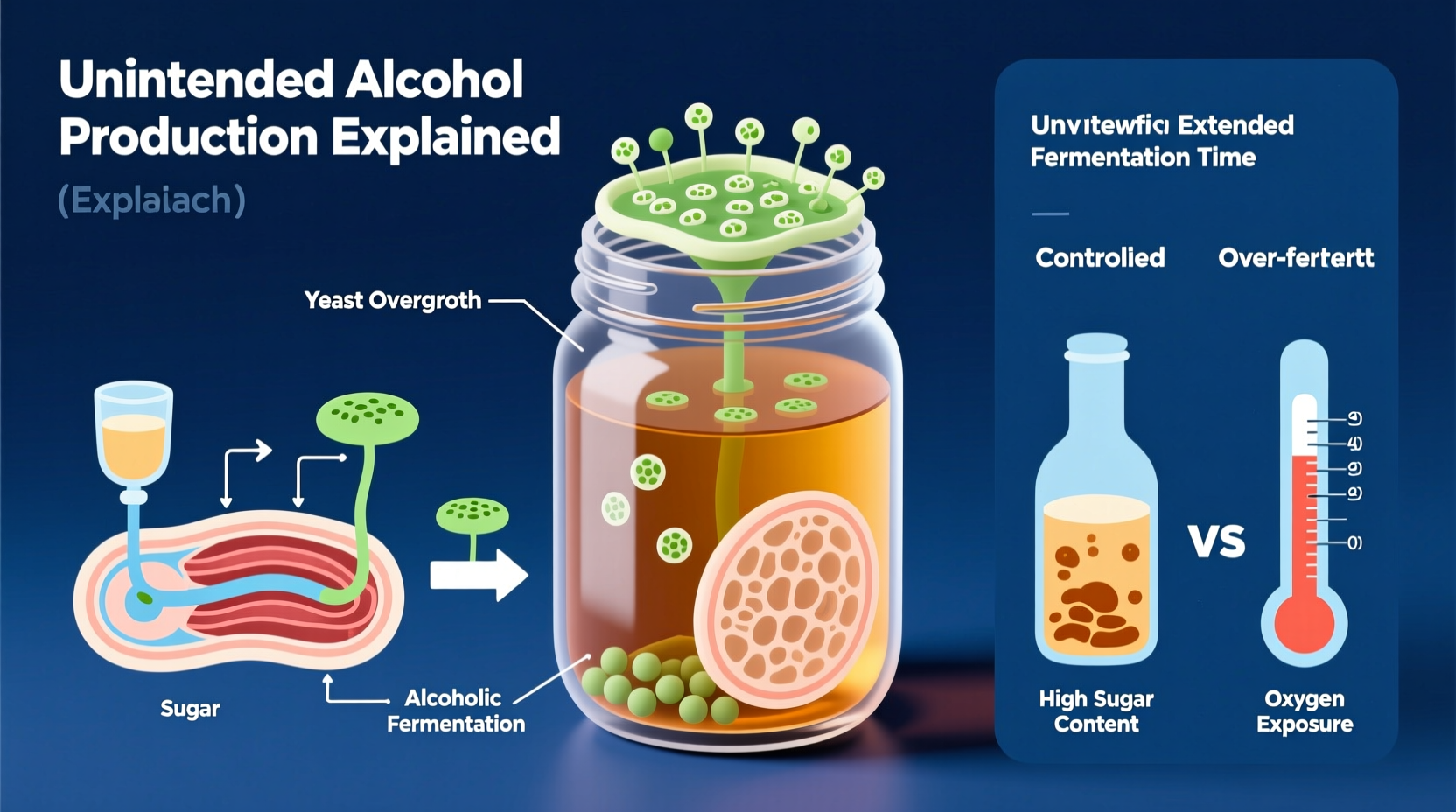
At its core, kombucha fermentation is a symbiotic dance between bacteria (primarily Acetobacter and Gluconobacter) and yeast (Saccharomyces, Brettanomyces, Zygosaccharomyces, among others). In ideal conditions, yeast converts sugar into ethanol and CO₂; then, acetic acid bacteria rapidly oxidize that ethanol into acetic acid—the compound responsible for kombucha’s signature sharpness and preservative effect.
The balance hinges on three interdependent variables: time, temperature, and oxygen availability. When any one shifts significantly, the yeast outpaces the bacteria—or the bacteria become inhibited—allowing ethanol to accumulate instead of converting. Unlike beer or wine, where ethanol is the desired end product, kombucha aims for *transient* ethanol: a brief intermediate, not a final compound.
This delicate equilibrium is easily disrupted—not by “bad SCOBY” or contamination alone, but by routine choices many home brewers make without realizing their biochemical consequences.
Five Key Drivers of Unintentional Alcohol Buildup
- Extended Fermentation Time: Beyond 7–10 days at room temperature, especially during secondary (bottle) fermentation, yeast continues metabolizing residual sugars while bacterial activity slows due to declining oxygen and rising acidity.
- Elevated Ambient Temperature: Yeast thrives between 25–30°C (77–86°F), doubling its metabolic rate with every 5°C rise. Bacteria, however, peak around 20–25°C and decline sharply above 28°C—creating a thermal window where ethanol production surges but conversion lags.
- High Initial Sugar Concentration: Using >1 cup (200g) of cane sugar per gallon (3.8L) provides excess substrate. Even after primary fermentation, unfermented fructose and sucrose remain—fuel for yeast in sealed bottles.
- Airtight Bottling Without Carbonation Management: During second fermentation, CO₂ buildup lowers oxygen, directly suppressing aerobic acetic acid bacteria. Meanwhile, anaerobic yeast keeps producing ethanol—especially strains like Zygosaccharomyces bailii, which tolerates low pH and high sugar better than most.
- Old or Imbalanced SCOBY Culture: A SCOBY dominated by yeast (visibly thick, creamy-white, or fuzzy) over bacteria (thin, translucent, vinegar-scented pellicle) signals microbial imbalance. This often occurs after repeated use without refreshing starter tea or introducing new bacterial strains.
Real-World Example: The Over-Carbonated Batch That Failed Lab Testing
In early 2023, a small-batch kombucha producer in Portland, Oregon launched a ginger-turmeric flavor using organic raw honey as a sweetener (a deviation from standard cane sugar). They fermented 12 days at 27°C, then bottled with fresh ginger for 48 hours at 24°C before refrigerating. Consumer complaints about “dizziness after two glasses” prompted third-party lab testing: results showed 1.8% ABV—nearly four times the non-alcoholic limit.
Investigation revealed three converging causes: (1) raw honey contains complex sugars (e.g., melezitose) poorly metabolized by Acetobacter, leaving ethanol unconverted; (2) elevated ambient temperature accelerated yeast metabolism while stressing bacterial efficiency; and (3) the 48-hour bottle time occurred entirely at room temperature—no cold crash to halt fermentation. Within two weeks, they adjusted protocols: switched to organic cane sugar, capped primary fermentation at 8 days, introduced a 24-hour cold crash before bottling, and added 10% mature starter tea (pH ≤ 3.0) to each batch to inhibit wild yeast. Subsequent tests averaged 0.32% ABV.
Do’s and Don’ts: Managing Alcohol Levels Safely
| Action | Do | Don’t |
|---|---|---|
| Sugar Source | Use refined organic cane sugar (sucrose); maintain 1–1.25 cups per gallon | Substitute honey, agave, maple syrup, or fruit juice—these contain fermentables resistant to bacterial oxidation |
| Temperature Control | Ferment between 20–24°C (68–75°F); use a thermometer strip on the vessel | Place near radiators, ovens, or sunlit windows—even 3°C variance alters bacterial:yeast ratios |
| Fermentation Timing | Begin tasting at day 5; bottle when pH reaches 3.0–3.3 (use calibrated pH strips) | Rely on calendar-based schedules alone—fermentation speed varies by season, altitude, and culture vitality |
| Bottling Protocol | Add only 1–2 tsp fruit/ginger per 16oz bottle; cap loosely for first 12 hrs, then seal fully | Fill bottles to the brim or add excessive fruit—both increase sugar load and reduce headspace oxygen |
| Culture Maintenance | Discard oldest SCOBY layer every 5 batches; refresh starter tea with 15% from a recent, balanced batch | Reuse the same SCOBY indefinitely without monitoring pellicle texture, aroma, or acidity development |
Step-by-Step: How to Reduce ABV in Your Next Batch
- Test & Adjust Starting pH: Mix cooled sweet tea with starter tea (minimum 10% volume). Use a calibrated pH meter or high-quality strips to confirm pH ≤ 3.8 before adding SCOBY. If above 4.0, add 1 tsp distilled white vinegar and retest.
- Monitor Daily After Day 4: Taste daily and measure pH. Target termination when pH hits 3.2–3.3 *and* flavor balances tartness with mild sweetness (not sour-only). Record ambient temperature hourly if possible.
- Cold Crash Before Bottling: Refrigerate finished brew for 24 hours. This halts yeast activity while preserving bacterial viability. Decant carefully to avoid stirring sediment.
- Limit Secondary Fermentation: Add flavorings to bottles, then cap *loosely*. Store at 20–22°C for 12 hours to allow initial CO₂ release and oxygen exchange. Then tighten caps and ferment 24–36 more hours—no longer.
- Chill & Stabilize: Refrigerate immediately after second ferment. Cold storage below 4°C suspends nearly all microbial activity. Consume within 10 days for optimal safety and consistency.
“Alcohol in kombucha isn’t a flaw—it’s feedback. Every elevated ABV reading tells you precisely where your fermentation environment diverged from bacterial dominance. Treat it as data, not failure.” — Dr. Lena Petrova, Microbial Ecologist & Lead Fermentation Scientist, Cultivate Labs
FAQ: Addressing Common Concerns
Can I test my kombucha’s alcohol content at home?
Yes—but with caveats. Hydrometer-based calculators (using original vs. final gravity) are unreliable for kombucha due to acid interference and non-fermentable dextrins. Ethanol test strips (like those from VinoLab) offer ±0.2% accuracy for samples between 0.2–3.0% ABV and cost under $25 for 50 tests. For regulatory compliance or commercial use, send samples to an ISO-accredited lab using gas chromatography (GC).
Does refrigeration stop fermentation completely?
No—it suppresses it dramatically. Yeast activity drops to ~5% of room-temperature rates below 4°C; acetic acid bacteria become nearly dormant. However, slow enzymatic reactions continue over weeks. That’s why refrigerated kombucha gradually loses effervescence and gains sharper acidity over time. For true stabilization, combine refrigeration with low residual sugar (<1.5 g/100mL) and pH ≤ 3.0.
Is “jun” kombucha more likely to be alcoholic?
Yes—consistently. Jun uses green tea and raw honey, both of which support Brettanomyces and osmotolerant yeasts that produce more ethanol and resist bacterial conversion. Jun typically averages 0.8–1.5% ABV even under careful control—making it inherently unsuitable for consumers seeking strictly non-alcoholic ferments.
Conclusion: Precision, Not Guesswork, Builds Trustworthy Kombucha
Unintentional alcohol in kombucha isn’t mysterious—it’s measurable, predictable, and controllable. What separates reliable home brewers and compliant producers from inconsistent ones isn’t luck or “special” cultures, but disciplined attention to three levers: temperature precision, pH-guided timing, and sugar-source integrity. When you understand that ethanol accumulation is less about “yeast running wild” and more about bacteria being sidelined by heat, time, or chemistry, you reclaim agency over every batch.
This isn’t about eliminating fermentation complexity—it’s about honoring it. The best kombucha balances liveliness with safety, tang with drinkability, and tradition with scientific awareness. Start your next batch with a pH strip and thermometer in hand. Record your ambient temperature, taste notes, and termination pH. Compare results across seasons. You’ll quickly see patterns emerge—how summer batches need shorter timelines, how winter requires gentle warming, how starter tea age changes acidity kinetics.
💬 Your experience matters. Did adjusting fermentation time drop your ABV? Did switching sugar sources change your fizz profile? Share your real-world observations in the comments—your insights help build a more informed, precise, and empowered fermentation community.








