
If you’ve noticed your hamster sprinting on its wheel, scurrying through tunnels, or exploring its cage in the middle of the night, you’re not alone. Many hamster owners are puzzled—or even concerned—by this burst of activity when the household is quiet. The truth is, this behavior is completely normal. Hamsters are naturally nocturnal creatures, meaning their biological rhythms are tuned to be active at night and sleep during the day. Understanding this instinctive pattern is key to providing proper care and reducing unnecessary worry.
This article explores the science behind your hamster’s nighttime energy, explains the evolutionary reasons for their nocturnal lifestyle, and offers practical guidance on creating an environment that supports their natural behaviors. Whether you're a new owner or have had a hamster for years, knowing what drives their late-night marathons can help you foster a calmer, more enriching home for your tiny companion.
The Science Behind Nocturnal Behavior in Hamsters
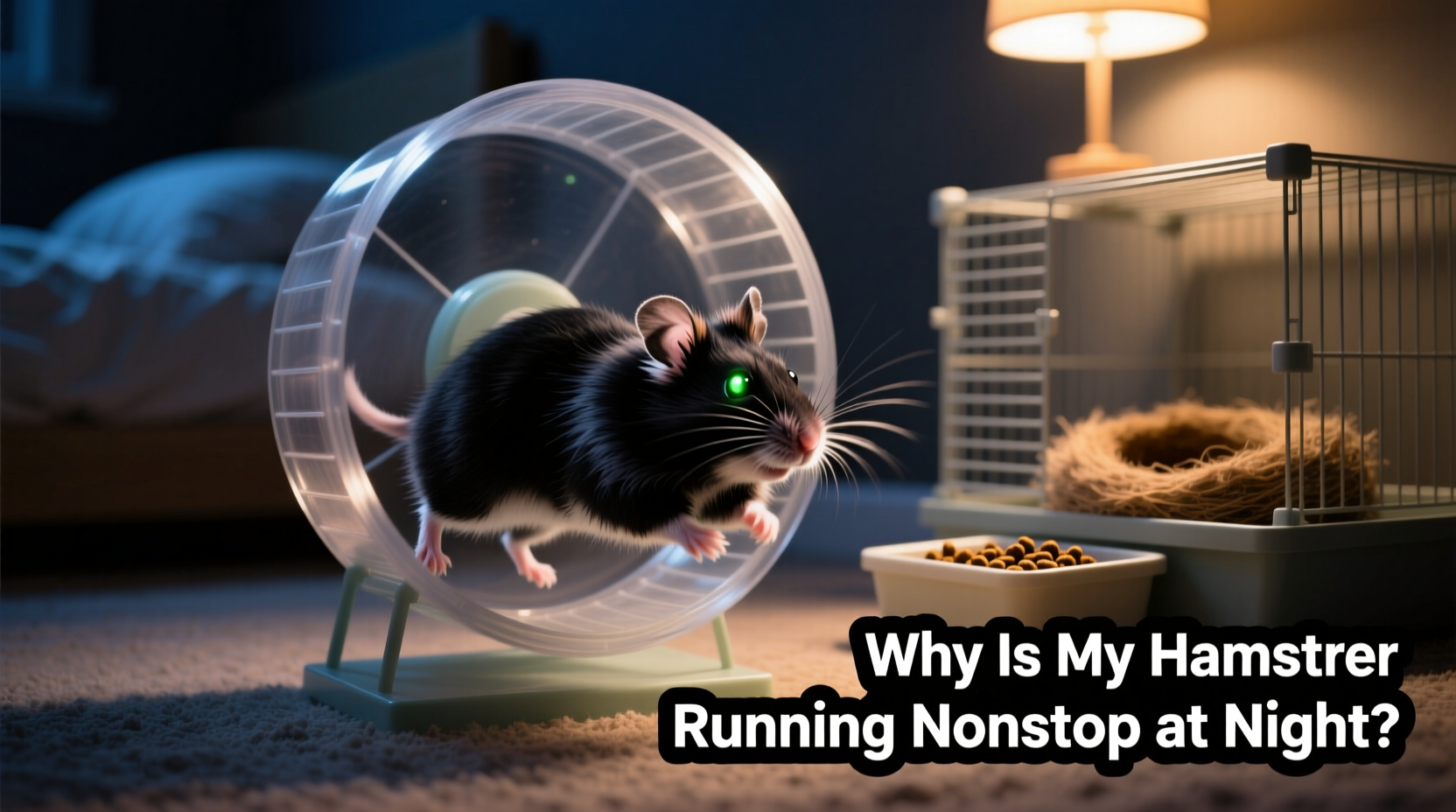
Hamsters originate from arid regions like Syria, northern China, and parts of Russia, where daytime temperatures can be extreme and predators are abundant. To survive, they evolved to be most active during the cooler, safer hours of dusk and dawn—and into the night. This adaptation is deeply encoded in their circadian rhythm, the internal biological clock that regulates sleep-wake cycles across 24 hours.
In laboratory studies, Syrian hamsters (the most common pet variety) consistently show peak activity beginning shortly after dark and continuing for several hours. Research published in the *Journal of Biological Rhythms* confirms that even in controlled environments with artificial lighting, hamsters maintain a strong preference for nighttime movement. Their bodies release hormones like melatonin later in the evening, signaling the start of their active phase.
Unlike humans, who are diurnal (active during daylight), hamsters enter a state of torpor during the day—a light, easily disrupted sleep that allows them to respond quickly to threats. At night, their metabolism increases, heart rate rises, and they become highly alert, making it the perfect time for foraging, exploring, and exercising.
Tip: Avoid waking your hamster during the day unless absolutely necessary. Disturbing their rest can cause stress and lead to defensive biting.Why Your Hamster Runs So Much at Night
The sight of your hamster running laps on a wheel for hours might seem excessive, but it serves several vital purposes:
- Natural Foraging Instinct: In the wild, hamsters may travel up to 5 miles each night searching for food. A wheel simulates this journey, giving them a way to fulfill their innate need to move.
- Energy Regulation: Hamsters have high metabolisms. Without sufficient physical activity, they can become obese or develop behavioral issues like bar-chewing or digging obsessively.
- Mental Stimulation: Running provides mental engagement. A hamster that can’t exercise properly may become anxious or depressed.
- Temperature Regulation: Activity helps regulate body temperature, especially important since hamsters are sensitive to heat and cold.
It’s also worth noting that not all nighttime activity is continuous. Hamsters typically engage in “burst activity”—short, intense periods of running or exploring, followed by brief rests. What sounds like nonstop motion from your bedroom might actually be cycles of exertion and recovery.
“Hamsters aren’t running because they’re stressed—they’re running because they’re healthy and expressing natural behaviors.” — Dr. Lena Torres, Small Mammal Veterinarian
Creating a Hamster-Friendly Environment
Respecting your hamster’s nocturnal nature doesn’t mean you have to endure noisy wheels all night. With thoughtful setup and routine adjustments, you can support their instincts while minimizing disruption to your sleep.
Choose the Right Wheel
A poorly designed wheel is a common source of noise and injury. Opt for a solid-surface wheel (no rungs or mesh) that’s appropriately sized. Dwarf hamsters need at least a 6-inch wheel; Syrians require 8 inches or larger. Smaller wheels force them to arch their backs unnaturally, which can lead to spinal issues.
| Wheel Type | Pros | Cons |
|---|---|---|
| Solid Plastic (e.g., Wodent Wheel) | Quiet, safe, durable | More expensive |
| Metal Mesh | Cheap, widely available | Risky—can trap feet, loud |
| Wooden | Natural look, quiet | Harder to clean, may wear down |
Soundproof the Cage Location
Place the cage in a room away from bedrooms if possible. Even moving it to a different part of a shared space can reduce perceived noise. Use a thick rug or foam pad under the cage to dampen vibrations from running.
Enrich the Enclosure
A stimulating environment reduces obsessive wheel use. Include:
- Tunnels and hideouts
- Chew toys made of safe wood
- Digging areas filled with shredded paper or aspen bedding
- Food puzzles or scatter feeding to encourage foraging
Mini Case Study: Reducing Nighttime Noise Without Suppressing Activity
Sarah, a college student living in a studio apartment, adopted a Syrian hamster named Nibbles. Within days, she noticed he was running on his small wire wheel every night between 10 PM and 2 AM. The constant clicking kept her awake and made her worry he was stressed.
After researching hamster behavior, Sarah realized Nibbles wasn't distressed—he was simply being a hamster. She upgraded to an 8-inch silent plastic wheel, added cardboard tubes and a wooden house for exploration, and moved the cage from beside her bed to a desk across the room. She also began offering mealworms hidden in bedding to encourage natural foraging.
Within a week, the noise decreased significantly. While Nibbles still ran at night, the quieter wheel and distributed activities reduced repetitive spinning. Sarah slept better, and Nibbles appeared more relaxed during the day.
This case illustrates that addressing the root cause—supporting natural behavior with proper tools—often resolves perceived problems more effectively than trying to change the animal’s instincts.
Common Misconceptions About Nocturnal Hamsters
Several myths persist about hamsters and their nighttime activity. Dispelling these can help owners provide better care:
- Myth: If my hamster runs all night, it must be lonely or bored.
Reality: Hamsters are solitary animals. Running is not a cry for company but a sign of health. In fact, housing hamsters together often leads to fighting. - Myth: I should wake my hamster during the day to “reset” its schedule.
Reality: Forcing a hamster to be active during daylight disrupts its circadian rhythm and causes stress. It won’t adapt to human schedules. - Myth: A tired hamster will stop running.
Reality: Unlike dogs or cats, hamsters don’t “tire out” in the same way. They’ll rest when needed, but their biology drives nightly activity regardless of prior exertion.
Step-by-Step Guide to Supporting Healthy Nocturnal Habits
Follow this timeline to ensure your hamster thrives while respecting both its needs and your own:
- Week 1: Assess Current Setup
Check wheel size and type, bedding depth, hiding spots, and noise levels. Identify any safety hazards or sources of stress. - Week 2: Upgrade Essentials
Replace unsafe wheels, add enrichment items, and reposition the cage if needed. Introduce one new toy at a time to monitor acceptance. - Week 3: Adjust Feeding Schedule
Offer fresh food and treats just before dusk (around 7–8 PM). This encourages natural foraging behavior at the start of their active phase. - Week 4: Observe and Refine
Track activity patterns. Is your hamster using new tunnels? Is wheel noise decreasing? Make small tweaks based on behavior. - Ongoing: Weekly Maintenance
Clean soiled areas, rotate toys, check for wear on equipment, and continue offering mental stimulation.
Frequently Asked Questions
Is it normal for my hamster to run for hours at night?
Yes. Hamsters can run up to 5 miles per night in captivity, mirroring their wild foraging behavior. As long as the wheel is safe and your hamster appears healthy, this is perfectly normal.
Can I make my hamster diurnal?
No. Attempting to shift a hamster’s natural rhythm can lead to chronic stress, weakened immunity, and shortened lifespan. It’s best to work with their biology, not against it.
Should I cover the cage at night to reduce noise?
Covering the cage isn’t recommended. Hamsters need airflow and visibility. Instead, focus on sound-dampening solutions like relocating the cage or upgrading the wheel.
Checklist: Optimizing Your Hamster’s Nocturnal Life
Use this checklist to ensure your hamster’s nighttime routine is healthy and sustainable:
- ✅ Wheel is solid, appropriately sized, and quiet
- ✅ Cage is placed in a low-traffic, draft-free area away from direct sunlight
- ✅ Bedding is deep enough (at least 6 inches) for burrowing
- ✅ Multiple hiding places are available
- ✅ Enrichment items (tunnels, chew toys, dig boxes) are provided
- ✅ Food is offered in the evening to align with active period
- ✅ No forced interaction during daytime sleep
- ✅ Noise levels are minimized without restricting movement
“The best care for a nocturnal pet isn’t changing their rhythm—it’s understanding it.” — Dr. Rajiv Mehta, Exotic Animal Behavior Specialist
Conclusion: Embracing Your Hamster’s Natural Rhythm
Your hamster’s nighttime running isn’t a problem to fix—it’s a window into their wild heritage and a sign of a vibrant, instinct-driven life. By recognizing that their activity is biologically programmed, you can shift from concern to appreciation. With the right habitat, enrichment, and respect for their schedule, your hamster will thrive, and you’ll gain peace of mind knowing their behavior is not only normal but essential to their well-being.
Instead of trying to silence the midnight wheel spins, celebrate them as proof that your hamster feels safe, healthy, and free to be exactly who they are. Small changes in setup and mindset can go a long way in harmonizing your life with your pet’s natural rhythm.
💬 Have a tip for managing a nocturnal hamster? Share your experience in the comments and help fellow owners create better homes for their furry friends!








