
Nighttime meowing in cats can be one of the most disruptive behaviors pet owners face. Unlike barking dogs or chirping birds, a cat’s vocalizations often come without warning and persist through the quiet hours when everyone else is trying to sleep. While occasional meowing might seem harmless, consistent nighttime calls can signal deeper issues—ranging from simple attention-seeking to more serious medical conditions like feline cognitive dysfunction (FCD), commonly referred to as senility. Understanding the root cause is essential not only for restoring peace in your home but also for ensuring your cat's health and comfort.
Cats are naturally crepuscular—most active during dawn and dusk—but many adapt their schedules to match human routines. When they don’t, and instead begin yowling, pacing, or crying out after dark, it’s time to investigate. The challenge lies in distinguishing between behavioral patterns rooted in habit and those stemming from physiological decline. This article breaks down the two primary culprits: attention-seeking behavior and age-related cognitive changes. More importantly, it provides actionable insights to help you determine which factor is at play—and what you can do about it.
Understanding Normal Cat Vocalization Patterns
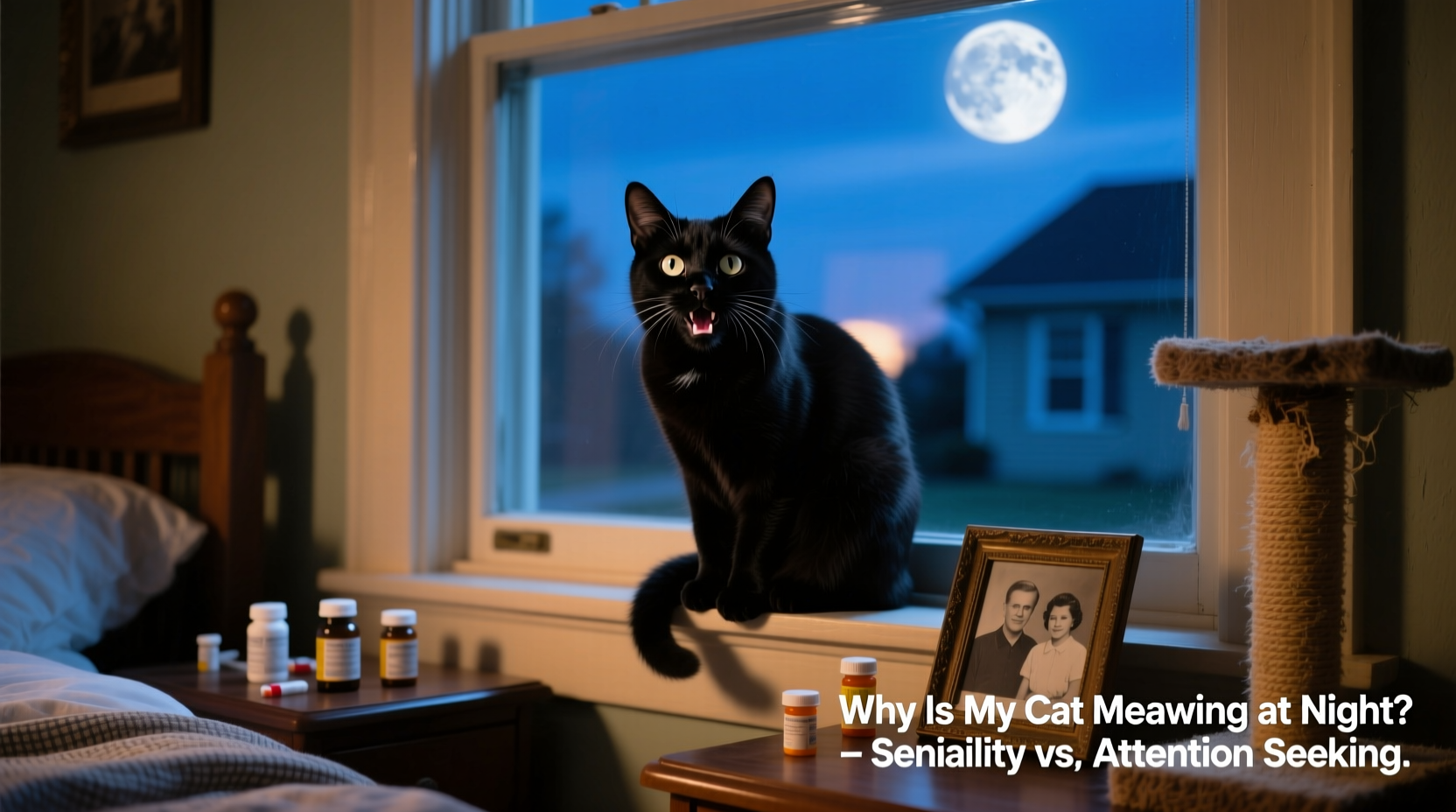
Cats communicate primarily through body language, scent, and sound. Meowing is a behavior largely reserved for humans; adult cats rarely meow at each other. Instead, they’ve evolved this vocal tool specifically to interact with people—whether to request food, signal discomfort, or demand affection. Kittens meow frequently to get their mother’s attention, and domesticated cats retain this trait into adulthood because it works so well with us.
However, normal meowing tends to occur during waking hours and follows predictable triggers: meal times, door openings, or play sessions. Nighttime vocalizations that lack an obvious trigger—especially if they’re new or escalating—should raise concern. These may reflect:
- Sudden environmental stressors (e.g., a new pet or move)
- Pain or illness
- Hormonal imbalances
- Cognitive decline in older cats
- Learned attention-seeking habits
The key to effective intervention is identifying whether the meowing serves a purpose (like getting fed) or appears disoriented and repetitive—a hallmark of neurological change.
Attention-Seeking Behavior: When Your Cat Has Learned the Wrong Lesson
One of the most common reasons cats meow at night is because they’ve successfully trained their owners to respond. If your cat wakes you up and you eventually feed them, pet them, or even scold them (which still counts as attention), you reinforce the behavior. From the cat’s perspective, the outcome is the same: they got what they wanted.
This type of meowing is typically rhythmic, persistent, and directed toward you. It often begins with soft chirps and escalates in volume until someone reacts. You might notice your cat staring at you intently or pawing at your face. In many cases, these cats are otherwise healthy, active during the day, and show no signs of confusion.
Tip: Never reward nighttime meowing with attention—even negative reactions like yelling can reinforce the behavior.Breaking this cycle requires consistency and patience. Many owners give in just once during a particularly exhausting night, unintentionally resetting progress. Success depends on ignoring the behavior completely while reinforcing positive alternatives during the day.
How to Address Attention-Seeking Meowing
- Establish a pre-bed routine: Feed, play, and groom your cat an hour before bedtime to satisfy their needs ahead of sleep.
- Use automatic feeders: Program a timed feeder to release food shortly after you go to bed, reducing hunger-based calls.
- Ignore all vocalizations: Do not respond in any way—not even eye contact—until several minutes of silence have passed.
- Enrich daytime activity: Increase mental stimulation with puzzle toys, window perches, and interactive play to reduce boredom.
- Consider confinement: Temporarily confine your cat to a comfortable room with resources (litter, water, bed) if their noise severely disrupts sleep.
Improvement can take anywhere from a few days to several weeks. Consistency across all household members is crucial—mixed signals will delay progress.
Feline Cognitive Dysfunction: When Meowing Signals Senility
As cats age—typically beyond 10–12 years—they become susceptible to cognitive decline similar to Alzheimer’s disease in humans. Feline Cognitive Dysfunction (FCD) affects memory, awareness, learning, and sensory perception. One of the earliest and most noticeable symptoms is increased vocalization at night.
Unlike attention-seeking meows, FCD-related cries are often loud, plaintive, and seemingly unfocused. The cat may pace, appear lost in familiar rooms, stare at walls, or forget where the litter box is located. These vocalizations stem from confusion, anxiety, and disrupted circadian rhythms. Affected cats may not recognize family members or react normally to stimuli.
“Cats with cognitive dysfunction aren't being ‘difficult’—they're genuinely disoriented and frightened. Their nighttime meowing is a cry for help, not manipulation.” — Dr. Laura Gonzales, Veterinary Neurologist
According to studies, up to 55% of cats aged 11–15 years and over 80% of those 16+ show at least one sign of cognitive decline. Yet, many owners mistake these behaviors for normal aging rather than treatable conditions.
Key Signs of Feline Cognitive Dysfunction
| Behavior | Attention-Seeking | Cognitive Dysfunction |
|---|---|---|
| Tone of Meow | Insistent, rhythmic, goal-oriented | Loud, mournful, repetitive, unfocused |
| Response to Owner | Direct eye contact, follows movement | Ignores commands, seems unaware |
| Daily Function | Normal eating, grooming, litter use | May urinate outside box, stop grooming |
| Sleep-Wake Cycle | Active at night but alert during day | Disoriented both day and night |
| Onset Pattern | Sudden, linked to schedule changes | Gradual, progressive over months |
If your senior cat displays multiple signs from the “Cognitive Dysfunction” column, especially if they worsen over time, veterinary evaluation is critical. Other medical issues such as hyperthyroidism, high blood pressure, kidney disease, or arthritis can mimic or exacerbate FCD symptoms and must be ruled out.
Mini Case Study: Bella, a 14-Year-Old Domestic Shorthair
Bella had always been a quiet cat. At age 13, her owner noticed she began calling out around 3 a.m., pacing between the bedroom and living room. Initially, the owner assumed Bella wanted food and started leaving extra kibble at night. The vocalizations increased.
Over the next six months, Bella began forgetting where her litter box was, sometimes eliminating beside it. She stopped responding to her name and would stare blankly at corners. Her meowing became louder and more distressed.
A vet visit revealed elevated T4 levels (indicating hyperthyroidism) and mild hypertension—both common in older cats and known contributors to restlessness and vocalization. After starting medication for thyroid regulation and adding a prescription diet rich in antioxidants, Bella’s nighttime episodes decreased significantly within four weeks. Her owner also introduced a nightlight and maintained a strict daily routine, which helped stabilize her circadian rhythm.
This case illustrates how underlying medical conditions can amplify or mimic cognitive decline. Treating the physical issue improved both quality of life and behavior.
Step-by-Step Guide: Responding to Nighttime Meowing
Follow this timeline to assess and address your cat’s nighttime vocalizations effectively:
- Week 1: Observe and Document
- Record the time, duration, and nature of meowing.
- Note any associated behaviors: pacing, hiding, staring, etc.
- Check for changes in appetite, litter use, or mobility.
- Week 2: Rule Out Medical Causes
- Schedule a veterinary exam including blood work, urinalysis, and blood pressure check.
- Discuss possible cognitive screening tools or imaging if needed.
- Week 3: Adjust Environment & Routine
- Implement a calming evening routine with feeding and play.
- Add nightlights to help disoriented cats navigate.
- Ensure easy access to litter, water, and resting areas.
- Week 4: Implement Behavioral Strategy
- If diagnosis points to attention-seeking, begin extinction training (ignore meows).
- If FCD is suspected, introduce supplements like SAM-e or diets fortified with omega-3s and antioxidants.
- Ongoing: Monitor and Adapt
- Reevaluate every month; adjust medications or routines as needed.
- Stay patient—behavioral improvements in older cats are gradual.
Checklist: What to Do When Your Cat Meows at Night
- ✅ Rule out pain or illness with a vet visit
- ✅ Assess your cat’s age and overall health
- ✅ Track meowing patterns for at least three nights
- ✅ Eliminate rewards (food, attention) for nighttime vocalizing
- ✅ Enrich daytime activities and establish a bedtime routine
- ✅ Consider pheromone diffusers (e.g., Feliway) to reduce anxiety
- ✅ Consult your vet about cognitive support supplements
FAQ: Common Questions About Nighttime Cat Meowing
Can young cats have cognitive dysfunction?
True feline cognitive dysfunction is extremely rare in cats under 10 years old. If a younger cat is meowing excessively at night, behavioral causes (attention-seeking, stress, unmet needs) or medical issues (pain, hyperthyroidism in rare cases) are more likely explanations.
Will ignoring my cat make them more anxious?
In cases of attention-seeking, no—consistent non-response teaches the cat that meowing doesn’t work. However, if the cat has FCD or anxiety, complete ignoring may increase distress. Pair silence with environmental enrichment and consult your vet about anti-anxiety options.
Are there medications for feline cognitive dysfunction?
While no drug is FDA-approved for FCD in cats in the U.S., veterinarians often prescribe selegiline (Anipryl), which is used off-label. More commonly, management focuses on antioxidant-rich diets (e.g., Hill’s Science Diet Aging 11+), omega-3 fatty acids, and environmental stability.
Conclusion: Respond with Compassion and Clarity
Nighttime meowing in cats isn’t something to dismiss as “just part of aging” or “bad behavior.” It’s a form of communication—one that demands careful interpretation. Whether your cat is cleverly manipulating your routine or struggling with neurological changes, your response should balance firmness with empathy.
For attention-seeking cats, consistency is your greatest ally. For seniors experiencing cognitive decline, patience and proactive care can dramatically improve their golden years. In either case, early action prevents minor issues from becoming entrenched problems.
Start tonight: observe without reacting, document the details, and reach out to your veterinarian if anything feels off. Your cat depends on you not just for food and shelter, but for understanding. By learning to read their cries correctly, you honor the bond you share—and ensure both of you can rest easier.
💬 Have a story about your cat’s nighttime habits? Share your experience in the comments—your insight could help another cat owner find peace and answers.








