Rugby sevens is a dynamic, high-speed version of traditional rugby union that has captured global attention with its explosive gameplay and international tournaments. While many fans enjoy the spectacle, few know the full story behind its name, origins, and evolution. Understanding why it’s called “rugby sevens” reveals more than just team size—it uncovers a legacy of innovation, community spirit, and sporting diplomacy rooted in a small Scottish town.
The Origin Story: Melrose, 1883
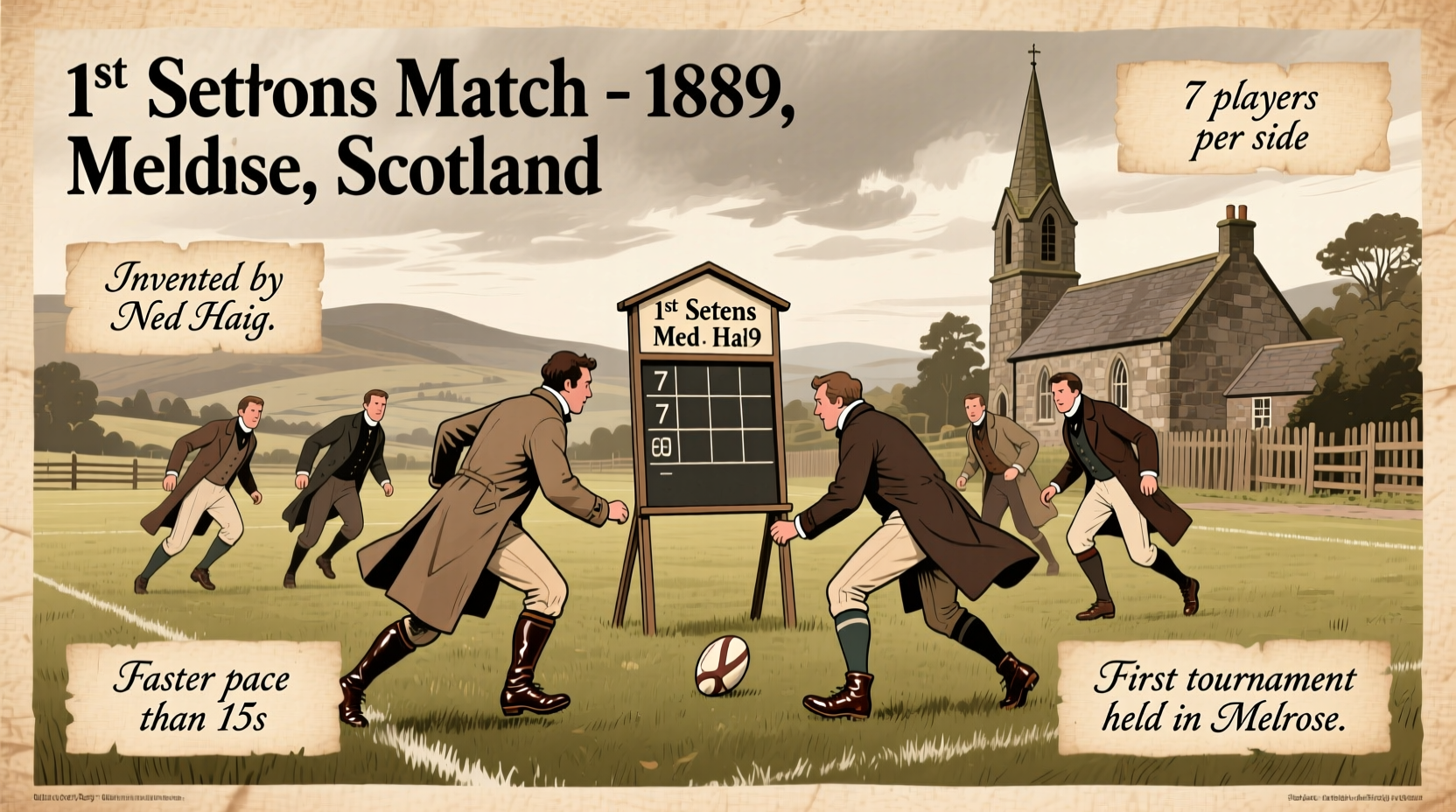
The birth of rugby sevens traces back to Melrose, Scotland, in 1883. The local club, Melrose RFC, faced declining attendance at midweek friendlies and sought a solution to reinvigorate interest. David Sanderson, the club’s treasurer, and Ned Haig, a local butcher and player, devised a radical idea: shorten the game and reduce team sizes to allow multiple matches in a single day. The format was simple—seven players per side instead of fifteen, shorter halves, and faster transitions.
The first official tournament took place on April 28, 1883, at the Greenyards, Melrose’s home ground. Eight teams competed in a single-day event that combined entertainment, competition, and fundraising for the club. It was an instant success. Spectators flocked to see the rapid pace and open-field action, which contrasted sharply with the more methodical nature of 15-a-side rugby.
“Sevens wasn’t invented to be a world sport—it was created to save a struggling local club. But passion and pace turned a local fix into a global phenomenon.” — Dr. Ian Morrison, Sports Historian, University of Edinburgh
Why \"Sevens\"? Decoding the Name
The term “rugby sevens” refers directly to the number of players on each team: seven, as opposed to the standard fifteen in traditional rugby union. This numerical distinction is central to the sport’s identity and differentiates it from other variants like rugby tens or nines.
The naming convention follows a broader pattern in rugby where formats are often labeled by player count. For example:
- Rugby fifteens – 15 players per side (standard international format)
- Rugby tens – 10 players per side (less common, used in regional events)
- Rugby sevens – 7 players per side (Olympic and World Rugby-sanctioned)
- Rugby nines – 9 players per side (popular in Pacific nations)
Because the reduced squad size fundamentally changes the dynamics of the game—emphasizing speed, endurance, and space—the name “sevens” quickly became synonymous with a distinct style of play rather than just a smaller team.
Tip: When watching rugby sevens, focus on transition speed—teams often score within seconds of regaining possession due to fewer defenders.Key Facts That Define Rugby Sevens
Beyond its name and origin, several defining characteristics set rugby sevens apart. These features explain its appeal and rapid adoption worldwide.
Game Duration and Structure
A standard rugby sevens match consists of two halves of seven minutes each, with a two-minute halftime. Finals may extend to ten-minute halves. This brevity allows tournaments to be completed in one or two days, making it ideal for festivals and broadcast scheduling.
Global Expansion and the Hong Kong Sevens
While born in Scotland, rugby sevens found its international stage in Hong Kong. The Hong Kong Sevens, launched in 1976, became a catalyst for global exposure. Featuring national teams, club sides, and invitational squads, the tournament attracted elite players and massive crowds. Its carnival-like atmosphere helped popularize sevens across Asia, Oceania, and beyond.
Olympic Inclusion
Rugby sevens returned to the Olympic Games in 2016 in Rio de Janeiro after a 92-year absence of any rugby format. The inclusion was strategic—its fast pace, lower infrastructure demands, and broad participation potential made it a better fit for the Olympics than the 15s game. Both men’s and women’s tournaments are now fixtures, boosting gender parity in the sport.
Player Versatility
With only seven players covering a full-size pitch, athletes must be exceptionally fit and versatile. Unlike 15s, where roles are highly specialized, sevens players often rotate between attacking, defending, and support duties. Many top sevens athletes are among the fittest in professional sports, averaging over 2 kilometers run per match.
Timeline of Major Milestones
The journey from a Scottish fundraiser to Olympic sport unfolded through key developments:
- 1883: First rugby sevens tournament held in Melrose, Scotland.
- 1920s–1930s: Spread across the UK and British Empire, including Wales, Kenya, and New Zealand.
- 1976: Inaugural Hong Kong Sevens elevates the format’s international profile.
- 1993: International Rugby Board (now World Rugby) begins formal oversight.
- 1998: Rugby sevens debuts at the Commonwealth Games in Kuala Lumpur.
- 2001: Formation of the World Rugby Sevens Series (now SVNS).
- 2016: Rugby sevens introduced at the Rio Olympics.
- 2024: Over 120 countries participate in World Rugby Sevens Challenger Series.
Comparison: Rugby Sevens vs. Rugby Union (15s)
| Feature | Rugby Sevens | Rugby Union (15s) |
|---|---|---|
| Players per Team | 7 | 15 |
| Match Duration | 2 x 7 minutes | 2 x 40 minutes |
| Substitutions | Up to 5 from a squad of 12 | 8 from a squad of 23 |
| Pace & Open Play | Extremely high; more space per player | Moderate; tighter defensive structures |
| Tournament Format | Single weekend events | Week-long or multi-stage competitions |
| Fitness Demands | Explosive speed, repeated sprints | Strength, endurance, positional stamina |
Mini Case Study: Fiji’s Olympic Triumph, 2016
No moment better illustrates the global impact of rugby sevens than Fiji’s gold medal victory at the 2016 Rio Olympics. With a population of less than 900,000, Fiji defeated powerhouses like Great Britain, Argentina, and Japan to win its first-ever Olympic medal in any sport.
The final against Great Britain ended 43–7, a dominant performance that showcased Fijian flair, footwork, and relentless defense. Captain Osea Kolinisau collapsed to his knees in tears after the final whistle—a moment broadcast globally. Back home, the nation erupted in celebration, declaring a public holiday. The win transcended sport, uniting communities and reinforcing national pride.
Fiji’s success stemmed from decades of grassroots sevens development. The format is deeply embedded in village life, with local tournaments drawing hundreds of participants. This culture produced a generation of agile, instinctive players perfectly suited to the sevens game.
Expert Tips for Understanding and Enjoying Rugby Sevens
Tip: Watch how teams restart after scoring—quick tap penalties and immediate counterattacks are hallmarks of elite sevens strategy.- Focus on transitions: Turnovers lead to instant attacks. Pay attention to breakdown speed and decision-making under fatigue.
- Appreciate conditioning: Players rarely rest. Substitutions are limited, so fitness determines late-game outcomes.
- Learn the tournament flow: Pool stages are followed by knockout rounds, often on the same weekend—momentum builds rapidly.
- Follow emerging nations: Countries like Ireland, China, and Jamaica are investing heavily, creating new rivalries.
Frequently Asked Questions
Why isn’t rugby sevens played with 15 players if it’s part of rugby union?
Rugby sevens is a separate format designed for speed and accessibility. Fewer players create more open space, encouraging running rugby and reducing reliance on complex set-pieces. It’s not a “shortened” version but a distinct discipline with unique tactics and athlete profiles.
How did rugby sevens become an Olympic sport?
The International Olympic Committee sought sports with youth appeal, gender equality, and global reach. Rugby sevens met all criteria: fast-paced, inclusive (men’s and women’s events), and played on every continent. World Rugby campaigned aggressively for inclusion, culminating in approval in 2009.
Do rugby sevens players also play 15s?
Some do, but many specialize. The skill sets overlap—passing, tackling, evasion—but sevens demands superior aerobic capacity and split-second decision-making. Players like Dan Norton (England) and Portia Woodman (New Zealand) have built entire careers in sevens.
Conclusion: A Legacy Built on Speed, Innovation, and Community
Rugby sevens carries a name that seems simple—seven players—but represents a rich history of ingenuity and cultural exchange. From a small-town fundraiser in Scotland to Olympic glory and viral highlight reels, the format has redefined what rugby can be. It’s faster, more inclusive, and more accessible than ever before.
Understanding why it’s called rugby sevens opens a door to appreciating how sport evolves—not always from grand design, but from local need, creative thinking, and human connection. Whether you're a lifelong fan or a newcomer drawn by the pace and passion, there's never been a better time to engage with this thrilling chapter of rugby history.
💬 What drew you to rugby sevens—was it the speed, the global diversity, or an unforgettable moment like Fiji’s gold? Share your story and help grow the conversation around this electrifying sport.








