In the world of Japanese animation, few phenomena are as simultaneously accepted and criticized as filler content. Long-running anime series like Naruto, One Piece, Bleach, and Dragon Ball Z have built global fanbases, yet many viewers find themselves skipping entire arcs labeled “non-canon.” These segments—commonly known as filler—serve no direct purpose in advancing the original source material. So why do studios continue to produce them? The answer lies not in creative laziness, but in a complex web of production logistics, broadcast demands, and business strategy unique to the anime industry.
Fan frustration with filler is understandable. A story arc that feels slow, irrelevant, or poorly written can disrupt narrative momentum. Yet removing filler entirely isn’t feasible for most long-term series. To understand its prevalence, one must look beyond storytelling into the realities of how anime is produced, aired, and sustained over years—or even decades.
The Broadcast Schedule vs. Source Material Dilemma
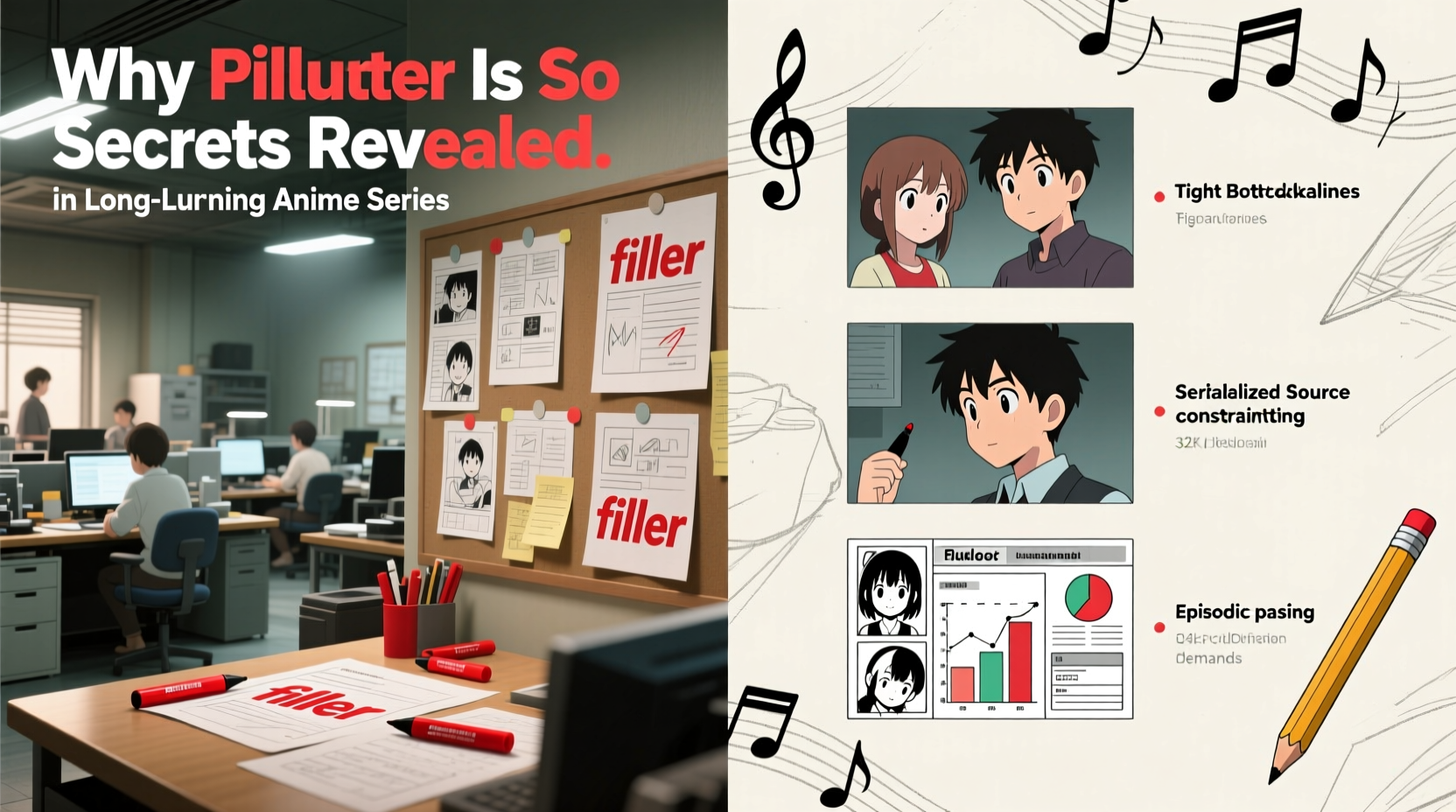
Anime production operates on tight weekly schedules, especially for series airing year-round. Unlike Western television, which often releases in seasonal batches, many popular shonen anime air every week without breaks. This relentless pace creates a fundamental mismatch: manga chapters are released weekly in print magazines, while anime episodes require significantly more time and resources to animate.
Consider this: a manga artist (mangaka) typically produces around 15–20 pages per week. That amount translates to roughly one episode of anime—but only if adapted directly. However, animating those pages into 22 minutes of content requires hundreds of drawings, voice acting, sound design, and post-production. By the time an episode airs, the anime may already be catching up to the still-ongoing manga.
To avoid overtaking the source material—a scenario that could force cancellation or awkward pauses—studios insert filler. This buys time for the manga to progress further ahead. For example, when One Piece began airing in 1999, it quickly surpassed the available manga content within its first year. The solution? Introduce self-contained stories featuring the Straw Hat crew in new locations, battling original villains, or exploring character backstories—all while Eiichiro Oda continued writing new chapters.
Tip: Filler isn't always wasted time—some arcs expand on underdeveloped characters or explore philosophical themes absent from action-heavy canon.Behind the Scenes: How Anime Production Works
To grasp why filler exists, it's essential to understand the structure of anime production committees (seisaku iinkai). These are consortiums of companies—including publishers, TV networks, merchandisers, and music labels—that fund and profit from an anime. Their goal isn’t just artistic expression; it’s sustaining revenue streams through Blu-ray sales, merchandise, licensing, and advertising.
Airing consistently strengthens these revenue models. Pausing a show risks losing audience momentum, reducing ad impressions, and delaying product launches tied to specific arcs. Therefore, continuity of broadcast becomes a financial imperative. Filler ensures the machine keeps running.
Moreover, animation studios operate under intense pressure. Studios like Toei Animation, MAPPA, or Studio Pierrot manage multiple projects simultaneously with limited staff and budgets. When a series runs long-term, burnout is real. Filler arcs allow directors and writers to rotate teams, reset pacing, and give lead creatives breathing room.
“Producing 50 episodes a year without filler would collapse most studios. We need buffer content to protect both quality and people.” — Anonymous Production Manager, Tokyo-based Studio
Types of Filler and Their Purposes
Not all filler serves the same function. While some episodes are purely stopgap measures, others fulfill creative or commercial goals. Here’s a breakdown of common filler types:
- Pacing Fillers: Slow down adaptation speed to prevent overtaking the manga.
- Character Exploration: Deepen relationships or backstories not fully covered in source material (e.g., Kakashi’s past in Naruto).
- Marketing-Driven Arcs: Promote upcoming movies, games, or merchandise (e.g., tournament arcs introducing new costumes or weapons).
- Recap Episodes: Summarize previous events using minimal new animation—cost-effective but often criticized.
- Alternate Universe Stories: Fun, non-serious scenarios (e.g., chibi-style comedy episodes).
Some filler has even gained cult status. The Infinite Tsukuyomi prelude arc in Naruto Shippuden, though initially seen as padding, provided crucial emotional context before the final war. Similarly, One Piece’s Ocean’s Dream arc, while non-canon, introduced environmental themes and showcased Luffy’s leadership in isolation.
When Filler Enhances Rather Than Detracts
The best filler doesn’t feel like filler at all. It integrates seamlessly by maintaining tone, expanding lore, or delivering satisfying standalone narratives. Case in point: the Itachi Shinden arc in Naruto Shippuden. Based on a light novel written under Masashi Kishimoto’s supervision, it explored Itachi Uchiha’s covert missions and moral conflicts—content fans craved but wasn’t in the main manga. Because it was canon-adjacent and emotionally resonant, it was widely praised despite being technically filler.
“Filler works when it answers questions the audience didn’t know they had.” — Ayumi Takahashi, Anime Critic & Columnist, *Otaku Times*
Production Timeline: How One Episode Takes Shape
Understanding the timeline reveals why shortcuts are necessary. Below is a simplified version of how a typical anime episode is made—from script to screen—in about 3 months:
- Week 1–2: Scriptwriting and storyboarding based on manga or original plot.
- Week 3–4: Voice recording sessions with actors.
- Week 5–6: Key animation (main movements drawn by senior animators).
- Week 7–8: In-between animation (filling frames between key poses).
- Week 9: Background art, coloring, and compositing.
- Week 10–11: Sound design, music integration, and editing.
- Week 12: Final review, network approval, and broadcast prep.
This grueling cycle repeats weekly. Now imagine doing this for 200+ episodes. When the manga falls behind, there’s no option but to create original content—or risk missing air dates. Missing even one episode can trigger contractual penalties, damage sponsor relationships, and confuse viewers.
Comparison: Canon vs. Filler Episode Production
| Aspect | Canon Episode | Filler Episode |
|---|---|---|
| Source Material | Manga panels and dialogue | Original scripts or light novels |
| Development Time | ~10–12 weeks | ~6–8 weeks (often faster) |
| Creative Oversight | Close coordination with mangaka | Limited oversight, studio-led |
| Budget Allocation | Higher (key battles, effects) | Lower (simpler fights, reused assets) |
| Audience Reception | Generally positive | Mixed to negative (varies widely) |
As shown, filler episodes are often produced faster and cheaper. This efficiency helps balance the budget for high-expectation canon arcs later on. Think of it as financial smoothing—spending less now to save for bigger payoffs later.
Mini Case Study: Naruto Shippuden’s 170-Episode Gap
Between episodes 128 and 296 of Naruto Shippuden, approximately 170 episodes were either filler or loosely adapted content. At its peak, the anime was airing three episodes for every one chapter of manga released. Fans grew restless. Social media buzzed with complaints. Streaming platforms added “skip” lists.
Yet behind the scenes, something critical was happening: Masashi Kishimoto was restructuring the entire narrative for the Fourth Great Ninja War. The manga needed time to develop complex character returns, power rebalancing, and thematic closure. Rushing adaptation would have compromised the ending.
Instead, the studio used filler to:
- Explore side characters like Yamato and Guy.
- Introduce concepts later echoed in canon (e.g., chakra origins).
- Maintain international syndication deals.
- Generate revenue via DVD box sets labeled “fan service collections.”
While controversial, this gap preserved the integrity of the final arcs. When the anime finally synced with the manga again, the climax received widespread acclaim—proof that strategic filler can serve a greater narrative good.
Checklist: How to Navigate Filler as a Viewer
For fans watching long-running series, knowing what to skip—and what to keep—can enhance the experience. Use this checklist:
- ✅ Check reliable fan wikis (e.g., Narutopedia, One Piece Wiki) for canon/filler breakdowns.
- ✅ Watch arcs labeled “character backstory” or “movie prequels”—they often add depth.
- ✅ Skip pure recap episodes or repetitive training sequences unless you enjoy nostalgia.
- ✅ Pay attention to animation quality—if it drops suddenly, it might be low-budget filler.
- ✅ Follow the creator’s involvement; arcs approved by the original author are usually worth watching.
Frequently Asked Questions
Is all filler bad?
No. While much filler is forgettable, some episodes provide meaningful character development, humor, or world-building. The Gohan vs. Super Buu fight in Dragon Ball Z was originally filler but became so popular it was retroactively included in official timelines.
Why don’t studios just go on hiatus?
Hiatuses hurt revenue. Sponsors expect consistent exposure. Merchandise cycles align with broadcast calendars. A break could mean lost contracts, reduced DVD sales, and weakened brand presence. Filler keeps the ecosystem alive.
Can streaming services eliminate the need for filler?
Possibly. With Netflix and Crunchyroll producing seasonal anime (e.g., Aggretsuko, Pluto), the pressure to rush adaptations has decreased. These shows adapt manga at a natural pace, minimizing filler. But for traditional TV anime tied to weekly slots, the model remains unchanged—for now.
Conclusion: Filler as a Necessary Compromise
Filler will likely remain a fixture of long-running anime for the foreseeable future. It’s not a flaw in the system—it’s a feature designed to sustain creativity under industrial constraints. Rather than dismissing it outright, viewers can learn to discern valuable content from padding, and appreciate the logistical miracle that keeps their favorite shows on air year after year.
The next time you see a “skip” warning before an episode, pause and ask: Could this be more than just filler? Might it offer insight, emotion, or even foreshadowing? Behind every extra arc is a team working against impossible deadlines, protecting the story’s future while keeping the present alive.
💬 What’s your take on filler? Have you discovered a “so-called” filler arc that turned out to be unforgettable? Share your thoughts and help build a smarter viewing guide for fans everywhere.








