
Vinegar has been a staple in household cleaning for generations, often praised for its ability to cut through grime, dissolve mineral deposits, and eliminate odors without harsh chemicals. While soap is effective for removing dirt and oils from skin and fabrics, there are specific surfaces where vinegar not only performs better—but actually excels in ways soap cannot match. The reason lies in the fundamental chemistry of both substances and the types of residues they’re designed to combat.
Understanding when and why vinegar works better than soap isn’t just about tradition or anecdotal evidence—it’s rooted in science. From bathroom tiles to kitchen appliances, vinegar offers unique advantages that make it a go-to solution for certain cleaning challenges. This article explores the chemical dynamics, practical applications, and real-world scenarios where vinegar outshines conventional soaps.
The Chemistry Behind Cleaning: Acids vs. Surfactants
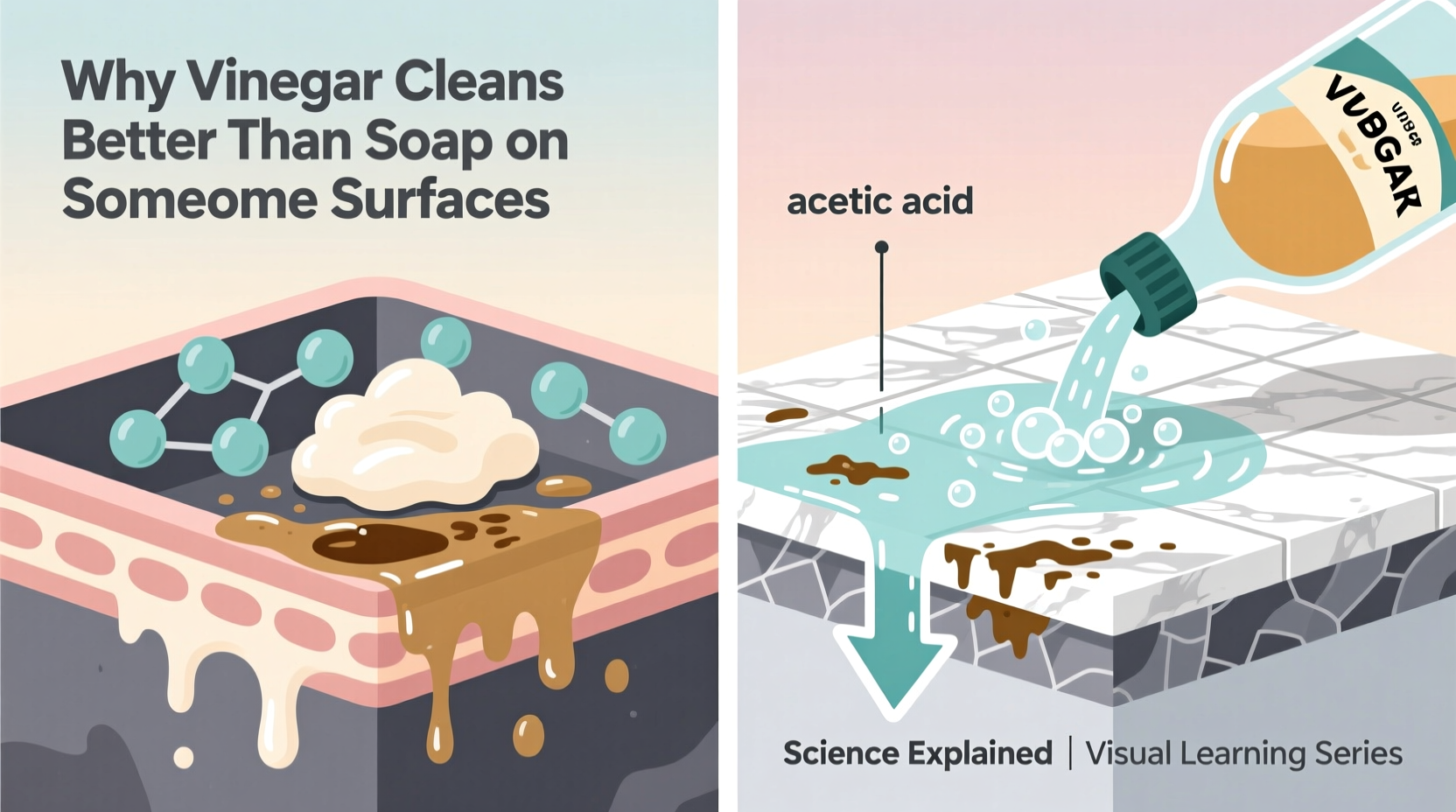
Cleaning agents work by interacting with the substances they aim to remove. Soap functions primarily as a surfactant—a compound that reduces surface tension between water and oil, allowing grease and organic matter to be lifted and rinsed away. This makes soap ideal for handwashing, laundry, and dish cleaning, where the primary contaminants are biological oils, food residue, and particulate matter suspended in fats.
Vinegar, specifically white distilled vinegar, is a dilute solution of acetic acid (typically 5–7% concentration). Its power comes from its acidity, which enables it to react chemically with alkaline and mineral-based deposits. When vinegar contacts substances like calcium carbonate (found in limescale), magnesium hydroxide, or rust precursors, it initiates an acid-base reaction that dissolves these compounds into soluble salts, carbon dioxide, and water.
This distinction is critical: soap emulsifies; vinegar dissolves. For greasy stovetops or soiled clothing, soap wins. But for hard water stains, soap scum buildup, or cloudy glassware caused by mineral deposits, vinegar’s acidic nature provides a direct chemical attack that soap simply can’t replicate.
“Acidic cleaners like vinegar are unmatched for descaling because they break down the molecular structure of mineral deposits. Soap doesn’t interact with those minerals at all.” — Dr. Linda Reeves, Environmental Chemist, University of Vermont
Where Vinegar Outperforms Soap: Key Surfaces and Scenarios
Not all surfaces respond equally to cleaning agents. Some materials accumulate residues that resist traditional soap-and-water methods. Below are common areas where vinegar proves superior:
1. Glass and Mirrors
While soap leaves behind streaks and film due to fatty acid residues, vinegar evaporates cleanly and cuts through mineral deposits left by tap water. A simple spray of diluted vinegar followed by a microfiber cloth yields a spotless, streak-free shine.
2. Showerheads and Faucets
Limescale builds up quickly on metal fixtures exposed to hard water. Soaking a showerhead in vinegar for 30–60 minutes dissolves calcium and magnesium deposits, restoring water pressure and flow. Soap lacks the chemical reactivity needed to achieve this result.
3. Coffee Makers and Kettles
Mineral scale accumulates inside heating elements and reservoirs over time, reducing efficiency and altering taste. Running a cycle of half vinegar, half water removes these deposits effectively. Soap would leave behind residues unsafe for consumption and could damage internal components.
4. Tile Grout and Porous Stone (with caution)
Grout traps moisture and minerals, leading to discoloration. Vinegar helps lift some mineral staining, though it should be used cautiously on porous or calcite-based stones like marble or travertine, which can etch under acidic exposure.
5. Refrigerator Coils and Appliances
Dust and grease mix on appliance coils to form a stubborn layer that insulates and reduces efficiency. Vinegar’s mild acidity breaks down the oxidized grime more effectively than soapy water, especially when applied with a brush or cloth.
Tip: Always rinse surfaces after using vinegar, especially metals and stone, to prevent long-term corrosion or etching.Comparison Table: Vinegar vs. Soap for Specific Tasks
| Cleaning Task | Vinegar Effectiveness | Soap Effectiveness | Recommended Choice |
|---|---|---|---|
| Removing limescale from faucet | High – dissolves mineral deposits | Low – no chemical interaction | Vinegar |
| Cleaning greasy stovetop | Moderate – cuts light grease | High – emulsifies oils | Soap |
| Deodorizing cutting board | High – kills bacteria, neutralizes odors | Moderate – removes debris but may miss microbes | Vinegar |
| Washing dishes by hand | Poor – ineffective on food oils | High – designed for fat removal | Soap |
| Clearing cloudy glassware | High – removes mineral film | Low – may add residue | Vinegar |
| Cleaning window tracks | Good – dissolves grit and moisture residue | Fair – lifts dirt but not mineral crust | Vinegar (followed by soap if needed) |
Step-by-Step Guide: Using Vinegar Effectively on Mineral-Prone Surfaces
To maximize vinegar’s cleaning potential while avoiding damage, follow this proven method:
- Dilute properly: Use a 1:1 ratio of white vinegar and water for most tasks. For heavy buildup, use undiluted vinegar.
- Apply directly: Spray or soak the affected area. For showerheads or kettles, submerge in a bowl of vinegar.
- Allow dwell time: Let sit for 30 minutes to several hours depending on severity. Do not exceed 60 minutes on metal fixtures to avoid corrosion.
- Scrub gently: Use a soft brush or non-abrasive pad to remove loosened deposits.
- Rinse thoroughly: Flush with clean water to remove any residual acid.
- Dry completely: Prevent new mineral spots by drying with a lint-free cloth.
Real Example: Reviving a Clogged Bathroom Showerhead
Sarah, a homeowner in Colorado Springs, noticed her shower pressure had dropped significantly over several months. She tried wiping the nozzle with soapy water and even scrubbing with a toothbrush, but the flow remained weak. After reading about vinegar’s descaling properties, she filled a plastic bag with one cup of white vinegar, secured it around the showerhead with a rubber band, and let it soak overnight.
The next morning, she removed the bag and turned on the water. The difference was immediate—the once-blocked nozzles were clear, and water sprayed evenly across all jets. Small flakes of white mineral residue floated out during the first rinse. Sarah saved $80 on a replacement fixture and restored full function with a $3 bottle of vinegar.
This case illustrates how physical cleaning alone fails against internal mineral blockages, and why chemical dissolution is necessary. Soap cleans surfaces; vinegar cleans within.
When Not to Use Vinegar: Limitations and Risks
Despite its strengths, vinegar is not universally safe. Its acidity poses risks to certain materials:
- Marble, limestone, and granite: These natural stones contain calcium carbonate, which reacts with acetic acid, causing etching and dullness.
- Unsealed grout: Vinegar can penetrate and weaken the material over time.
- Aluminum and cast iron: Prolonged exposure leads to oxidation and pitting.
- Wax-coated floors: Vinegar strips wax and finishes, leaving surfaces vulnerable.
In contrast, soap is generally safer for these surfaces, provided it’s rinsed well. The key is matching the cleaner to the contaminant and the substrate.
Expert Checklist: Choosing Between Vinegar and Soap
Use this checklist to decide which cleaner to reach for:
- ✅ Is the stain caused by hard water, limescale, or mineral deposits? → Choose vinegar.
- ✅ Are you cleaning grease, oil, or organic food waste? → Choose soap.
- ✅ Is the surface porous, natural stone, or waxed? → Avoid vinegar; use mild soap.
- ✅ Do you need disinfecting action? → Vinegar has mild antimicrobial properties, but soap is better for pathogen removal via mechanical action.
- ✅ Is the item used for food preparation? → Both can be used safely if rinsed thoroughly, but vinegar is preferred for deodorizing and descaling.
Frequently Asked Questions
Can I mix vinegar and soap for better cleaning?
Mixing vinegar and soap is not recommended. The acid in vinegar can neutralize the alkaline components in soap, reducing its effectiveness. Additionally, the reaction may create insoluble curds that leave residue. Instead, use them sequentially—soap first for grease, then vinegar for mineral film, with rinsing in between.
Is vinegar safe for septic systems?
Yes, moderate use of vinegar is generally safe for septic systems. Unlike chemical drain cleaners, vinegar does not kill beneficial bacteria in septic tanks when used in typical cleaning amounts (e.g., 1–2 cups per application). However, daily excessive pouring can disrupt microbial balance over time.
Does vinegar disinfect as well as commercial cleaners?
Vinegar has limited disinfectant properties. It can reduce some bacteria and viruses (like E. coli and Salmonella) but is less effective than EPA-registered disinfectants against pathogens like norovirus or mold spores. For high-risk areas like cutting boards or bathroom counters, vinegar can be part of a routine but shouldn’t replace proper disinfection when needed.
Conclusion: Leveraging Nature’s Cleaner Wisely
Vinegar’s superiority over soap on certain surfaces isn’t magic—it’s chemistry. Where mineral buildup, hard water stains, and internal scaling dominate, vinegar’s acidic profile allows it to dissolve what soap merely slides over. Recognizing this distinction empowers smarter, more effective cleaning decisions.
By understanding the nature of the residue and the composition of the surface, you can choose the right tool for the job. Vinegar won’t replace soap in your kitchen sink, but it might save your coffee maker, revive your showerhead, and keep your glassware sparkling without synthetic additives.
🚀 Ready to optimize your cleaning routine? Start by identifying one mineral-prone surface in your home and try a vinegar treatment this week. Share your results or tips with others looking to clean smarter, not harder.








