
It’s a familiar sensation: you reach overhead, roll your shoulders back, or stretch after sitting for too long—and suddenly, a sharp pop echoes from your shoulder joint. Sometimes it feels relieving; other times, it’s unsettling. You might wonder: Is this normal? Should I be worried? Could this be a sign of something serious?
Joint cracking, especially in the shoulder, is one of the most common musculoskeletal concerns people experience. While it often causes anxiety, the reality is that most instances of shoulder popping or cracking during stretching are harmless. However, there are situations where it signals underlying issues that deserve attention.
This article breaks down the science behind shoulder crepitus (the medical term for joint noise), explores when it’s normal versus when it may indicate injury or degeneration, and provides actionable steps to support long-term shoulder health.
The Science Behind Joint Cracking
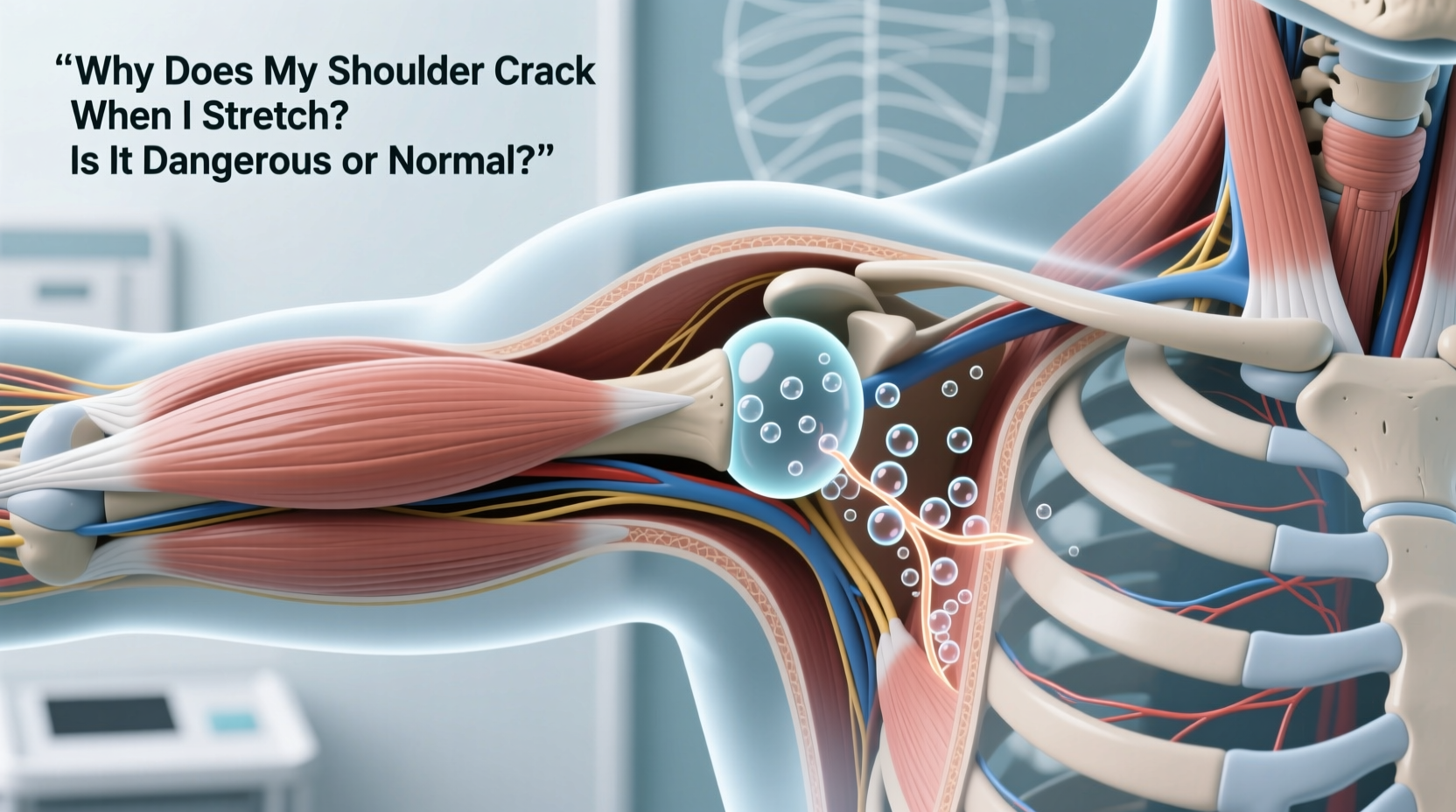
When your shoulder “cracks” during movement, several physiological processes could be at play. The most widely accepted explanation involves a phenomenon called **cavitation**.
Inside your shoulder joint—like all synovial joints—is a lubricating fluid known as synovial fluid. This fluid contains dissolved gases, primarily nitrogen, oxygen, and carbon dioxide. When you stretch or move your arm into certain positions, the pressure inside the joint capsule changes rapidly. This sudden shift can cause these gases to form tiny bubbles that quickly collapse, producing the familiar popping or cracking sound.
This process is completely painless and temporary. Once the gas has been released, it takes about 15–30 minutes for it to re-dissolve into the fluid, which is why you can’t immediately “crack” the same joint again.
In addition to cavitation, other mechanisms can produce joint noises:
- Tendon snapping: Tendons glide over bony prominences as you move. If a tendon shifts slightly out of its usual path, it may snap back into place with an audible pop.
- Cartilage wear: Over time, cartilage can become rough or thin due to age or overuse. As bones move against uneven surfaces, they may create grinding or grating sounds (crepitus).
- Scar tissue or adhesions: Following injury or inflammation, soft tissues around the joint may develop minor restrictions that produce noise during motion.
“Most joint sounds are benign. The key isn’t the noise itself, but whether it’s accompanied by pain, swelling, or loss of function.” — Dr. Lena Torres, Sports Medicine Physician
Is Shoulder Cracking Normal During Stretching?
Yes—in most cases, shoulder cracking during stretching is entirely normal. It becomes more common with age, increased flexibility, or frequent use of the joint through exercise or daily activity.
If the sound occurs without pain, stiffness, weakness, or instability, it likely reflects natural biomechanics rather than pathology. Many yoga practitioners, swimmers, weightlifters, and office workers report occasional shoulder pops, particularly after prolonged immobility.
For example, someone who sits at a desk all day may experience shoulder cracking when reaching upward because the joint has been compressed and underused for hours. The first few stretches reintroduce movement and pressure changes, triggering gas release.
Tip: Don’t force a stretch just to make your shoulder crack. Gentle, controlled movements are safer and more effective for joint health.When Shoulder Cracking Might Be a Warning Sign
While isolated, pain-free popping is usually nothing to worry about, certain red flags suggest the need for medical evaluation:
- Pain during or after the pop – Discomfort indicates possible irritation, inflammation, or structural damage.
- Recurrent clicking with specific motions – Especially if it happens every time you lift your arm sideways or backward.
- Shoulder instability or “slipping” sensation – Suggests ligament laxity or labral tear.
- Swelling, warmth, or redness – Signs of active inflammation or joint effusion.
- Loss of strength or range of motion – May point to rotator cuff injury or impingement.
- History of trauma or dislocation – Increases risk of chronic joint issues.
A condition like **shoulder labral tear**, often caused by repetitive overhead motion or acute injury, can result in persistent clicking or catching sensations. Similarly, **rotator cuff tendinopathy** may produce both noise and discomfort, especially when lifting the arm above shoulder level.
In older adults, osteoarthritis can lead to progressive cartilage breakdown, resulting in gritty, grinding-type crepitus that worsens over time. Unlike harmless gas-related pops, arthritic crepitus tends to be more consistent and may be felt as much as heard.
Mini Case Study: The Weekend Athlete
Mark, a 38-year-old recreational tennis player, began noticing a distinct click in his right shoulder each time he served. At first, it didn’t hurt—just a quick pop. But after a few weeks, he started feeling a dull ache afterward and noticed reduced power in his serve.
He visited a physical therapist, who identified tightness in his posterior capsule and early signs of internal impingement. The clicking was due to abnormal humeral head translation during abduction and external rotation—the classic serving motion. With targeted stretching, strengthening, and activity modification, Mark resolved the issue within two months and returned to play pain-free.
His case illustrates how seemingly harmless joint noise can evolve into dysfunction if ignored.
Do’s and Don’ts of Managing Noisy Shoulders
| Do’s | Don’ts |
|---|---|
| Warm up before stretching or exercising | Force a stretch to make your shoulder pop |
| Strengthen rotator cuff and scapular stabilizers | Ignore persistent pain or weakness |
| Practice good posture, especially at workstations | Repeat painful motions to “reset” the joint |
| Use controlled, full-range movements | Self-diagnose based on internet research alone |
| See a professional if symptoms persist beyond 2 weeks | Continue high-impact activities through pain |
How to Maintain Healthy Shoulder Joints
Prevention and maintenance are critical, especially if you're active or spend long hours in static postures. Here’s a step-by-step guide to supporting shoulder integrity and minimizing problematic joint noise.
Step-by-Step Guide: Daily Shoulder Health Routine
- Start with mobility (5 minutes): Perform gentle arm circles forward and backward, shoulder rolls, and wall slides to awaken the joint.
- Improve thoracic spine flexibility: Sit on heels, place palms together in prayer position, and walk hands forward until forehead touches ground (child’s pose variation). Hold for 30 seconds. Poor upper back mobility forces the shoulder to compensate.
- Activate stabilizing muscles: Do 2 sets of 10 prone Y, T, W raises lying face down on a mat to engage lower trapezius and serratus anterior.
- Stretch tight areas: Doorway pectoral stretch (30 seconds per side) counters rounded shoulders. Cross-body arm stretch targets posterior capsule tightness.
- Strengthen rotator cuff: Use light resistance bands for external rotations (3 sets of 12 reps). This improves joint centering and reduces abnormal friction.
- End with awareness: Perform slow, mindful shoulder shrugs and retractions, focusing on smooth movement without jerking or popping.
FAQ: Common Questions About Shoulder Popping
Can cracking my shoulder cause arthritis?
No, there is no scientific evidence that habitual joint cracking leads to arthritis. A famous study by Dr. Donald Unger, who cracked the knuckles on one hand for over 60 years and left the other untouched, found no difference in arthritis development between the two hands. The same principle applies to shoulders—unless there’s trauma involved, casual popping doesn’t accelerate joint degeneration.
Should I stop stretching if my shoulder cracks?
Not necessarily. If the cracking is pain-free and doesn’t limit your movement, continuing to stretch is beneficial. However, avoid aggressive ranges or bouncing motions that could strain connective tissues. Focus on smooth, progressive loading instead.
What’s the difference between crepitus and actual joint damage?
Crepitus refers broadly to any joint noise—clicking, popping, or grinding. Damage implies structural compromise such as torn cartilage, inflamed tendons, or bone-on-bone contact. The presence of pain, swelling, or mechanical symptoms (like locking) helps differentiate benign noise from pathology.
Checklist: Assess Your Shoulder Health
Use this checklist to evaluate whether your shoulder cracking warrants further action:
- ✅ Does the sound happen only occasionally and without pain?
- ✅ Can you move your arm freely in all directions?
- ✅ Is there no history of dislocation or major injury?
- ✅ Does the noise not interfere with sleep, work, or sports?
- ✅ Have you maintained regular physical activity without worsening symptoms?
If you answered \"yes\" to all, your shoulder noise is likely benign. If you marked any \"no,\" consider consulting a physical therapist or orthopedic specialist for assessment.
“The shoulder is the most mobile joint in the body—but that comes at the cost of stability. Small imbalances in muscle control or alignment can lead to abnormal mechanics and noise.” — Dr. Rajiv Mehta, Orthopedic Biomechanics Researcher
Conclusion: Listen to Your Body, Not Just the Noise
Occasional shoulder cracking during stretching is a normal part of human movement. It reflects the dynamic nature of our joints and is rarely a cause for alarm. What matters most is context: Is the sound isolated, or is it paired with pain, weakness, or restricted motion?
Rather than obsess over the pop, focus on building resilient, well-balanced shoulders through proper posture, targeted strengthening, and mindful movement. Address early warning signs before they escalate. And remember—your body communicates through both silence and sound. Learning to interpret its messages is the first step toward lasting joint health.
💬 Have questions about your shoulder symptoms? Share your experience in the comments below—we’ll help guide you toward the right next steps.








