That unmistakable, sweet, almost tropical aroma—like overripe bananas rippling through the air as you uncork a bottle of rum—is both surprising and strangely comforting. It’s not uncommon for drinkers, especially those new to aged or pot-still rums, to pause mid-pour and wonder: Is this supposed to smell like fruit salad? Did something go wrong? Or is this actually part of the craft? The answer isn’t a simple yes or no—it’s rooted in microbiology, chemistry, tradition, and even terroir. Banana notes in rum aren’t accidental outliers; they’re often deliberate signatures of specific production methods, yeast strains, and maturation environments. But they can also signal unintended fermentation byproducts—or, in rare cases, spoilage. Understanding the origin of that aroma separates informed appreciation from unwarranted concern.
The Science Behind the Banana Scent: Esters and Fermentation
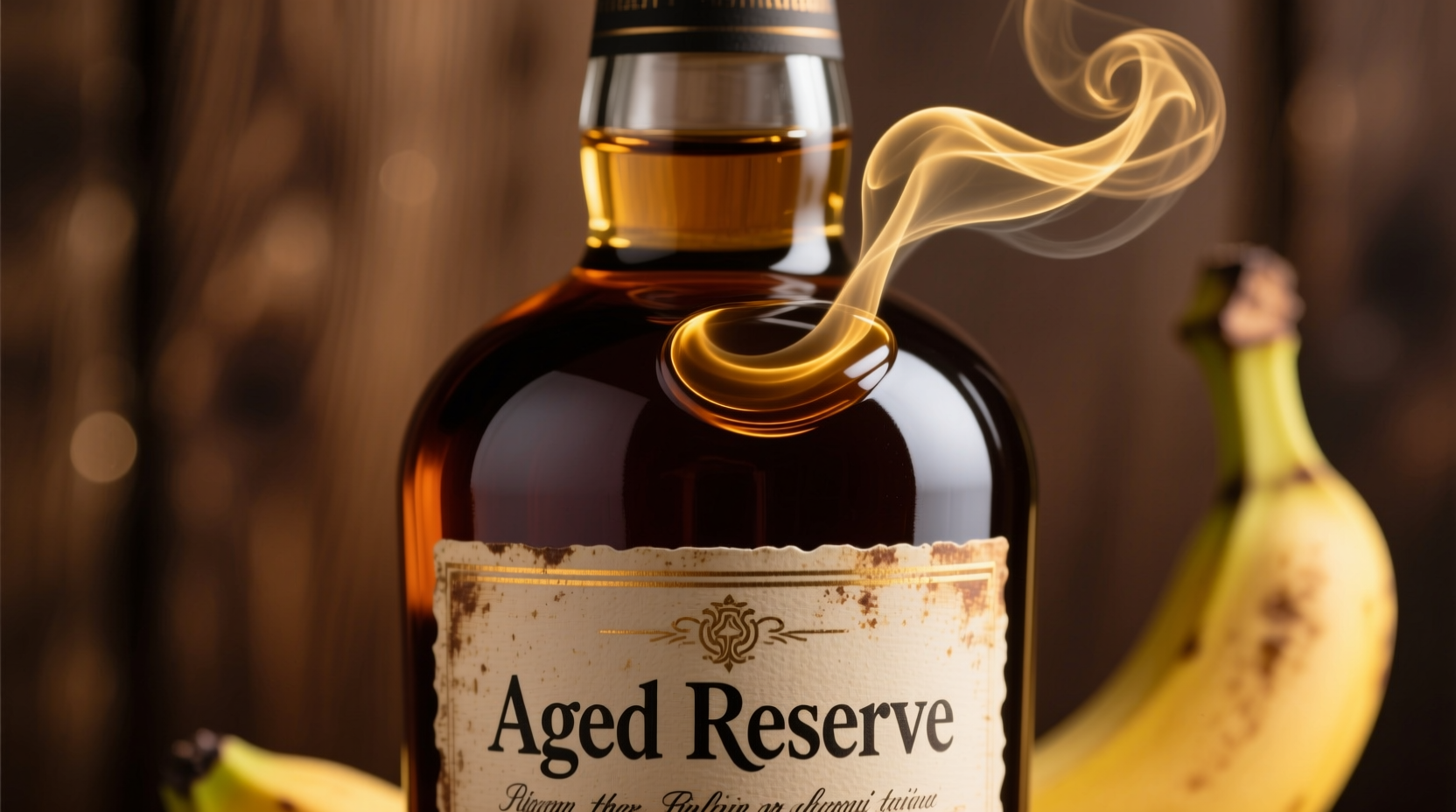
At the heart of banana-like aromas in rum lies a family of organic compounds called esters. These volatile molecules form during fermentation when alcohols (primarily ethanol) react with organic acids (like acetic or isobutyric acid) under the influence of yeast enzymes. One ester in particular—isoamyl acetate—is directly responsible for the classic “banana candy” or “artificial banana” scent familiar from childhood treats and lab experiments. In rum, isoamyl acetate arises most readily during warm, extended fermentations using certain Saccharomyces cerevisiae strains, especially those native to Jamaican or Guyanese distilleries.
Fermentation time and temperature dramatically influence ester formation. A 48-hour fermentation at 30°C may yield modest ester levels; extend that to 7–14 days at 32–35°C, and ester concentration can increase tenfold. Many traditional Caribbean producers intentionally encourage long, hot, open-vat ferments—not just for flavor complexity, but to build layers of fruity, funky, and floral notes. As master blender Joy Spence, Appleton Estate’s longtime Master Blender, explains:
“Esters are the fingerprints of fermentation. When we let our molasses wash ferment for up to 11 days, we’re not chasing speed—we’re cultivating character. That banana note? It’s not added. It’s coaxed, nurtured, and preserved through careful still management.” — Joy Spence, Master Blender, Appleton Estate (retired)
It’s worth noting that isoamyl acetate isn’t exclusive to rum—it appears in pears, apples, and even some Belgian ales—but in rum, its prominence signals a specific stylistic choice rooted in heritage practices rather than artificial flavoring.
Distillation Style Matters More Than You Think
Even with identical fermentation, the final aromatic profile hinges on how the spirit is distilled. Two primary still types dominate rum production: column (continuous) and pot (batch). Their impact on banana notes is starkly different.
| Still Type | Ester Retention | Typical Banana Intensity | Why It Happens |
|---|---|---|---|
| Pot Still | High | Strong to dominant | Slower, lower-temperature distillation preserves volatile esters; heavier congeners carry fruity notes into the hearts cut. |
| Column Still | Low to moderate | Faint to absent | Higher temperatures and precise fractionation strip out many esters; cleaner, lighter profiles result. |
| Hybrid (e.g., John Dore + Coffey) | Moderate to high | Noticeable, layered | Combines pot-like richness with column efficiency—retains key esters while enhancing clarity. |
Jamaican rums—especially those from Hampden Estate or Worthy Park—are renowned for their “hogo,” a French term describing pungent, ester-rich funk that includes pronounced banana, pineapple, and overripe mango. These rums rely heavily on pot stills and wild or proprietary yeast cultures. By contrast, Cuban-style or Spanish-heritage rums (e.g., Havana Club Añejo 7 Años) use column stills and shorter fermentations, yielding softer, drier profiles where banana notes—if present—are subtle and integrated, not forward.
Tip: If you love bold banana notes, seek rums labeled “pot still,” “Jamaican,” “high-ester,” or “DOK” (dunder-based, high-ester style). Avoid “light,” “silver,” or “Cuban-style” unless you prefer restrained fruitiness.Maturation: How Wood and Time Transform the Aroma
While esters originate in fermentation and survive distillation, aging adds nuance—and sometimes confusion. Freshly distilled high-ester rum smells aggressively of banana runts, nail polish remover, and fermented fruit. But after months or years in oak, those sharp edges mellow. Vanillin from lignin breakdown blends with isoamyl acetate, transforming “banana candy” into “banana bread” or “caramelized plantain.” Tannins and lactones from the barrel add structure, preventing the fruit note from becoming cloying.
Critical context: Not all banana-like scents in aged rum come from esters. Oxidation of certain higher alcohols (like isoamyl alcohol) during aging can produce banana-like nuances indirectly. And if a rum is aged in ex-bourbon casks with residual vanilla and coconut notes, the brain may “fill in” banana as part of an overall tropical impression—even if isoamyl acetate levels have dropped.
A real-world illustration makes this tangible:
Mini Case Study: The Hampden DOK Batch Revelation
In 2021, Hampden Estate released a limited DOK (dunder-over-kill) rum with an ester count of 1,500+ gr/hL AA (grams per hectoliter of pure alcohol)—over 30 times higher than a standard Jamaican rum. Initial nosing was polarizing: sharp acetone, rotting banana peel, and bubblegum. But reviewers who revisited the same sample after 20 minutes of air contact reported a dramatic shift—baked banana, toasted coconut, and brown sugar emerged as the volatile top notes dissipated. This wasn’t degradation; it was molecular evolution. The lesson? Banana notes in high-ester rum aren’t static. They’re dynamic, responsive, and deeply tied to serving conditions.
When Banana Smells Signal a Problem—Not Character
Despite its legitimacy in many styles, a banana aroma *can* indicate issues—especially in rums not known for ester-forward profiles. Three red flags warrant attention:
- Acetone or nail polish remover dominance: While trace acetone is normal in young high-ester rums, overwhelming solvent notes in a 10-year-old Demerara rum suggest poor still management or oxidation.
- Sour, vinegary, or “wet cardboard” undertones beneath the banana: Signals bacterial contamination (e.g., Acetobacter) during fermentation or post-distillation exposure to air—common in poorly sealed bottles left half-full for months.
- Banana paired with musty, damp basement, or wet dog notes: May indicate mold growth in wooden fermentation vats or barrels, or improper warehouse conditions (excessive humidity without airflow).
Crucially, spoilage-related banana notes lack sweetness or depth. They’re one-dimensional, harsh, and often accompanied by heat or astringency on the palate—not the lush, rounded mouthfeel of intentional esters.
Step-by-Step: How to Evaluate Your Banana-Scented Rum
Don’t rush to judge—or dismiss—that banana aroma. Follow this practical, five-step evaluation process before drawing conclusions:
- Check the label: Identify country of origin, still type (pot/column), age statement, and terms like “high-ester,” “dunder,” or “funk.” Jamaican and Guyanese pot still rums are ester-intentional; German or Australian column rums rarely are.
- Observe the color: Deep amber or mahogany hues suggest extended oak interaction—meaning banana notes should be integrated, not raw. Clear or pale gold rums with strong banana aromas are likely young, high-ester expressions.
- Nose with intention: Pour 25ml into a copita glass. Swirl gently. Wait 30 seconds. Then inhale deeply—not from the rim, but just above it. Note whether the banana is sweet and ripe (good) or sharp and chemical (caution).
- Add a drop of water: This hydrolyzes some esters and opens the bouquet. If banana softens into baked goods or fades into other fruits (mango, guava), it’s likely authentic and balanced. If it intensifies unpleasantly, suspect instability.
- Taste and finish: Does the palate confirm the nose? Does the finish linger with warmth and complexity—or leave a thin, sour, or metallic aftertaste? Authentic ester-driven rums deliver viscosity and length; flawed ones collapse quickly.
FAQ: Your Banana Rum Questions, Answered
Is banana flavor added artificially to rum?
No—reputable, traditionally produced rum contains zero artificial flavorings. The U.S. TTB and EU spirits regulations prohibit adding synthetic esters or fruit essences to rum labeled as “aged,” “pot still,” or “single estate.” If a rum tastes unnaturally sweet or candy-like without corresponding depth or balance, it may be a flavored spirit—not a true rum.
Can storage conditions make my rum start smelling like bananas later?
Unlikely. Once bottled, ester composition is largely stable. However, prolonged exposure to heat (>30°C) or UV light can accelerate oxidation, potentially generating new esters or breaking down existing ones—sometimes yielding unexpected fruit nuances. But this is degradation, not development. Store rum upright, in cool darkness, and consume within 2–3 years of opening.
Why don’t all rums smell like bananas if it’s natural?
Because ester formation requires precise alignment: specific yeast strains, extended warm fermentation, and distillation methods that preserve volatiles. Most industrial rums prioritize consistency, speed, and neutrality—using selected yeasts, 24–48 hour ferments, and column stills that strip esters. Banana notes are a feature of artisanal, terroir-driven production—not the default.
Final Thoughts: Embrace the Complexity, Respect the Craft
That banana scent isn’t a flaw to mask or ignore—it’s a portal into rum’s living chemistry. It speaks to generations of Jamaican distillers who treated fermentation vats like living organisms, to Guyanese blenders who calibrated dunder pits like alchemists, and to modern producers reviving these traditions with scientific rigor. When you detect banana in your rum, you’re not smelling an additive—you’re smelling time, temperature, microbial life, and human intention converging in a glass. Whether it’s the playful funk of a Hampden DOK, the elegant subtlety of a Foursquare Exceptional Cask, or the nostalgic sweetness of a well-aged Mount Gay, that aroma deserves attention—not suspicion.
Next time you pour, take a moment. Breathe deeply. Consider what that banana reveals about where the rum was made, how it was born, and the choices that shaped it. Then share your observation—not just “it smells like banana,” but *what kind* of banana, and what else emerges alongside it. The more precisely we describe these aromas, the more we deepen our connection to the craft—and honor the people who coax such vivid life from molasses and yeast.
💬 Have you encountered a rum where the banana note surprised or delighted you? Tell us the brand, age, and what other aromas danced with it—your experience helps others navigate rum’s rich, fruity frontier.








