Sitting on a yoga ball chair—also known as an exercise ball or stability ball—has become a popular alternative to traditional office seating. Marketed as a way to improve posture, engage core muscles, and reduce sedentary strain, these chairs promise ergonomic benefits. But if you’ve started experiencing lower back pain after using one, you’re not alone. Many users report discomfort, stiffness, or even sharp pain in the lumbar region after prolonged use. The truth is, while a yoga ball chair can offer short-term engagement of stabilizing muscles, improper use, poor setup, or underlying biomechanical issues can quickly turn this wellness tool into a source of chronic discomfort.
This article explores the science behind why your lower back might hurt after sitting on a yoga ball chair, identifies common user errors, and provides practical solutions to either adjust your approach or decide whether this seating option is right for you.
The Mechanics of Sitting: Why Stability Matters
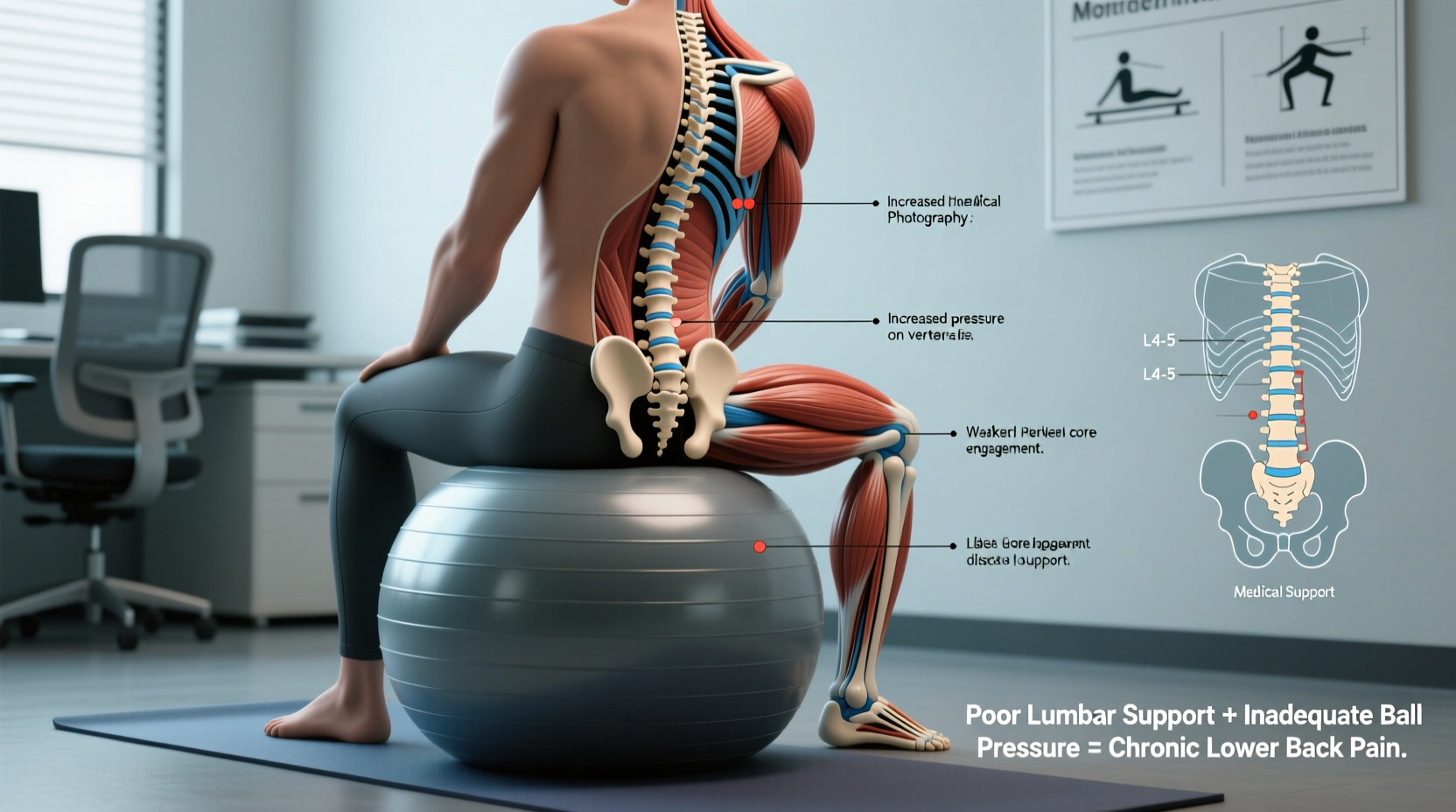
Unlike a conventional office chair with back support and a fixed base, a yoga ball chair offers no structural support. Its instability is intentional—it forces your body to make constant micro-adjustments to stay balanced. These small corrections engage postural muscles in the core, glutes, and lower back. In theory, this promotes better spinal alignment and reduces slouching.
However, the human spine is designed for movement, not static positioning—even on a dynamic surface. When seated for long periods, the lack of lumbar support on a ball chair means the natural inward curve of the lower back (the lumbar lordosis) often collapses. This leads to a condition known as “posterior pelvic tilt,” where the pelvis rotates backward, flattening the lower spine and increasing pressure on the intervertebral discs.
Over time, this misalignment strains the ligaments, muscles, and joints of the lower back. Muscles like the erector spinae and multifidus, which stabilize the spine, become fatigued from overuse without adequate rest. Meanwhile, weak abdominal muscles may fail to compensate, leaving the lower back to bear excessive load.
Tip: Never use a yoga ball chair full-time. Limit sessions to 20–30 minutes at a time to avoid muscle fatigue.Common Causes of Lower Back Pain from Yoga Ball Chairs
Not all discomfort stems from the same source. Several interrelated factors contribute to lower back pain when using a yoga ball chair. Understanding these can help pinpoint the root cause and guide corrective action.
1. Incorrect Ball Size
Using a ball that’s too large or too small disrupts hip and knee alignment. When seated properly, your knees should be at a 90-degree angle, with feet flat on the floor and thighs parallel to the ground. A ball that’s too big elevates your hips too high, forcing forward pelvic tilt and lower back arching. One that’s too small causes hip flexion beyond 90 degrees, compressing the lumbar spine.
2. Prolonged Use Without Conditioning
Most people don’t have the core strength required for extended use of unstable seating. Jumping into all-day ball chair use without gradually building endurance leads to muscle exhaustion. Think of it like doing planks for hours without training—you wouldn’t expect your abs to hold up, and neither will your back.
3. Poor Posture Habits
Even on a stability ball, slouching, leaning forward, or craning the neck toward a screen negates any potential benefit. Without conscious effort to maintain neutral spine alignment, the ball becomes just another seat that enables bad habits.
4. Lack of Foot Support
If your feet aren’t firmly planted on the ground—or on a footrest—your legs dangle, increasing pressure on the sciatic nerve and destabilizing the pelvis. This forces the lower back to work harder to maintain balance.
5. Underlying Spinal Conditions
Individuals with pre-existing conditions such as degenerative disc disease, herniated discs, or sacroiliac joint dysfunction may find that the constant micro-movements of a ball chair aggravate nerve irritation or joint inflammation.
“Stability balls can enhance core activation, but they are not a substitute for proper ergonomic support. For individuals with low back pain, unsupported sitting can increase disc pressure by up to 40%.” — Dr. Lena Torres, Physical Therapist and Spine Biomechanics Researcher
Do’s and Don’ts of Using a Yoga Ball Chair
| Do | Don’t |
|---|---|
| Choose the correct ball size based on your height | Use a ball that’s too big or too small |
| Limit use to 20–30 minutes per session | Sit on the ball for more than an hour continuously |
| Keep feet flat on the floor or a footrest | Allow legs to dangle unsupported |
| Engage core muscles gently and maintain upright posture | Slouch or lean heavily on a desk |
| Pair with a supportive chair for rotation | Replace your entire desk setup with only a ball chair |
| Use a burst-resistant ball with anti-slip coating | Use an old or poorly inflated ball |
Step-by-Step Guide to Safer Yoga Ball Chair Use
If you still wish to incorporate a yoga ball chair into your routine, follow this structured approach to minimize risk and maximize benefit.
- Determine the Correct Size: Sit on the ball with feet flat. If your knees are significantly higher or lower than hip level, adjust the ball size. Standard sizes:
- Up to 5'4\": 55 cm ball
- 5'5\" to 5'11\": 65 cm ball
- 6'0\" and above: 75 cm ball
- Inflate Properly: The ball should be firm but slightly compressible. Over-inflation increases instability; under-inflation reduces support.
- Set Up Ergonomic Alignment: Position your desk so your elbows are at 90 degrees when typing. Monitor top should be at or slightly below eye level.
- Start Gradually: Begin with 15–20 minute intervals twice a day. Gradually increase only if no discomfort occurs.
- Practice Active Sitting: Gently engage your core, keep shoulders relaxed, and avoid locking your knees. Shift positions subtly—rock forward/backward or side-to-side in small motions to promote circulation.
- Pair with Movement Breaks: Stand, stretch, or walk every 30 minutes. Consider using a sit-stand desk to alternate between supported and active sitting.
- Listen to Your Body: Discomfort is a warning sign. Persistent pain means it’s time to stop and reassess.
Mini Case Study: From Pain to Prevention
Mark, a 38-year-old software developer, switched to a yoga ball chair after reading about its benefits for posture. Excited by the idea of “active sitting,” he replaced his office chair entirely. Within three days, he noticed a dull ache in his lower back. By week two, the pain intensified, radiating slightly into his left glute.
He consulted a physical therapist, who observed Mark’s setup: a 75 cm ball (too large for his 5'7\" frame), no footrest, and a monitor placed well below eye level. The therapist explained that Mark’s pelvis was tilting posteriorly, his feet were dangling, and he was unconsciously hunching forward. His core wasn’t strong enough to sustain the posture, so his lower back compensated.
The solution? Mark returned to a supportive ergonomic chair and began using the ball chair for only 20-minute intervals, twice daily. He added core-strengthening exercises—bridges, bird-dogs, and planks—and installed a footrest. After six weeks, he could use the ball more comfortably, but only as part of a varied seating strategy.
His takeaway: “The ball isn’t a magic fix. It’s a tool—one I now use wisely, not constantly.”
When a Yoga Ball Chair Isn’t the Right Choice
Despite their popularity, yoga ball chairs are not suitable for everyone. They are best viewed as transitional tools or short-term posture trainers, not permanent replacements for ergonomically designed seating.
People with chronic lower back pain, disc issues, or limited core strength may find them counterproductive. Similarly, those working long hours at a computer need consistent support, not continuous muscular engagement. The fatigue from sustained stabilization can lead to compensatory movements—like shifting weight unevenly or gripping with the legs—that further distort spinal alignment.
Modern ergonomic chairs offer adjustable lumbar support, seat depth, armrests, and recline tension—all calibrated to reduce spinal load. A study published in *Applied Ergonomics* found that participants using standard ergonomic chairs reported significantly less lower back discomfort than those using stability balls after two hours of continuous sitting.
If your goal is spinal health, consider combining brief ball chair sessions with standing breaks, walking meetings, and strength training—rather than relying on one piece of equipment to solve complex postural challenges.
Frequently Asked Questions
Can a yoga ball chair fix bad posture?
No single seating solution can “fix” posture. While a yoga ball chair may increase awareness of alignment and engage core muscles temporarily, long-term posture improvement requires strengthening exercises, ergonomic setup, and behavioral changes. Relying solely on a ball chair can actually worsen posture due to fatigue and lack of support.
How long should I sit on a yoga ball chair each day?
Limit use to 20–30 minutes at a time, no more than two to three times per day. Extended use increases the risk of muscle strain and spinal compression. Always alternate with supported sitting or standing.
Is it safe to use a yoga ball chair if I already have back pain?
Generally, no. If you have existing lower back pain, consult a healthcare provider before using a yoga ball chair. Unsupported sitting can exacerbate disc pressure and irritate nerves. In most cases, structured support with targeted rehabilitation is safer and more effective.
Conclusion: Listen to Your Body, Not the Hype
The appeal of the yoga ball chair lies in its simplicity and promise of passive posture correction. But the reality is more nuanced. While it can serve as a short-term tool for enhancing body awareness and core engagement, it is not a sustainable or universally beneficial replacement for ergonomic seating.
Lower back pain after using a yoga ball chair is not normal—it’s a signal that something is off. Whether it’s incorrect sizing, poor posture, overuse, or inadequate conditioning, the discomfort points to a mismatch between your body’s needs and your seating choice.
Instead of chasing trends, prioritize evidence-based ergonomics. Use the ball chair mindfully, strengthen your core progressively, and invest in a workspace that supports movement and recovery. Your spine will thank you—not tomorrow, but years down the line.
💬 Have you tried a yoga ball chair? What worked—or didn’t—for you? Share your experience in the comments to help others make informed choices about their seating health.








