Sitting for prolonged periods has become a norm in modern work culture, but it comes at a cost—especially to the lower back. Millions of office workers, remote employees, and students experience persistent lower back discomfort after long hours seated. The pain often starts subtly: a dull ache just above the hips that intensifies by mid-afternoon. Left unaddressed, this can evolve into chronic strain or even contribute to disc issues over time.
The root cause lies in biomechanics. When seated, especially in poorly designed chairs or with slouched posture, the natural curve of the lumbar spine flattens. This increases pressure on spinal discs and tightens key muscles like the hip flexors and hamstrings. Simultaneously, core stabilizing muscles weaken from disuse. The result is muscular imbalance, joint stiffness, and nerve irritation—all contributing to lower back pain.
The good news? Immediate relief is possible through targeted stretching and postural awareness. These simple, science-backed techniques can be done at your desk, during breaks, or before bed to reset your spine and restore mobility.
Why Sitting Triggers Lower Back Pain
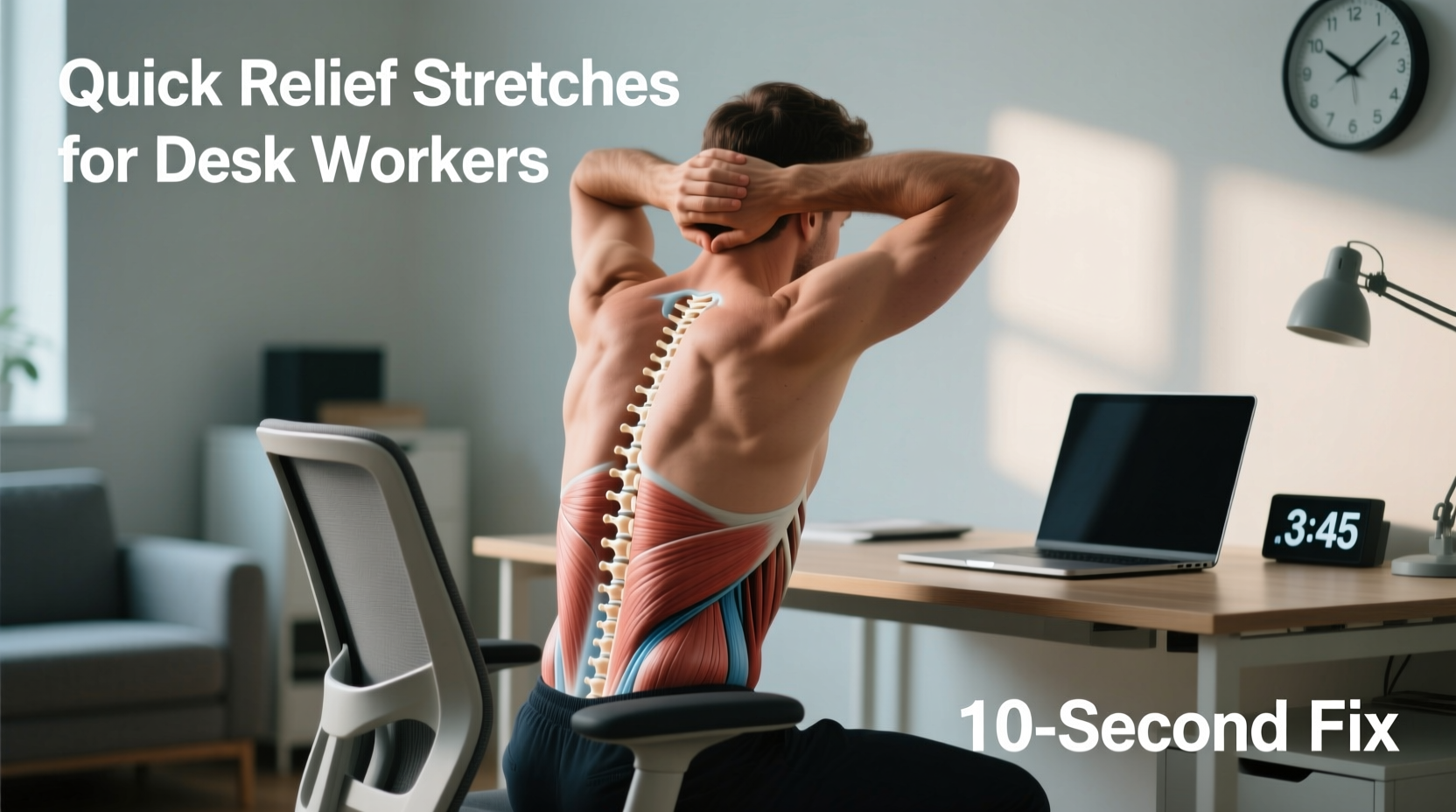
The human spine evolved for movement, not static positions. Prolonged sitting forces the body into a compromised alignment:
- Lumbar Flexion: Slouching rounds the lower back, compressing the anterior portion of spinal discs. Over time, this uneven pressure can lead to disc degeneration.
- Hip Flexor Tightness: Sitting keeps the iliopsoas and rectus femoris muscles in a shortened state. Chronic shortening pulls the pelvis forward (anterior tilt), increasing lumbar lordosis and strain.
- Gluteal Inhibition: The glutes—key pelvic stabilizers—become neurologically “switched off” when inactive. This shifts stabilization duties to smaller, less-equipped muscles in the lower back.
- Weak Core Engagement: Abdominal and transverse abdominis muscles remain underused, reducing spinal support.
A 2021 study published in the Journal of Physical Therapy Science found that individuals who sat more than six hours daily were 3.4 times more likely to report chronic lower back pain compared to those with active routines.
“Sitting is not inherently harmful—but how we sit, how long we sit, and whether we counteract it with movement determines spinal health.” — Dr. Lena Torres, DPT, Spine Rehabilitation SpecialistTip: Set a timer every 30–45 minutes to stand, walk for 2 minutes, or perform one stretch. This micro-movement prevents tissue stagnation.
Quick Relief Stretches for Immediate Comfort
The following five stretches target the primary contributors to sitting-related back pain: tight hip flexors, stiff spinal segments, and inhibited posterior chain muscles. Each takes less than two minutes and can be performed without equipment.
1. Seated Forward Bend (Paschimottanasana)
This stretch lengthens the entire posterior chain, including hamstrings and erector spinae muscles.
- Sit on the edge of a firm chair, feet flat on the floor.
- Inhale and lengthen your spine upward.
- Exhale and hinge at the hips, reaching hands toward toes.
- Keep your back straight; avoid rounding shoulders.
- Hold for 30 seconds, breathing deeply.
2. Kneeling Hip Flexor Stretch
Directly counters hip flexor shortening caused by sitting.
- Kneel on one knee (use a cushion if needed).
- Position the other foot flat in front, knee bent at 90 degrees.
- Tuck your pelvis slightly and shift weight forward until you feel a stretch in the front of the kneeling leg’s hip.
- Hold for 30 seconds per side.
3. Supine Knee-to-Chest Stretch
Releases tension in the lower lumbar region and promotes spinal decompression.
- Lie on your back on a carpeted floor or mat.
- Bend knees and draw one knee toward your chest.
- Clasp hands around the shin or thigh (avoid pulling on the knee).
- Maintain contact between your lower back and the floor.
- Hold 30 seconds, then switch legs—or pull both knees in together for a deeper release.
4. Cat-Cow Mobilization (Seated Version)
Restores motion to stiff spinal segments and improves intervertebral fluid exchange.
- Sit upright on a chair, feet grounded, hands on knees.
- Inhale: Arch your back, lift your chest, and look slightly up (Cow).
- Exhale: Round your spine, tuck your chin, and draw belly inward (Cat).
- Repeat slowly for 1 minute, coordinating breath with movement.
5. Figure-Four Stretch (Supine Piriformis Stretch)
Targets deep gluteal muscles that refer pain to the lower back when tight.
- Lie on your back, knees bent, feet flat.
- Cross right ankle over left thigh, forming a “4” shape.
- Grab behind the left thigh and gently pull toward your chest.
- You should feel a stretch in the right buttock.
- Hold 30 seconds per side.
Do’s and Don’ts of Post-Sitting Recovery
Don’t| Do’s | Don’ts |
|---|---|
| Do take micro-breaks every 30–45 minutes to stand or walk. | Don’t stay seated for more than 2 hours without a full stretch break. |
| Do engage your core lightly while sitting to support the spine. | Don’t rely solely on lumbar rolls—active muscle engagement is better than passive support. |
| Do combine stretching with light walking to enhance circulation. | Don’t stretch aggressively when cold—warm up with gentle movement first. |
| Do focus on pelvic alignment—keep hips level and slightly tucked. | Don’t twist forcefully on a stiff spine after prolonged sitting. |
| Do hydrate well—discs require water for optimal shock absorption. | <> ignore numbness or radiating leg pain—it may signal nerve involvement.
Real-Life Example: Sarah’s Desk Job Transformation
Sarah, a 34-year-old graphic designer, began experiencing sharp lower back pain after transitioning to full-time remote work. Her days involved 8–10 hours at a dining table with no ergonomic setup. Within three months, she could barely stand up from her chair without wincing.
After a physiotherapy assessment, she learned her pain stemmed from extreme hip flexor tightness and weak glutes. Her treatment plan included daily execution of the five stretches listed above, combined with hourly posture resets. She also invested in a small footrest and adjusted her monitor height.
Within four weeks, Sarah reported a 70% reduction in pain. By week six, she no longer needed pain relievers. “The stretches took five minutes total,” she said. “But doing them consistently changed everything.”
Step-by-Step Daily Routine for Prevention
Preventing lower back pain requires consistency, not complexity. Follow this actionable timeline to integrate relief into your existing schedule:
- Every 30–45 Minutes (At Work): Stand up, walk 10–15 steps, or do seated cat-cow for 1 minute.
- Lunch Break (Daily): Perform 3 of the 5 main stretches—focus on areas feeling tightest.
- End of Workday: Complete all five stretches in sequence. Hold each for 30 seconds.
- Evening (Optional): Add 10 minutes of yoga or foam rolling for cumulative benefits.
- Weekly Check-In: Assess pain levels and posture. Adjust chair height or stretch routine as needed.
Frequently Asked Questions
How long does it take for these stretches to relieve lower back pain?
Most people notice reduced stiffness and improved comfort within 5–10 minutes of stretching. For lasting relief, consistent daily practice over 2–4 weeks is typically required to reverse muscular imbalances.
Can I stretch if my back hurts severely?
Gentle, controlled stretching is usually safe and beneficial. However, if pain includes numbness, tingling, or radiates down the leg, consult a healthcare provider first. These symptoms may indicate sciatica or disc involvement requiring professional evaluation.
Are standing desks a solution to lower back pain from sitting?
Standing desks help reduce continuous sitting but are not a standalone fix. Standing too long can also strain the lower back and legs. The ideal approach is alternating between sitting, standing, and moving every 30–60 minutes.
Conclusion: Take Control of Your Spinal Health
Lower back pain after sitting isn’t inevitable—it’s a warning sign your body needs movement. With minimal time investment, targeted stretches can interrupt the cycle of stiffness, weakness, and discomfort. The key is consistency and awareness. You don’t need a gym membership or special gear. Just five minutes, several times a day, can restore balance to your musculoskeletal system.
Start today. Choose one stretch to perform after your next sitting session. Build from there. Your spine supports your entire body—give it the attention it deserves.
💬 Which stretch gave you the fastest relief? Share your experience in the comments—your tip might help someone else find comfort too.








