
That familiar pop or crackle in your jaw while chewing, yawning, or speaking can be more than just a minor annoyance—it might signal underlying tension or joint dysfunction. While occasional jaw clicking is common and often harmless, persistent cracking accompanied by pain, stiffness, or limited movement could point to temporomandibular joint (TMJ) issues. The good news? Most cases respond well to self-care, including targeted stretches and lifestyle adjustments. Understanding the causes and knowing how to gently intervene can make a significant difference in comfort and long-term joint health.
Understanding the Temporomandibular Joint (TMJ)
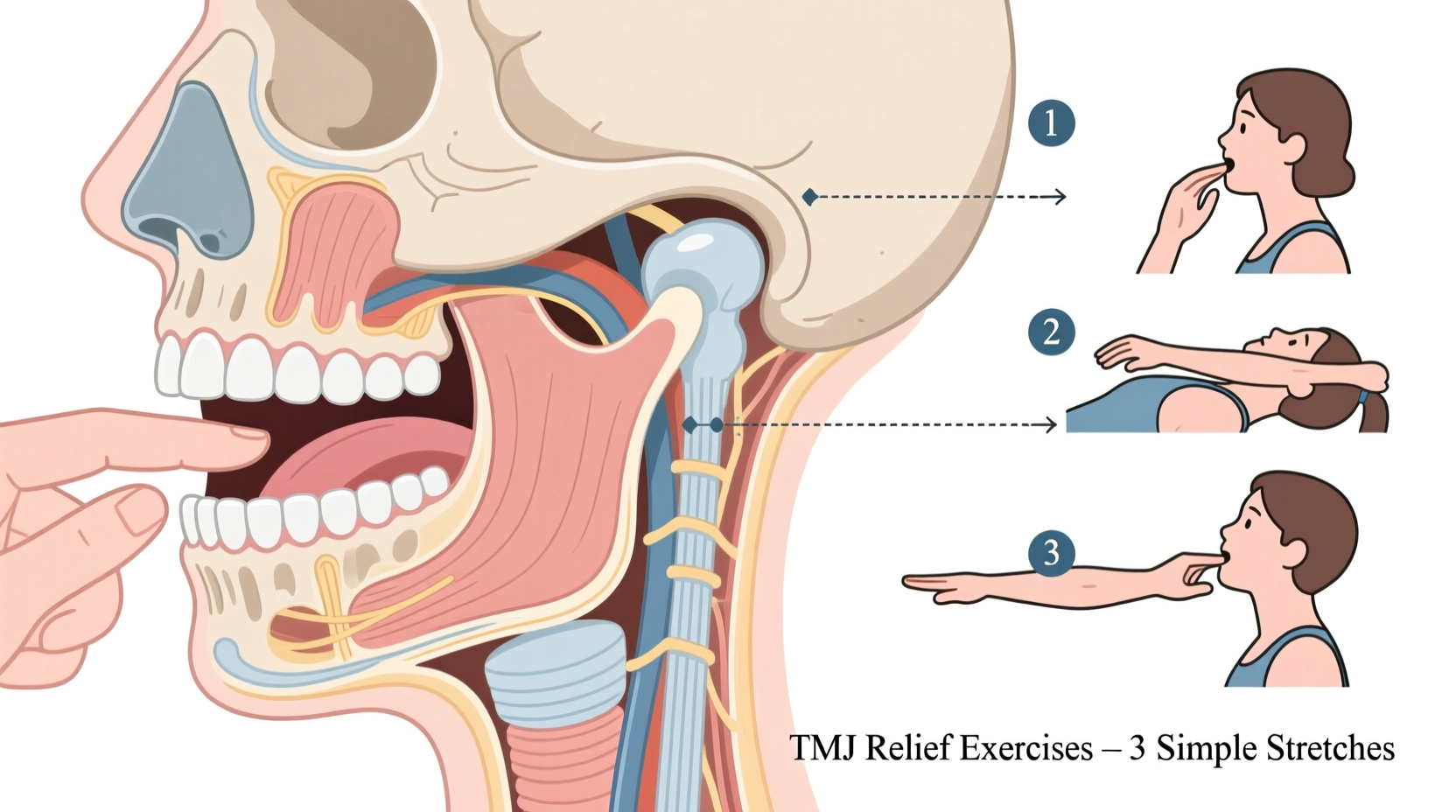
The temporomandibular joint connects your jawbone to your skull, just in front of each ear. It’s one of the most complex joints in the body, allowing for hinge-like opening and closing as well as sliding motions that enable chewing, talking, and yawning. A small disc cushions the bones within the joint, facilitating smooth movement. When this disc becomes misaligned, inflamed, or worn down, or when surrounding muscles are overly tense, it can lead to audible snapping, popping, or grinding—commonly referred to as crepitus.
Unlike other joints, the TMJ functions asymmetrically during many movements. This means one side may move more than the other depending on the direction of jaw motion, which increases its susceptibility to imbalances and strain. Factors like teeth grinding (bruxism), poor posture, stress-related clenching, or even dental misalignment can contribute to abnormal wear or muscle tightness around the joint.
“Over 10 million Americans experience TMJ-related symptoms at some point. While not all require medical intervention, early awareness and conservative care can prevent progression.” — Dr. Alan Foster, Orofacial Pain Specialist
Common Causes of Jaw Cracking During Chewing
Jaw cracking isn’t always a sign of serious trouble. In fact, many people experience it without pain or restriction. However, understanding the root cause helps determine whether action is needed. Below are the most frequent contributors:
- Muscle tension: Chronic stress or clenching leads to tightness in the masseter, temporalis, and pterygoid muscles, altering joint mechanics.
- Disc displacement: The articular disc inside the TMJ can shift out of place, causing a pop when it snaps back during movement.
- Arthritis: Osteoarthritis or inflammatory arthritis can degrade joint surfaces, leading to rough or noisy motion.
- Joint laxity: Some individuals naturally have looser ligaments, making the jaw more prone to clicking.
- Trauma or injury: A past jaw injury—even if seemingly minor—can disrupt alignment over time.
- Bruxism: Nighttime grinding wears down teeth and strains the joint, increasing the likelihood of noise and discomfort.
When to Be Concerned About Jaw Popping
Not every jaw sound requires treatment. However, certain red flags suggest the need for professional evaluation:
- Pain during chewing or speaking
- Difficulty opening the mouth fully (limited range of motion)
- Jaw locking—either open or closed position
- Frequent headaches or earaches without infection
- Noticeable facial asymmetry or change in bite alignment
- Symptoms worsening over weeks
If you're experiencing any combination of these, consult a dentist, oral surgeon, or physical therapist specializing in orofacial disorders. Imaging such as MRI or CT scans may be used to assess disc position and joint integrity.
Simple Stretches to Relieve Jaw Tension
Just like tight shoulders or stiff hamstrings, jaw muscles benefit from regular stretching. These exercises help reduce muscle hypertonicity, improve joint glide, and restore balanced movement. Perform them gently—never force a stretch—and aim for consistency over intensity.
1. Chin Tuck with Resistance
This exercise strengthens deep neck flexors while calming hyperactive jaw muscles often linked to forward head posture.
- Sit upright with your back supported.
- Place a fingertip lightly on your chin.
- Gently press backward as you tuck your chin toward your chest (like making a “double chin”).
- Hold for 5 seconds, release slowly.
- Repeat 10 times, twice daily.
2. Resisted Mouth Opening
Builds control and reduces overactivity in the muscles that close the jaw.
- Rest your thumb under your chin.
- Slowly open your mouth, using your thumb to gently resist the movement.
- Open only as far as comfortable—about 2–3 fingers’ width.
- Hold for 3 seconds, then close slowly against light resistance.
- Repeat 8–10 times, once daily.
3. Jaw Protrusion Stretch
Encourages forward gliding of the joint, counteracting posterior disc displacement.
- Sit with lips parted and teeth slightly apart.
- Slide your lower jaw forward so your bottom teeth are ahead of your top teeth.
- Hold for 5 seconds, then return to neutral.
- Repeat 10 times, twice daily.
4. Lateral Jaw Movement Stretch
Improves side-to-side mobility and balances muscle activity.
- Keep your teeth slightly apart.
- Move your lower jaw to the right, aiming to touch the right molars together.
- Hold for 3 seconds, return to center.
- Repeat on the left side.
- Perform 5 repetitions per side, once daily.
5. Tongue-to-Roof Relaxation Technique
A neuromuscular retraining method that promotes ideal resting jaw posture.
- Lightly place the tip of your tongue on the roof of your mouth, just behind the front teeth.
- Allow your teeth to come slightly apart, with no contact between upper and lower molars.
- Breathe deeply and maintain this position for 1–2 minutes.
- Practice several times throughout the day, especially during stressful moments.
Lifestyle Adjustments to Support Jaw Health
Stretching alone won’t resolve jaw issues if aggravating habits persist. Integrating behavioral changes enhances recovery and prevents recurrence.
| Do’s | Don’ts |
|---|---|
| Eat soft foods during flare-ups (e.g., soups, steamed vegetables) | Avoid chewy or hard foods like gum, bagels, or tough meats |
| Apply warm compresses for 10–15 minutes before stretching | Don’t apply ice directly or for prolonged periods unless advised |
| Practice mindfulness or breathing techniques to reduce clenching | Avoid resting your chin on your hand or cradling your phone between shoulder and ear |
| Use a supportive pillow to maintain neutral neck alignment at night | Don’t sleep on your stomach, which twists the neck and strains jaw muscles |
| Stay hydrated to support joint lubrication | Avoid excessive caffeine or alcohol, which can worsen bruxism |
Mini Case Study: Recovery Through Daily Routine
Sarah, a 34-year-old graphic designer, began noticing her jaw cracking loudly every time she ate breakfast. Over two months, the sensation grew uncomfortable, and she developed morning headaches. After ruling out dental issues, her dentist suggested TMJ therapy. Sarah started doing the chin tuck and resisted opening exercises daily, avoided chewing gum, and switched to a cervical pillow. Within six weeks, the cracking reduced significantly, and her headaches disappeared. “I didn’t realize how much I clenched at my desk,” she said. “Just five minutes of stretching made a real difference.”
Step-by-Step Guide to Managing Jaw Cracking at Home
Follow this 4-week plan to reduce jaw noise and build resilience:
- Week 1: Awareness & Assessment
- Note when cracking occurs and whether it’s painful.
- Eliminate gum chewing and hard foods.
- Begin chin tucks and tongue-to-roof technique 2x/day.
- Week 2: Introduce Stretching
- Add resisted mouth opening and jaw protrusion stretches.
- Use a warm towel on the jaw for 10 minutes before exercises.
- Track symptoms in a journal.
- Week 3: Build Consistency
- Include lateral jaw movements.
- Practice relaxation techniques during work breaks.
- Assess improvement: Is there less noise? Less stiffness?
- Week 4: Maintain & Prevent
- Continue all stretches 1x daily for maintenance.
- Reintroduce firmer foods gradually.
- If no improvement, schedule a consultation with a TMJ specialist.
FAQ: Common Questions About Jaw Cracking
Is jaw cracking dangerous?
Occasional, pain-free cracking is usually not dangerous and may result from normal joint movement or gas release within the synovial fluid. However, if cracking is accompanied by pain, swelling, or limited motion, it may indicate TMJ dysfunction requiring evaluation.
Can stretching make jaw popping worse?
If done incorrectly—such as forcing the jaw open too wide or performing aggressive maneuvers—stretches can irritate the joint. Always move slowly and stop if pain increases. When performed correctly, stretches promote healing by improving circulation and reducing muscular imbalance.
How long does it take for jaw stretches to work?
Many people notice reduced tension within 2–3 weeks of consistent daily practice. Significant improvement in joint noise may take 4–8 weeks. Patience and routine are key, as muscles and connective tissues adapt gradually.
Conclusion: Take Control of Your Jaw Health
Your jaw plays a vital role in communication, nutrition, and overall comfort. Ignoring persistent cracking can lead to chronic pain, sleep disruption, and reduced quality of life. But with informed self-care—including gentle stretches, mindful habits, and timely professional input—you can restore smooth, silent function. Start today by dedicating just five minutes to jaw relaxation. Small actions compound into lasting relief. Listen to your body, respect its signals, and give your TMJ the attention it deserves.
💬 Have you tried jaw stretches? Share your experience or questions in the comments below—your insight could help others find relief too.








