
Garage door openers are essential for convenience, security, and daily access—but when they begin acting up, especially with inconsistent performance, it can be frustrating and even hazardous. If your garage door opener works one minute and fails the next, you're not alone. Intermittent operation is a common complaint among homeowners, often stemming from overlooked electrical issues, worn components, or environmental interference. Understanding the root causes and knowing how to methodically test each possibility can save time, money, and prevent future breakdowns.
This comprehensive guide breaks down the most frequent culprits behind intermittent garage door opener failures, offering practical diagnostics, real-world examples, and expert-backed solutions. Whether you’re dealing with remote signal dropouts, motor stuttering, or sensors cutting out at random, this article equips you with the knowledge to restore reliable function—safely and effectively.
Common Causes of Intermittent Operation
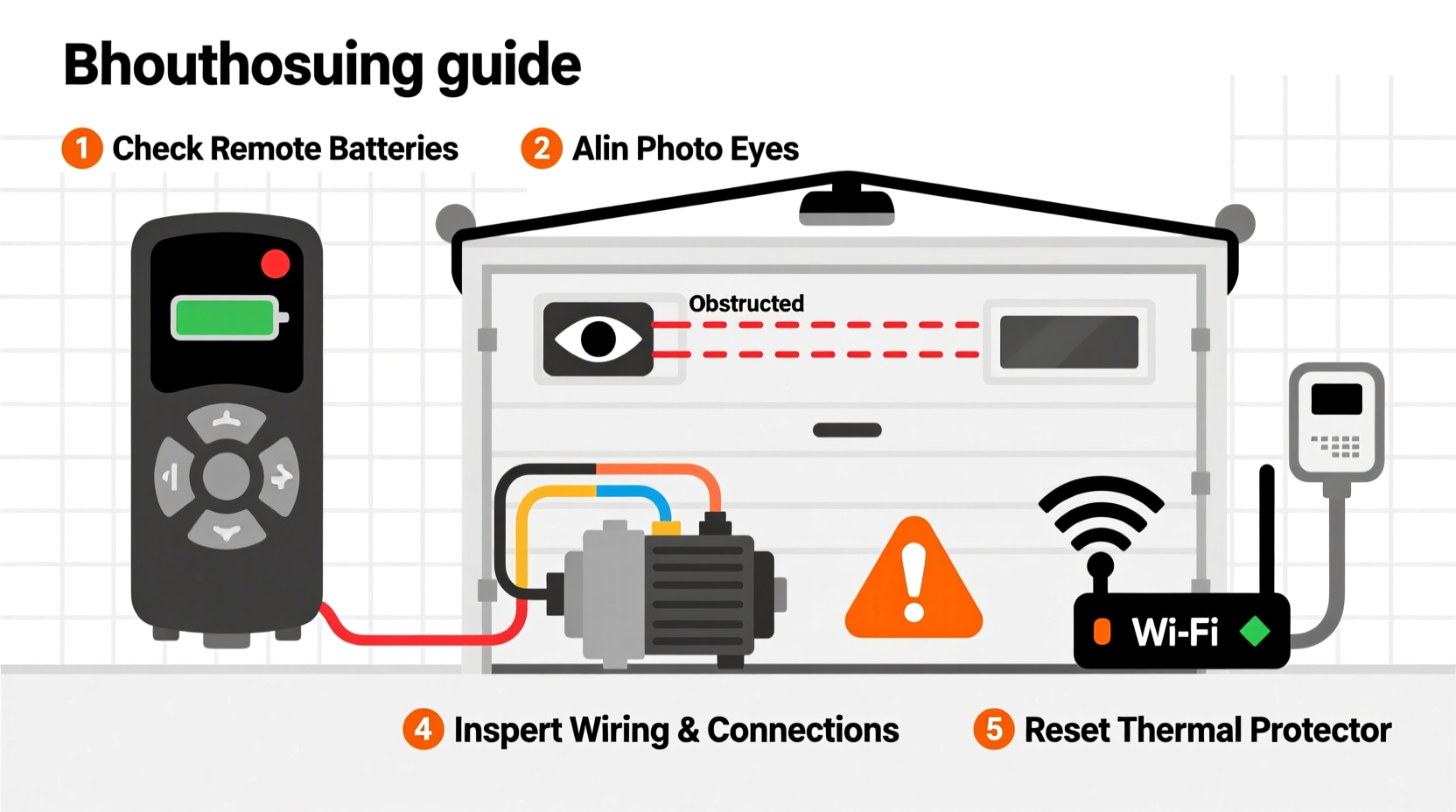
Intermittent failure means the problem isn’t constant; the opener may work after a reset, at certain times of day, or only with specific triggers. This inconsistency points to underlying instability rather than total component failure. The following are the top five reasons why your garage door opener behaves unpredictably:
- Loose or corroded wiring connections – Vibration over time can loosen terminals in the motor unit, wall switch, or safety sensors.
- Faulty safety sensors – Misalignment, dirt buildup, or internal damage can cause sensors to intermittently block operation.
- Remote control or keypad battery issues – Weak batteries may deliver enough power for occasional use but fail under load.
- Radio frequency (RF) interference – Nearby electronics, LED lights, or Wi-Fi routers can disrupt wireless signals.
- Worn-out logic board or motor capacitor – Internal electronic components degrade over time, leading to erratic behavior.
Unlike complete system failures, intermittent problems require careful observation and testing under different conditions. For example, if the opener works perfectly in the morning but fails in the afternoon, temperature-related expansion or increased household electrical demand could be contributing factors.
Tip: Keep a log of when the opener fails—including time of day, weather, and what triggers were used—to identify patterns that point to heat, humidity, or usage cycles.Step-by-Step Diagnostic Process
To systematically isolate the cause, follow this logical sequence. Each step eliminates potential variables while confirming or ruling out specific faults.
- Test all activation methods: Use the wall-mounted hardwired button, handheld remote(s), and any smart device app. If only the remote fails intermittently, the issue likely lies in the remote or signal reception—not the opener itself.
- Inspect safety sensor alignment: These infrared sensors must face each other directly and show solid indicator lights (usually green). Nudge them slightly and observe if the light flickers, which suggests loose mounting or internal wire fatigue.
- Check wiring continuity: Turn off power at the breaker. Remove the cover of the main motor unit and examine wire connections to the terminal strip. Gently tug each wire—if any move, tighten the screw terminal. Look for signs of arcing, discoloration, or corrosion.
- Eliminate RF interference sources: Temporarily turn off nearby LED bulbs, dimmer switches, or wireless devices. Some modern LED fixtures emit electromagnetic noise that interferes with garage opener frequencies (typically 300–400 MHz).
- Monitor temperature and humidity effects: Does the problem worsen on hot days? Overheating logic boards may shut down temporarily until cooled. Similarly, moisture in wall switches or remotes can cause short circuits.
Document your findings at each stage. A consistent pattern—such as failure only during high sun exposure—can direct you toward thermal expansion issues in tracks or electronic components.
Do’s and Don’ts When Troubleshooting Electrical Components
Safety is critical when inspecting electrical parts. Below is a comparison table outlining best practices versus risky behaviors.
| Do’s | Don’ts |
|---|---|
| Always disconnect power before opening the motor housing | Never bypass safety sensors permanently—even temporarily |
| Use a multimeter to test voltage at sensor terminals (should read 5–6V DC) | Avoid using water or wet cloths near electrical components |
| Clean sensor lenses with rubbing alcohol and a soft cloth | Don’t overtighten terminal screws—this can crack circuit boards |
| Replace frayed or brittle wires with same-gauge replacements | Don’t ignore blinking LED codes on the opener—these indicate error types |
Following these guidelines ensures accurate diagnosis without introducing new hazards. For instance, improperly grounded systems can create ground loops that interfere with sensor signals, mimicking intermittent faults.
Real-World Example: The Case of the Afternoon Failure
Homeowner Maria in Phoenix reported her Chamberlain opener worked fine in the mornings but failed 70% of the time by mid-afternoon. She replaced remotes and checked sensors, but the issue persisted. A technician observed that the failure coincided with her central AC kicking on. Using an oscilloscope, he detected voltage sags in the garage circuit when large appliances cycled—a known trigger for sensitive electronics.
The solution? Installing a dedicated 15-amp circuit for the garage door opener eliminated shared load fluctuations. Additionally, the technician added a surge protector rated for motor loads, which stabilized input voltage. After these changes, the opener operated reliably year-round, even during summer peak usage.
This case illustrates how seemingly unrelated household systems can impact garage door performance. Environmental stressors like heat, vibration, and electrical noise compound over time, making intermittent issues more likely in older installations.
“More than half the intermittent opener calls we get are tied to power quality or sensor misalignment. People overlook simple fixes because they assume the motor must be failing.” — James Rolen, Master Technician at Reliable Access Systems
Expert Tips for Long-Term Reliability
Maintaining consistent performance requires proactive care. Consider these professional recommendations to reduce future issues:
- Test safety sensors monthly by placing an object in the door path—door should reverse upon contact.
- Lubricate rollers, hinges, and tracks every six months with silicone-based spray (never WD-40, which attracts dust).
- Upgrade to lithium battery remotes—they maintain stable voltage longer than alkaline cells.
- Install a backup battery system if your model supports it, ensuring operation during power outages.
- Label all remotes and erase unused ones from memory to prevent signal confusion.
When to Call a Professional
While many issues can be resolved DIY, some symptoms warrant expert attention:
- Visible burn marks or melted insulation inside the motor unit
- Frequent tripping of the circuit breaker when operating the opener
- Grinding noises accompanied by jerky movement
- Opener reverses without obstruction but shows no sensor error
These signs may indicate failing capacitors, worn gears, or compromised wiring insulation—components that require specialized tools and knowledge to replace safely. According to the International Door Association, nearly 30% of DIY repairs lead to secondary malfunctions due to improper calibration or part substitution.
Frequently Asked Questions
Why does my garage door opener work from inside the car but not outside?
This usually indicates weak remote batteries or signal attenuation through walls. Try replacing the battery first. If the issue persists, check for interference sources like metal siding or solar attic fans that block RF signals.
Can cold weather cause intermittent operation?
Yes. Cold temperatures thicken lubricants and stiffen mechanical parts, increasing strain on the motor. Lithium-ion remotes also lose efficiency below freezing. Ensure all moving parts are lubricated with a cold-weather-rated grease (rated to -20°F or lower).
Is it safe to keep using the opener if it works sometimes?
No. Intermittent operation increases the risk of sudden failure, which could leave you stranded or compromise home security. It may also indicate deteriorating safety features. Address the issue promptly.
Final Checklist: Quick Fixes You Can Do Today
Before scheduling service, run through this rapid diagnostic checklist:
- Replace batteries in all remotes and keypads.
- Verify both safety sensor lights are steadily lit (not blinking).
- Clean sensor lenses with isopropyl alcohol.
- Press the wall button firmly—listen for a click or hum.
- Ensure no objects obstruct the sensor beam (e.g., cobwebs, toys).
- Reset the opener by unplugging it for 2 minutes, then plugging back in.
- Reprogram one remote to confirm pairing stability.
If the problem resolves after one of these steps, monitor performance over the next few days. If not, proceed with deeper inspection or consult a certified technician.
Conclusion: Restore Confidence in Your Garage System
An intermittently failing garage door opener isn’t just inconvenient—it’s a red flag for deeper mechanical or electrical instability. By methodically testing each possible cause, from remote batteries to circuit interference, you gain control over the repair process and avoid unnecessary replacement costs. Most intermittent issues stem from preventable wear, poor connections, or environmental factors that respond well to maintenance.
💬 Have you fixed an intermittent garage door issue? Share your experience in the comments to help others troubleshoot smarter and stay safe.








