
A garage door that opens on its own is more than just a mystery—it’s a serious safety hazard. Whether it happens in the middle of the night or while you're away from home, unexplained activation compromises security, invites theft, and could endanger pets or children. While modern garage doors are designed for convenience and reliability, they rely on complex electronic and mechanical systems that can fail due to interference, wear, or improper setup.
Understanding the root causes behind spontaneous operation is essential for homeowners who want to maintain control over their property's access points. This article explores the most common reasons your garage door might open unexpectedly, outlines real-world risks, and provides actionable steps to diagnose and resolve the issue—before it leads to damage or danger.
Common Causes of Unintended Garage Door Activation
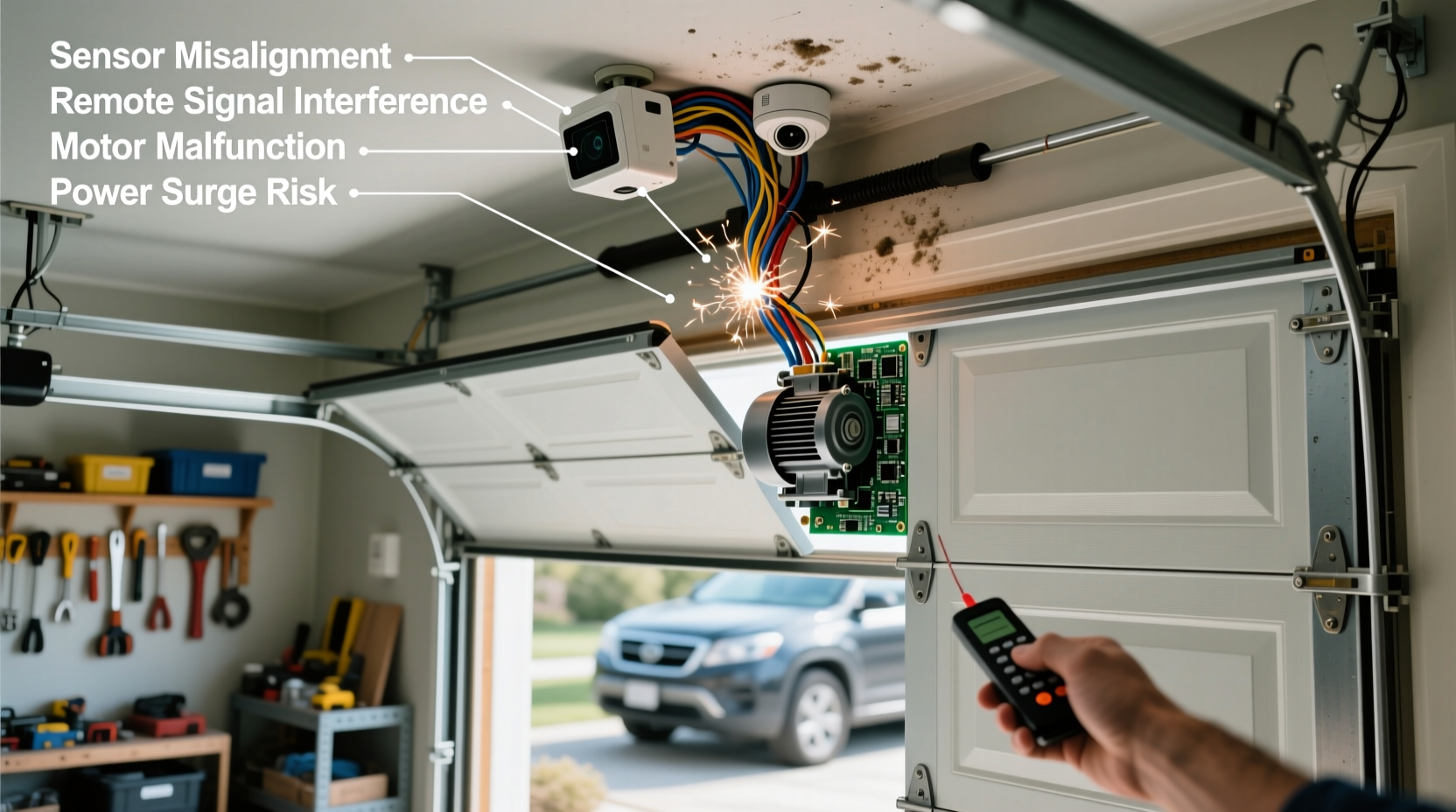
Garage doors don’t typically malfunction without cause. Most cases of self-opening result from signal interference, hardware faults, or environmental factors. Identifying the source begins with understanding how your opener system works and what might be disrupting it.
- Remote or keypad signal interference: Nearby radio frequency signals from construction equipment, utility vehicles, or even neighboring garage openers can accidentally trigger your motor unit.
- Stuck remote or wall button: A remote control left in a bag near the ceiling or a wall-mounted button with debris underneath may send continuous signals.
- Faulty logic board: The internal circuitry inside the opener can degrade over time, leading to erratic behavior such as random cycling.
- Wiring issues: Damaged or frayed wires connecting the wall button to the opener can short-circuit and simulate a press.
- Power surges: Lightning strikes or electrical grid fluctuations may reset the opener or activate it momentarily during reboot.
- Improperly programmed safety sensors: If misaligned or dirty, some systems interpret sensor failure as an obstruction and reverse direction unpredictably.
Potential Risks of an Uncontrolled Garage Door
An unpredictable garage door isn’t merely inconvenient—it poses tangible threats to people, property, and privacy.
“Any device that controls access to your home must operate reliably. A garage door opening at random creates a vulnerability criminals can exploit.” — Daniel Reeves, Home Security Consultant
Security Vulnerabilities
If your garage connects directly to your house, an open door grants immediate entry to intruders. Even if alarmed, many homes lack motion detection in garages, allowing unnoticed access. Thieves often target garages first because they store tools, vehicles, and sometimes spare keys.
Safety Hazards
Children and pets playing near the garage are at risk when doors reverse or close unexpectedly. Though modern units have auto-reverse features, these aren't foolproof. Mechanical failures or worn springs increase the chance of crushing incidents.
Property Damage
Repeated unintended cycles strain motors, belts, and tracks. Over time, this accelerates wear and increases repair costs. In extreme cases, repeated opening during storms can allow water intrusion, damaging stored items or flooring.
Energy Loss
An open garage exposes conditioned air to outdoor elements, especially if the space is attached and partially heated or cooled. This forces HVAC systems to work harder, increasing energy bills unnecessarily.
Troubleshooting Steps: Diagnose the Issue Yourself
Before calling a technician, perform a systematic check to identify possible triggers. Many problems can be resolved with basic maintenance or minor adjustments.
- Inspect all remote controls: Remove batteries from every handheld remote and visor console. Wait 24 hours to see if the door still opens. If not, one of the remotes was likely stuck or transmitting erratically.
- Test the wall-mounted button: Press and release it firmly. Does it feel sticky or resist returning? Clean around the switch with compressed air. Disconnect temporarily (by unplugging the wires) to rule out internal shorts. <3> Check for RF interference: Temporarily turn off nearby electronics like Wi-Fi routers, baby monitors, or power tools. See if the behavior changes. Consider switching to a rolling-code opener if using an older model.
- Examine wiring connections: Look along the path from the wall button to the opener unit. Ensure no nails or staples have pierced insulation, causing intermittent contact.
- Verify sensor alignment: Stand at floor level and visually confirm both safety sensors (near the bottom of each track) show steady lights. Blinking indicates misalignment—adjust carefully until solid green appears.
- Reset the opener: Unplug the main unit for two minutes, then restore power. Reprogram remotes and test operation.
When to Call a Professional Technician
Some issues require specialized knowledge. Attempting repairs on high-tension components like torsion springs or internal circuit boards can lead to injury or further damage.
Call a certified garage door technician if:
- The motor runs but the door doesn’t move consistently.
- You notice burning smells or visible scorch marks on the opener unit.
- The logic board frequently resets or fails to retain programming.
- Sensor alignment cannot be stabilized despite careful adjustment.
- Your system uses outdated fixed-code technology vulnerable to code grabbing.
Professionals use diagnostic tools to detect voltage drops, ground faults, and electromagnetic interference that aren’t visible to the average homeowner. They can also upgrade legacy systems to modern standards with enhanced encryption and monitoring.
Preventive Maintenance Checklist
Regular upkeep prevents most spontaneous activation issues. Use this checklist monthly to keep your garage door operating safely and predictably.
| Action | Frequency | Notes |
|---|---|---|
| Test auto-reverse function | Monthly | Place a roll of paper towels under the door; it should reverse upon contact. |
| Inspect remote controls | Monthly | Look for swollen batteries or worn buttons. |
| Clean safety sensors | Monthly | Wipe lenses with a soft cloth; avoid solvents. |
| Lubricate moving parts | Every 3 months | Use silicone-based lubricant on hinges, rollers, and rail. |
| Check wire integrity | Quarterly | Ensure no exposed conductors or rodent damage. |
| Update firmware (if applicable) | Annually | Smart openers may receive security patches via app. |
Real Example: How One Family Avoided a Break-In
In suburban Ohio, the Thompson family began noticing their garage door would rise slightly in the early morning—just enough to create a gap. At first, they assumed wind or settling foundation. But after finding muddy paw prints inside, they installed a security camera.
Footage revealed the door opened fully at 2:17 a.m., stayed up for 12 minutes, then closed. No one had touched a remote. An electrician discovered a chewed low-voltage wire beneath the workbench, where a mouse nest had formed. The exposed copper occasionally bridged the circuit, mimicking a button press. After replacing the wiring and sealing entry points, the phantom openings ceased.
This case highlights how small, overlooked issues—especially those involving pests or degraded materials—can mimic technical glitches while posing real dangers.
Upgrading for Long-Term Reliability
If your garage door opener is more than 10–15 years old, consider upgrading to a modern system with advanced safeguards:
- Rolling-code technology: Replaces static codes with dynamic encryption, preventing replay attacks.
- Wi-Fi integration: Allows remote monitoring through smartphone apps, sending alerts when the door opens.
- Battery backup: Maintains functionality during outages, avoiding unexpected unlocks due to power cycling.
- Enhanced diagnostics: Onboard systems report sensor errors, obstructions, and usage patterns.
Newer models from brands like Chamberlain, LiftMaster, and Genie include built-in protections against false triggering and unauthorized access. Some even integrate with smart home platforms like Google Home and Alexa for voice-controlled status checks.
Frequently Asked Questions
Can weather cause my garage door to open by itself?
Indirectly, yes. Severe storms can induce power surges that disrupt the opener’s logic board. Additionally, strong winds may shake loose wiring, creating temporary shorts. However, temperature or humidity alone won’t trigger an opening unless paired with hardware failure.
Is it possible for someone else to open my garage door remotely?
With older fixed-code systems, yes—signal interception devices exist that can capture and replay access codes. Modern openers use rolling codes that change with each use, making this nearly impossible. Still, weak Wi-Fi passwords or unsecured smart hubs could allow digital breaches.
Why does my garage door open only halfway before reversing?
This usually indicates misaligned safety sensors, excessive friction in the track, or failing springs. It’s not typically linked to self-opening unless the reversal logic is confused by inconsistent signals. Perform a manual lift test—if the door feels heavy or uneven, call a technician.
Final Recommendations and Call to Action
Your garage door should respond only when you command it. Random openings signal underlying flaws that demand attention—not delay. By methodically checking remotes, wiring, sensors, and environmental factors, most homeowners can pinpoint and resolve the issue quickly.
Don’t wait until something goes wrong. Implement the monthly maintenance checklist, invest in a Wi-Fi-enabled opener for peace of mind, and ensure every family member knows how to disconnect and manually operate the door in emergencies.
If you’ve experienced unexplained openings or have insights from resolving similar issues, share your story below. Your experience could help another homeowner avoid a dangerous oversight. Stay vigilant, stay secure, and take control of your home’s weakest access point—one garage door at a time.
💬 Have a question or solution to share? Join the conversation—your input could protect someone else’s home.








