
Dogs communicate in ways that go far beyond barking and tail wagging. One of the most common yet misunderstood behaviors is the deep, audible sigh that often follows when a dog lies down. To many owners, this sound resembles human relaxation—a release of tension after effort. But could it also signal discomfort? Understanding the context, body language, and accompanying behaviors is essential to distinguishing between a peaceful exhalation and a warning sign of pain.
Unlike humans, dogs don’t verbalize emotions with words, so they rely on vocalizations, posture, and routine patterns to express their internal state. A loud sigh may seem harmless, but when repeated frequently or paired with other subtle cues, it can indicate underlying issues ranging from joint strain to anxiety. This article explores the science behind canine sighing, examines behavioral indicators, and provides actionable guidance for pet owners concerned about their dog’s well-being.
The Science Behind Canine Sighing
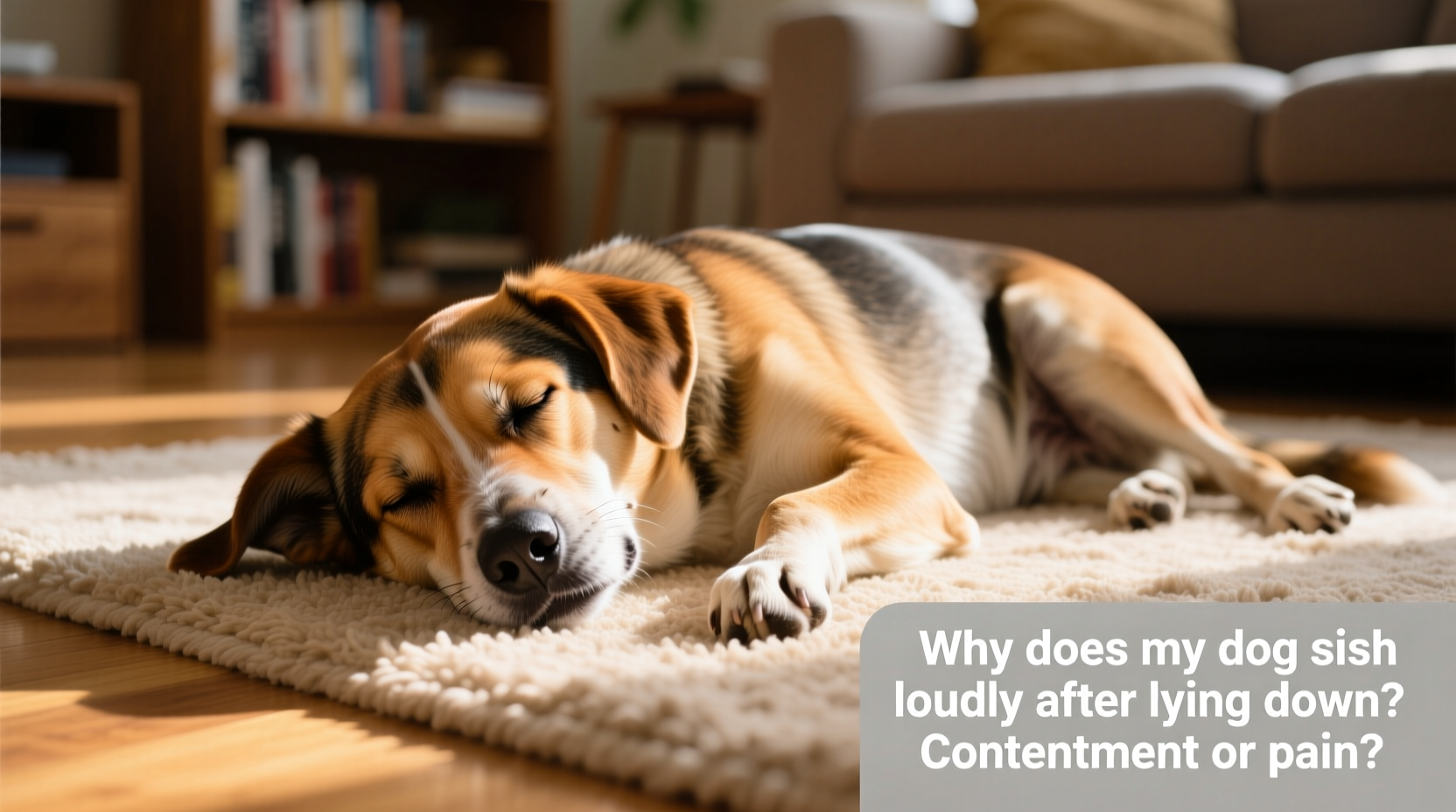
In both humans and animals, sighing serves a physiological purpose. A study published in *The Journal of Neuroscience* explains that spontaneous sighs help reinflate alveoli—the tiny air sacs in the lungs—that collapse during normal breathing. This reset function ensures optimal oxygen exchange and respiratory efficiency. In dogs, a deep postural sigh after lying down may serve the same restorative role, especially after physical activity or periods of alertness.
However, not all sighs are equal. The distinction lies in timing, frequency, and associated body language. A single, low-pitched sigh accompanied by soft eyes, relaxed ears, and a slow blink is typically a sign of comfort. Conversely, repeated high-intensity exhalations, particularly when the dog avoids certain movements or shows stiffness, may reflect discomfort or fatigue.
“Dogs use sighs as emotional punctuation. It can be a release of tension, either positive or negative. Context is everything.” — Dr. Sarah Carter, Veterinary Behaviorist
Contentment: When Sighing Signals Relaxation
Just like people who exhale deeply after a long day, dogs often sigh when transitioning from an active or alert state to rest. This behavior is especially common after play, walks, or mental stimulation such as training sessions. The sigh acts as a physical and psychological release, signaling the nervous system’s shift from sympathetic (fight-or-flight) to parasympathetic (rest-and-digest) dominance.
Signs that a sigh reflects contentment include:
- Lying down voluntarily in a preferred resting spot
- Soft, half-closed eyes
- Slow blinking or “dog kisses”
- Loose, floppy body posture with limbs splayed
- Falling asleep shortly after the sigh
This type of sigh is usually soft, drawn out, and followed by stillness. It often occurs at predictable times—after dinner, following a walk, or when settling in beside their owner. In multi-dog households, you might notice one dog sighing after another has calmed down, suggesting social synchronization of relaxation.
Tip: Observe your dog’s sighing pattern over several days. If it consistently happens in relaxing contexts without distress signals, it’s likely a sign of comfort.Pain or Discomfort: When Sighing Warrants Concern
While many sighs are benign, some can point to musculoskeletal pain, respiratory issues, or chronic conditions like arthritis. Dogs are instinctively inclined to hide weakness, so they rarely vocalize pain directly. Instead, they display subtle behavioral shifts—one of which is exaggerated exhalation during movement transitions.
A sigh linked to discomfort tends to occur precisely as the dog lowers its body to the ground or shifts position. It may resemble a groan or grunt more than a relaxed breath. Other red flags include:
- Hesitation before lying down (e.g., circling excessively or lowering slowly)
- Limping or favoring a limb before or after resting
- Vocalizing softly during movement
- Restlessness after lying down—getting up and shifting positions repeatedly
- Reduced activity levels or reluctance to jump or climb stairs
Older dogs or breeds predisposed to hip dysplasia, such as German Shepherds or Labrador Retrievers, are particularly vulnerable. Chronic pain may not cause overt crying, but frequent sighing after lying down could be a compensatory mechanism—an unconscious response to joint pressure or muscle strain.
Case Study: Max, a 9-Year-Old Golden Retriever
Max’s owner noticed he began sighing loudly every evening after settling on the living room rug. Initially dismissed as aging-related tiredness, the behavior escalated—he started avoiding his usual dog bed and showed stiffness in the mornings. A veterinary exam revealed moderate osteoarthritis in his hips. After beginning a regimen of joint supplements, weight management, and controlled exercise, Max’s sighing decreased significantly within six weeks. His owner reported he now lies down more fluidly and sleeps through the night without shifting.
How to Differentiate Between Contentment and Pain
Telling the difference requires careful observation and attention to nuance. Use the following checklist to evaluate your dog’s sighing behavior:
Checklist: Is Your Dog’s Sigh a Sign of Comfort or Concern?- Does the sigh happen only once per rest session, or repeatedly?
- Is the dog’s body fully relaxed afterward, or does it fidget or reposition?
- Are there signs of stiffness when getting up or lying down?
- Has the frequency of sighing increased recently?
- Does the dog avoid favorite activities like playing fetch or climbing onto furniture?
- Are there other vocalizations, such as whining or yelping, during movement?
- Has your dog gained weight or lost muscle tone?
If three or more items apply, consult your veterinarian. Early intervention can prevent minor discomfort from progressing into chronic pain.
Do’s and Don’ts: Responding to Canine Sighing
| Do’s | Don’ts |
|---|---|
| Observe the full sequence: approach, lie-down motion, sigh, and post-sigh behavior | Assume all sighs are harmless without tracking patterns |
| Record a video of the behavior to show your vet | Force your dog into positions that trigger sighing |
| Provide orthopedic bedding for older or large-breed dogs | Ignore changes in mobility or energy levels |
| Maintain a healthy weight through diet and exercise | Use human painkillers—many are toxic to dogs |
| Schedule regular vet checkups, especially after age 7 | Dismiss behavioral changes as “just getting old” |
What You Can Do: A Step-by-Step Guide
If you’re uncertain whether your dog’s sighing is normal, follow this structured approach to assess and respond appropriately:
- Monitor and Document: For one week, note each instance of sighing—time of day, activity preceding it, body position, and any other behaviors. Keep a log in a notebook or digital app.
- Assess Mobility: Watch how your dog rises from lying down. Does it push up slowly? Does it hesitate or use furniture for support? Difficulty rising is a strong indicator of joint issues.
- Evaluate Environment: Ensure your dog has comfortable, supportive bedding. Hard floors increase pressure on joints. Consider memory foam mats, especially in cool areas.
- Review Diet and Weight: Excess weight exacerbates joint stress. Consult your vet about an ideal weight range and nutrition plan tailored to your dog’s breed and age.
- Schedule a Veterinary Visit: Even if no acute symptoms exist, annual senior wellness exams (for dogs over 7) should include orthopedic and neurological assessments. X-rays or blood work may be recommended if pain is suspected.
- Implement Supportive Care: Depending on diagnosis, options may include glucosamine supplements, physical therapy, laser treatment, or prescribed anti-inflammatory medication.
- Reassess After 4–6 Weeks: Track improvements in mobility, rest quality, and sigh frequency. Adjust care plans in consultation with your vet.
Frequently Asked Questions
Is it normal for puppies to sigh loudly when lying down?
Yes, puppies often sigh after bursts of play or exploration. Their rapid growth and high energy expenditure make deep exhalations common during rest transitions. As long as the puppy moves freely, eats well, and shows no signs of limping or avoidance behaviors, the sighing is likely part of normal relaxation.
Can anxiety cause loud sighing in dogs?
Absolutely. Dogs under stress may sigh as a displacement behavior—a way to self-soothe when conflicted or overwhelmed. For example, a dog left alone may sigh heavily after pacing, indicating emotional fatigue rather than physical pain. Look for additional signs like panting, trembling, excessive licking, or destructive behavior to assess anxiety levels.
Should I be worried if my dog only sighs on one side?
There’s no evidence that dogs preferentially sigh based on sleeping position. However, if your dog consistently avoids lying on one side—especially if accompanied by whimpering or guarding behavior—it could suggest localized pain, such as abdominal discomfort or a sore limb. This warrants veterinary evaluation.
Conclusion: Listen Beyond the Sound
Your dog’s sigh is more than just noise—it’s a window into their physical and emotional state. While many sighs are innocent expressions of relief and comfort, others may quietly signal discomfort that goes unnoticed until it worsens. By tuning into the rhythm of your dog’s behavior, asking the right questions, and acting early, you can ensure their golden years—or even their energetic prime—are spent in genuine ease, not silent suffering.
💬 Have you noticed changes in your dog’s sighing or resting habits? Share your experience in the comments—your observations could help another pet owner recognize a problem early.








