It’s a scene many cat owners have witnessed: your feline suddenly freezes, pupils dilated, tail twitching, locked in an intense gaze at an empty patch of wall. No movement. No sound. Just… staring. You wonder—can cats see ghosts? Is something supernatural happening? Or is this just another quirk of their mysterious behavior? The truth lies less in the paranormal and more in biology, instinct, and environment. Understanding why your cat stares at the wall requires looking beyond folklore and into the intricate world of feline perception and psychology.
The Science Behind Feline Vision and Perception
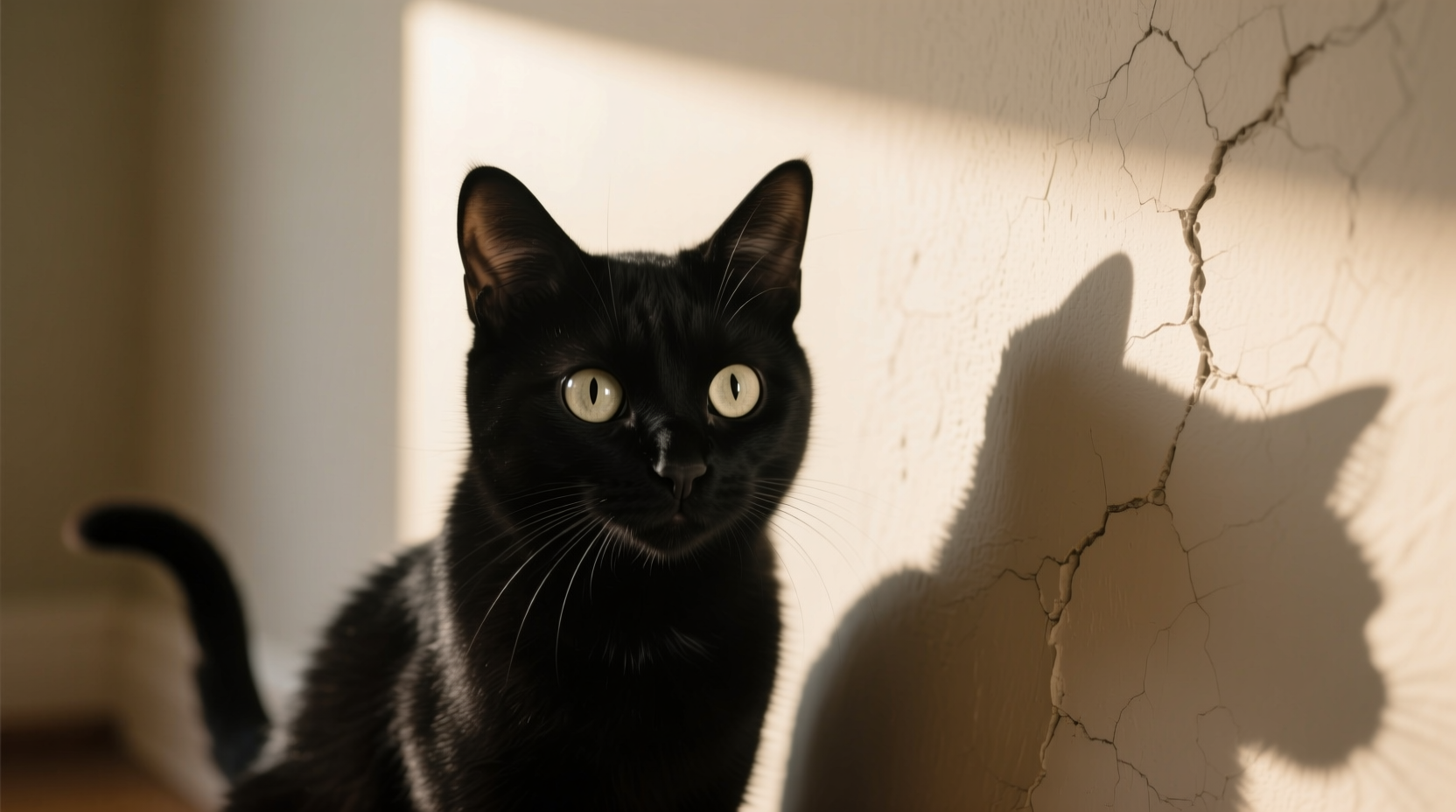
Cats perceive the world differently than humans. Their eyes are adapted for low-light hunting, with a high number of rod cells that enhance motion detection and night vision. While they don’t see colors as vividly as we do, they’re exceptionally sensitive to subtle movements—even those imperceptible to human eyes. A flicker from a shadow, a slight vibration in the wall from plumbing, or even dust particles dancing in a sunbeam can trigger a cat’s attention.
Additionally, cats have a wider field of peripheral vision (about 200 degrees compared to our 180) and superior depth perception when tracking fast-moving objects. This means they may detect minute shifts in light or texture on a wall that we simply overlook. What appears blank to us might be a dynamic visual landscape to a cat.
“Cats don’t need ghosts to explain strange behaviors. Their sensory world is rich and often invisible to us.” — Dr. Sarah Thompson, Veterinary Ethologist
This heightened sensory input doesn’t always lead to action—but it does lead to observation. Staring is part of their information-gathering process, rooted in survival instincts developed over thousands of years.
Hunting Instincts: The Predator Mindset
Even well-fed domestic cats retain the predatory drive of their wild ancestors. In the wild, patience is essential for successful hunting. A lion waits silently for hours before pouncing; similarly, your housecat may fixate on a spot where it once saw a bug, a shadow, or a reflection, anticipating movement.
This behavior isn’t limited to live prey. Cats often stalk toys, strings, or light patterns cast by mirrors or windows. When your cat stares at a wall, it may be replaying a past event—like spotting a fly weeks ago—or responding to residual stimuli such as:
- Faint sounds from within walls (mice, insects, pipes)
- Subtle air currents moving curtains or dust
- Reflections from glass or metallic surfaces
- Vibrations transmitted through flooring or walls
In essence, the wall becomes a canvas for imagined or remembered prey. The cat enters a state of hyperfocus, ready to spring if the “target” moves. This isn’t abnormal—it’s natural predatory programming in action.
Tip: Rotate interactive toys regularly to satisfy your cat’s hunting drive and reduce fixation on static objects like walls.Boredom and Understimulation: A Hidden Cause
A lack of mental stimulation is one of the most common reasons behind repetitive or obsessive behaviors in indoor cats. Unlike outdoor cats who navigate complex environments, indoor cats often live in visually and sensorially limited spaces. Without adequate enrichment, they may develop habits like wool-sucking, over-grooming, or staring at walls out of sheer boredom.
Staring can become a self-reinforcing loop: the cat notices something minor (a speck, a shadow), focuses intensely, and releases small bursts of dopamine—the brain’s reward chemical—when it feels “alert” or “on the hunt.” Over time, this can evolve into compulsive behavior.
Signs your cat may be under-stimulated include:
- Excessive sleeping during the day
- Lack of interest in toys or people
- Repetitive actions (tail chasing, fabric sucking)
- Aggression when approached during staring episodes
If your cat spends more than a few minutes daily in unexplained staring spells, especially without external triggers, environmental enrichment should be your first intervention.
Environmental Enrichment Checklist
- Provide vertical space (cat trees, shelves, window perches)
- Introduce puzzle feeders or treat-dispensing toys
- Schedule two 10–15 minute play sessions daily using wand toys
- Rotate toys weekly to maintain novelty
- Add bird feeders outside windows for visual stimulation
- Use cat-safe apps with moving images or laser pointers (supervised only)
- Introduce safe scents like silver vine or catnip occasionally
Medical and Behavioral Concerns: When to Worry
While most wall-staring is harmless, prolonged or intense fixation can sometimes signal underlying health issues. Neurological conditions such as seizures, cognitive dysfunction syndrome (especially in older cats), or vision problems can manifest as vacant staring.
Focal seizures, also known as partial seizures, may cause a cat to appear frozen, unresponsive, and intensely focused on nothing. These episodes typically last seconds to minutes and may be followed by disorientation, drooling, or aimless wandering.
Similarly, feline hyperesthesia syndrome—a poorly understood condition—can cause sudden bursts of agitation, tail flicking, and obsessive grooming or staring. It’s often misdiagnosed due to its variable symptoms.
| Symptom | Normal Behavior | Potential Red Flag |
|---|---|---|
| Duration of stare | Under 1–2 minutes | Over 5 minutes, unresponsive |
| Movement after episode | Resumes normal activity | Dazed, confused, or aggressive |
| Frequency | Occasional | Daily or multiple times per day |
| Physical signs | None | Twitching, drooling, vocalizing |
| Response to name | Turns head or blinks | No reaction |
If your cat exhibits any red flags, consult a veterinarian promptly. Diagnostic tools like blood work, neurological exams, or even MRI scans may be necessary to rule out medical causes.
Do Cats See Ghosts? Separating Myth from Reality
The idea that cats see spirits persists across cultures. Ancient Egyptians revered cats as spiritual guardians, and Japanese folklore features the *bakeneko*—a supernatural cat with ghostly powers. Even today, some pet owners interpret unusual feline behavior as evidence of paranormal awareness.
However, there is no scientific evidence that cats perceive ghosts. What they do possess is a suite of acute senses that allow them to detect stimuli beyond human capability. For example:
- Hearing: Cats hear frequencies up to 64 kHz (humans top out around 20 kHz), meaning they can pick up ultrasonic rodent calls or electrical hums from appliances.
- Smell: With over 200 million olfactory receptors (humans have about 5 million), cats can detect pheromones, decay, or even changes in human emotional states via sweat.
- Vibration Sensitivity: Their paws and whiskers can feel minute floor vibrations from distant footsteps or machinery.
A cat reacting to a “ghost” might actually be responding to a mouse behind drywall, a heating vent clicking on, or electromagnetic fields from wiring. These stimuli create real, physical reactions—not supernatural ones.
“We anthropomorphize cats when we say they see ghosts. They’re not mystical—they’re exquisitely tuned machines of perception.” — Dr. Lena Ruiz, Animal Behavior Researcher
That said, respecting your cat’s sensitivity doesn’t require believing in the paranormal. It means acknowledging that their experience of reality is deeper and more nuanced than ours.
Mini Case Study: Bella the Wall-Watcher
Bella, a 4-year-old tabby living in a third-floor apartment, began staring at the same corner of her bedroom wall every evening. Her owner, Mark, grew concerned, especially after she started meowing at the spot. He tried cleaning the wall, covering it with art, and even blessing the room—nothing worked.
After consulting a veterinary behaviorist, Mark installed a small camera near the wall. Reviewing footage, he noticed a faint flickering light reflecting off a metal picture frame at sunset—exactly when Bella stared. The reflection moved slightly each night due to seasonal sun angles, mimicking insect movement.
The solution? Relocating the frame and adding a bird feeder outside the window. Within days, Bella’s staring decreased by 90%. Her “ghost” was just sunlight playing tricks on a predator’s mind.
Step-by-Step Guide to Addressing Wall-Staring Behavior
If your cat frequently stares at walls, follow this practical sequence to identify and resolve the cause:
- Observe and Document: Note the time, duration, location, and any triggers (lights, sounds, etc.). Record a video if possible.
- Inspect the Environment: Look for reflections, drafts, pests, or noises near the spot. Tap the wall to check for hollow sounds indicating rodents.
- Enhance Enrichment: Introduce new toys, climbing structures, or window access to redirect focus.
- Adjust Lighting: Close blinds during peak glare hours or use anti-glare films to reduce reflections.
- Schedule Playtime: Engage your cat in active hunting simulations before typical staring times.
- Monitor Changes: Track improvements over 1–2 weeks. If no change, consult a vet.
- Seek Professional Help: If medical or behavioral issues are suspected, involve a veterinarian or certified animal behaviorist.
Frequently Asked Questions
Can cats really see things we can’t?
Yes. Cats detect higher-pitched sounds, subtle movements in low light, and minute environmental changes. This doesn’t mean they see ghosts—it means their senses are biologically superior in certain areas.
Is it bad if my cat stares at the wall every day?
Occasional staring is normal. However, daily, prolonged episodes—especially with trance-like unresponsiveness—warrant veterinary evaluation to rule out seizures or cognitive issues.
Should I interrupt my cat when it’s staring?
Gently calling your cat’s name is fine. Avoid startling them, as this can increase anxiety. If the behavior seems obsessive, redirect with a toy or treat instead.
Conclusion: Understanding, Not Explaining Away
Your cat’s wall-staring isn’t a mystery to be feared but a behavior to be understood. Whether driven by primal instincts, environmental monotony, or sensory input we can’t perceive, these moments reveal the complexity of feline minds. Rather than attributing them to ghosts or quirks, we can respond with empathy, curiosity, and action.
By enriching your cat’s world, observing with intention, and seeking professional guidance when needed, you honor both their nature and their well-being. The wall may be blank to you—but to your cat, it’s part of a rich, unseen narrative. Your role isn’t to dismiss it, but to help them live fully within it.
💬 Have a story about your cat’s strange staring habits? Share your experience in the comments—your insight could help another confused pet parent find clarity.








