
It’s a scene many cat owners know all too well: your feline companion sits perfectly still, tail twitching slightly, eyes locked on a blank stretch of wall with an intensity that suggests they’ve spotted something invisible to human eyes. You look—nothing there. No bug, no shadow, not even a flicker of light. Yet your cat remains transfixed, as if tracking a spectral presence. This behavior, often dubbed “ghost hunting,” can be unsettling or amusing, but it raises a legitimate question: why does my cat stare at the wall?
While some may joke about cats seeing spirits, the truth is usually grounded in biology, environment, and sometimes health. Understanding what drives this behavior requires looking beyond superstition and into feline psychology, sensory perception, and potential medical issues. Whether occasional or frequent, wall-staring can signal anything from natural predatory instincts to neurological problems.
The Feline Mind: How Cats Perceive the World
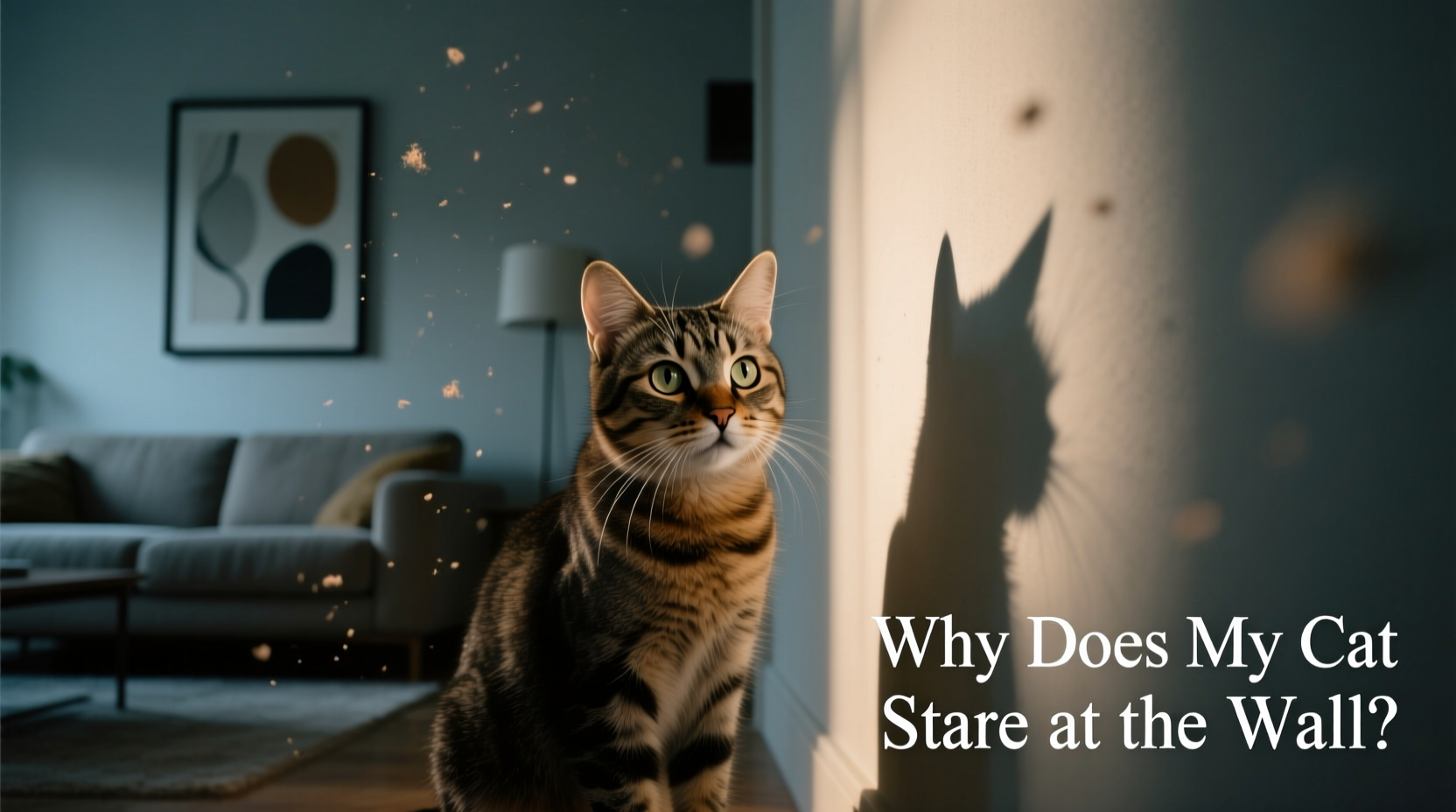
Cats experience their surroundings in ways vastly different from humans. Their senses are fine-tuned for survival, especially in low-light conditions and when detecting subtle movement. A cat’s vision, while less effective at discerning colors, excels at picking up motion and changes in light—even the faintest shifts that go unnoticed by people.
This heightened sensitivity means that what appears to be a blank wall to you might be alive with visual stimuli for your cat. Tiny dust particles floating in a sunbeam, shadows cast by tree branches outside, or even the texture of paint or wallpaper can capture a cat’s attention. Their brains are wired to respond to movement, making them prone to fixate on anything that triggers their hunting instincts—even if it's illusory.
Additionally, cats have a wider field of peripheral vision (about 200 degrees compared to humans’ 180) and superior night vision thanks to the tapetum lucidum, a reflective layer behind the retina. These adaptations mean they see more of their environment and detect changes imperceptible to us.
Tip: Observe when and where your cat stares—note lighting conditions, time of day, and nearby sounds to identify environmental triggers.Possible Causes of Wall-Staring Behavior
Wall-gazing isn’t inherently alarming, but understanding its root causes helps determine whether it’s normal or warrants concern. Below are the most common explanations, ranging from instinctual to medical.
1. Predatory Instincts and Imagined Prey
Cats are natural hunters, and their brains are primed to detect prey-like motion. Even without real insects present, patterns on walls, dust motes in sunlight, or rippling reflections can mimic the erratic movements of small creatures. Your cat may be engaging in “simulated hunting,” mentally tracking an invisible target.
This behavior is especially common in indoor cats who lack regular opportunities to hunt. The stimulation provided by wall patterns or light play can become a substitute for real-world prey interaction.
2. Environmental Stimuli You Can’t See
Sometimes, the stimulus is real—but invisible to humans. High-frequency sounds, ultrasonic vibrations from appliances, or even electromagnetic fields may intrigue or unsettle a cat. While not visible, these can create a sense of unease or focus, prompting prolonged staring.
For example, a refrigerator’s hum, a faulty electrical outlet, or a Wi-Fi router emitting subtle noise might draw a cat’s attention to a specific spot on the wall.
3. Cognitive Dysfunction in Older Cats
Just like humans, aging cats can develop cognitive decline. Feline Cognitive Dysfunction Syndrome (CDS) affects up to 55% of cats over 15 years old. Symptoms include disorientation, altered sleep cycles, decreased grooming, and yes—staring blankly at walls.
A senior cat may stare for minutes at a time, seemingly unaware of their surroundings. This isn’t “seeing ghosts”—it’s a sign of neurological changes affecting perception and memory.
“Cats with cognitive dysfunction often appear ‘spaced out’ or stuck in one position, staring into space. It’s important not to dismiss this as quirky behavior.” — Dr. Sarah Thompson, Veterinary Neurologist
4. Seizures or Neurological Disorders
One of the most serious causes of wall-staring is partial (focal) seizures. Unlike full-body convulsions, focal seizures may only affect a small part of the brain and manifest as vacant staring, lip-licking, twitching, or unresponsiveness.
These episodes can last seconds to minutes and may occur during rest. Because they’re subtle, they’re often mistaken for daydreaming. However, repeated staring spells, especially if accompanied by other odd behaviors, should prompt a veterinary evaluation.
5. Stress, Anxiety, or Obsessive Behaviors
Cats under stress may develop compulsive habits, such as excessive grooming, tail-chasing, or repetitive staring. Changes in the household—new pets, moving, loud noises—can trigger anxiety that manifests in unusual focus on inanimate objects.
In some cases, this evolves into stereotypic behavior, where the cat performs the same action repeatedly without apparent purpose. Wall-staring becomes a coping mechanism, a way to self-soothe in an unpredictable environment.
When to Be Concerned: Red Flags to Watch For
Occasional wall-gazing is typically harmless. But certain signs suggest the behavior may stem from a medical or psychological issue requiring intervention. Use the checklist below to assess whether your cat’s staring is cause for concern.
Checklist: Signs That Wall-Staring May Be Problematic- Staring lasts longer than 2–3 minutes
- Accompanied by twitching, drooling, or loss of balance
- Occurs multiple times per day
- Cat doesn’t respond when called
- New or sudden onset in adult or senior cats
- Followed by confusion or disorientation
- Happens mostly when the cat is alone or at night
Step-by-Step Guide to Investigating the Cause
If your cat’s wall-staring worries you, follow this practical timeline to identify and address the underlying cause.
- Observe and Document: Note the frequency, duration, time of day, location, and any triggers (e.g., after eating, during quiet hours).
- Eliminate Environmental Triggers: Check for drafts, appliance noises, reflections, or pests. Try covering the area with a towel or repositioning furniture.
- Monitor for Other Symptoms: Look for changes in appetite, litter box use, activity level, or social interaction.
- Record a Video: Capture an episode to show your veterinarian. Visual evidence is invaluable for diagnosing seizures or behavioral issues.
- Schedule a Veterinary Visit: Request a full physical, neurological exam, and possibly blood work or imaging if CDS or seizures are suspected.
- Discuss Behavioral Support: If no medical cause is found, consider consulting a veterinary behaviorist for anxiety or compulsive disorder management.
Do’s and Don’ts: Managing Wall-Staring Behavior
| Do’s | Don’ts |
|---|---|
| Provide mental stimulation through puzzle toys and interactive play | Ignore sudden changes in behavior, especially in older cats |
| Maintain a consistent daily routine to reduce stress | Yell at or punish your cat for staring—it’s not willful misbehavior |
| Use pheromone diffusers (like Feliway) to ease anxiety | Assume the behavior is “just weird” without investigating |
| Keep the environment enriched with climbing spaces and hiding spots | Allow long periods of isolation, especially for indoor-only cats |
Real-Life Example: Bella the Siamese
Bella, a 12-year-old Siamese cat, began staring at the corner of her owner’s bedroom wall every evening around 9 PM. Her owner, Lisa, initially thought Bella was watching a spider or reacting to outdoor noises. But when the behavior persisted for weeks—and Bella started meowing incessantly afterward—Lisa grew concerned.
She recorded a video showing Bella frozen in place, pupils dilated, head tilted slightly. After ruling out pests and environmental factors, Lisa took Bella to the vet. Blood tests were normal, but the veterinarian suspected early-stage cognitive dysfunction. Bella was prescribed a diet rich in antioxidants and omega-3 fatty acids, and Lisa introduced a nightly routine with calming music and gentle brushing.
Within two months, the staring episodes decreased from daily to once every few weeks. While not eliminated, the improvement highlighted how targeted care could significantly reduce distressing behaviors.
Frequently Asked Questions
Is it normal for cats to stare at walls?
Yes, occasional wall-staring is normal, especially if triggered by light, shadows, or textures. However, frequent or prolonged episodes—especially in older cats—should be evaluated by a veterinarian.
Can cats really see ghosts?
There’s no scientific evidence that cats see ghosts. What may seem supernatural is usually explained by their acute senses, imagination, or medical conditions. Attributing behavior to the paranormal can delay necessary care.
What should I do if my cat stares and then runs away suddenly?
This is often part of simulated hunting behavior. The cat may perceive movement, “chase” it mentally, then spring into action. As long as it’s infrequent and doesn’t disrupt their routine, it’s likely harmless.
Conclusion: From Curiosity to Care
Your cat’s wall-staring may never fully lose its mysterious charm. There’s something undeniably captivating about watching a creature so attuned to a world beyond our perception. But beneath the surface of “ghost hunting” lies a complex interplay of instinct, environment, and health.
By approaching the behavior with curiosity rather than fear, you empower yourself to distinguish between normal feline quirks and signs of deeper issues. Whether it’s enriching your cat’s environment, reducing stress, or seeking medical advice, each step brings you closer to understanding your pet’s inner world.
💬 Have a story about your cat’s mysterious staring habits? Share your experience in the comments—your insight could help another pet owner feel less alone.








