
Cats are enigmatic companions. One minute they're curled up on your lap, purring contentedly; the next, they've vanished behind the couch, uninterested in your presence. Then, without warning, they return with insistent meows, pawing at your arm or head-butting your elbow until you comply. This push-pull behavior can feel confusing, even frustrating. But far from being arbitrary, these shifts in attention-seeking are deeply rooted in feline instincts, communication styles, and learned behaviors. Understanding the psychology behind your cat’s on-again, off-again engagement is key to building a more harmonious relationship.
The Independent Nature of Cats
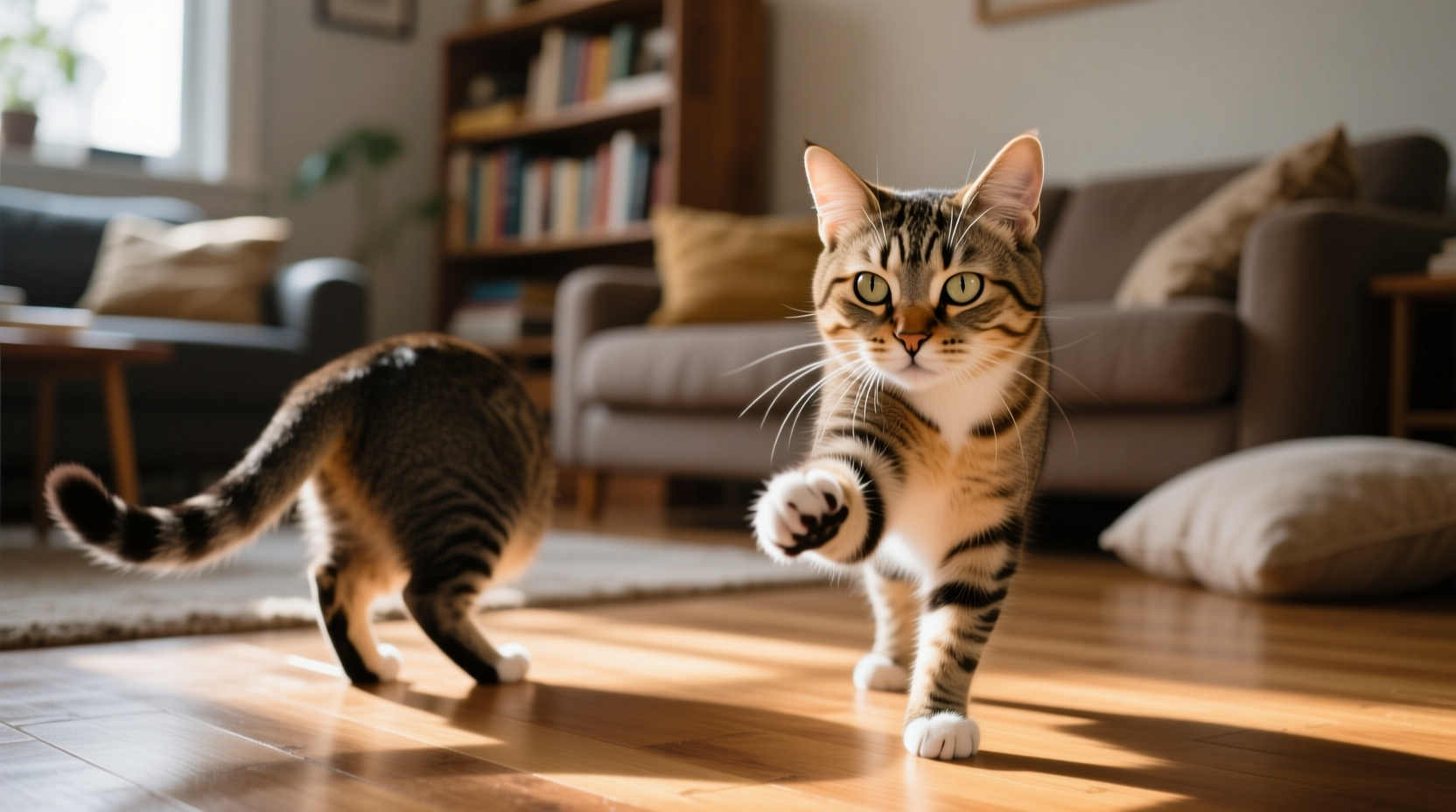
Unlike dogs, who evolved as pack animals dependent on social hierarchy and constant interaction, cats are solitary hunters by nature. Even after thousands of years of domestication, their core behavioral patterns remain aligned with independence. In the wild, cats spend much of their time alone—hunting, resting, and patrolling territory. This doesn’t mean they don’t form bonds with humans, but rather that their affection is often conditional and self-directed.
When your cat ignores you, it may simply be acting on instinct. They aren’t rejecting you emotionally—they’re following an internal rhythm dictated by energy levels, environmental stimuli, and personal boundaries. A cat that walks away mid-pet isn’t being rude; they’re signaling that their threshold for physical contact has been reached. Similarly, sudden bursts of attention-seeking often coincide with biological needs: hunger, play drive, or territorial reassurance.
Tip: Respect your cat’s need for solitude. Forcing interaction when they retreat can damage trust and increase anxiety.Communication Through Behavior
Cats don’t communicate in words, but every flick of the tail, blink of the eye, or rub against your leg carries meaning. Their attention patterns are part of a complex nonverbal language shaped by survival and social learning.
When your cat ignores you, observe their body language. Are they grooming? Sleeping? Staring out the window? These activities indicate they’re engaged in something meaningful to them. Conversely, sudden demands for attention—especially at night or during work hours—are often deliberate attempts to influence your behavior. If you respond every time they meow at 3 a.m., they learn that vocalization equals reward.
This isn’t manipulation in the human sense—it’s operant conditioning. Cats quickly associate actions with outcomes. Over time, they refine their tactics based on what works. A cat that gets fed after persistent nudging will repeat that behavior, even if it seems inconsistent with their earlier aloofness.
Common Triggers for Sudden Attention-Seeking
- Hunger or feeding time cues: Cats have excellent internal clocks and may begin soliciting food before their usual mealtime.
- Play deprivation: Indoor cats especially need mental stimulation. Without adequate outlets, they redirect pent-up energy toward owners.
- Environmental changes: New furniture, visitors, or routine disruptions can heighten insecurity, prompting clinginess.
- Seasonal shifts: Longer nights in winter may increase nocturnal activity and demand for interaction.
- Reinforced behavior: Accidental rewards (e.g., petting a cat who jumps on your keyboard) teach them which actions gain attention.
“Cats aren’t unpredictable—they’re communicating in ways we often fail to recognize. What looks like moodiness is usually context-driven behavior.” — Dr. Sarah Thompson, Feline Behavior Specialist, Cornell University College of Veterinary Medicine
Understanding the Attention Cycle
Your cat’s fluctuating attention patterns follow a natural cycle influenced by biology, environment, and history. Recognizing this rhythm allows you to anticipate needs and reduce conflict.
Step-by-Step Guide: Mapping Your Cat’s Daily Rhythm
- Track behaviors for one week: Note times when your cat seeks attention, ignores you, plays, eats, or vocalizes.
- Identify patterns: Look for consistency in timing—e.g., always demanding pets at 7 p.m. or avoiding touch after meals.
- Correlate with triggers: Did someone leave the house? Was there loud noise? Did you skip playtime?
- Adjust routines accordingly: Offer interactive play before peak demand periods to redirect energy.
- Reinforce calm behavior: Reward quiet, independent moments with praise or treats to encourage balance.
Over time, this observational approach helps shift reactive interactions into proactive care. Instead of wondering why your cat suddenly wants cuddles at midnight, you’ll understand it’s tied to their natural crepuscular activity peaks—times when cats are biologically wired to be most alert, typically around dawn and dusk.
Do’s and Don’ts of Managing Attention-Seeking Behavior
| Do’s | Don’ts |
|---|---|
| Establish consistent feeding and play schedules | Respond immediately to every demand—this reinforces urgency |
| Use puzzle feeders and solo toys to promote independence | Punish or yell when ignored—this damages trust |
| Initiate play sessions before your cat becomes restless | Withhold all attention to “teach a lesson”—cats don’t interpret absence as discipline |
| Encourage positive interactions through gentle petting and slow blinks | Force handling when your cat shows signs of overstimulation (flattened ears, twitching tail) |
| Provide vertical spaces and hiding spots for security | Assume indifference means lack of attachment—many cats express love subtly |
A Real-Life Example: Luna’s Nighttime Demands
Sarah, a graphic designer in Portland, noticed her 3-year-old tuxedo cat Luna would ignore her all evening, only to wake her at 5:15 a.m. with insistent meowing and pawing. At first, Sarah assumed Luna was hungry, so she started feeding her earlier. The behavior worsened. After consulting a veterinary behaviorist, Sarah realized Luna wasn’t hungry—she was bored.
Luna spent most days alone while Sarah worked remotely with headphones on, missing subtle cues for play. Her nighttime demands were a buildup of unmet stimulation. The solution? Sarah introduced two short interactive play sessions using a wand toy—one before logging on in the morning, another before dinner. She also added a bird feeder outside the living room window to provide visual enrichment.
Within ten days, Luna’s early-morning demands decreased by 80%. She still checked in occasionally, but her behavior became less frantic and more balanced. This case illustrates how seemingly erratic attention-seeking often stems from unmet needs rather than caprice.
Building a Predictable Bond
The goal isn’t to make your cat constantly attentive, but to foster mutual understanding. A healthy human-cat relationship thrives on predictability, respect, and shared rituals. When your cat feels secure in their environment and confident in your responses, their dramatic shifts in attention tend to stabilize.
Start by creating structured daily routines. Feed, play, and interact at roughly the same times each day. Structure reduces anxiety and gives cats a sense of control. Incorporate environmental enrichment: rotating toys, scratching posts, perches near windows, and safe outdoor access via catio or harness walks can dramatically improve emotional regulation.
Equally important is learning your cat’s personal preferences. Some cats enjoy extended petting sessions; others prefer brief, frequent check-ins. Pay attention to micro-signals: a swishing tail, dilated pupils, or skin rippling along the back often precede withdrawal. Ending interaction just before overstimulation occurs builds trust and prevents negative associations with touch.
Tip: Practice “cat-directed speech” using soft tones and high-pitched vowels. Studies show cats respond more readily to gentle, melodic voices.Frequently Asked Questions
Is it normal for my cat to ignore me for hours?
Yes. Cats naturally alternate between social engagement and solitary rest. As long as your cat eats, uses the litter box, and shows no signs of illness or distress, prolonged independence is typical feline behavior.
Why does my cat only want attention when I’m busy?
This often reflects timing and reinforcement. If your cat learns that interrupting your work leads to interaction—even if you’re annoyed—they’ll repeat the behavior. It’s not spite; it’s cause-and-effect learning. Redirect with scheduled play before work sessions to prevent interruptions.
Can cats get jealous or act out for attention?
While cats don’t experience jealousy in the human emotional sense, they do notice changes in attention distribution. Introducing a new pet, partner, or baby can trigger increased vocalization or clinginess as your cat seeks reassurance. Maintaining individual bonding time helps ease transitions.
Action Checklist: Improving Attention Balance
- ✅ Schedule two 10–15 minute play sessions daily using wand toys
- ✅ Feed meals via puzzle feeders or timed dispensers to engage natural hunting instincts
- ✅ Observe and record your cat’s daily rhythm for one week
- ✅ Create a quiet retreat space with elevated views and hiding options
- ✅ Respond selectively to attention requests—reward calm approaches over demanding ones
- ✅ Use slow blinks and soft vocalizations to strengthen non-invasive bonding
- ✅ Consult a vet if sudden behavioral changes occur—medical issues can mimic attention-seeking
Conclusion: Embracing the Feline Paradox
Your cat’s alternating phases of detachment and demand aren’t contradictions—they’re expressions of a species finely tuned to autonomy and connection in equal measure. By honoring their innate rhythms and responding with patience and insight, you create a relationship grounded in mutual respect. The moments of aloofness aren’t rejections; they’re affirmations of trust in a safe environment. And the sudden demands? Often just a plea for engagement framed in the only language they know.
Instead of seeking constant validation, focus on consistency, enrichment, and observation. Small adjustments in routine and responsiveness can lead to profound improvements in harmony. The bond you share with your cat isn’t measured by constant proximity, but by the depth of understanding that grows when you listen—not just to their meows, but to their silence.
💬 Have a story about your cat’s surprising attention shifts? Share your experience in the comments—your insights might help another cat owner feel less alone.








