If you’ve ever watched your cat press their nose against a window, eyes locked on a bird outside, you’ve likely heard it—the rapid, staccato chattering sound they make. It’s a peculiar noise, almost like a mix between a purr and a rattle, often accompanied by quick jaw movements. While it may seem odd or even concerning, this behavior is completely normal and deeply rooted in feline biology and instinct. But what exactly causes this chattering? Is it a sign of frustration, an expression of excitement, or part of a rehearsal for the hunt?
The answer lies in understanding how cats perceive the world, their evolutionary history as predators, and the complex interplay between instinct and emotion. This article explores the science and psychology behind cat chattering, offering insight into whether it's driven by frustration, serves as hunting practice, or fulfills another purpose altogether.
The Anatomy of Cat Chatter: What It Sounds Like and When It Happens
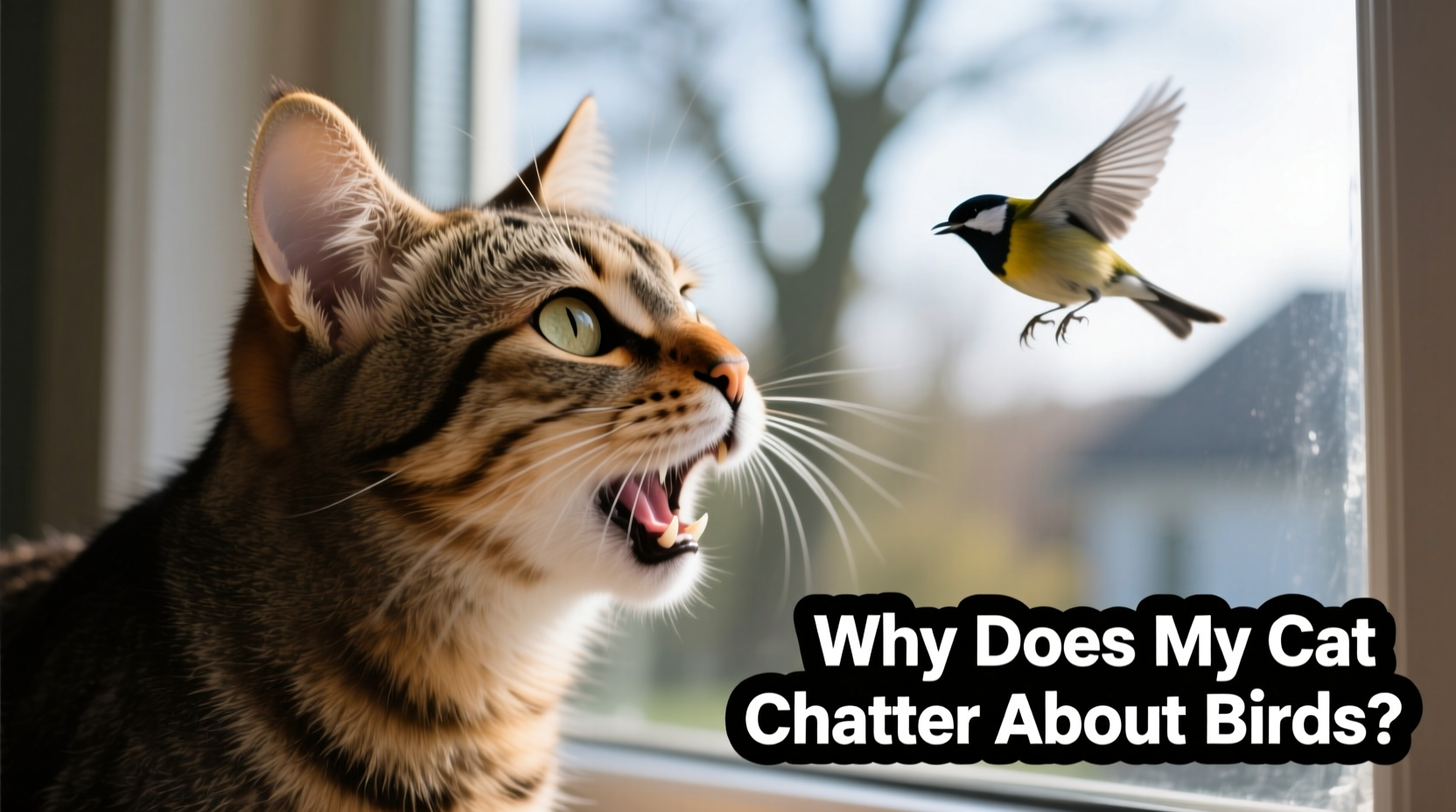
Cat chattering typically occurs when a cat spots potential prey—most commonly birds, but also squirrels, insects, or small rodents—through a window or screen. The sound is characterized by a series of rapid, teeth-chattering clicks or buzzes produced by the jaw vibrating quickly. It often coincides with intense focus, dilated pupils, twitching tail, and forward-leaning posture.
This behavior is not vocal in the traditional sense (like meowing or purring), but rather a physical action involving the jaw and tongue. Researchers believe the motion mimics the “killing bite” that cats use to sever the spinal cord of small prey. In the wild, this precise bite is essential for efficient hunting. When a domestic cat sees a bird but cannot reach it, the motor pattern activates anyway—leading to the signature chatter.
Tip: If your cat frequently chatters at birds, consider rotating window perches or using bird feeders out of direct line of sight to reduce obsessive behavior.Frustration vs. Instinct: Two Competing Explanations
There are two primary theories explaining why cats chatter at birds: one emphasizes emotional frustration, while the other focuses on hardwired predatory instincts.
Frustration Theory: The Captive Hunter
One school of thought suggests that chattering is a response to thwarted hunting desire. Cats are natural hunters, and their brains are wired to act when prey is detected. When a bird is visible but inaccessible—separated by glass or screens—the cat experiences a conflict between impulse and reality. This creates a state of arousal without release, leading to what scientists call \"redirected behavior.\"
In such cases, the chattering may be an outlet for pent-up energy and instinctual drive. Behavioral studies show that cats exhibit higher levels of stress hormones after prolonged exposure to unreachable prey, especially if they're indoor-only and lack alternative outlets for hunting behavior.
“Chattering can be seen as a displacement activity—a way for cats to cope with the inability to complete a natural sequence of actions.” — Dr. Sarah Ellis, Feline Behavior Scientist, University of Lincoln
Hunting Practice Theory: Rehearsing the Kill
A more widely supported explanation is that chattering is a form of motor rehearsal. Even though the cat cannot physically pursue the bird, its brain simulates the final stage of the hunt. The jaw movement closely resembles the precision bite used to dispatch small animals quickly and humanely (from a survival standpoint).
Neurological research on felids shows that visual stimuli from fast-moving prey trigger specific neural pathways associated with predation—even in well-fed domestic cats. These circuits activate the muscles involved in biting and killing, resulting in the chattering motion. In essence, the cat isn’t just excited; it’s mentally preparing for action.
This theory aligns with observations that cats often chatter most intensely just before pouncing during play. Toys that mimic bird movements—feather wands, robotic birds—also elicit similar sounds, suggesting the behavior is tied to the predatory sequence, not just frustration.
Is Chattering a Sign of Stress or Excitement?
Determining whether chattering reflects positive or negative emotions requires context. Most experts agree that initial chattering is driven by excitement and high arousal, not distress. However, if the stimulus persists without resolution, it can shift into frustration or mild stress.
Key indicators help differentiate:
- Excitement signs: Forward ear position, focused gaze, tail tip flicks, crouched posture, spontaneous play afterward.
- Frustration/stress signs: Prolonged staring without blinking, excessive vocalization beyond chattering, pacing, redirected aggression, or sudden disengagement.
In many cases, short bursts of chattering followed by grooming or napping indicate a healthy expression of instinct. But if your cat becomes fixated on birds for hours each day, it may benefit from environmental enrichment to redirect that energy.
How to Support Your Cat’s Natural Instincts Without Encouraging Frustration
While you can’t eliminate chattering—and shouldn’t want to—it’s important to ensure your cat has healthy outlets for its predatory drive. A life devoid of hunting opportunities, even symbolic ones, can lead to boredom, anxiety, or compulsive behaviors.
Step-by-Step Guide: Creating a Stimulating Indoor Environment
- Provide Daily Interactive Play Sessions
Use wand toys that mimic bird flight patterns (zigzagging, fluttering). Aim for 10–15 minutes twice daily to simulate the full hunt-catch-kill-eat sequence. - Rotate Toys Regularly
Cats habituate quickly. Rotate 3–5 toys weekly to maintain novelty. Include puzzle feeders that require “hunting” for food. - Install Perches Near Windows
Elevated seating gives cats control over their view. Add transparent shelves or window hammocks so they can observe without feeling trapped. - Limit Unreachable Prey Exposure
Position bird feeders either very close to windows (so birds move too fast to target) or far away (beyond clear visibility). Alternatively, use frosted film to partially obscure views. - Introduce Safe Outdoor Experiences
Consider leash training or a secure catio (cat patio) where your cat can experience the outdoors under supervision.
Checklist: Signs Your Cat’s Chattering Is Healthy vs. Problematic
| Healthy Chattering | Potentially Problematic Chattering |
|---|---|
| Occurs briefly upon spotting prey | Lasts for extended periods (over 30 minutes) |
| Followed by grooming or resting | Leads to pacing, vocalizing, or aggression |
| Happens occasionally | Daily, obsessive fixation on windows |
| Also occurs during play | Never occurs during interactive games |
| No physical tension (relaxed body) | Tense muscles, flattened ears, dilated pupils long after stimulus gone |
Real Example: Luna the Apartment Cat
Luna, a 3-year-old Siamese living in a high-rise apartment, began chattering excessively at pigeons on the balcony railing. Her owner noticed she would stare for hours, becoming agitated and swatting at the glass. Over time, Luna started showing redirected aggression toward her owner during these episodes.
After consulting a veterinary behaviorist, the owner implemented changes: installing a frosted window decal to break up reflections, adding a perch with a view of a busy street (less bird traffic), and introducing two 10-minute feather wand sessions per day. Within three weeks, Luna’s chattering decreased in duration, and she no longer displayed aggressive behaviors. The structured play routine gave her a constructive outlet for her instincts.
This case illustrates how environmental adjustments and behavioral support can transform potentially stressful stimulation into manageable, enriching experiences.
Expert Insight: What Veterinarians and Ethologists Say
Feline ethologists—scientists who study animal behavior—largely agree that chattering is a normal, adaptive behavior with roots in evolution.
“The chattering jaw snap is neurologically linked to the kill bite. Even indoor cats retain this programming because domestication hasn’t erased millions of years of predatory adaptation.” — Dr. John Bradshaw, Anthrozoologist and Author of *Cat Sense*
Veterinarians also emphasize that suppressing natural behaviors can do more harm than good. Instead of discouraging chattering, the goal should be to provide balance.
“We don’t want cats to stop being cats. We want them to express their instincts in ways that keep them mentally healthy and emotionally fulfilled.” — Dr. Elizabeth Colleran, DVM, Diplomate ACVB
FAQ: Common Questions About Cat Chattering
Do all cats chatter at birds?
No, not all cats chatter. Some breeds, like Siamese and other Oriental types, are more prone to vocal and motor expressions of excitement. Individual personality and early life experiences also play a role. Shy or less predatory cats may simply watch silently.
Can chattering be a sign of dental pain?
Rarely. While jaw movements could theoretically relate to oral discomfort, true chattering is rhythmic and context-specific (only during prey observation). If your cat makes similar sounds randomly or avoids eating, consult a vet. Otherwise, it’s likely instinctual.
Should I let my cat outside to catch birds?
No. Allowing cats to hunt birds poses serious ecological and safety risks. Free-roaming cats contribute to declining bird populations and face dangers like traffic, disease, and predators. Instead, provide simulated hunting through toys and supervised outdoor enclosures.
Conclusion: Embracing the Wild Side of Your Domestic Cat
Your cat’s chattering at birds isn’t a quirk to correct—it’s a window into their ancestral mind. Whether fueled by instinctual rehearsal or momentary frustration, this behavior reveals the depth of their predatory heritage and the complexity of their emotional responses. Rather than suppress it, embrace it as a sign of a healthy, engaged feline.
By understanding the reasons behind the chatter and providing appropriate outlets, you honor your cat’s nature while maintaining harmony in your home. Offer enriching play, manage visual stimuli wisely, and observe with curiosity rather than concern. In doing so, you’re not just caring for a pet—you’re supporting a predator in a peaceful world.
💬 Have a story about your cat’s chattering habits? Share your experience below and connect with fellow cat lovers who appreciate the wild heart within their furry companions.








