
Stretching in the morning, after sitting for hours, or during a yoga session often comes with a familiar sound: a sharp pop or grinding noise from your back. For many, it’s satisfying. For others, it’s concerning. Is that cracking dangerous? Does it mean you’re damaging your spine? Or is it just a natural part of movement?
The truth is, joint noises—especially in the spine—are common and usually benign. But misinformation abounds. From viral social media claims to outdated advice from well-meaning friends, myths about joint cracking persist. This article separates fact from fiction, explains the science behind those pops, and helps you understand when to pay attention—and when to relax.
The Science Behind Joint Cracking
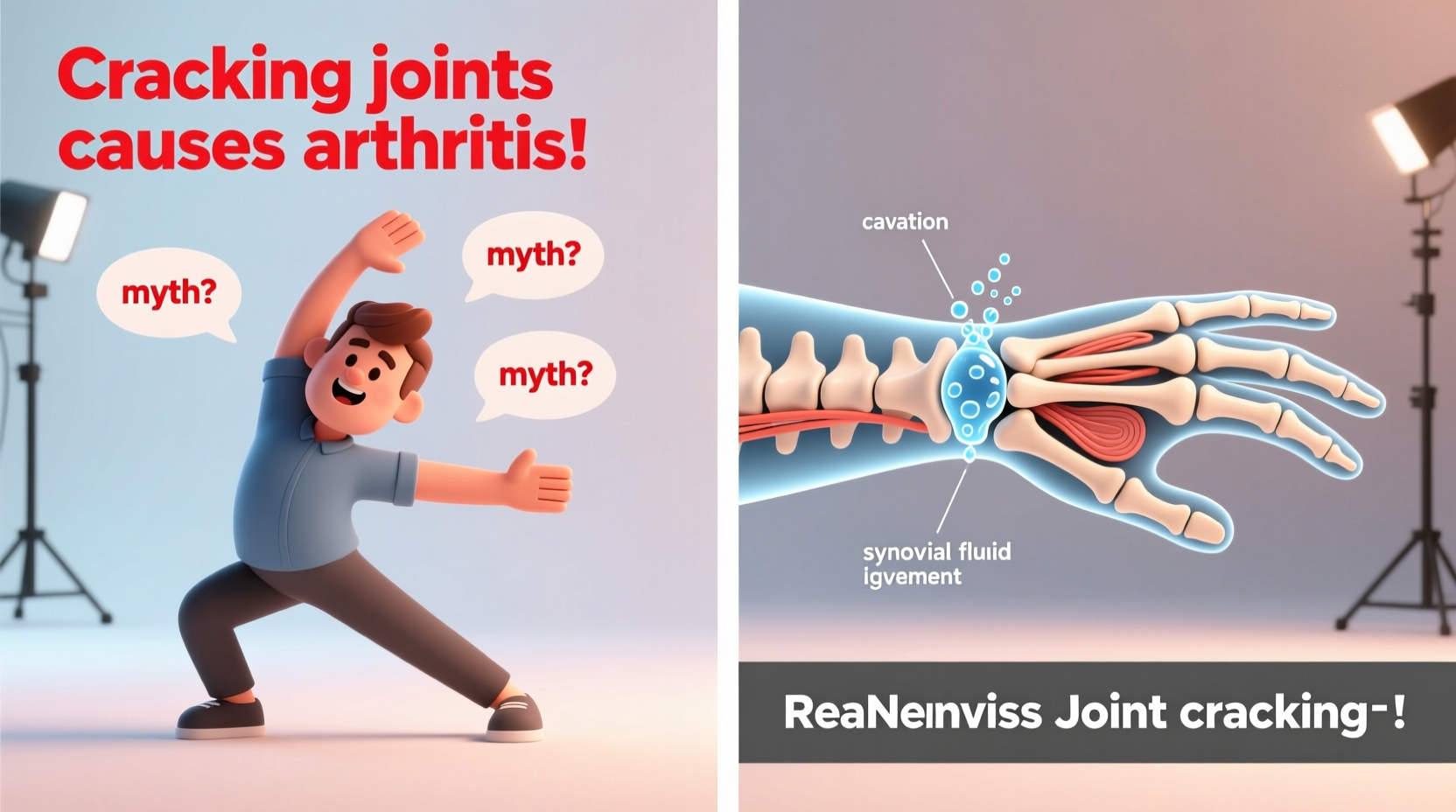
When you stretch and hear a crack in your back, the most likely explanation lies in a process called *cavitation*. Inside each joint—including the facet joints along your spine—is synovial fluid, a lubricant that reduces friction between bones. This fluid contains dissolved gases like nitrogen, carbon dioxide, and oxygen.
When you move or stretch, especially into extension or rotation, the pressure inside the joint capsule drops suddenly. This change causes the gases to form a bubble, which then collapses rapidly—producing the audible “pop” or “crack.” The same mechanism occurs when someone cracks their knuckles.
A 2015 study published in PLoS One used real-time MRI to observe knuckle cracking and confirmed that the sound results from cavity formation, not bone-on-bone contact as some believe. While this research focused on fingers, the biomechanics apply similarly to spinal joints.
Tip: The \"crack\" isn’t damage—it’s physics. If the sound is painless and doesn’t limit movement, it’s almost certainly harmless.Common Myths About Back Cracking—Debunked
Fear often stems from misunderstanding. Let’s dismantle some of the most persistent myths surrounding spinal joint sounds.
Myth 1: Cracking Your Back Causes Arthritis
False. There is no scientific evidence linking habitual joint cracking to osteoarthritis. A landmark study by Dr. Donald Unger, who cracked the knuckles on one hand for over 60 years and left the other untouched, found no difference in arthritis development between the two hands. He won an Ig Nobel Prize for his dedication—and his findings have been supported by broader clinical research.
Myth 2: Popping Means You’re “Putting Vertebrae Back In Place”
Misleading. While spinal manipulation (such as chiropractic adjustment) can restore motion to a restricted joint, the audible pop does not confirm that anything was “out” or has now been “fixed.” Joint alignment issues are diagnosed through imaging and physical exams—not by sound.
Myth 3: Frequent Cracking Weakens Joints
Unfounded. Cavitation is a temporary gas release. It doesn’t wear down cartilage or destabilize joints. However, aggressively manipulating your spine using poor technique or excessive force can lead to ligament strain or muscle irritation—so context matters.
Myth 4: All Joint Noises Are Normal
Not always true. While occasional popping is typical, repetitive grinding, grating, or clicking—especially when paired with pain or stiffness—may indicate underlying changes such as degenerative disc disease, facet joint arthritis, or soft tissue dysfunction.
“Joint cavitation is a physiological event, not a pathological one. The sound alone doesn’t diagnose injury.” — Dr. Susan Lee, Physical Therapist and Spine Biomechanics Researcher
When Joint Sounds Signal Something Else
Most back cracking is innocuous. But certain patterns warrant attention. Here’s how to tell the difference between normal and potentially problematic joint noise:
- Pain-free, infrequent pops during stretching: Typically normal.
- Repetitive grinding or crunching (crepitus), especially in the neck or lower back: May reflect joint surface irregularities.
- Clicking with muscle spasms: Could suggest joint fixation or compensatory movement patterns.
- Sudden onset of noise after trauma: Should be evaluated if accompanied by reduced mobility or radiating symptoms.
Crepitus—the medical term for grating joint sounds—can occur when cartilage wears down or when tendons snap over bony prominences. Unlike the single cavitation pop, crepitus tends to repeat with every movement and may feel rough internally.
Red Flags That Warrant Medical Evaluation
If your back cracking is associated with any of the following, consult a healthcare provider:
- Pain during or after the pop
- Swelling or warmth around the area
- Numbness, tingling, or weakness in legs
- Loss of bladder or bowel control (seek emergency care)
- Progressive stiffness or reduced range of motion
Safe Ways to Stretch and Mobilize Your Back
Movement is medicine—but technique matters. Whether you're stretching independently or working with a professional, here’s how to support spinal health without risking harm.
Do’s and Don’ts of Back Mobilization
| Do | Don’t |
|---|---|
| Warm up before deep stretching (e.g., walking or light movement) | Force a stretch to create a pop |
| Move slowly and mindfully through full ranges of motion | Twist violently or use momentum |
| Incorporate daily mobility exercises (e.g., cat-cow, thoracic rotations) | Crack your neck by twisting sharply |
| Seek professional help if you feel stuck or restricted | Rely solely on self-manipulation for chronic discomfort |
| Breathe deeply during stretches to relax muscles | Ignore pain as a signal to stop |
Step-by-Step: Gentle Morning Back Release Routine
This simple sequence promotes healthy joint movement and may reduce the urge to forcefully crack your back.
- Lie on your back with knees bent, feet flat. Take 5 slow breaths, relaxing your lower back into the floor.
- Knee-to-chest stretch: Gently pull one knee toward your chest. Hold 20 seconds. Repeat on the other side.
- Supine twist: Bring both knees to one side while keeping shoulders grounded. Hold 20 seconds. Switch sides.
- Cat-Cow flow: On hands and knees, alternate arching and rounding your back slowly for 1 minute.
- Child’s pose: Sit back onto heels, arms extended forward. Breathe deeply for 30–60 seconds.
This routine encourages natural joint lubrication and muscle relaxation without aggressive manipulation.
Tip: Hydration supports synovial fluid quality. Drink water throughout the day to maintain joint health.Real Example: Sarah’s Story
Sarah, a 34-year-old software developer, started noticing frequent cracking in her lower back after long workdays. She’d twist in her chair trying to “get it to pop,” finding temporary relief. Over time, the relief shortened, and she began feeling soreness afterward.
She visited a physical therapist who explained that her self-manipulation wasn’t harmful per se, but it was masking poor posture and weak core muscles. The repeated cracking was a sign of joint hypermobility in one segment compensating for stiffness elsewhere.
Her treatment plan included postural correction, diaphragmatic breathing, and targeted core stabilization exercises. Within six weeks, Sarah reported less need to crack her back and improved overall comfort—even during long coding sessions.
Her case illustrates a key point: joint sounds aren’t always the problem. They’re often a symptom of movement imbalance.
Expert Insight: What Professionals Recommend
Healthcare providers agree: context is everything.
“The goal isn’t to eliminate joint noise—it’s to ensure movement is balanced, pain-free, and functional. We don’t treat sounds; we treat patterns.” — Dr. Marcus Reed, Doctor of Physical Therapy and Orthopedic Specialist
Chiropractors, physical therapists, and osteopathic physicians may use controlled high-velocity, low-amplitude thrusts (HVLA) to improve joint mobility. These adjustments often produce cavitation—but the therapeutic benefit comes from restored motion, not the sound itself.
Self-cracking lacks precision. Repeatedly targeting the same segment can lead to capsular laxity (loose ligaments), making the joint feel “unstable” or “like it needs constant fixing.” A better approach is addressing root causes: sedentary habits, poor ergonomics, or muscular imbalances.
Frequently Asked Questions
Is it bad to crack my back every day?
Occasional self-cracking isn’t harmful if done gently and without pain. However, doing it daily—especially aggressively—can lead to reliance or minor soft tissue irritation. Focus instead on consistent mobility work and posture improvement.
Why does only one spot in my back crack repeatedly?
This often happens because mobile segments compensate for stiff ones. The “crack-happy” area moves too easily, while adjacent levels remain restricted. A physical therapist can assess your spinal motion pattern and prescribe corrective exercises.
Can stretching cause a herniated disc?
Proper stretching is extremely unlikely to cause a disc herniation. Disc injuries typically result from cumulative loading, poor lifting mechanics, or sudden trauma—not passive stretching. If you have a known disc issue, consult a professional before starting new routines.
Conclusion: Listen to Your Body, Not Just the Noise
The sound of your back cracking when you stretch is usually nothing to fear. It’s a natural biomechanical event, not a warning siren. But neither should it be glorified as a cure-all. The real measure of spinal health isn’t silence or symphony—it’s function.
Movement without pain, strength through range, and resilience in daily life matter far more than whether your joints make noise. If you’re concerned, seek clarity from a qualified provider. If you’re comfortable, keep moving—just do so with awareness and care.
💬 Have questions about your own experience? Share your story in the comments—we’d love to help you understand your body better.








