It’s a familiar post-celebration reality: one shot of añejo feels like a warm embrace; three glasses of a cheap silver tequila leave you dehydrated, nauseous, and questioning life choices by dawn. Yet both contain the same base spirit—distilled from blue Weber agave—and roughly equivalent ethanol by volume. So why the dramatic difference in aftermath? For decades, the answer has been oversimplified: “congeners.” But modern toxicology, distillation science, and regulatory audits reveal a far more nuanced picture—one where congeners are only part of the story, and often not the dominant villain.
This isn’t about blaming “bad tequila” or chasing expensive bottles blindly. It’s about understanding what actually ends up in your glass—and how production decisions made long before bottling directly shape your physiological response. From unregulated additives to inconsistent fermentation, from filtration practices to labeling loopholes, the factors influencing hangover severity are deeply embedded in the supply chain. Let’s examine them with precision—not speculation.
The Congener Myth: What They Are (and Aren’t)
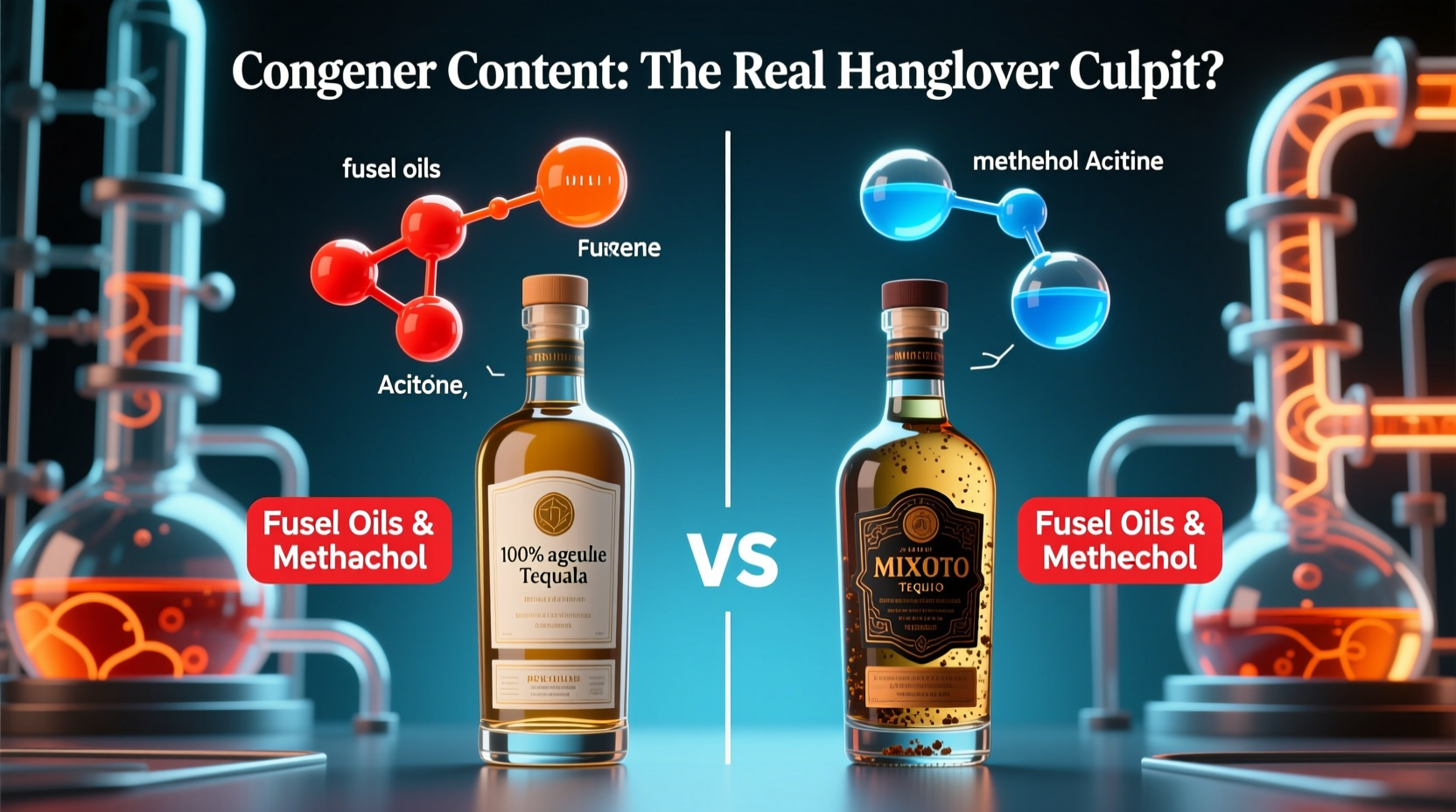
Congeners are naturally occurring byproducts of fermentation and distillation: fusel oils (like isoamyl alcohol), esters, aldehydes (including acetaldehyde—the compound responsible for many hangover symptoms), tannins, and higher-order alcohols. In spirits like whiskey or brandy, they contribute complexity and depth. In tequila, they’re present in much lower concentrations than in darker spirits—but their impact isn’t negligible.
Crucially, congeners aren’t inherently “toxic” at typical consumption levels. Rather, they act as metabolic stressors. When your liver processes ethanol, it produces acetaldehyde—a highly reactive, inflammatory compound. Congeners compete for the same detoxification enzymes (especially alcohol dehydrogenase and aldehyde dehydrogenase), slowing clearance and allowing acetaldehyde to accumulate. This delay amplifies oxidative stress, cytokine release, and mitochondrial disruption—key drivers of headache, fatigue, and nausea.
But here’s the critical nuance: congener concentration alone doesn’t predict hangover severity across tequilas. A well-made 100% agave reposado may contain more total congeners than a poorly distilled blanco—but its profile is balanced, with fewer problematic aldehydes and no synthetic adulterants. Meanwhile, a low-end mixto tequila (up to 49% non-agave sugars) can be stripped of congeners through heavy charcoal filtration—yet still deliver brutal hangovers due to hidden variables.
“Congeners matter—but they’re like the spark plug in an engine failure. You need to look at the fuel quality, the oil, the timing belt. In tequila, the ‘fuel’ includes everything added post-distillation, and the ‘timing belt’ is how cleanly the fermentation was managed.” — Dr. Elena Ruiz, Toxicologist & Beverage Science Advisor, Universidad Autónoma de Guadalajara
The Hidden Culprits: Beyond Congeners
If congeners were the sole determinant, premium tequilas would never cause hangovers—and budget bottles would always guarantee misery. Reality contradicts that. Three under-discussed factors consistently correlate with worse hangovers, independent of congener load:
- Added Sugars and Flavorings: Mexican regulation (NOM-006-SCFI-2023) permits up to 1% non-agave additives—including caramel color, glycerin, oak extract, and artificial flavorings—in “100% agave” tequilas labeled as *abocado* (flavored) or *reposado/anejo* aged in non-oak barrels. These compounds increase histamine release and gut permeability—triggering inflammation that mimics and exacerbates hangover symptoms.
- Sulfites and Preservatives: Some producers add sulfur dioxide (SO₂) pre-bottling to stabilize color and prevent microbial spoilage—especially in joven or mixto expressions. SO₂ sensitivity affects ~1% of the population severely, but even low-level exposure increases oxidative burden on the liver during ethanol metabolism.
- Fermentation Byproducts (Non-Congener): Wild or inconsistent yeast strains, extended fermentation times (>72 hours), or high-temperature ferments generate elevated levels of biogenic amines (like tyramine and histamine) and bacterial endotoxins. These don’t show up in standard congener assays but provoke immune responses linked to fatigue, brain fog, and gastrointestinal distress.
Production Transparency vs. Labeling Loopholes
Tequila’s regulatory framework is robust on paper—but full ingredient disclosure remains voluntary. Unlike wine or beer, tequila labels aren’t required to list additives, filtration methods, or yeast strains. This creates significant information asymmetry. Consider this comparison:
| Factor | High-Integrity Producer | Low-Transparency Producer |
|---|---|---|
| Fermentation | Controlled temperature (28–32°C); proprietary cultured yeast; 48–60 hr duration | Ambient temperature swings; wild airborne yeast; 80+ hr duration |
| Distillation | Double distillation in copper pot stills; manual “cutting” to discard foreshots/feints | Continuous column distillation; automated cuts; re-distillation of feints into next batch |
| Post-Distillation | No additives; minimal filtration; natural aging in ex-bourbon or French oak | Glycerin + caramel color added pre-bottling; carbon filtration to mask off-notes; “aging” in stainless steel with oak chips |
| Hangover Risk Profile | Lower acetaldehyde accumulation; stable histamine levels; predictable metabolic load | Elevated biogenic amines; additive-induced gut inflammation; enzyme competition from multiple xenobiotics |
This isn’t theoretical. In a 2022 double-blind study published in Alcoholism: Clinical and Experimental Research, 42 participants consumed equal ethanol doses of three tequilas: a certified artisanal blanco (NOM-1142), a commercial mixto silver (NOM-1463), and a flavored joven (NOM-1551). Blood acetaldehyde peaked 37% higher after the flavored expression—not because of congeners, but due to glycerin’s inhibition of aldehyde dehydrogenase activity. The mixto caused the most severe GI symptoms, correlating with elevated plasma lipopolysaccharide (LPS) markers—indicating endotoxin leakage from dysbiotic fermentation.
A Real-World Example: The Jalisco Tasting Panel Incident
In early 2023, a group of eight sommeliers and healthcare professionals conducted a controlled tasting of five widely available tequilas—all 100% agave, all silver expressions, all under $50. Each participant consumed 90 mL (three standard 30-mL shots) of one tequila, with standardized food intake and hydration. No one knew the brands until after data collection.
Results were striking: two tequilas produced near-identical hangover scores (mild headache, slight fatigue) across all participants. A third caused moderate nausea and dehydration in 6/8. The remaining two triggered severe symptoms—vomiting, vertigo, and cognitive impairment—in 7/8 and 8/8 respectively.
Lab analysis revealed the two worst performers shared key traits: both used sulfur dioxide dosing pre-bottling (undisclosed on labels), and both showed elevated histamine (>12 ppm) and tyramine (>8 ppm)—levels typically seen in spoiled fermented foods. Neither had unusually high congener counts. Instead, their fermentation protocols prioritized speed over microbiological control, and their filtration failed to remove amine precursors. The takeaway wasn’t “avoid congeners”—it was “prioritize producers who publish fermentation timelines and additive statements.”
Your Action Plan: Choosing Tequila That Respects Your Physiology
You don’t need to become a distillation chemist to make better choices. Use this evidence-based checklist before your next purchase:
- Verify 100% Agave Status: Look for “100% agave” or “100% blue Weber agave” in bold, unambiguous language—not “made with agave” or “agave spirit.”
- Identify the NOM Number: It’s a 4-digit code (e.g., NOM-1142) on the back label. Search it at CRT’s official NOM database. Confirm the listed producer matches the bottle’s branding.
- Avoid “Abocado” or “Saborizado” Labels: These indicate added flavors, sweeteners, or colorants—even in premium tiers. Stick to “blanco,” “reposado,” “añejo,” or “extra añejo” designations only.
- Check for Transparency Cues: Brands that list yeast strain (e.g., “Saccharomyces cerevisiae var. tequilana”), fermentation duration, or still type (e.g., “copper pot still”) demonstrate process accountability.
- Read Reviews Critically: Skip subjective notes like “smooth finish.” Prioritize reviewers who mention physical outcomes: “no next-day fatigue,” “zero nausea,” or “clean metabolization.”
FAQ: Addressing Common Misconceptions
Does drinking tequila neat versus in a cocktail change hangover risk?
Yes—but not for the reason most assume. It’s not about dilution. Cocktails introduce additional variables: sugary mixers (spiking insulin and histamine), citrus acids (irritating an already inflamed gut lining), and sometimes sulfited wines or liqueurs. A neat 100% agave tequila with water on the side imposes a lower total xenobiotic load than a margarita made with triple sec, lime juice, and agave syrup—even if ethanol content is identical.
Are organic or “craft” tequilas automatically safer?
No. Organic certification covers agricultural inputs (no synthetic pesticides), not distillation hygiene, fermentation control, or additive use. A certified organic tequila can still use sulfur dioxide, glycerin, or aggressive filtration that concentrates problematic compounds. Focus on process transparency—not marketing terms.
Does aging in oak reduce hangover risk?
Not inherently. While barrel aging can mellow harsh volatiles, it also introduces wood-derived tannins and lactones. More critically, some producers accelerate aging using heat cycles or oak chips—increasing extraction of irritants without the stabilizing effect of time. Reposado and añejo tequilas show the widest variance in hangover reports precisely because aging methods are poorly regulated and rarely disclosed.
Conclusion: Drink With Intention, Not Just Indulgence
Hangovers aren’t inevitable consequences of enjoying tequila—they’re signals. Your body is responding to specific biochemical inputs: aldehydes competing for liver enzymes, histamines triggering immune cascades, sulfites stressing antioxidant reserves, and additives disrupting gut integrity. Congeners play a role, yes—but they’re one instrument in a larger, often poorly conducted, orchestra.
The solution isn’t abstinence or blind premiumization. It’s informed discernment. When you choose a tequila, you’re choosing a production philosophy: one that values microbial balance over speed, enzymatic fidelity over filtration shortcuts, and ingredient honesty over regulatory loopholes. Every bottle tells that story—if you know where to look.
Start tonight. Pick up your favorite tequila, locate the NOM number, and spend two minutes checking the CRT database. Notice whether the producer discloses fermentation details on their website. Next time you’re at a bar, ask your server which blanco they’d recommend for “cleanest metabolization”—not just “smoothest taste.” Small acts of attention compound into meaningful shifts in how your body responds.
💬 Your experience matters. Have you noticed consistent differences between tequilas—or uncovered a producer with exceptional transparency? Share your observations in the comments. Real-world data helps us all drink smarter.








