
In an era where entire seasons of television are released at once and streaming platforms dominate entertainment, binge watching has become a cultural norm. No longer a rare indulgence, marathon viewing is now a nightly ritual for millions. But what drives this behavior? Behind the seemingly passive act of watching episode after episode lies a complex web of psychological, emotional, and neurological factors. From dopamine-driven rewards to social belonging and escapism, the reasons people binge watch go far beyond simple entertainment.
Understanding the psychology behind binge watching isn't just about curiosity—it’s essential for managing screen time, maintaining mental well-being, and fostering healthier relationships with media. This article explores the cognitive mechanisms, emotional needs, and societal shifts that fuel our obsession with continuous storytelling.
The Dopamine Loop: How Shows Hook the Brain
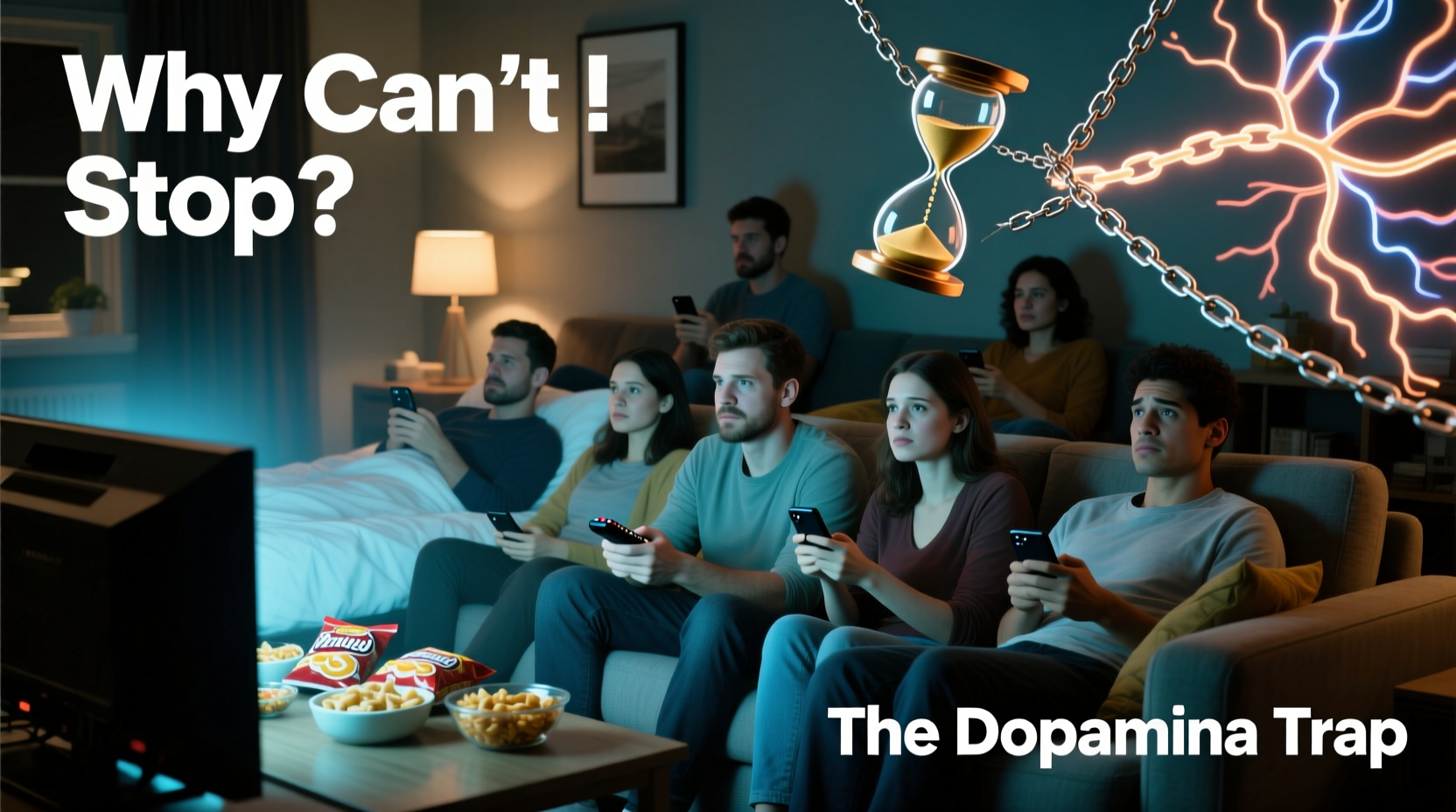
The human brain is wired to respond to novelty, suspense, and resolution—all elements skillfully embedded in modern television narratives. When viewers watch a show, especially one with cliffhangers or unresolved tension, the brain releases dopamine, a neurotransmitter associated with pleasure, motivation, and reward. This creates a feedback loop: anticipation builds during suspenseful moments, and when a plot point resolves, dopamine spikes, reinforcing the desire to keep watching.
Streaming services have mastered this mechanism by eliminating commercial breaks and using auto-play features that begin the next episode within seconds. This seamless transition reduces friction and decision fatigue, making it easier to continue than to stop. The result? A psychological \"just one more episode\" trap that can stretch hours into late-night marathons.
“Binge watching exploits the same neural pathways as other reward-based behaviors. It's not laziness—it's biology.” — Dr. Lena Peterson, Cognitive Psychologist at Stanford University
This dopamine-driven cycle mirrors patterns seen in gaming and social media use. The unpredictability of narrative outcomes keeps the brain engaged, similar to how slot machines use variable rewards to maintain user attention. Over time, viewers may develop conditioned responses: dimming the lights, grabbing snacks, and settling in becomes a ritual that signals the brain to prepare for pleasurable stimulation.
Escapism and Emotional Regulation
One of the most powerful drivers of binge watching is its role as a form of emotional escape. In times of stress, loneliness, or anxiety, immersive storytelling offers a temporary retreat from reality. Characters become companions; fictional worlds provide structure and predictability absent in real life. For many, turning on a familiar show feels like visiting a safe space where problems are solvable and endings are satisfying.
Psychologists refer to this as “self-soothing through media consumption.” Unlike passive distraction, binge watching often involves deep engagement—viewers project themselves into storylines, empathize with characters, and experience catharsis through dramatic arcs. This emotional investment can be therapeutic in moderation but problematic when used excessively to avoid dealing with real-world issues.
Tip: If you find yourself reaching for a show every time you feel stressed, try journaling or a short walk first. Notice whether your viewing is intentional or automatic.A 2020 study published in the Journal of Communication found that individuals with higher levels of perceived stress were significantly more likely to engage in prolonged viewing sessions. Similarly, those experiencing loneliness reported stronger emotional connections to fictional characters, sometimes describing them as “friends” who never judge or abandon them.
Social Connection and Cultural Participation
Beyond personal comfort, binge watching serves a social function. In a fragmented media landscape where traditional appointment viewing (watching live TV at a set time) has declined, catching up on popular series allows people to stay culturally relevant. Discussing plot twists on social media, participating in fan theories, or avoiding spoilers becomes part of social currency.
Consider the phenomenon around shows like *Stranger Things*, *Squid Game*, or *The Last of Us*. These aren’t just watched—they’re experienced collectively, even when viewed alone. Bingeing enables rapid entry into these conversations. Waiting weeks between episodes risks social exclusion; consuming a season in days ensures inclusion.
This pressure to participate contributes to what researchers call “FOMO-driven viewing”—fear of missing out on shared experiences. Platforms amplify this by trending lists, recommendation algorithms, and notifications like “90% of viewers continued to Episode 5.” Social validation becomes intertwined with consumption speed.
| Motivation | Psychological Need | Example Behavior |
|---|---|---|
| Dopamine Seeking | Reward & Novelty | “Just one more episode” despite being tired |
| Emotional Escape | Stress Relief | Watching after a difficult workday |
| Social Belonging | Connection & Inclusion | Bingeing before a group discussion |
| Narrative Immersion | Cognitive Engagement | Feeling emotionally invested in character fates |
| Habitual Routine | Structure & Comfort | Always watching after dinner |
The Role of Narrative Design and Platform Engineering
Modern television is no longer designed for weekly consumption. Writers craft serialized stories with long arcs, interwoven subplots, and slow-burn mysteries that reward sustained attention. The shift from episodic formats (where each episode stands alone) to serialized storytelling means skipping episodes or taking long breaks disrupts comprehension and emotional continuity.
Platforms reinforce this design. Netflix, Hulu, and Disney+ optimize interfaces for extended use: personalized recommendations, minimal ads, dark mode interfaces, and progress indicators (“You’re 80% through Season 2”) all nudge users toward completion. Interface cues subtly frame stopping as failure and finishing as achievement.
Moreover, many shows employ “narrative hooks” at the end of episodes—sudden revelations, character betrayals, or shocking deaths—that trigger what psychologists call the Zeigarnik effect: the tendency to remember uncompleted tasks more vividly than completed ones. Unresolved tension lingers in the mind, creating mental discomfort that only continuing the story can resolve.
Mini Case Study: Alex and the Weekend Binge
Alex, a 29-year-old graphic designer, had a stressful week at work. On Friday night, they opened a new sci-fi series recommended by a friend. After two episodes, it was midnight. Despite feeling tired, Alex kept going—drawn in by mysterious world-building and a protagonist facing moral dilemmas. By Sunday evening, all eight episodes were finished.
At first, Alex felt accomplished. But reflection revealed a pattern: every weekend ended with a binge, leaving little time for exercise, cooking, or calls with family. What started as relaxation became a default coping mechanism. Recognizing this, Alex began setting viewing limits and scheduling alternative activities. Within weeks, energy levels improved, and weekend binges became occasional rather than automatic.
Alex’s story illustrates how binge watching begins innocently but can evolve into a behavioral habit shaped by both internal needs and external design.
When Binge Watching Becomes Problematic
While occasional marathon viewing is harmless, habitual bingeing can interfere with sleep, productivity, and relationships. Research from the University of Toledo found that frequent binge watchers report higher levels of depression, anxiety, and insomnia. Prolonged sedentary behavior also increases risks for physical health issues like obesity and cardiovascular strain.
Signs that binge watching may be crossing into unhealthy territory include:
- Consistently sacrificing sleep to finish a season
- Neglecting responsibilities or social obligations
- Feeling irritable when unable to watch
- Using shows to avoid uncomfortable emotions
- Losing track of time regularly while viewing
These behaviors suggest that viewing is no longer a choice but a compulsion—a way to regulate mood at the expense of long-term well-being.
Checklist: Healthy Viewing Habits
To maintain balance, consider adopting these practices:
- Set a timer before starting a session to define viewing boundaries.
- Choose intentionally—ask if you’re watching because you want to or because you feel obligated.
- Pause between episodes—wait five minutes to reassess whether you truly want to continue.
- Engage socially—discuss shows with friends instead of consuming them alone.
- Track your time—use screen time reports to monitor weekly viewing.
- Create alternatives—have a list of non-screen activities ready for downtime.
FAQ: Common Questions About Binge Watching
Is binge watching officially considered an addiction?
Not currently recognized as a clinical diagnosis in major psychiatric manuals like the DSM-5, but researchers are studying “problematic media use” as a behavioral pattern with addictive qualities. While not identical to substance addiction, it shares features like loss of control, continued use despite negative consequences, and withdrawal-like symptoms.
Are some people more prone to binge watching?
Yes. Individuals with high levels of neuroticism, impulsivity, or loneliness tend to binge more frequently. Those with irregular schedules or shift workers may also use viewing to regulate circadian rhythms or fill downtime. Personality traits and life circumstances shape viewing habits significantly.
Can binge watching ever be beneficial?
Absolutely. Shared viewing can strengthen relationships, and engaging with meaningful stories can enhance empathy and perspective-taking. When done mindfully and in moderation, binge watching offers legitimate enjoyment and intellectual stimulation. The key is intentionality—not letting the habit run the schedule.
Conclusion: Reclaiming Control Over Your Viewing Life
Binge watching isn’t inherently good or bad—it’s a behavior shaped by powerful psychological forces and engineered environments. Understanding the motivations behind marathon viewing empowers us to make conscious choices rather than default reactions. Whether it’s seeking comfort, staying connected, or chasing narrative closure, awareness is the first step toward balance.
You don’t need to give up binge watching entirely. Instead, build a relationship with media that serves you—not one that controls your time and energy. Set boundaries, reflect on your habits, and reclaim agency over how and when you engage with stories. Entertainment should enrich life, not eclipse it.
🚀 Ready to take charge of your viewing habits? Start tonight: pick a show with intention, set a limit, and honor it. Share your commitment with someone—it’s the first step toward mindful media consumption.








