
In an age where streaming platforms offer entire seasons of anime at a single click, it’s no surprise that viewers often find themselves deep into a 10-hour marathon without realizing how much time has passed. This phenomenon—commonly known as binge-watching—is more than just passive entertainment. It’s a complex interplay of psychological triggers, narrative design, and emotional engagement. The immersive nature of anime, in particular, amplifies this behavior. Unlike many Western animated series, anime often features serialized storytelling, rich world-building, and emotionally layered characters that pull viewers into their universes for hours on end. Understanding why people binge-watch anime requires examining not just the medium itself, but the cognitive and emotional mechanisms that make such prolonged viewing both possible and pleasurable.
The Allure of Narrative Immersion
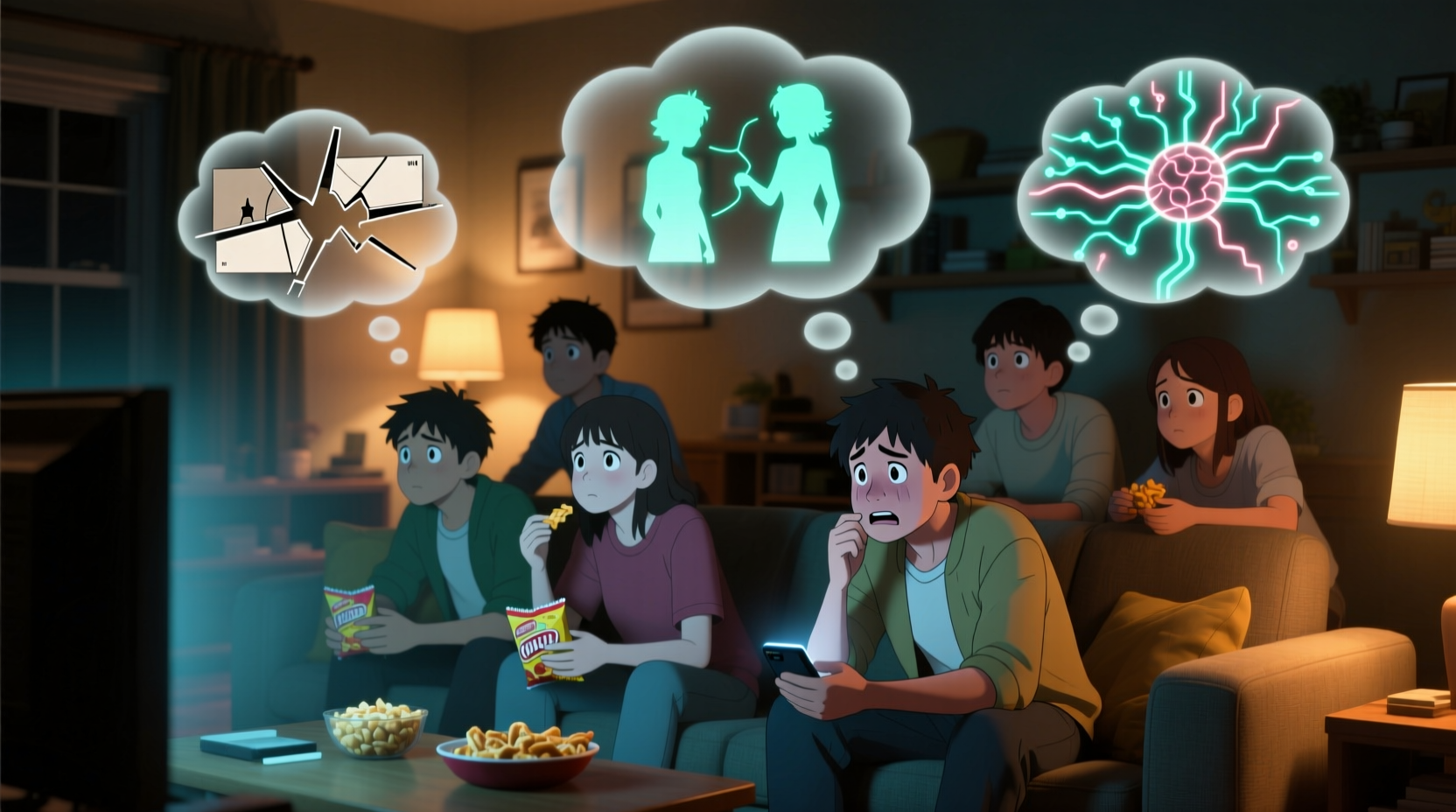
At the heart of anime binge-watching lies the concept of narrative immersion—the feeling of being mentally and emotionally absorbed in a story to the point where the real world fades away. Psychologists refer to this state as \"narrative transportation,\" where individuals lose awareness of their surroundings because their attention is fully captured by a compelling plot. Anime, with its often epic arcs spanning dozens or even hundreds of episodes, is uniquely suited to induce this effect.
Series like Attack on Titan, Fullmetal Alchemist: Brotherhood, or Death Note are built on tightly woven plots with escalating stakes, cliffhangers, and moral ambiguity. Each episode ends with a question or revelation that compels the viewer to continue. This technique, known as the \"cliffhanger loop,\" exploits the Zeigarnik Effect—a psychological principle stating that people remember uncompleted tasks better than completed ones. When a story is left unresolved, the brain remains engaged, creating a mental itch that only the next episode can scratch.
“Narrative immersion isn’t just about escapism—it’s about emotional investment. When viewers care deeply about characters and outcomes, they’re far more likely to keep watching.” — Dr. Naomi Chen, Cognitive Psychologist specializing in media consumption
The Role of Dopamine and Reward Systems
Binge-watching anime isn’t just a habit; it’s reinforced by the brain’s reward circuitry. Every twist, character development, or action sequence triggers a release of dopamine—the neurotransmitter associated with pleasure, motivation, and reinforcement learning. Streaming platforms enhance this effect by automatically playing the next episode, removing the need for active decision-making. This seamless transition reduces friction and keeps dopamine levels elevated, making it easier to continue watching.
Moreover, anime often employs pacing strategies that alternate between high-intensity scenes (battles, revelations) and quieter emotional moments. This rhythm mimics the structure of a rollercoaster, keeping the brain in a state of anticipation. Viewers aren’t just watching—they’re riding a wave of emotional highs and lows, each one reinforcing the desire to see what happens next.
Tip: If you're trying to moderate binge-watching, set a timer before starting a session. Knowing when to pause helps maintain control over your viewing habits.Emotional Resonance and Identity Projection
Anime frequently explores themes of identity, belonging, perseverance, and self-discovery—universal human concerns that resonate deeply with audiences. Characters like Naruto Uzumaki, who grows from an outcast to a hero, or Eren Yeager, driven by trauma and revenge, mirror real-life struggles. Viewers don’t just observe these journeys; they internalize them. This process, known as identification, allows fans to project parts of themselves onto protagonists, experiencing their triumphs and failures as if they were their own.
This emotional mirroring fosters a sense of companionship. For many, especially those experiencing loneliness or social isolation, anime characters become symbolic friends. A 2022 study published in the Journal of Media Psychology found that individuals who reported higher levels of social anxiety were more likely to engage in extended anime viewing sessions, citing feelings of connection and reduced emotional distress during playback.
The immersive quality of anime is further enhanced by stylistic elements: expressive animation, dramatic music scores, and voice acting that conveys intense emotion. These components work together to create a multisensory experience that strengthens emotional attachment and makes disengagement difficult.
Escapism and Psychological Relief
In times of stress, uncertainty, or routine fatigue, anime serves as a form of healthy escapism. Unlike aimless scrolling or passive TV viewing, anime offers structured narratives with clear progression, giving viewers a sense of purpose and direction—even if fictional. This temporary withdrawal from reality can provide psychological relief, functioning as a mental reset.
For students, remote workers, or individuals under prolonged pressure, binge-watching becomes a ritual of decompression. The predictability of a storyline (knowing there’s a beginning, middle, and end) contrasts with the unpredictability of daily life, offering a rare sense of control. In this context, immersion isn’t avoidance—it’s regulation. The mind uses the narrative as a container for emotions, allowing users to process stress indirectly through character experiences.
However, when escapism becomes a default coping mechanism, it risks tipping into maladaptive behavior. Excessive binge-watching can lead to sleep deprivation, procrastination, and emotional numbing—especially when used to suppress rather than process feelings.
| Psychological Benefit | Healthy Use | Risk of Overuse |
|---|---|---|
| Stress Reduction | Short-term relaxation after work | Avoiding responsibilities |
| Emotional Connection | Feeling understood by characters | Replacing real relationships |
| Mental Escape | Brief respite from anxiety | Chronic disengagement from reality |
| Dopamine Stimulation | Motivation and enjoyment | Addictive viewing patterns |
Community, Fandom, and Social Reinforcement
Binge-watching is rarely a solitary act in the digital age. Platforms like Crunchyroll, MyAnimeList, and Reddit foster vibrant communities where fans discuss theories, share reactions, and celebrate milestones. Completing a series quickly allows viewers to participate in real-time conversations, avoiding spoilers and gaining social validation. This communal aspect transforms binge-watching from a personal indulgence into a socially integrated activity.
Fandom culture also encourages completionism—the desire to consume all available content related to a series. Limited-time events, seasonal releases, and exclusive merchandise create urgency, pushing fans to catch up rapidly. The fear of missing out (FOMO) acts as a powerful motivator, especially when new seasons or films are announced.
“When fans talk about ‘needing’ to finish a series before the finale drops, they’re not just talking about curiosity. They’re expressing a need to belong.” — Dr. Rafael Torres, Sociologist of Digital Communities
Mini Case Study: The Rise of “Simulcast Binging”
Takashi, a 24-year-old software developer in Toronto, began watching Jujutsu Kaisen during a particularly stressful period at work. Initially, he watched one episode per week, aligning with the simulcast schedule. But after falling behind due to overtime, he found himself overwhelmed by spoilers on social media. Determined not to miss out, he spent a weekend catching up—12 episodes in two days. “It felt intense,” he said. “But once I was back on track, I could finally join the discussions. It made me feel part of something bigger.”
Takashi’s experience reflects a growing trend: binge-watching not for leisure, but for social inclusion. His immersion wasn’t accidental—it was strategic, driven by the desire to remain connected within a community that values timely engagement.
How to Binge-Watch Mindfully: A Step-by-Step Guide
Binge-watching anime isn’t inherently harmful. With intention and self-awareness, it can be an enriching experience. The key is mindful consumption—approaching viewing with purpose rather than autopilot. Follow this five-step guide to maintain balance:
- Set Intentions Before Watching: Ask yourself why you’re watching. Is it to relax, connect with a story, or avoid something? Awareness prevents passive consumption.
- Choose a Viewing Window: Decide in advance how many episodes you’ll watch. Use a timer or app to signal when to pause.
- Take Active Breaks: After every two episodes, stand up, stretch, hydrate, and reflect briefly on what happened. This disrupts autopilot mode.
- Engage Critically: Discuss themes, character decisions, or animation style—not just plot points. This deepens appreciation and reduces mindless viewing.
- Disconnect Afterward: Avoid jumping into another series. Give your mind time to process and return to the present.
Frequently Asked Questions
Is binge-watching anime addictive?
While not clinically addictive like substance abuse, binge-watching can develop compulsive patterns, especially when used to escape stress or loneliness. Signs of problematic use include neglecting responsibilities, skipping sleep, or feeling anxious when unable to watch. If viewing interferes with daily functioning, it may be time to reassess habits.
Why do I feel tired after a long anime marathon?
Prolonged screen exposure, mental engagement, and sedentary posture contribute to post-binge fatigue. Your brain works hard to process complex narratives and emotions, similar to reading an intense novel. Pair viewing with movement, hydration, and rest to reduce strain.
Can anime binging improve empathy?
Yes. Research suggests that engaging with emotionally rich stories can enhance perspective-taking and emotional intelligence. Anime, with its focus on inner conflict and moral dilemmas, offers opportunities to practice empathy by seeing the world through diverse character lenses.
Actionable Checklist: Healthy Anime Binge Habits
- ☑ Set a maximum number of episodes per session
- ☑ Disable auto-play on streaming platforms
- ☑ Schedule viewing after completing key tasks
- ☑ Take a 5-minute break every 45 minutes
- ☑ Reflect on character motivations or themes afterward
- ☑ Share thoughts with a friend or online community
- ☑ Avoid watching within an hour of bedtime
Conclusion: Embrace Immersion, Not Escapism
The psychology behind binge-watching anime reveals a profound truth: humans crave meaningful stories. We seek connection, resolution, and transformation—both in fiction and in life. Anime, with its depth, artistry, and emotional resonance, provides a space where these needs can be met. Immersion is not the enemy; unchecked escapism is. By understanding the forces that draw us into these worlds—the dopamine hits, the emotional bonds, the social rewards—we gain the power to engage intentionally.
Instead of passively consuming content, approach anime as an experience to be savored. Let the stories move you, challenge you, and inspire you—but always return to the present with greater insight. Whether you’re diving into a new shonen epic or revisiting a classic, do so with awareness. That way, the journey doesn’t end when the credits roll. It continues in how you live afterward.
💬 What anime pulled you into a marathon? Share your story and help others understand the power of immersive storytelling.








