
Anime has evolved from a niche cultural export into a global phenomenon, captivating audiences across age groups and continents. One of its most defining modern behaviors is the tendency for fans to engage in marathon viewing sessions—sometimes lasting hours or even entire days. This pattern, known as binge-watching, isn't random. It’s driven by a complex interplay of psychological mechanisms that tap into human emotion, cognition, and social behavior. Understanding these triggers not only explains why viewers fall into extended anime binges but also reveals broader insights about media consumption in the digital age.
The Dopamine Feedback Loop: Reward and Anticipation
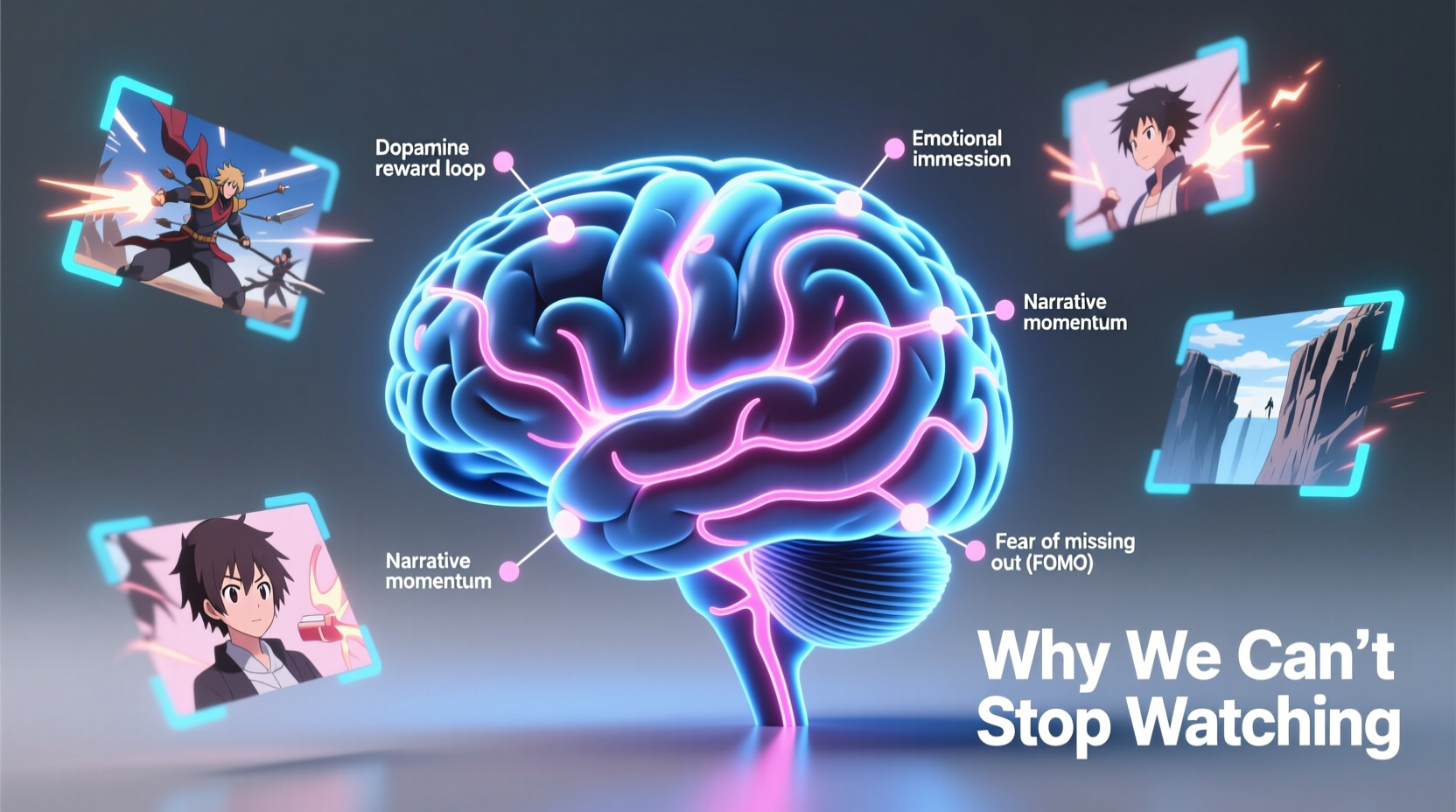
At the core of binge-watching lies the brain's reward system. Each episode of an anime series often ends with a cliffhanger, emotional payoff, or pivotal revelation—events that stimulate the release of dopamine, a neurotransmitter associated with pleasure and motivation. This neurochemical response reinforces the desire to continue watching.
When viewers click “Next Episode,” they’re not just consuming content—they’re chasing a feeling. The anticipation of what happens next activates the same neural circuits involved in gambling or other reward-based behaviors. Over time, this creates a feedback loop: the more episodes watched, the stronger the expectation for resolution, making it harder to stop.
Tip: Recognize when you're watching for emotional reward rather than enjoyment. If you feel restless or fatigued but keep going, your brain may be chasing dopamine.This mechanism is amplified by streaming platforms that auto-play the next episode. The removal of friction—no need to search, select, or wait—makes it easier to transition from one episode to the next without conscious decision-making. In psychological terms, this reduces cognitive load and weakens self-regulation, allowing passive continuation.
Narrative Immersion and Escapism
Many anime series are built around expansive worlds, intricate character arcs, and emotionally charged storylines. From the high-stakes battles of *Attack on Titan* to the introspective journeys in *Your Name*, anime often delivers intense emotional experiences that draw viewers deeply into the narrative.
This deep level of engagement is known as \"narrative transportation\"—a state where individuals become so absorbed in a story that they lose awareness of their surroundings. During such immersion, time perception distorts, and external responsibilities fade into the background. Viewers report feeling \"in the world\" of the anime, empathizing with characters as if they were real.
Escapism plays a significant role, especially during periods of stress, loneliness, or uncertainty. Anime offers a controlled environment where problems have structure, emotions are validated, and justice—or at least meaning—is often served. For someone navigating a chaotic real life, stepping into a well-defined fictional universe can feel like relief.
“Escapism isn’t about rejecting reality—it’s about finding emotional balance through temporary immersion. Well-crafted stories provide psychological respite.” — Dr. Lena Torres, Cognitive Psychologist specializing in media effects
Social Connection and Fandom Identity
Binge-watching anime is rarely a purely solitary act. For many, it’s a social ritual. Fans coordinate group watches, participate in live chats, or prepare to discuss episodes on forums like Reddit or Discord. The desire to belong to a community amplifies the urgency to catch up quickly.
Missing out on key plot developments can lead to feelings of exclusion—a phenomenon known as FOMO (Fear of Missing Out). When a new season drops, fans rush to consume it not just for personal enjoyment but to maintain relevance within their social circles. Being “spoiler-free” becomes a status symbol, and completing a marathon allows entry into shared conversations.
Moreover, anime fandoms often foster strong identity formation. Identifying as a fan of a particular series or genre contributes to self-concept. Binging an entire series can feel like a rite of passage—proof of dedication and authenticity within the community.
How Fandom Influences Viewing Behavior
| Behavior | Psychological Driver | Example |
|---|---|---|
| Group watch parties | Social bonding | Friends syncing episodes via teleparty apps |
| Racing to avoid spoilers | Fear of Missing Out (FOMO) | Finishing *Demon Slayer* before coworkers discuss it |
| Re-watching favorite arcs | Emotional comfort & nostalgia | Revisiting *Clannad*’s After Story during tough times |
| Completing full series in one go | Achievement motivation | Posting “100 episodes down!” on social media |
The Role of Commitment and Sunk Cost Fallacy
Once viewers invest time in a series, psychological inertia sets in. The longer they watch, the harder it becomes to quit—even if interest wanes. This is partly due to the sunk cost fallacy: the belief that stopping would waste the time already invested.
For example, after finishing 15 episodes of a 24-episode seasonal anime, a viewer might think, “I’ve come this far—might as well finish.” This mindset overrides momentary disinterest and fuels completion-driven binging. Streaming services exploit this by organizing content into clearly defined seasons, making “just one more episode” feel like progress toward a goal.
Additionally, anime often follows a serialized format with minimal episodic closure. Unlike sitcoms or procedurals, where each episode wraps up neatly, anime builds tension over multiple installments. Stopping mid-arc feels unsatisfying, creating a psychological pressure to reach a natural breakpoint—which may be several hours away.
Mini Case Study: The *Chainsaw Man* Season 1 Marathon
In Fall 2022, *Chainsaw Man* premiered to widespread acclaim. Within days, fans reported marathon sessions averaging 4–6 hours. One university student, Alex R., described watching all 12 episodes over a single weekend. “I started Friday night after class,” he said. “By episode three, I was hooked. I kept telling myself I’d stop, but each ending made me need to know more. By Sunday, I’d finished—but I was exhausted.”
Alex wasn’t alone. Online communities lit up with similar stories. The show’s fast pacing, unpredictable twists, and stylized violence created a compulsive rhythm. Many viewers admitted they didn’t plan to binge but felt “carried along” by the momentum. This case illustrates how narrative design, combined with platform features and social buzz, can trigger unplanned, prolonged viewing.
Practical Strategies for Mindful Anime Consumption
While binge-watching can be enjoyable, unchecked habits may interfere with sleep, productivity, and mental well-being. Recognizing the psychological triggers is the first step toward intentional viewing. The following checklist helps maintain balance:
Checklist: Managing Anime Binges Responsibly
- Set a clear limit before starting (e.g., “two episodes tonight”)
- Disable auto-play on streaming platforms
- Schedule breaks every 60–90 minutes to stretch and hydrate
- Avoid watching late at night if it disrupts sleep
- Reflect on whether you’re watching for joy or compulsion
- Engage in post-viewing discussion instead of immediate rewatching
- Take notes or journal reactions to deepen engagement without extending screen time
Step-by-Step Guide to Building Healthier Viewing Habits
- Assess your motivation: Are you watching to relax, connect, or escape? Knowing your intent helps identify potential red flags.
- Choose a viewing window: Allocate a specific time block (e.g., 7–9 PM) rather than watching “until I’m done.”
- Plan episode count: Decide in advance how many episodes you’ll watch, based on duration and energy levels.
- Create a shutdown ritual: After viewing, perform a non-screen activity (e.g., journaling, tea, light stretching) to signal transition.
- Track patterns weekly: Note how binging affects mood, focus, and sleep. Adjust habits accordingly.
FAQ: Common Questions About Anime Binge-Watching
Is binge-watching anime harmful?
Occasional binges are generally harmless and can be a source of joy and connection. However, frequent, uncontrolled binging that interferes with daily responsibilities, sleep, or emotional regulation may indicate problematic media use. Balance and self-awareness are key.
Why do some anime feel more “bingeable” than others?
Series with tight pacing, high emotional stakes, serialized storytelling, and frequent cliffhangers are designed to maximize engagement. Studios increasingly adopt “event-style” releases (e.g., dropping multiple episodes at once) to encourage marathon viewing, especially for global audiences.
Can binge-watching strengthen memory of the story?
Contrary to intuition, excessive back-to-back viewing can impair retention. The brain needs downtime to consolidate memories. Spaced viewing—watching episodes over several days—often leads to better comprehension and emotional integration than cramming.
Conclusion: Harnessing the Power of Story with Intention
Anime marathons are more than a pastime—they’re a testament to the power of storytelling to captivate, comfort, and connect. The psychological triggers behind binge-watching are deeply rooted in human nature: our craving for reward, our need for meaning, and our desire to belong. These forces aren’t inherently negative; they reflect how profoundly media can enrich our lives.
But like any powerful experience, moderation and mindfulness matter. By understanding the mechanisms at play, viewers can transform passive consumption into active engagement. Choose when to dive deep—and when to surface. Celebrate the stories that move you, but don’t let them carry you away from yourself.
💬 What anime sent you into an unexpected binge? Share your story and tips for staying balanced—we’d love to hear from fellow fans!








