If you've noticed that your running shoes are wearing down faster on one side—especially along the outer edge of the heel—it's not just a manufacturing flaw or bad luck. This kind of uneven wear is surprisingly common among runners and often points to biomechanical imbalances in your gait. While it might seem like a minor issue at first, persistent one-sided wear can lead to discomfort, inefficient running mechanics, and even long-term injuries if left unaddressed.
The good news? Identifying the root cause early allows you to make adjustments that extend shoe life, improve performance, and protect your joints. From overpronation and supination to muscle imbalances and improper footwear selection, several factors contribute to asymmetric shoe wear. Understanding these causes—and knowing what steps to take next—can transform your running experience.
Understanding Shoe Wear Patterns
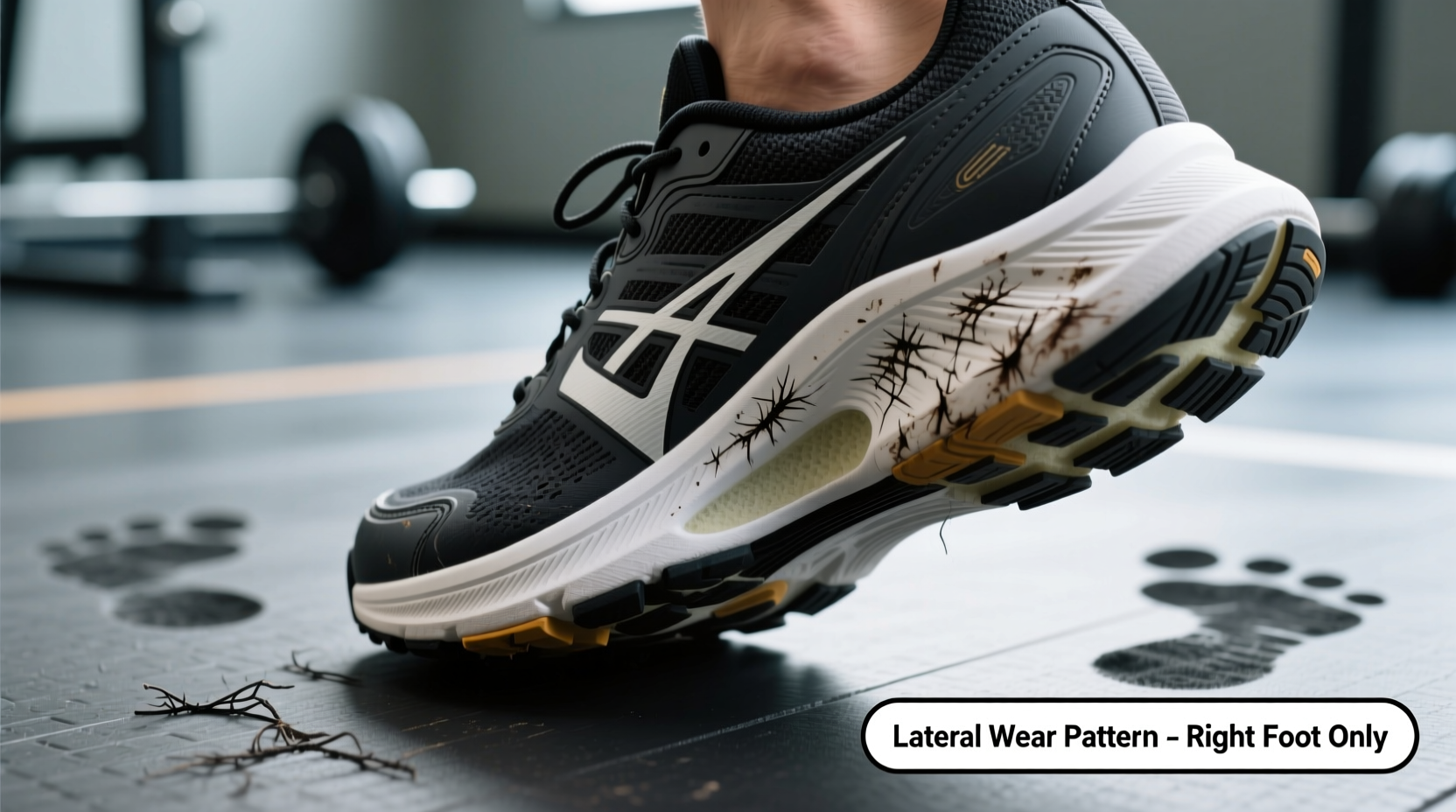
Running shoes are engineered to absorb impact, support motion, and last for hundreds of miles. But when wear appears concentrated on one side, particularly the lateral (outer) edge of the heel, it signals an uneven distribution of force during foot strike. Most runners land on their heels first, and the initial contact point bears the brunt of body weight multiplied by impact forces—often 2–3 times your body weight per stride.
Over thousands of strides, even a slight deviation in foot alignment can cause disproportionate friction and compression on one side of the sole. This leads to accelerated breakdown of the midsole foam and outsole rubber. Common patterns include:
- Lateral heel wear: Most frequent; indicates excessive supination or heel-striking with outward tilt.
- Middle-to-inner wear: Suggests overpronation, where the foot rolls inward excessively after landing.
- Asymmetric forefoot wear: May point to toeing-in or out, or leg length discrepancies.
While some wear is normal, rapid deterioration on one side alone should prompt further investigation into your running form and lower-body mechanics.
Tip: Rotate between two pairs of running shoes to reduce repetitive stress on the same materials and allow foam recovery time.Common Causes of One-Sided Wear
Uneven shoe wear rarely stems from a single cause. More often, it’s the result of a combination of biomechanical, muscular, and equipment-related factors. Below are the most prevalent contributors:
1. Supination (Underpronation)
Supination occurs when your foot doesn’t roll inward enough upon landing. Instead, weight stays on the outer edge, concentrating impact there. Runners who supinate tend to have high arches and rigid feet, which lack natural shock absorption. The repeated lateral loading wears down the outside of the heel and midsole rapidly.
2. Overpronation with Asymmetry
While overpronation typically causes inner wear, if it’s more pronounced in one foot than the other, it can create an imbalance in wear patterns. For example, one foot may collapse inward more due to weaker tibialis posterior muscles or ankle instability, leading to irregular sole degradation.
3. Leg Length Discrepancy
A structural difference in leg length—even as small as 5–10 mm—can alter pelvic alignment and change how each foot strikes the ground. The longer leg often experiences greater external rotation, causing the foot to evert and wear laterally. Functional discrepancies caused by muscle tightness or joint restrictions can produce similar effects.
4. Gait Asymmetry
No two strides are perfectly identical, but significant asymmetries in stride length, cadence, or foot placement can stem from previous injuries, dominant-side compensation, or poor neuromuscular control. These subtle differences accumulate over miles, resulting in uneven shoe wear.
5. Running Surface and Route Habits
Consistently running on sloped surfaces—like many urban roads that slope toward gutters—forces your downhill foot to pronate more while the uphill foot supinates. Over time, this creates a predictable wear pattern: the inside of one shoe and the outside of the other degrade faster.
“Shoe wear patterns are like fingerprints—they tell a story about how someone moves. A sharp lateral heel groove often reveals chronic supination and inadequate shock absorption.” — Dr. Lena Torres, Sports Biomechanist
How to Diagnose the Cause
Before replacing your shoes again, take time to assess why they wore unevenly. A systematic approach helps identify whether the issue lies in form, structure, or environment.
Step-by-Step Assessment Process
- Inspect old shoes: Place them on a flat surface and view from behind. Do they tilt to one side? Is the sole worn deeper on one heel?
- Check your gait: Record a video of yourself running on a treadmill from behind and side angles. Look for visible tilting, inward/outward foot rotation, or hip drop.
- Evaluate pain or discomfort: Note any recurring aches in knees, shins, or ankles, especially on one side. These often correlate with mechanical inefficiencies.
- Test leg symmetry: Lie flat and have someone compare the position of your ASIS (hip bones). Uneven alignment may suggest functional leg length issues.
- Visit a specialty running store: Many offer free gait analysis using pressure plates or slow-motion video to detect imbalances.
Mini Case Study: Sarah’s Lopsided Wear
Sarah, a 34-year-old recreational runner, replaced her shoes every 250 miles due to severe outer-heel wear on her right shoe. After a gait analysis, it was discovered she had a 7mm functional leg length discrepancy caused by tightness in her left hip flexor. This led to pelvic tilt and over-supination on the right side. With targeted stretching, strengthening, and custom orthotics, her wear patterns normalized within three months—and her new shoes lasted nearly 500 miles.
Corrective Strategies and Solutions
Once you’ve identified the likely cause, implement practical changes to correct the imbalance and protect future footwear.
Choose the Right Shoes
Not all running shoes are created equal. Select models designed for your foot type and gait pattern:
| Gait Type | Recommended Shoe Category | Features to Look For |
|---|---|---|
| Supination (Underpronation) | Cushioned/Neutral | Soft midsoles, curved lasts, extra shock absorption |
| Overpronation | Stability or Motion Control | Dual-density foam, medial posts, structured heels |
| Neutral Gait | Neutral Cushioned | Balanced support, responsive cushioning |
If you have asymmetric mechanics, consider whether one-foot-specific solutions—such as customized insoles or differential cushioning—are needed.
Use Orthotics or Insoles
Prefabricated or custom orthotics can correct alignment issues by supporting arches, leveling imbalances, and guiding foot motion. For leg length discrepancies, a heel lift in the shorter leg’s shoe can restore symmetry.
Incorporate Strength and Mobility Work
Muscle imbalances in the hips, glutes, and calves often underlie abnormal gait patterns. Strengthening key stabilizers improves control and reduces compensatory movements.
Tip: Perform single-leg balance drills daily to enhance proprioception and reduce asymmetry.Adjust Your Running Form
Small tweaks can yield big results:
- Increase cadence to 170–180 steps per minute to reduce overstriding and heel striking.
- Focus on landing with a midfoot strike directly under your center of mass.
- Avoid cambered roads; opt for flatter trails or sidewalks when possible.
Prevention Checklist
Follow this actionable checklist to minimize one-sided wear and prolong shoe life:
- ✅ Get a professional gait analysis at least once a year.
- ✅ Replace running shoes every 300–500 miles, depending on usage and wear.
- ✅ Stretch hip flexors, hamstrings, and calves regularly to maintain symmetry.
- ✅ Strengthen gluteus medius with clamshells, lateral band walks, and single-leg squats.
- ✅ Rotate multiple pairs of shoes to vary stress patterns and allow material recovery.
- ✅ Avoid consistently running in the same direction on banked tracks.
- ✅ Consider custom orthotics if over-the-counter insoles don’t resolve the issue.
Frequently Asked Questions
Can I continue using shoes that are worn on one side?
It’s not advisable. Worn-down areas lose cushioning and stability, increasing injury risk. Continuing to run in asymmetrically worn shoes may worsen biomechanical imbalances and lead to knee, hip, or back pain.
Is one-sided wear always a sign of a problem?
Minor asymmetry is normal, but rapid, pronounced wear suggests an underlying issue. If you notice a consistent pattern across multiple pairs, it’s worth investigating further through gait analysis or physical therapy assessment.
Do minimalist shoes wear unevenly faster?
Yes. Minimalist shoes have less material and cushioning, so any gait irregularities become apparent more quickly. They also require stronger foot and ankle control, making them less forgiving of biomechanical flaws.
Conclusion: Take Action Before It Costs You More
One-sided shoe wear isn’t just about replacing gear too soon—it’s a warning sign your body sends before discomfort turns into injury. By paying attention to how your shoes break down, you gain valuable insight into your movement patterns. Whether the culprit is supination, muscle weakness, or environmental habits, solutions exist to correct the imbalance and extend both your shoe life and running longevity.
Start by examining your current pair, then apply the strategies outlined here: get evaluated, strengthen weak links, choose appropriate footwear, and adjust your training environment. Small changes today can prevent pain tomorrow and keep your runs efficient, enjoyable, and sustainable.
💬 Have you noticed uneven wear in your running shoes? Share your experience or questions below—your story could help another runner avoid the same pitfalls.








