If you're a regular runner, you've likely experienced the frustration of seeing your favorite pair of running shoes degrade in just a few months. Despite careful use, the midsole compresses, the outsole wears thin, and the support diminishes—often far sooner than expected. This isn't just bad luck; it's the result of biomechanics, materials science, and usage habits converging. Understanding the root causes of rapid shoe degradation allows runners to make smarter choices—not only in footwear selection but also in daily care and rotation practices.
Running shoes are engineered for performance, not longevity. They’re built with lightweight foams and flexible uppers to enhance comfort and responsiveness. But these same features make them more vulnerable to wear. The average running shoe lasts between 300 and 500 miles—roughly 4 to 6 months for someone logging 20 miles per week. Exceed that, and you risk injury due to loss of cushioning and stability. The good news? With informed habits, you can stretch that lifespan meaningfully while maintaining foot health.
The Science Behind Shoe Degradation
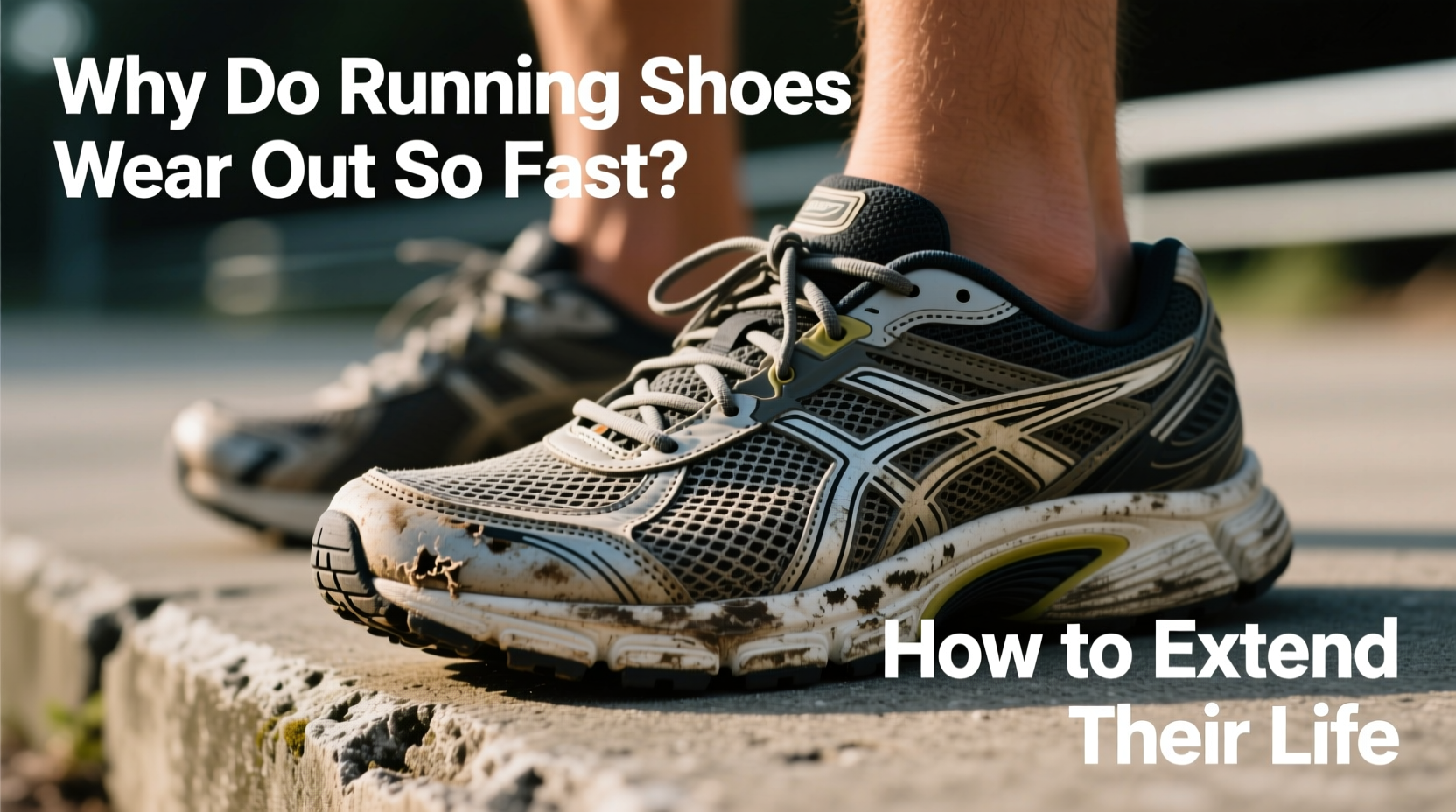
Running shoes deteriorate through a combination of mechanical stress and material fatigue. Each time your foot strikes the ground, forces equivalent to 2–3 times your body weight travel through the shoe. Over hundreds of miles, this repetitive impact breaks down foam molecules in the midsole, reducing its ability to absorb shock. Even if the outsole looks intact, the internal structure may be compromised.
Ethylene-vinyl acetate (EVA) and polyurethane (PU) are common midsole materials. EVA is lighter and more responsive but degrades faster, especially when exposed to moisture and heat. PU lasts longer but adds weight. Many modern shoes now use advanced foams like Nike React, Adidas Boost, or Peba-based formulations, which offer better durability and energy return—but they still break down over time.
The outsole, typically made of carbon rubber or blown rubber, wears down based on surface type. Pavement is far more abrasive than trails or treadmills. Runners who log miles on concrete often see uneven wear patterns, particularly on the lateral heel and forefoot—areas that bear the brunt of initial contact and push-off.
“Midsole compression is irreversible. Once the foam cells collapse, they don’t rebound. That’s why mileage matters more than appearance.” — Dr. Laura Chen, Sports Podiatrist
Common Reasons Running Shoes Wear Out Fast
Several factors accelerate the breakdown of running shoes. Recognizing them helps identify preventable behaviors.
- High weekly mileage: Logging more than 30–40 miles per week drastically shortens shoe life. More steps mean more compression cycles.
- Pavement-heavy routes: Concrete and asphalt grind down rubber faster than dirt paths or indoor tracks.
- Heavy heel strikers: A pronounced heel-first gait concentrates impact in one spot, creating deep grooves in the outsole and faster midsole fatigue.
- Improper fit: Shoes that are too tight or too loose create internal friction, damaging the upper and causing premature structural failure.
- Lack of rotation: Using one pair exclusively prevents foam recovery time between runs, accelerating permanent compression.
- Poor storage: Leaving shoes in hot cars, damp basements, or direct sunlight breaks down adhesives and degrades foam elasticity.
How to Extend the Life of Your Running Shoes
You can’t stop wear entirely, but you can slow it significantly with smart habits.
1. Implement a Shoe Rotation System
Using multiple pairs alternately allows midsoles to regain some resilience between runs. Foam needs 24–48 hours to partially rebound after compression. Rotating gives each pair downtime, preserving cushioning over the long term. For moderate runners (15–25 miles/week), two pairs are sufficient. Serious runners may benefit from three: one for speedwork, one for long runs, and one for easy days.
2. Match Shoes to Terrain and Purpose
Don’t use trail shoes on pavement—they wear faster due to softer rubber compounds. Likewise, avoid using racing flats for daily training. Assign roles: durable trainers for road miles, lightweight models for tempo runs, and rugged builds for off-road terrain. This specialization reduces unnecessary strain.
3. Store Shoes Properly
Keep shoes in a cool, dry place away from direct sunlight and heat sources. UV rays and high temperatures break down synthetic fibers and adhesives. Avoid leaving them in gym bags or car trunks. Loosen laces after runs to reduce tension on the upper and allow airflow.
4. Clean Gently When Needed
Dirt and sweat accelerate material breakdown. Wipe off mud with a damp cloth. For deeper cleaning, remove insoles and laces, then use a soft brush with mild soap and water. Never machine wash or submerge shoes—this delaminates glued layers and warps the midsole.
5. Monitor Mileage Religiously
Track every mile. Use a running app, journal, or simple spreadsheet. Most runners underestimate usage. Replace shoes at 350–450 miles unless signs of wear appear earlier. Some brands now embed QR codes or NFC chips to log wear data—take advantage of these tools.
| Factor | Accelerates Wear? | Prevention Strategy |
|---|---|---|
| Running on concrete | Yes – High abrasion | Mix surfaces; use durable outsoles |
| Heel striking | Yes – Concentrated impact | Strengthen glutes/calves; consider gait analysis |
| Wearing shoes daily (non-running) | Yes – Constant compression | Reserve running shoes for exercise only |
| Exposure to moisture | Yes – Breaks down foam | Air dry promptly; avoid wet storage |
| Using old or expired shoes | Yes – Foam degrades over time | Replace after 6–12 months, even if unused |
Step-by-Step Guide to Maximizing Shoe Longevity
- Buy two pairs at once: Choose models with different purposes (e.g., daily trainer and tempo shoe) to enable immediate rotation.
- Label each pair: Mark them “A” and “B” and alternate use regardless of perceived need.
- Track mileage: Log each run in a dedicated notebook or app, noting distance and shoe used.
- Inspect monthly: Check for creasing in the midsole, thinning rubber, or collapsed arch support.
- Clean after muddy/wet runs: Wipe soles and uppers; air dry naturally, away from heaters.
- Store correctly: Keep in a ventilated closet or shoe rack at room temperature.
- Retire proactively: Replace at 400 miles or when cushioning feels flat—even if they look fine.
Real Runner Case Study: Sarah’s 600-Mile Trainer
Sarah, a recreational marathoner from Portland, noticed her previous shoes lasted only 350 miles before causing knee pain. After consulting a running specialist, she changed her approach. She began rotating two pairs of Brooks Ghost 15s—one primarily for weekday runs, the other for weekend long runs. She tracked every mile in her Strava log, cleaned shoes monthly, and stored them in a climate-controlled closet.
She avoided wearing them casually and never left them in her car. When one pair hit 500 miles, she inspected it closely: the midsole had deep flex grooves, and the heel cushion felt less responsive. She retired it and donated it to a local shelter. The second pair, used less frequently, reached 600 miles with minimal wear thanks to consistent rotation and care.
By extending the effective life of her footwear investment and avoiding overuse injuries, Sarah improved her race times and reduced annual shoe spending by nearly 30%.
Expert Tips and Maintenance Checklist
“The best way to extend shoe life isn’t buying expensive models—it’s respecting their limits and caring for them like performance gear, not sneakers.” — Marcus Reed, Certified Running Coach & Retail Specialist
Shoe Care Checklist
- ✅ Rotate between at least two pairs
- ✅ Track mileage per pair
- ✅ Clean after exposure to mud or rain
- ✅ Air dry naturally—never use a dryer
- ✅ Store in a cool, dry place
- ✅ Avoid using for non-running activities
- ✅ Replace every 350–500 miles or 6–12 months
- ✅ Inspect midsole for deep creasing or permanent compression
Frequently Asked Questions
Can I extend shoe life by airing them outside?
Not recommended. While drying shoes is essential, leaving them in direct sunlight accelerates material aging. UV radiation weakens synthetic mesh and degrades foam. Instead, air them indoors near a fan or open window without direct sun exposure.
Do waterproof running shoes last longer?
Not necessarily. Waterproof membranes like Gore-Tex protect against moisture but trap heat and sweat, increasing internal humidity. This can degrade adhesives and promote bacterial growth. They’re useful in wet climates but require more diligent drying and aren’t inherently more durable.
Is it safe to keep using shoes past 500 miles if they still feel okay?
Risk increases significantly. Even if they feel comfortable, cushioning may have diminished beyond perception. Studies show runners who exceed 500 miles in a pair face a 30–50% higher risk of overuse injuries like plantar fasciitis or shin splints. It’s safer to retire them and repurpose for light walking or gym use.
Conclusion: Protect Your Feet and Your Investment
Your running shoes are precision instruments designed for peak performance over a limited window. Their rapid wear isn’t a flaw—it’s an inevitable outcome of intense use. But by understanding the mechanics of degradation and adopting disciplined care habits, you can extract maximum value and protection from every mile.
Rotation, proper storage, mindful usage, and vigilant tracking transform how long your shoes serve you—not just in mileage, but in injury prevention and running enjoyment. Don’t wait for blisters or joint pain to signal replacement. Be proactive. Treat your footwear like the athletic gear it is, and it will support you reliably mile after mile.
💬 What’s your longest-lasting pair of running shoes? Share your tips and experiences in the comments—help fellow runners get more life from their kicks!








