
Squatting is a fundamental human movement pattern—essential for daily activities like sitting, lifting, and climbing stairs—and a cornerstone of most strength training programs. Yet, many people experience knee pain during or after squats. This discomfort isn’t just an inconvenience; it’s often a warning sign of improper mechanics, muscle imbalances, or underlying joint stress. The good news is that in most cases, knee pain during squatting isn’t a reason to stop the movement entirely, but rather a signal to reassess and refine your technique.
Knee pain doesn't have to be part of your fitness journey. With proper understanding of biomechanics, targeted mobility work, and intelligent form adjustments, you can squat safely and effectively at any age or fitness level. This guide breaks down the most common causes of knee pain during squats, provides actionable strategies to correct them, and equips you with tools to build stronger, more resilient knees over time.
Common Causes of Knee Pain During Squatting
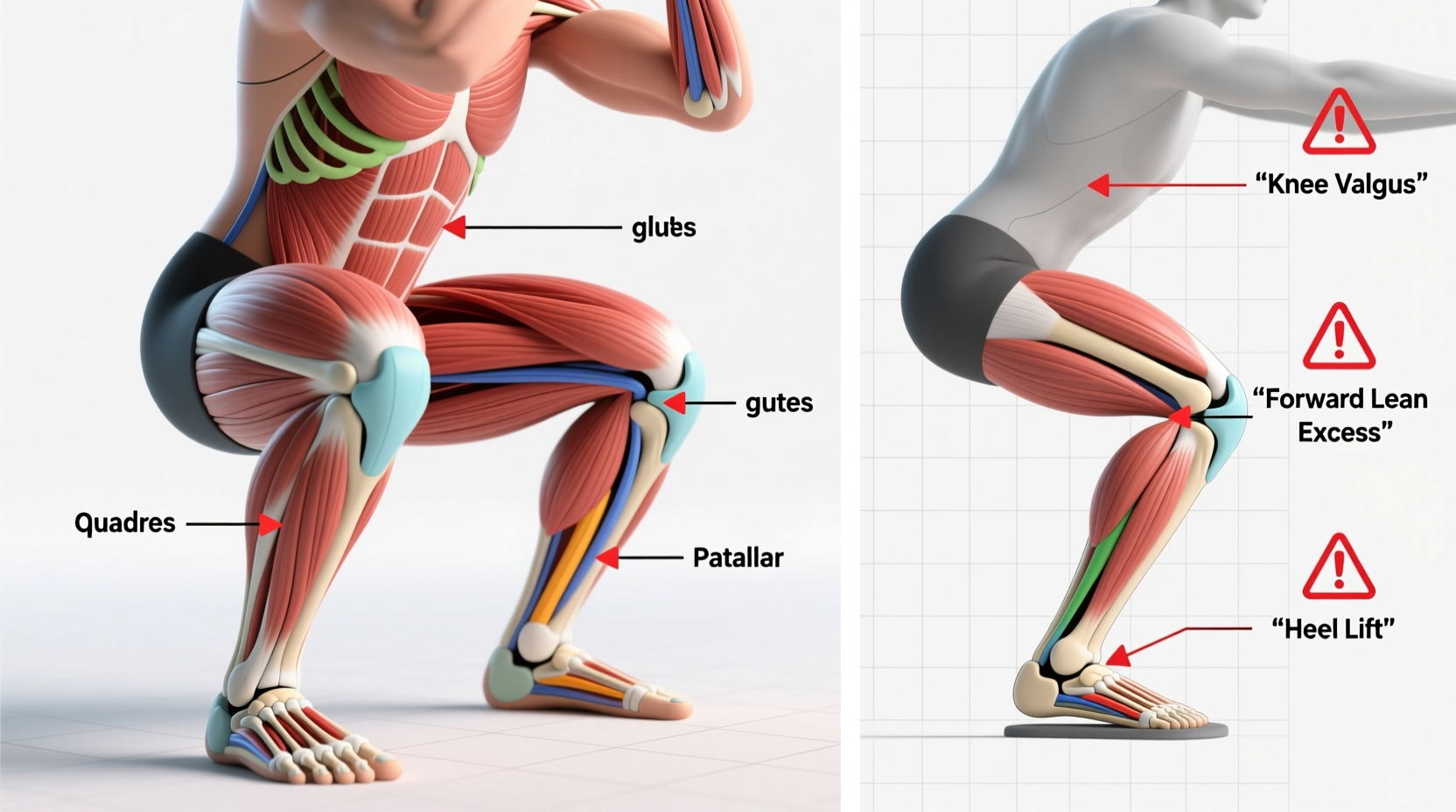
Knee pain while squatting rarely stems from one single issue. Instead, it's usually the result of a combination of mechanical inefficiencies, muscular weaknesses, or joint restrictions. Identifying the root cause is essential before attempting to correct it.
- Poor ankle mobility: Limited dorsiflexion prevents the shin from moving forward naturally, forcing the knees to compensate by shifting excessively forward or collapsing inward.
- Weak glutes and hamstrings: When posterior chain muscles are underactive, the quadriceps take on too much load, increasing compressive forces on the patella (kneecap).
- Knee valgus (inward collapse): Knees caving inward during descent place uneven stress on ligaments and cartilage, particularly the medial meniscus and MCL.
- Excessive forward knee travel: While some forward movement is normal, allowing the knees to extend far beyond the toes increases shear force on the joint, especially under load.
- Improper depth or speed: Forcing deep squats without adequate hip or ankle mobility, or descending too quickly, can overload tissues not ready to handle the stress.
- Patellofemoral pain syndrome (PFPS): Often called “runner’s knee,” this condition involves irritation beneath the kneecap due to tracking issues, commonly worsened by repetitive squatting with poor alignment.
How to Fix Your Squat Form: A Step-by-Step Guide
Correcting squat form isn’t about mimicking textbook images—it’s about creating a stable, efficient movement pattern tailored to your body’s structure and capabilities. Follow these steps to systematically improve your squat mechanics and reduce knee strain.
- Start with a neutral spine: Begin each squat by setting your ribcage over your pelvis. Avoid overarching the lower back or rounding the upper back. Engage your core gently as if preparing for a light punch to the stomach.
- Initiate with the hips: Think “sit back” rather than “sit down.” This cues the posterior chain (glutes and hamstrings) to engage early, reducing reliance on the quads and minimizing anterior knee stress.
- Maintain knee alignment: As you descend, ensure your knees track in line with your second toe. Use a mirror or record yourself to check for valgus collapse. A cue like “push your knees out slightly” can activate the glute medius and stabilize the joint.
- Control the descent: Lower yourself slowly—aim for 2–3 seconds down. This allows better tension control and reduces impact forces on landing.
- Find your optimal depth: Not everyone should squat ass-to-grass. Stop when you feel tightness in the hips or your lower back begins to round (butt wink). Work toward deeper ranges gradually through mobility drills.
- Drive through the heels and midfoot: Focus pressure through the entire foot, especially the heel and big toe mound. Avoid rising onto your toes, which shifts weight forward and strains the knees.
“Most knee pain in squats isn’t caused by the knee itself, but by what’s happening above and below it—the hips and ankles. Fix those, and the knee often calms down.” — Dr. Stuart McGill, Spine Biomechanics Expert
Do’s and Don’ts of Knee-Friendly Squatting
| Do’s | Don’ts |
|---|---|
| Keep your chest up and spine neutral | Rounding your back or hyperextending your lumbar spine |
| Engage glutes throughout the movement | Let your knees cave inward |
| Squat within your pain-free range of motion | Force depth beyond what your mobility allows |
| Wear flat or minimalist shoes (or go barefoot) | Use heavily cushioned running shoes that destabilize your base |
| Warm up with dynamic stretches and activation drills | Jump straight into heavy squats cold |
Real Example: From Pain to Progress
Mark, a 34-year-old office worker and recreational lifter, came to a corrective exercise specialist complaining of sharp pain behind his right kneecap every time he performed back squats. He had been told to “just strengthen his quads” but found that leg extensions made the pain worse. After assessment, it was clear Mark had tight hip flexors, weak glute medius muscles, and limited ankle dorsiflexion—especially on his right side.
Instead of eliminating squats, his trainer introduced goblet squats with a small heel lift (a 5kg plate under each heel) to accommodate his ankle restriction. He also began daily mobility routines focusing on calf stretching, hip flexor releases, and banded glute activations. Within three weeks, Mark could perform bodyweight squats pain-free. By week six, he returned to barbell back squats using improved form and no knee pain.
This case illustrates that knee pain isn’t always a contraindication to squatting—it’s often a symptom of compensatory patterns that can be corrected with targeted intervention.
Essential Mobility and Strengthening Exercises
To support pain-free squatting, integrate these foundational exercises into your routine 3–4 times per week. They address the most common contributors to knee discomfort and build resilience in the kinetic chain.
Ankle Mobility Drill: Wall Dorsiflexion Stretch
Stand facing a wall with one foot forward, heel down. Gently drive the knee forward over the toes while keeping the heel planted. Aim for the knee to touch the wall without lifting the heel. Perform 3 sets of 10 reps per leg.
Hip Activation: Banded Clamshells
Lie on your side with a resistance band just above your knees. Keep feet together and lift the top knee while maintaining pelvic stability. This strengthens the glute medius, crucial for preventing knee valgus. Do 3 sets of 15 per side.
Quad and Hip Flexor Release: Couch Stretch
Kneel in a half-kneeling position with your back foot against a wall or elevated surface. Tuck your pelvis slightly and lean forward until you feel a stretch in the front of the hip and quad. Hold for 45 seconds per side, 2–3 times daily.
Strengthening: Box Squats
Use a sturdy bench or box set to a height just above your parallel squat depth. Sit back and lightly touch the box, then stand up using your glutes and hamstrings. This teaches proper hip hinge mechanics and reduces knee dominance. Start with bodyweight and progress to light loads.
Tip: Perform mobility work after training or on rest days—never force a deep stretch before lifting.Checklist: How to Squat Without Knee Pain
- ✅ Assess pain location: Is it under, around, or behind the kneecap? Inside or outside the joint?
- ✅ Test ankle dorsiflexion: Can you lunge forward with your knee over your toes while keeping your heel down?
- ✅ Record your squat: Look for knee alignment, torso angle, and foot pressure.
- ✅ Warm up with glute activation (e.g., banded walks, bridges)
- ✅ Start with regressions (goblet squats, box squats) if pain persists
- ✅ Gradually increase depth and load only when pain-free
- ✅ Incorporate daily mobility for hips and ankles
- ✅ Consult a physical therapist if pain lasts more than 2 weeks despite corrections
Frequently Asked Questions
Is squatting bad for your knees?
No, squatting is not inherently harmful to the knees. In fact, when performed with proper form and appropriate loading, squatting strengthens the muscles around the knee joint, improves joint stability, and enhances overall function. Research shows that full-range squatting does not increase injury risk in healthy individuals and may even protect knee health over time.
Should I stop squatting if my knees hurt?
Not necessarily. Complete avoidance can lead to weakness and further dysfunction. Instead, modify the movement—reduce depth, use lighter loads, or switch to variations like goblet or front squats. Identify and address the underlying cause. If pain persists beyond minor soreness or worsens with activity, seek evaluation from a qualified healthcare provider.
Can flat feet cause knee pain when squatting?
Yes. Flat feet (or excessive pronation) can contribute to internal rotation of the tibia, which pulls the knee inward during squatting. This misalignment increases stress on the medial compartment of the knee. Using supportive footwear or custom orthotics, combined with foot strengthening exercises (like short-foot drills), can help stabilize the arch and improve knee alignment.
Conclusion: Move Better, Feel Better
Knee pain during squatting is a common but solvable problem. It’s rarely a life sentence to leg press machines or avoidance of functional movement. More often, it’s a communication from your body that something in your movement system needs attention—whether it’s stiff ankles, sleepy glutes, or flawed motor patterns.
The solution lies not in elimination, but in education and refinement. By applying the principles of joint alignment, progressive loading, and tissue preparation, you can transform a painful squat into a powerful, confidence-building movement. Start where you are: assess your form, address your limitations, and build from there.
🚀 Ready to squat pain-free? Pick one correction from this article—ankle mobility, glute activation, or form adjustment—and practice it consistently for two weeks. Track your progress, and reclaim your strength safely.








