
It’s a familiar sound—sharp, sudden, and sometimes startling. You reach for your toes, roll your shoulders, or twist your back, and out comes that unmistakable pop or crack from a joint. For many, the question follows immediately: Is this normal? Could it be damaging my body over time? Joint cracking during stretching is a common experience, but its causes and implications are often misunderstood. This article explores the science behind why joints make noise, evaluates whether it's harmful, and offers practical guidance on when to pay closer attention—and when to relax.
The Science Behind Joint Cracking
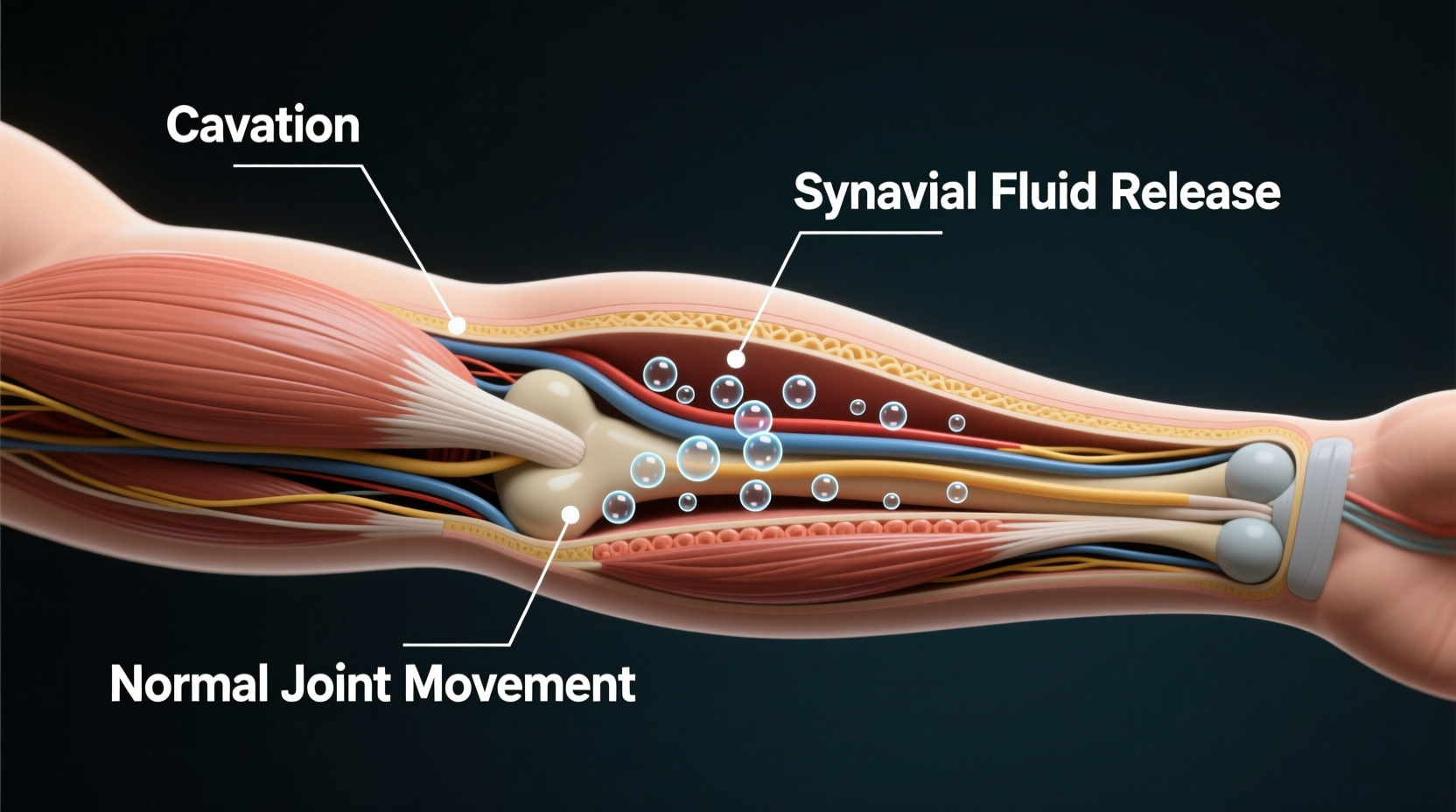
Joints produce sound through several physiological mechanisms, most of which are harmless. The most widely accepted explanation involves a process called **cavitation**. Inside synovial joints—such as the knees, shoulders, fingers, and spine—is a lubricating fluid known as synovial fluid. This fluid contains dissolved gases like nitrogen, oxygen, and carbon dioxide.
When you stretch or manipulate a joint, you create negative pressure within the joint capsule. This sudden change in pressure causes the dissolved gases to form a bubble, which then rapidly collapses—producing the popping or cracking sound. This phenomenon is similar to what happens when you pull apart two suction cups with a moist surface between them.
A 2015 study published in *PLOS ONE* used real-time MRI imaging to observe knuckle cracking. Researchers found that the \"pop\" occurred at the moment the gas cavity formed, not when it collapsed, challenging earlier assumptions. Once the gas has been released, it takes about 15 to 30 minutes for it to dissolve back into the fluid, which explains why you can’t crack the same joint repeatedly in quick succession.
Tip: The sound of a single, painless joint pop during stretching is typically due to gas release and is not a cause for concern.Common Causes of Joint Sounds During Stretching
Not all joint noises are created equal. While cavitation is the most frequent reason, other mechanical processes can also generate audible sounds:
- Tendon or ligament snapping: As tendons move across bony surfaces during motion, they may snap or flick, producing a clicking sound. This is especially common in the hips, wrists, and ankles.
- Joint surface irregularities: Minor imperfections in cartilage or slight misalignments can cause rubbing or grinding noises (crepitus), particularly in older adults or those with past injuries.
- Adhesions or scar tissue: After an injury or prolonged immobility, soft tissues around joints may develop adhesions. Stretching can break these slightly, leading to audible shifts.
- Arthritis-related changes: In conditions like osteoarthritis, cartilage wears down, increasing friction between bones and potentially causing grating sounds.
Most of these sounds are benign if they occur without pain, swelling, or reduced mobility. However, patterns matter. A new, persistent, or painful noise warrants further evaluation.
Is Joint Cracking Harmful? Separating Myth from Fact
One of the most enduring myths is that cracking your joints—especially knuckles—leads to arthritis. This idea has circulated for decades, often reinforced by well-meaning parents or friends warning against the habit.
Science tells a different story. A landmark study conducted by Dr. Donald Unger, who cracked the knuckles on one hand daily for over 60 years while leaving the other untouched, found no difference in arthritis development between the two hands. His informal experiment earned him an Ig Nobel Prize, but it highlighted a broader truth supported by clinical research: there is no evidence linking habitual joint cracking to arthritis.
“After reviewing multiple studies, we can confidently say that cracking your knuckles does not cause arthritis. The sound is simply gas escaping from the joint.” — Dr. Kevin Stone, Orthopedic Surgeon and Regenerative Medicine Specialist
That said, excessive or forceful manipulation of joints—especially if done repetitively or aggressively—can lead to soft tissue irritation or temporary ligament laxity. While not dangerous in most cases, it may contribute to joint instability over time in rare instances.
Do’s and Don’ts of Joint Cracking
| Do’s | Don’ts |
|---|---|
| Allow natural cracking during gentle stretching | Forcefully pop joints using external pressure |
| Maintain regular movement and flexibility | Crack the same joint repeatedly in one session |
| Pay attention to pain or swelling | Ignore persistent discomfort after cracking |
| Stay hydrated to support synovial fluid quality | Use cracking as a substitute for proper warm-up |
When Should You Be Concerned?
While occasional joint noise is normal, certain red flags suggest the need for medical evaluation. Pain, inflammation, or mechanical dysfunction accompanying the sound may indicate an underlying issue.
Warning Signs That Warrant Attention
- Pain during or after cracking: If the pop is followed by sharp or lingering pain, it could signal a meniscus tear, labral injury, or tendon strain.
- Swelling or warmth: Inflammation around the joint may point to arthritis, bursitis, or infection.
- Reduced range of motion: If a joint feels stiff or locks up after making noise, structural damage such as cartilage flaps or loose bodies may be present.
- Repetition without relief: Some people crack joints compulsively seeking a sensation of release. Over time, this can irritate surrounding tissues.
For example, a 34-year-old office worker began noticing a consistent click in her right knee every time she stood up from her desk. Initially painless, the sound was accompanied weeks later by a dull ache and occasional buckling. An MRI revealed a small meniscal tear aggravated by repetitive micro-movements and poor posture. Early intervention with physical therapy prevented the need for surgery.
“Mechanical symptoms like catching, locking, or giving way are more telling than noise alone. Always assess function alongside sound.” — Dr. Lena Patel, Sports Medicine Physician
How to Support Healthy Joints Through Stretching
Stretching is essential for maintaining joint health, flexibility, and circulation. When done correctly, it supports synovial fluid distribution and reduces stiffness. Here’s how to stretch safely and effectively:
Step-by-Step: Safe Stretching Routine to Minimize Joint Stress
- Warm up first: Engage in light aerobic activity (e.g., brisk walking or arm circles) for 5–10 minutes to increase blood flow and fluid viscosity in joints.
- Move slowly: Avoid jerky motions. Gradual elongation allows tissues to adapt and reduces the likelihood of abrupt gas release or tendon snapping.
- Focus on form: Maintain neutral alignment. For instance, keep your spine straight during forward bends to avoid uneven pressure on facet joints.
- Breathe deeply: Oxygenation helps relax muscles and improves tissue elasticity.
- Hold stretches for 20–30 seconds: This duration optimizes muscle lengthening without overloading connective tissues.
- Hydrate afterward: Water supports the replenishment of synovial fluid and flushes metabolic byproducts.
Checklist: Joint-Friendly Stretching Habits
- ✅ Warm up before stretching
- ✅ Avoid bouncing or ballistic movements
- ✅ Stretch both sides equally
- ✅ Stop if pain occurs
- ✅ Stay hydrated throughout the day
- ✅ Include full-body mobility work 3–5 times per week
- ✅ Consider yoga or tai chi for controlled, mindful movement
Frequently Asked Questions
Can cracking my back cause long-term damage?
Occasional, natural cracking during stretching is not harmful. However, forcefully manipulating your spine—especially without training—can strain muscles or irritate nerves. Chiropractic adjustments performed by licensed professionals are generally safe, but self-cracking should be gentle and not repeated excessively.
Why do my knees crack when I squat?
Knee cracking during squats is common and often due to patellar tendon movement or gas release in the knee joint. If pain-free, it’s usually normal. However, persistent crepitus with discomfort may indicate early cartilage wear or tracking issues of the kneecap, especially in individuals with flat feet or weak glutes.
Does joint cracking mean I’m lacking nutrients?
Not directly. However, poor nutrition can affect joint health over time. Deficiencies in vitamin D, calcium, magnesium, or omega-3 fatty acids may contribute to stiffness or inflammation, indirectly influencing how joints feel and sound during movement. A balanced diet supports overall musculoskeletal resilience.
Conclusion: Listen to Your Body, Not Just the Sounds
The occasional crack, pop, or click during stretching is overwhelmingly normal and rarely a sign of trouble. These sounds are part of the body’s natural mechanics—gas bubbles forming, tendons shifting, and tissues adapting to movement. What matters most is context: Is the sound isolated and painless, or accompanied by discomfort, swelling, or dysfunction?
Instead of fearing the noise, focus on cultivating healthy joint habits—regular movement, proper hydration, mindful stretching, and strength training. These practices do far more for long-term joint integrity than avoiding a harmless pop ever could.
💬 Have a joint concern or personal experience with cracking sounds? Share your thoughts in the comments below—your story might help someone else understand their body better.








