It’s a familiar sensation: you reach for the sky in a morning stretch, twist your neck to relieve tension, or bend your knee after sitting too long—and suddenly, a sharp *pop* echoes from one of your joints. For many, this sound is routine, even satisfying. But beneath the surface, questions linger. Is that popping noise normal? Could it be damaging cartilage or signaling early arthritis? The truth is, joint cracking during stretching is incredibly common, but understanding the difference between harmless crepitus and a potential red flag requires insight into anatomy, biomechanics, and symptoms.
This article breaks down the science behind joint sounds, explores when cracking is benign versus concerning, and provides practical guidance on monitoring joint health. Whether you're an athlete, office worker, or someone managing chronic pain, knowing what your body is telling you can make all the difference.
The Science Behind Joint Cracking
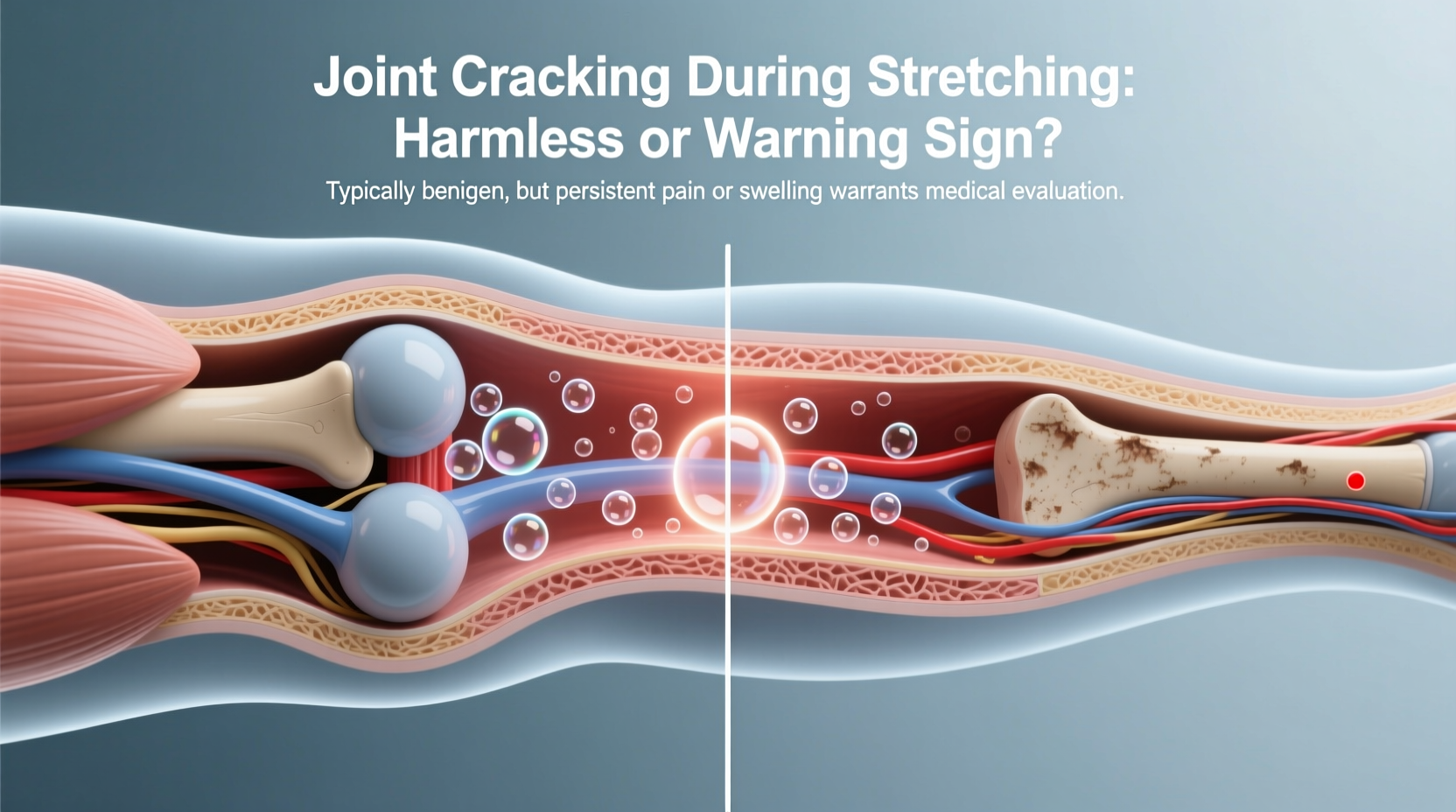
Joint cracking—also known as crepitus—is the audible release of gas within the synovial fluid that lubricates your joints. When you stretch or move a joint beyond its usual range, pressure changes occur inside the joint capsule. This shift causes dissolved gases (primarily nitrogen) to form bubbles that rapidly collapse, producing the characteristic popping or cracking sound. This process is called cavitation.
Research dating back to 1947 and confirmed by modern MRI studies shows that after a joint \"cracks,\" it takes about 15 to 30 minutes for the gas to re-dissolve before the same joint can pop again. That’s why you can’t immediately crack the same knuckle twice in succession.
While knuckles are the most commonly cracked joints, similar mechanisms occur in the spine, shoulders, knees, and hips. In most cases, this phenomenon involves no pain, swelling, or loss of function—making it physiologically normal.
“Cavitation in synovial joints is a natural biomechanical event. Absent pain or dysfunction, joint cracking is not harmful.” — Dr. Robert Kaplan, Orthopedic Biomechanics Researcher, Stanford University
Harmless vs. Harmful: How to Tell the Difference
Not all joint noises are created equal. While occasional, pain-free pops are typically nothing to worry about, certain types of sounds may indicate underlying issues such as cartilage wear, ligament injury, or inflammation.
Consider these key distinctions:
| Feature | Harmless Cracking | Warning Sign |
|---|---|---|
| Pain Level | No discomfort during or after | Pain, tenderness, or soreness follows |
| Frequency | Occasional, especially after inactivity | Frequent, repetitive with every movement |
| Swelling | Absent | Visible puffiness or warmth around joint |
| Movement Quality | Full, smooth range of motion | Stiffness, catching, or locking sensation |
| Sound Type | Sudden, single pop | Grinding, grating, or continuous noise |
For example, a soft *pop* in your shoulder when reaching overhead after sleeping is likely due to gas release. However, if that same movement produces a gritty, sandpaper-like feeling under the skin accompanied by weakness, it could point to rotator cuff degeneration or labral tear.
Tip: Pay attention not just to the sound, but to how the joint feels afterward. Pain-free mobility is a strong indicator of safety.Common Causes of Joint Popping During Stretching
Different joints produce different sounds for varied reasons. Understanding the source helps determine whether intervention is needed.
- Knuckles: Most studied joint for cracking. The rapid separation of joint surfaces creates a vacuum, leading to gas bubble formation and collapse.
- Knees: Often crack due to patellar tracking—where the kneecap shifts slightly over the femur. Also common in people with slight misalignments or weak quadriceps.
- Spine (neck and back): Facet joints release gas during rotation or extension. Chiropractic adjustments amplify this effect intentionally.
- Hips: Snapping hip syndrome occurs when tendons glide over bony prominences. Can be internal (iliopsoas tendon) or external (IT band).
- Shoulders: May involve labral tears or subluxation, especially in athletes. A consistent “clunk” rather than a “pop” warrants evaluation.
In older adults, increased joint noise often correlates with age-related cartilage thinning. This doesn’t automatically mean osteoarthritis, but it does suggest closer monitoring of joint loading and strength training.
When Joint Cracking Signals Trouble
Some forms of crepitus go beyond normal mechanics. Persistent grinding sensations—especially in weight-bearing joints like knees or hips—are frequently linked to chondromalacia (softening of cartilage) or early-stage osteoarthritis.
Red flags include:
- Recurrent pain after cracking
- Joint instability or giving way
- Reduced range of motion
- History of trauma or sports injury
- Family history of arthritis
One study published in the Journal of the American Academy of Orthopaedic Surgeons found that individuals reporting painful knee crepitus were three times more likely to develop radiographic evidence of osteoarthritis within five years compared to those without symptoms.
Mini Case Study: The Yoga Instructor with Knee Pops
Sarah, a 38-year-old yoga instructor, began noticing a consistent crack in her right knee each time she moved from downward dog into warrior pose. Initially, she ignored it—many yogis experience joint sounds. But over six months, the pop turned into a dull ache, followed by stiffness after class.
She consulted a physical therapist who performed a McMurray test and observed mild swelling. An MRI revealed a small meniscal tear aggravated by repetitive deep flexion. With targeted strengthening exercises, activity modification, and temporary avoidance of full-knee bends, Sarah reduced both pain and noise within ten weeks.
Her case illustrates a crucial point: context matters. What starts as innocent noise can evolve into a symptom if mechanical stress continues unchecked.
Step-by-Step Guide to Assessing Your Joint Health
If joint cracking concerns you, follow this structured self-assessment to determine whether professional input is necessary.
- Observe Frequency and Pattern: Note which joints crack, when it happens (e.g., after sitting), and how often.
- Evaluate Pain Response: Does the joint hurt during or after the pop? Rate discomfort on a scale of 1–10.
- Check Range of Motion: Can you move freely without resistance, catching, or locking?
- Look for Swelling or Warmth: Compare the affected joint to the opposite side. Use touch to detect temperature differences.
- Monitor Functional Impact: Are daily activities like climbing stairs, lifting objects, or walking affected?
- Document Changes Over Time: Keep a brief journal for two weeks noting symptoms and triggers.
- Consult a Professional If: Pain persists beyond a few days, swelling appears, or movement becomes restricted.
This approach empowers you to distinguish fleeting quirks from developing problems. Early detection improves outcomes significantly, especially for conditions like tendonitis or joint instability.
Expert Advice: What Doctors Want You to Know
Clinicians emphasize that while isolated joint cracking isn't dangerous, dismissing persistent symptoms can delay treatment.
“We see patients who’ve ignored painful clicking for years, only to find advanced cartilage damage. Don’t normalize pain just because there’s a sound involved.” — Dr. Lena Torres, Sports Medicine Physician, Cleveland Clinic
Doctors also caution against habitual joint cracking, particularly in the spine or fingers. Though no conclusive evidence links knuckle cracking to arthritis (a myth debunked by multiple longitudinal studies), excessive manipulation may lead to ligament laxity or reduced grip strength over time.
Additionally, self-adjusting the neck—common among people seeking relief from stiffness—can strain vertebral arteries and should be avoided without professional training.
Prevention and Joint Maintenance Checklist
Maintaining healthy joints reduces abnormal stresses that contribute to problematic crepitus. Follow this actionable checklist to support long-term joint integrity:
- ✅ Perform dynamic stretches before workouts to warm up synovial fluid
- ✅ Strengthen muscles surrounding major joints (e.g., quads for knees, glutes for hips)
- ✅ Maintain a healthy body weight to reduce load on joints
- ✅ Stay hydrated—synovial fluid depends on water content
- ✅ Avoid prolonged static postures (e.g., sitting without breaks)
- ✅ Incorporate low-impact exercise like swimming or cycling
- ✅ Use proper form during lifting and athletic movements
- ✅ Schedule regular mobility checks with a physical therapist if active or aging
Frequently Asked Questions
Is it bad to crack my back every day?
Occasional back cracking during stretching is normal. However, habitual self-manipulation—especially forceful twisting or jerking—can lead to hypermobility and muscle guarding. If you feel compelled to crack your back daily, it may indicate underlying stiffness or poor core stability. Consider seeing a physical therapist for corrective exercises.
Can joint cracking cause arthritis?
No. A landmark study by Dr. Donald Unger, who cracked the knuckles on one hand for over 60 years and left the other untouched, found no difference in arthritis development. His findings, later supported by population studies, confirm that non-painful joint cracking does not increase arthritis risk.
Why do my knees crack when I squat?
Knee cracking during squats is common, especially if you’re new to strength training or have weak hip/knee stabilizers. As long as there's no pain, it’s usually due to gas release or tendons snapping over bone. However, if the sound worsens or begins to hurt, evaluate your form and consider consulting a trainer or therapist.
Conclusion: Listen to Your Body, Not Just the Noise
Your joints communicate through movement, sensation, and sometimes sound. A harmless pop during a stretch is simply physics in action—an echo of pressure changes within your body’s intricate framework. But when noise comes paired with pain, swelling, or dysfunction, it becomes a signal worth heeding.
Understanding the difference empowers you to live actively without fear, while staying alert to changes that need care. Joint health isn’t just about avoiding injury—it’s about maintaining mobility, strength, and quality of life across decades.
💬 Have a joint concern or personal experience with crepitus? Share your story in the comments below—your insight could help others navigate their own journey toward better movement and lasting joint health.








