Numbness in the feet during or after running is more common than many runners realize — but it’s not something you should ignore. While occasional tingling might seem harmless, persistent foot numbness can signal poor shoe fit, biomechanical stress, or even nerve compression. The root cause often lies in footwear that doesn’t accommodate your foot’s natural shape, volume, or movement patterns. Understanding why this happens and how to select the right running shoes can transform your running experience from uncomfortable to effortless.
Running places significant demands on your lower limbs. With every stride, your feet absorb forces up to three times your body weight. When your shoes don’t support or align with your foot mechanics, pressure builds in sensitive areas — especially the forefoot, where nerves and blood vessels are most vulnerable. Over time, this can lead to temporary or even chronic numbness, burning sensations, or pain.
What Causes Foot Numbness in Running Shoes?
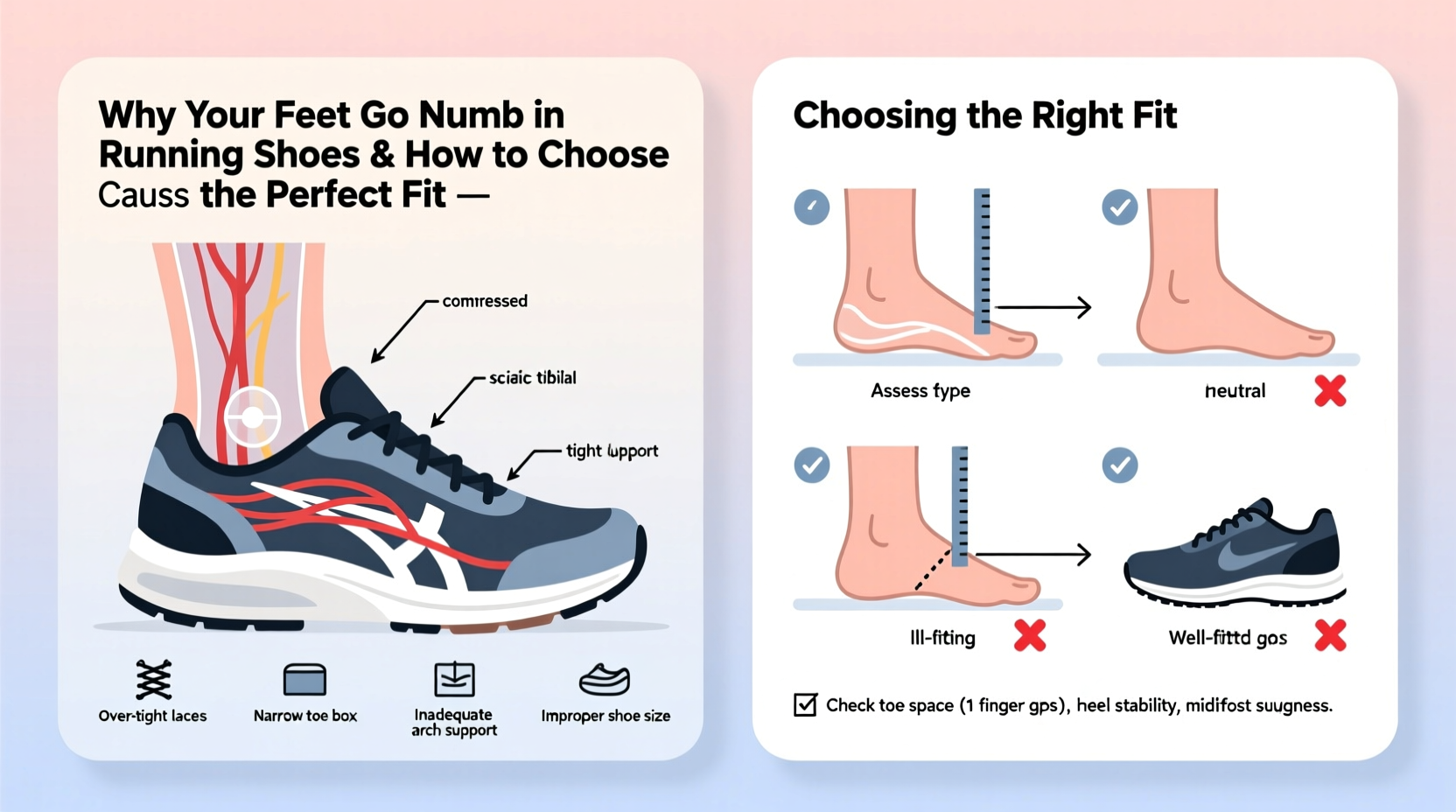
Foot numbness during running typically stems from restricted blood flow or nerve compression. Several factors contribute to this, most of which are directly related to shoe design and fit.
- Tight toe box: A narrow or shallow front section squeezes toes together, compressing the digital nerves (especially the interdigital nerves between the third and fourth toes), leading to conditions like Morton’s neuroma.
- Excessive pressure from lacing: Over-tightening or improper lacing techniques can restrict circulation across the top of the foot, causing numbness in the toes.
- Shoe too small: If your heel slips or your toes hit the end of the shoe repeatedly, microtrauma accumulates, irritating nerves and reducing blood flow.
- Inadequate cushioning or midsole density: Hard or overly responsive foams may transmit excessive impact, increasing pressure on plantar nerves.
- Swelling during runs: Feet naturally expand during prolonged activity due to increased blood flow. Shoes that fit well at rest may become constrictive mid-run.
“Numbness isn't normal. It's your body signaling that something is wrong — usually with fit or alignment.” — Dr. Laura Chen, Sports Podiatrist
How Shoe Fit Impacts Nerve Health and Circulation
The human foot contains over 7,000 nerve endings and 26 bones, all packed into a dynamic structure designed for motion and load absorption. When confined in an ill-fitting shoe, especially one that’s too narrow or short, the metatarsal heads (the bones behind the toes) bear disproportionate pressure. This compression can inflame surrounding tissues and pinch nerves.
One of the most common culprits is the intermetatarsal nerve, which runs between the long bones of the foot. Chronic irritation leads to thickening of the nerve sheath — a condition known as Morton’s neuroma — often felt as sharp, electric-like pain or numbness in the ball of the foot or radiating into the toes.
Additionally, tight uppers or high tongue padding can press down on the dorsal nerves along the top of the foot. Runners who lace their shoes tightly over a high instep often report a “dead foot” sensation halfway through a run.
Tip: Loosen your laces slightly over the top of the foot if you feel pressure or tingling. Try a \"runner’s loop\" lacing technique to relieve tension without sacrificing heel lock.Step-by-Step Guide to Choosing the Right Running Shoe Fit
Selecting the correct running shoe involves more than just knowing your size. Foot shape, gait pattern, arch type, and swelling behavior all influence how a shoe will perform over miles. Follow this process to ensure optimal fit and prevent numbness.
- Measure your feet professionally — both length and width. Many runners wear shoes that are too narrow. Use a Brannock device or visit a specialty running store for accurate measurements, ideally in the afternoon when feet are largest.
- Consider your foot shape. Are your feet wide, narrow, or average? Do you have high arches or flat feet? Some brands cater specifically to wider forefeet (e.g., Altra, Topo Athletic), while others offer multiple width options (Brooks, New Balance).
- Leave adequate toe space. There should be about a thumb’s width (roughly 10–12mm) between your longest toe and the end of the shoe. Remember: your toes may slide forward during downhill runs or long distances.
- Check the midfoot and heel lockdown. The shoe should hold your heel securely without slipping, but not squeeze the midfoot. You shouldn’t need to overtighten laces to achieve stability.
- Test the volume. Internal shoe height (volume) affects how much room your foot has vertically. Low-volume shoes may press down on high arches; high-volume shoes can cause instability in low-arched feet.
- Try shoes with socks you plan to run in. Bring your usual running socks to the fitting. Thicker cushioned socks increase foot volume and alter fit dynamics.
- Walk and jog in them. Don’t judge fit while standing still. Take a few laps around the store or test them on a treadmill if available.
Do’s and Don’ts of Running Shoe Selection
| Do’s | Don’ts |
|---|---|
| Buy shoes later in the day when feet are slightly swollen | Choose shoes based solely on appearance or brand popularity |
| Prioritize toe box width and depth over snugness | Assume your size is the same across all brands |
| Replace shoes every 300–500 miles to maintain cushioning integrity | Continue using shoes with worn-out midsoles that increase impact stress |
| Use custom or supportive insoles if needed for arch control | Overcompensate with thick socks to fix a loose heel |
| Adjust lacing patterns to relieve pressure points | Lace so tightly that circulation is visibly impaired |
Real Example: How One Runner Solved Chronic Numbness
Sarah, a 34-year-old recreational runner training for her first marathon, began experiencing numbness in her right foot after six miles. Initially dismissing it as fatigue, she noticed the issue worsened over weeks. Her second and third toes would go completely numb, sometimes lasting hours post-run.
After consulting a sports podiatrist, she learned her shoes — though the correct length — were too narrow in the forefoot. She had been wearing a popular racing model designed for lightweight efficiency, but its tapered toe box compressed her metatarsals. Switching to a wider-platform shoe with a foot-shaped design eliminated the numbness within two runs. She also adopted a heel-lock lacing method to prevent forward slippage without tightening the forefoot.
Sarah now prioritizes toe box splay and gets fitted annually. “I didn’t realize how much discomfort I was accepting until I found the right fit,” she says. “It’s not just about avoiding pain — my stride feels freer and more efficient.”
Key Features to Look for in a Better-Fitting Running Shoe
Not all running shoes are created equal when it comes to preventing numbness. Focus on these structural elements when selecting a new pair:
- Wide toe box: Allows toes to spread naturally upon ground contact, reducing nerve compression.
- Low heel-to-toe drop (4–8mm): Encourages a more natural foot strike, decreasing forefoot loading.
- Adequate stack height: Sufficient midsole cushioning absorbs impact and reduces stress on plantar nerves.
- Flexible forefoot: Shoes that bend easily at the ball of the foot reduce strain during toe-off.
- Breathable upper: Minimizes heat buildup and swelling, which can exacerbate tightness mid-run.
- Multiple width options: Brands like New Balance, Brooks, and ASICS offer 2E, 4E, or even 6E widths for wider feet.
“The best running shoe is the one that disappears on your foot. If you’re thinking about your shoes during a run, they’re probably not right.” — Mark Rivera, Certified Pedorthist and Gait Analyst
Checklist: How to Evaluate Your Current Running Shoes
Before buying new shoes, assess whether your current pair is contributing to numbness. Use this checklist:
- ☐ Is there less than 10mm of space beyond your longest toe?
- ☐ Do your toes feel cramped or overlap when walking in the shoes?
- ☐ Can you wiggle your toes freely without resistance?
- ☐ Does the top of your foot feel pressed by the tongue or laces?
- ☐ Is the sole excessively worn, especially under the forefoot?
- ☐ Have you exceeded 500 miles in these shoes?
- ☐ Do symptoms improve when switching to wider casual footwear?
If you answered “yes” to two or more of these, your shoes are likely contributing to your numbness.
Frequently Asked Questions
Can numbness in feet lead to long-term damage?
Occasional, transient numbness is usually reversible once pressure is relieved. However, chronic nerve compression — such as untreated Morton’s neuroma — can lead to permanent nerve damage or require surgical intervention. Persistent symptoms warrant evaluation by a podiatrist.
Should I size up in running shoes to prevent numbness?
Sizing up in length without addressing width can cause other issues like heel slippage or friction blisters. Instead, look for shoes with a wider toe box or available in extended widths. Length should allow 10–12mm of space, but width and volume are equally critical.
Are zero-drop or minimalist shoes bad for foot numbness?
Minimalist shoes aren’t inherently problematic, but they often have narrow toe boxes and minimal cushioning, increasing pressure on nerves. If transitioning to minimalist footwear, do so gradually and ensure the shoe allows natural toe splay. For those prone to numbness, a moderate drop with ample forefoot space is often safer.
Conclusion: Make Comfort a Non-Negotiable Part of Your Run
Numbness in your feet while running isn’t a badge of endurance — it’s a warning sign. By understanding how shoe fit influences nerve health and circulation, you can make informed choices that enhance both comfort and performance. The right shoe doesn’t just prevent pain; it supports natural foot function, improves efficiency, and lets you focus on the joy of running rather than the ache in your toes.
Take the time to measure your feet accurately, prioritize width and volume, and test shoes under real-world conditions. Whether you're logging miles on pavement or trails, your feet deserve footwear that respects their anatomy. Don’t settle for “good enough.” Upgrade your fit, and rediscover what it means to run freely.
💬 Have you struggled with foot numbness? What changes helped you find relief? Share your story in the comments — your experience could help another runner avoid the same discomfort.








