
Waking up at 3 a.m. consistently, just as deep sleep should be taking hold, is more than a minor annoyance—it can disrupt your energy, mood, and long-term health. You're not alone: millions report this pattern, often with no obvious explanation. While it may feel mysterious or even unsettling, science offers several plausible causes, ranging from biological rhythms to psychological stress. Understanding the root of your 3 a.m. awakenings is the first step toward reclaiming restful nights.
The Science Behind 3 a.m. Wake-Ups
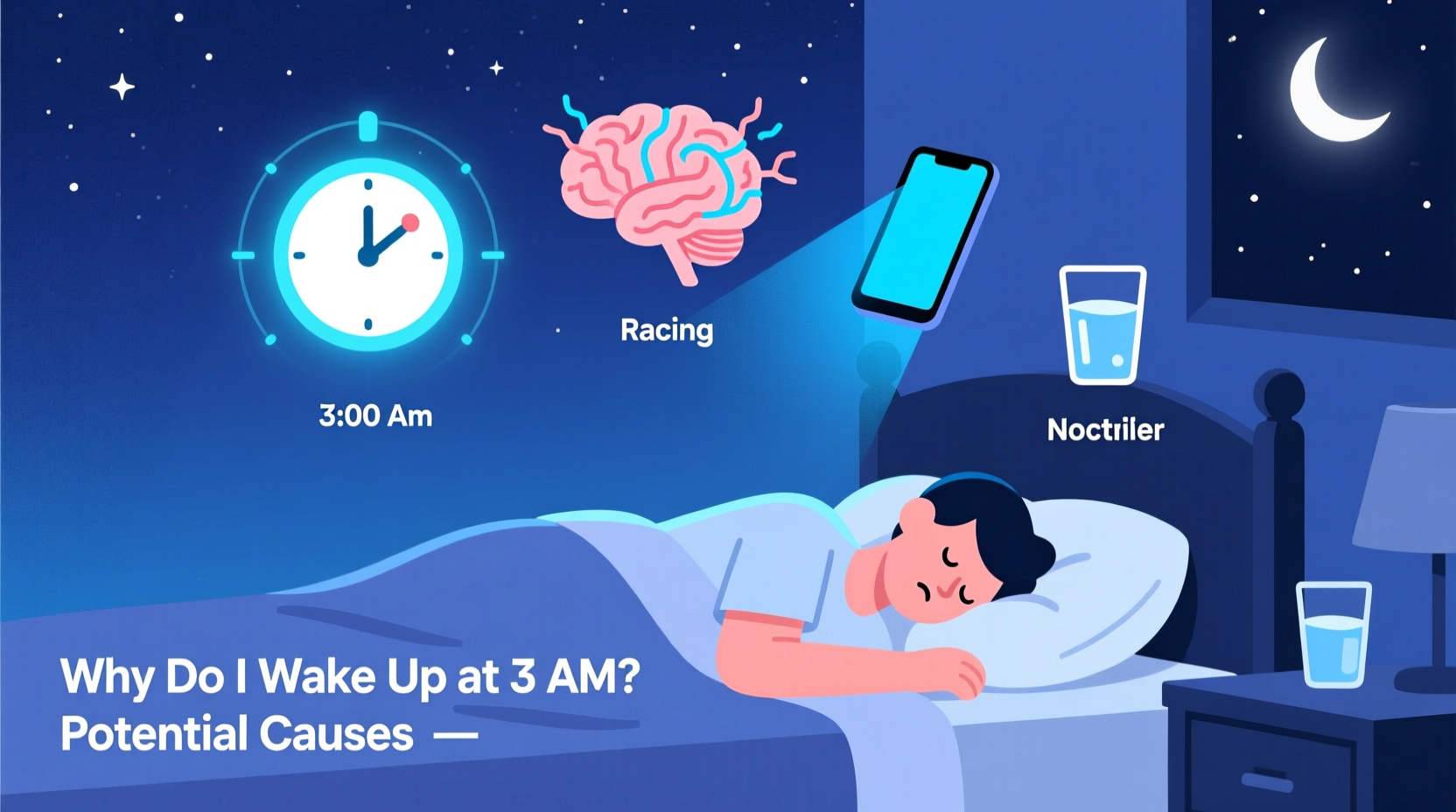
The human sleep cycle operates in roughly 90-minute phases, each progressing through light sleep, deep sleep, and REM (rapid eye movement) sleep. Around 3 a.m., most people are transitioning between their final REM phase and lighter stages. This natural shift makes it easier to wake up—especially if something interrupts the process.
Your circadian rhythm, regulated by the brain’s suprachiasmatic nucleus, follows a 24-hour pattern influenced by light, temperature, and hormones. Cortisol, the stress hormone, begins rising around 3–4 a.m. in preparation for waking. In some individuals, this surge occurs too early or too intensely, triggering full awakening.
“Many patients who wake at 3 a.m. aren’t experiencing insomnia—they’re noticing a normal transition point that’s being amplified by underlying stress or poor sleep hygiene.” — Dr. Lena Reyes, Sleep Neurologist, Stanford Sleep Medicine Center
Common Medical and Biological Causes
Several physiological factors can make 3 a.m. awakenings more likely. These include:
- Blood sugar fluctuations: If you go to bed with low blood sugar or consume high-glycemic foods late at night, your body may release adrenaline and cortisol to stabilize glucose levels, jolting you awake.
- Sleep apnea: Obstructive sleep apnea causes breathing interruptions during sleep. You may not fully remember gasping for air, but these micro-awakenings often cluster in the early morning hours when muscle tone is lowest.
- Gastroesophageal reflux (GERD): Lying flat can allow stomach acid to rise, causing discomfort that wakes you. Symptoms often worsen after midnight.
- Hormonal changes: Menopause, thyroid imbalances, and adrenal fatigue can all disrupt sleep architecture and increase nighttime awakenings.
- Nocturia: Frequent nighttime urination due to age, medication, diabetes, or prostate issues may coincide with 3 a.m. wake-ups.
Psychological and Emotional Triggers
Mental health plays a major role in sleep continuity. Anxiety, depression, and chronic stress are strongly linked to middle-of-the-night awakenings, particularly around 3 a.m.
During REM sleep, brain activity resembles wakefulness. When emotional processing intensifies—often tied to unresolved worries—your mind may “snap” into alertness. This is especially common in people with generalized anxiety disorder (GAD) or post-traumatic stress disorder (PTSD).
Moreover, 3 a.m. darkness amplifies rumination. Without distractions, the mind fixates on fears, regrets, or future concerns. This hyperarousal state prevents reentry into sleep, creating a cycle of dread about bedtime.
Real Example: The Case of Sarah M.
Sarah, a 38-year-old project manager, began waking at 3 a.m. three months after a job restructuring. She wasn’t stressed during the day, but each night she’d wake abruptly, heart racing, thinking about missed deadlines. Over time, she started dreading sleep. A sleep diary revealed no physical triggers, but cognitive behavioral therapy (CBT) uncovered repressed anxiety about job security. After six weeks of CBT and scheduled worry time during the day, her awakenings reduced from five to one per week.
“When the mind isn’t given space to process stress during waking hours, it defaults to the quietest moment—usually 3 a.m.” — Dr. Alan Cho, Clinical Psychologist
Environmental and Lifestyle Factors
Even subtle disruptions in your sleep environment can fragment your night. Consider these often-overlooked contributors:
| Factor | How It Affects Sleep | Solution |
|---|---|---|
| Room temperature above 68°F (20°C) | Impairs core body cooling needed for deep sleep | Use breathable bedding, set thermostat to 65°F |
| Blue light exposure before bed | Suppresses melatonin production | Avoid screens 1 hour before sleep; use warm lighting |
| Caffeine after 2 p.m. | Half-life of 5–6 hours delays sleep onset and depth | Limit caffeine to morning hours |
| Noisy environment (traffic, snoring) | Causes micro-arousals during light sleep phases | Use white noise machine or earplugs |
| Inconsistent sleep schedule | Disrupts circadian rhythm stability | Go to bed and wake up within 30 minutes daily |
Step-by-Step Guide to Stop Waking at 3 a.m.
If you're ready to break the cycle, follow this evidence-based plan over 21 days:
- Week 1: Track and Adjust
- Keep a sleep journal: record bedtime, wake time, nighttime awakenings, food, stress level, and medications.
- Eliminate caffeine after noon and alcohol within 3 hours of bed.
- Set a consistent bedtime and wake-up time—even on weekends.
- Week 2: Optimize Environment and Routine
- Dim lights an hour before bed; use red or amber bulbs.
- Practice a 20-minute wind-down routine: reading, gentle stretching, or journaling.
- Cool your bedroom to 65°F (18°C) and block external light.
- Week 3: Address Mental Patterns
- If you wake and can’t fall back asleep within 20 minutes, get out of bed. Sit in dim light and do a quiet activity (e.g., coloring, reading a physical book).
- Try “worry time”: schedule 15 minutes earlier in the day to write down concerns and possible solutions.
- Practice diaphragmatic breathing: inhale for 4 seconds, hold for 4, exhale for 6. Repeat for 5 minutes.
When to Seek Professional Help
Occasional 3 a.m. wake-ups are normal. But if you experience any of the following, consult a sleep specialist:
- Awakening at 3 a.m. more than three nights per week for over a month
- Excessive daytime fatigue, irritability, or difficulty concentrating
- Loud snoring, gasping, or choking during sleep
- Pain, frequent urination, or heart palpitations upon waking
A polysomnogram (sleep study) can diagnose conditions like sleep apnea, periodic limb movement disorder, or abnormal REM behavior. Cognitive behavioral therapy for insomnia (CBT-I) is also highly effective and recommended as a first-line treatment by the American Academy of Sleep Medicine.
Frequently Asked Questions
Is waking up at 3 a.m. a sign of depression?
It can be. Early morning awakening—waking significantly earlier than intended and unable to return to sleep—is a diagnostic criterion for major depressive disorder. However, not everyone who wakes at 3 a.m. is depressed. Look for other symptoms: low mood, loss of interest, appetite changes, or feelings of worthlessness lasting two weeks or more.
Could spiritual or cultural beliefs explain 3 a.m. wake-ups?
Some traditions refer to 3 a.m. as the “witching hour” or the time when the veil between worlds is thinnest. While these ideas are culturally meaningful, they don’t replace medical evaluation. If you’re concerned about spiritual causes, consider speaking with a counselor or spiritual advisor—but don’t delay seeking medical advice if symptoms persist.
Does age affect 3 a.m. awakenings?
Yes. As we age, sleep becomes lighter and more fragmented. Older adults spend less time in deep sleep and more in stage 1 and 2 sleep, making them more prone to waking from environmental stimuli. Hormonal shifts, medication side effects, and increased incidence of chronic illness also contribute.
Checklist: What to Do Tonight to Improve Your Sleep
Start tonight with this actionable checklist:
- ✅ Finish eating at least 2–3 hours before bed
- ✅ Turn off screens by 9 p.m. or enable blue light filters
- ✅ Set your bedroom temperature between 60–67°F (15–19°C)
- ✅ Practice 4-7-8 breathing: inhale 4 sec, hold 7 sec, exhale 8 sec (repeat 4 times)
- ✅ Write down any lingering thoughts on paper to clear your mind
- ✅ Use blackout curtains or an eye mask to ensure total darkness
- ✅ Avoid checking the clock if you wake—turn it away from view
Conclusion: Reclaim Your Night, Restore Your Health
Waking up at 3 a.m. every night isn’t something you have to accept. Whether the cause is hormonal, psychological, or environmental, solutions exist. Small, consistent changes to your routine can reset your sleep architecture and reduce the frequency of awakenings. Prioritizing sleep isn’t indulgence—it’s foundational to mental clarity, emotional resilience, and long-term wellness.
💬 Have you figured out why you wake at 3 a.m.? Share your story or tips in the comments—your experience could help someone finally get a full night’s rest.








