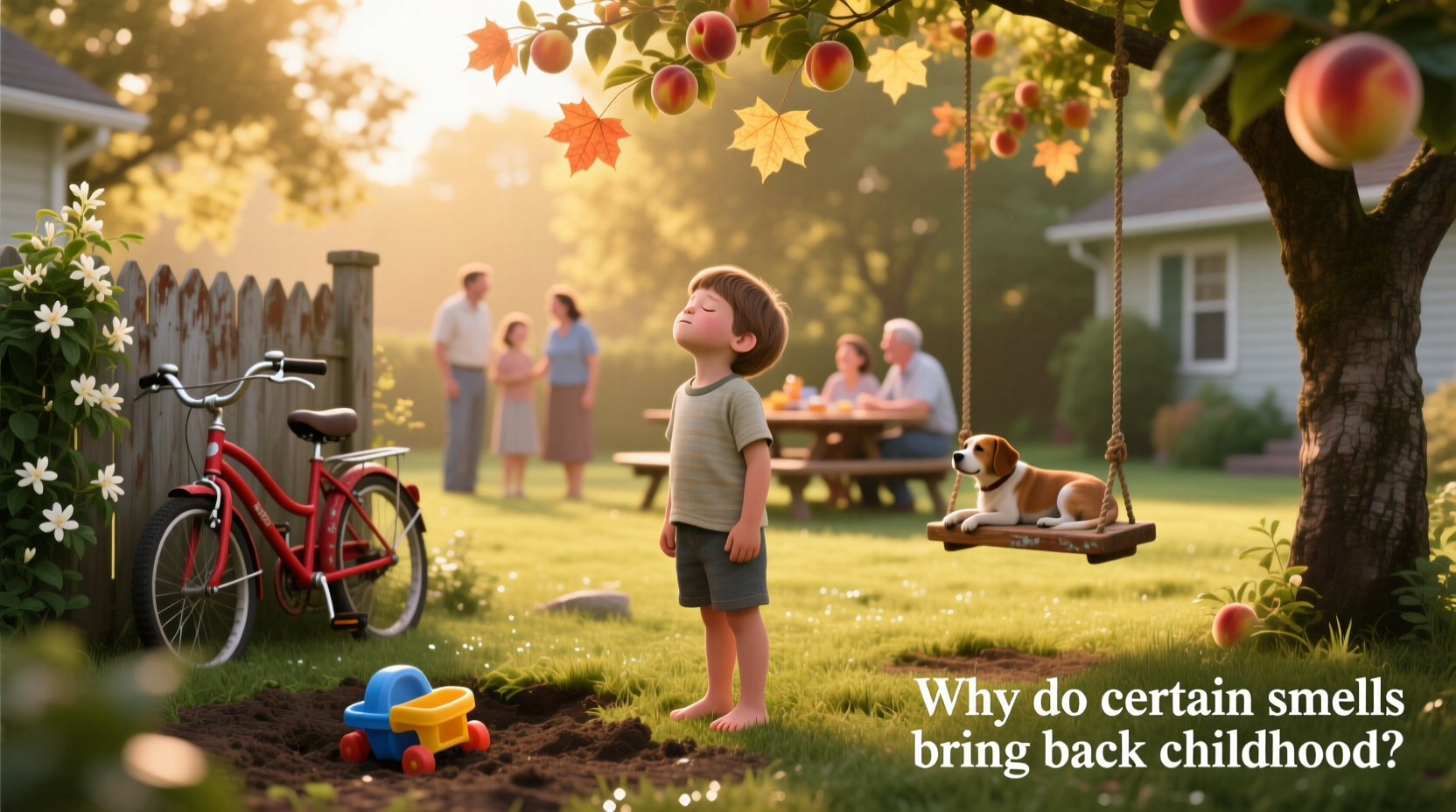
It happens without warning: a whiff of fresh-cut grass, the sharp tang of chlorine from a public pool, or the warm aroma of cinnamon rolls baking in the oven—and suddenly, you’re eight years old again. The memory is not just recalled; it’s relived. A wave of emotion rises, faces emerge from the fog of time, and for a moment, you are back in your grandmother’s kitchen or riding in the backseat of your family car. Unlike other senses, smell has a unique power to unlock deeply buried memories with startling clarity. This phenomenon isn’t magic—it’s neuroscience, psychology, and biology converging in one of the most intimate corners of the human experience.
The Science Behind Smell and Memory
The reason smells evoke such powerful memories lies in the architecture of the brain. When you inhale, odor molecules travel through the nasal cavity to the olfactory bulb, which processes scent information. This bulb is directly connected to two critical regions: the amygdala, which governs emotion, and the hippocampus, responsible for forming and retrieving memories. These structures are part of the limbic system—the brain’s emotional core.
Compare this to other senses. Visual and auditory signals first pass through the thalamus, a relay station that filters and directs information before it reaches higher processing areas. But smell bypasses this filter entirely. It travels straight to the emotional and memory centers, creating an almost instantaneous link between scent and feeling. This direct neural pathway explains why a simple fragrance can feel like a time machine.
“Olfaction is the only sense that has a backdoor into the limbic system. No other sensory input has such immediate access to emotion and memory.” — Dr. Rachel Herz, Cognitive Neuroscientist and Author of *The Scent of Desire*
This neurological shortcut means that smells are processed more emotionally and less cognitively than sights or sounds. You don’t just recognize the smell of rain on hot pavement—you feel something when you do. That sensation is often tied to a moment in your past, even if you can’t immediately recall the details.
Why Childhood Memories Are Most Commonly Triggered
While scents can evoke memories from any life stage, they most frequently summon moments from childhood. There are several reasons for this pattern:
- Novelty and First Exposure: Many smells we encounter during early life are experienced for the first time. The brain encodes these “firsts” more vividly because they carry new information. The scent of Play-Doh, school cafeteria food, or a parent’s perfume becomes indelibly linked to that period.
- Emotional Salience: Childhood is rich with intense emotions—joy, fear, comfort, wonder. Because the amygdala tags memories with emotional weight, those associated with strong feelings are more likely to be preserved and later retrieved by sensory cues.
- Lack of Cognitive Filtering: Young children process experiences more holistically and sensorially. Without the abstract thinking patterns of adulthood, their memories are rooted in sensory detail, making them more susceptible to olfactory retrieval later in life.
- Formative Environment Stability: Most people spend their early years in a relatively consistent environment—same home, same routines, same caregivers. This repetition strengthens the association between specific smells and daily life, embedding them deeper into memory.
The Role of Nostalgia and Emotional Resonance
Nostalgia is more than sentimentality—it’s a psychological mechanism that helps us maintain a sense of identity and continuity. When a smell triggers a childhood memory, it often brings with it a feeling of warmth, safety, or longing. These emotions are not random; they reflect the significance of the original experience.
For example, the smell of woodsmoke might remind someone of camping trips with their father, evoking both joy and loss if that person is now grown and estranged or if the parent has passed away. The scent becomes a vessel for complex emotional narratives.
Studies have shown that nostalgic memories tend to be more positive than negative, even when tinged with sadness. This emotional balance makes them psychologically beneficial—they boost mood, increase social connectedness, and enhance self-esteem. In this way, smell-induced memories aren’t just mental flashbacks; they serve a functional role in emotional well-being.
A Mini Case Study: The Bakery on Maple Street
Sarah, a 42-year-old graphic designer living in Chicago, hadn’t thought about her childhood town in decades—until she walked past a small French bakery and caught the scent of buttery croissants mixed with almond extract. Instantly, she was transported to Saturday mornings at her grandmother’s house, where they would bake together while listening to old jazz records.
“I stopped walking,” she recalls. “My chest tightened, and I could see the yellow curtains in her kitchen, hear her laugh. I didn’t realize how much I missed her until that moment.”
Afterward, Sarah began researching her grandmother’s recipes and started baking on weekends. What began as a fleeting memory evolved into a meaningful ritual that helped her reconnect with her roots and process unresolved grief. Her story illustrates how a single scent can act as both a key and a catalyst—unlocking memory and inspiring action.
How to Harness the Power of Scent for Personal Insight
Understanding the connection between smell and memory doesn’t just explain a curious phenomenon—it offers practical tools for self-exploration and emotional healing. By intentionally engaging with scents, you can access forgotten experiences, deepen self-awareness, and even improve mental health.
Step-by-Step Guide: Exploring Memory Through Scent
- Identify Key Life Periods: Choose a phase of your life you’d like to explore—early childhood, adolescence, college years, etc.
- List Associated Smells: Write down scents you remember from that time (e.g., crayons, sunscreen, a sibling’s shampoo).
- Source the Scents: Find products that replicate them—essential oils, candles, spices, or even household items.
- Create a Sensory Session: In a quiet space, introduce one scent at a time. Breathe slowly and observe what arises—images, emotions, fragments of dialogue.
- Journal Your Experience: Record everything, no matter how trivial. Over time, patterns may emerge that reveal deeper insights about your values, fears, or relationships.
“The nose knows more than the mind remembers. Scent can retrieve memories that conscious recall cannot reach.” — Avery Gilbert, Olfactory Psychologist
Common Smells and Their Typical Memory Associations
| Smell | Common Memory Triggers | Emotional Tone |
|---|---|---|
| Chlorine | Swimming lessons, summer camps, public pools | Nostalgic, playful, carefree |
| Freshly mowed grass | Backyard games, weekend chores, playing outside | Calm, happy, grounded |
| Baby powder | Infancy, younger siblings, bedtime routines | Comforting, tender, safe |
| Pine trees / Evergreen | Holiday seasons, family vacations, winter hikes | Festive, warm, familial |
| Vanilla | Baking, school cafeterias, grandparents’ homes | Warm, sweet, secure |
| Rain on dry earth (petrichor) | Stormy days, playing in puddles, window gazing | Meditative, reflective, peaceful |
Do’s and Don’ts of Engaging With Smell-Triggered Memories
| Do’s | Don’ts |
|---|---|
| Use scent mindfully to revisit positive memories | Force a memory if it causes distress |
| Pair scents with relaxation techniques (meditation, deep breathing) | Overuse artificial fragrances that may cause headaches |
| Explore ancestral or cultural scents (family recipes, traditional incense) | Dismiss seemingly minor memories—they often hold symbolic meaning |
| Share scent memories with loved ones to strengthen bonds | Assume everyone associates smells the same way—context is personal |
FAQ: Understanding Smell and Memory
Can lost memories really be recovered through smell?
Yes, in many cases. Because smell accesses the brain differently than verbal or visual cues, it can retrieve memories that are otherwise inaccessible. This is especially true for early childhood memories, which are often pre-verbal and thus harder to recall through language-based prompts.
Why do some people have stronger scent-memory reactions than others?
Individual differences play a role. People with higher emotional sensitivity, stronger olfactory acuity, or more vivid autobiographical memory tend to experience stronger responses. Additionally, those who grew up in highly sensory-rich environments may have more scent-linked memories stored.
Is it possible to create new scent-memory associations as an adult?
Absolutely. While childhood associations are often the most potent, adults can form strong new links between smell and memory. For instance, wearing the same perfume during a joyful vacation may later allow that scent to rekindle the experience. Mindful pairing of scent with meaningful events enhances this effect.
Conclusion: Reclaiming the Past One Breath at a Time
The ability of a simple smell to catapult us back in time is one of the most poetic features of human cognition. It reminds us that memory is not just a mental archive but a living, sensory experience woven into the fabric of our bodies and brains. These involuntary journeys are more than fleeting nostalgia—they offer windows into who we were, clues about who we’ve become, and sometimes, guidance for who we want to be.
By paying attention to the scents that move you, you honor the depth of your lived experience. Whether it’s the ghost of your mother’s hand lotion or the echo of autumn bonfires, each aroma carries a story worth remembering. Don’t let these moments pass unnoticed. Breathe deeply, listen closely, and let your nose lead you home.
🚀 Start today: Pick one childhood scent and find a way to experience it mindfully. Journal what surfaces. You might rediscover a piece of yourself you forgot you had.








