
Cats are creatures of subtle expression. Unlike dogs, who often wear their emotions on their sleeves, felines communicate through quiet gestures—blinks, tail flicks, purrs, and the rhythmic push-pull of their paws against a blanket, your lap, or a favorite pillow. This behavior, known as kneading, is both endearing and mysterious to many cat owners. While it may seem like a random quirk, kneading is deeply rooted in biology, emotion, and instinct. Understanding why cats knead soft surfaces offers insight into their psychological needs, emotional attachments, and evolutionary history.
The Origins of Kneading: From Kittenhood to Adulthood
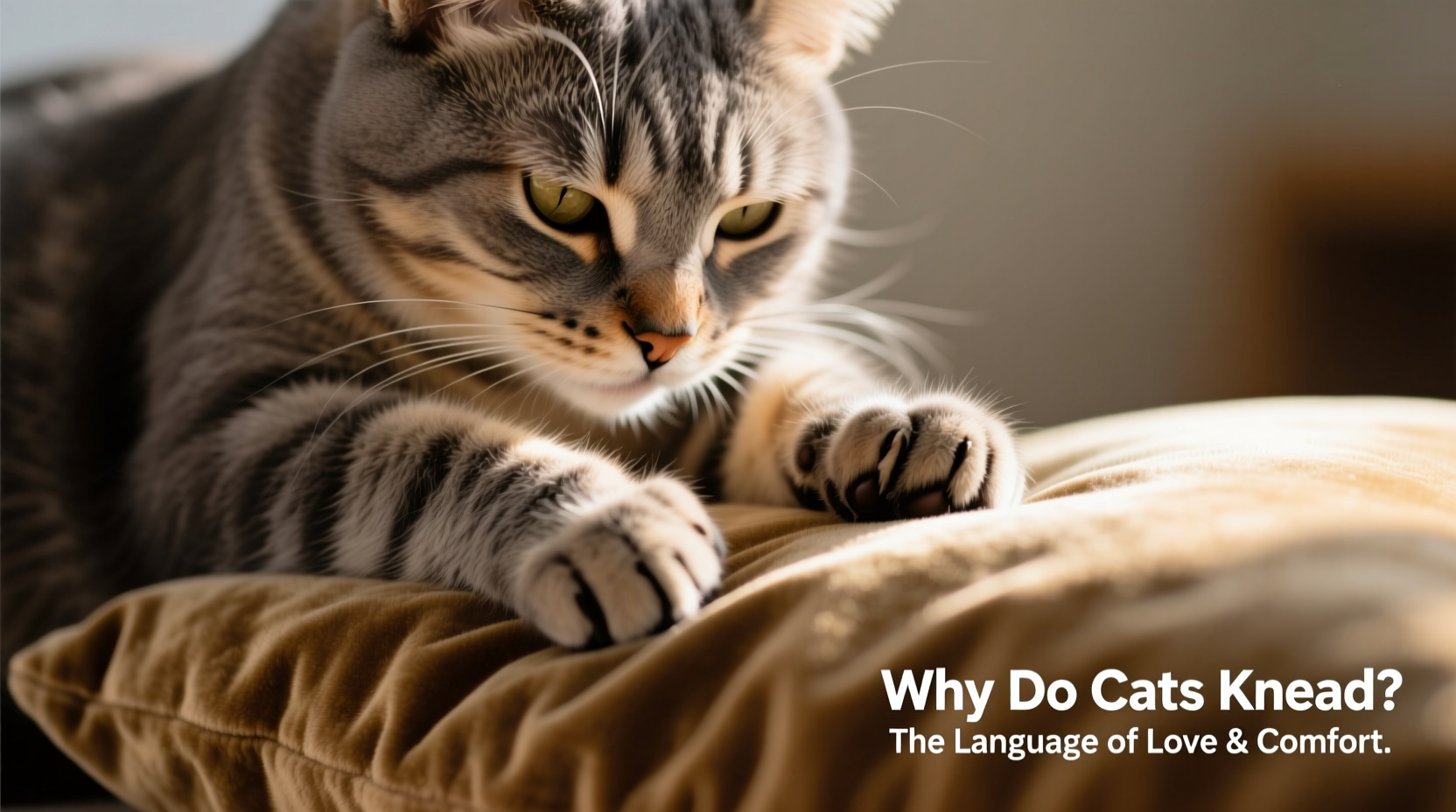
Kneading begins in the earliest days of a kitten’s life. When nursing, kittens press their front paws rhythmically against their mother’s mammary glands. This motion stimulates milk flow, ensuring nourishment. The action is both functional and comforting—a physical connection that signals safety and sustenance. Over time, the sensation becomes associated with warmth, security, and emotional satisfaction.
As cats mature, they often retain this behavior despite no longer needing to nurse. Adult cats may knead when they feel relaxed, content, or affectionate. The persistence of this juvenile trait into adulthood is an example of neoteny—the retention of childlike characteristics in adult animals. In cats, neoteny extends beyond physical traits to include behaviors that reinforce social bonds, particularly with humans who serve as surrogate caregivers.
“Kneading is one of the clearest windows into a cat’s emotional world. It’s not just habit—it’s a living memory of comfort and trust.” — Dr. Sarah Thompson, Feline Behavior Specialist
The continuation of kneading into adulthood suggests that the act transcends mere reflex. It evolves into a self-soothing mechanism, much like how humans might rock in a chair or wrap themselves in a blanket when stressed. For cats, the repetitive motion provides a sense of control and calm, especially in unfamiliar or overstimulating environments.
Emotional Significance: What Kneading Reveals About Your Cat’s State of Mind
When a cat kneads, it’s rarely a neutral act. The behavior is almost always tied to positive emotional states. Observing context is key to interpreting its meaning:
- Contentment: A cat curled on your lap, purring while kneading your sweater, is expressing deep relaxation. The combination of purring and kneading indicates peak comfort.
- Attachment: Cats often reserve kneading for people or spaces they associate with safety. If your cat kneads you specifically, it views you as a trusted figure—akin to a parental bond.
- Anxiety Relief: In some cases, cats knead during times of stress, such as after moving homes or during loud events like thunderstorms. Here, the behavior serves as a grounding ritual, helping them reestablish emotional equilibrium.
- Marking Territory: Cats have scent glands in their paw pads. Each press releases pheromones, subtly marking the surface (or person) as familiar and safe. This olfactory signature reinforces their sense of ownership and security.
Biological and Evolutionary Explanations Behind the Behavior
Beyond emotional cues, kneading has practical roots in wild feline behavior. Wild ancestors of domestic cats used similar motions to prepare sleeping areas. By pressing down grass, leaves, or soil, they created a compact, insulated nest—safe from predators and temperature extremes. This nesting instinct persists in housecats, even when no actual construction is needed. A cat kneading a plush bed or folded blanket may be unconsciously “fluffing” their resting spot, mimicking ancestral habits.
Additionally, kneading may play a role in muscle development and circulation. The flexing and extending of paw muscles keeps joints limber and promotes blood flow—an advantage for animals built for sudden bursts of movement. While less critical in sedentary indoor cats, the motor pattern remains ingrained.
Another theory links kneading to mating behavior. Female cats in heat sometimes knead more frequently, possibly signaling receptivity. Though not exclusive to reproductive contexts, the hormonal influence suggests that kneading can be modulated by internal physiological states.
Do All Cats Knead?
No. While common, not every cat exhibits kneading behavior. Factors influencing whether a cat kneads include:
- Early weaning: Kittens separated from their mothers too early may miss the full development of nursing-related behaviors.
- Personality: More anxious or aloof cats may be less likely to engage in vulnerable, infantile actions.
- Upbringing: Cats raised in enriched, nurturing environments are more prone to retain comforting behaviors into adulthood.
Even declawed cats may knead, though they often use gentler motions to avoid pain. Some adapt by using the heels of their paws instead of claws.
Interpreting Kneading in Multi-Cat Households
In homes with multiple cats, kneading patterns can reveal social hierarchies and relationships. Dominant cats may knead more openly, claiming shared spaces like sofas or heated beds. Submissive cats might restrict kneading to secluded areas unless they feel secure.
Observation of shared kneading zones—such as a favorite armchair—can also indicate group cohesion. When multiple cats knead the same spot, it suggests collective comfort and acceptance. Conversely, avoidance of a previously popular kneading surface may signal tension or environmental change.
“We once worked with a household where two cats hadn’t groomed each other in months. After introducing synchronized kneading sessions on a heated pad, affiliative behaviors increased within weeks.” — Lena Ruiz, Certified Feline Behavior Consultant
Case Study: Rebuilding Trust Through Kneading
Milo, a three-year-old tabby, was adopted after spending six months in a noisy shelter. Initially, he avoided human contact, hiding under furniture and refusing to purr. His new owner, Jenna, introduced daily quiet sessions—soft talking, gentle brushing, and placing a warm fleece blanket near her during reading time.
After three weeks, Milo began approaching. One evening, he climbed onto her lap, sniffed the blanket, and began slow, tentative kneading. Within days, the behavior became routine. Over the next month, his confidence grew: he started greeting her at the door and initiated play.
This progression illustrates how kneading can serve as a milestone in emotional recovery. For Milo, the act wasn’t just about comfort—it was a sign that he had begun to trust again.
Practical Tips for Cat Owners: Responding to Kneading Behavior
While kneading is generally positive, it can present challenges—especially when claws are involved. Understanding how to respond enhances both your cat’s well-being and your own comfort.
Tip: Place a thick blanket or cushion between your lap and your cat’s paws to protect skin while encouraging bonding.Step-by-Step Guide to Managing Kneading Safely
- Observe the context: Note when and where your cat kneads. Is it during cuddle time? After eating? During stress?
- Trim claws regularly: Keep front claws blunt to minimize scratches without compromising your cat’s ability to stretch and grip.
- Provide alternatives: Offer soft, washable kneading mats or old towels in preferred spots.
- Use positive reinforcement: Reward gentle kneading with verbal praise or treats to encourage non-aggressive behavior.
- Respect boundaries: If your cat seems overstimulated (tail flicking, ears back), pause interaction to prevent redirected aggression.
Checklist: Is Your Cat’s Kneading Healthy?
- ✅ Occurs during relaxed moments
- ✅ Accompanied by purring or half-closed eyes
- ✅ Not excessive or obsessive (more than 30 minutes at a time)
- ✅ Doesn’t cause injury to the cat or others
- ✅ Stops when redirected gently
If kneading becomes compulsive—occurring during sleep, causing sores, or resisting interruption—it may indicate underlying anxiety or neurological issues. Consult a veterinarian or feline behaviorist if concerns arise.
Do’s and Don’ts of Living With a Kneading Cat
| Do | Don’t |
|---|---|
| Encourage bonding by allowing kneading on appropriate surfaces | Punish or yell when your cat kneads—it undermines trust |
| Keep a dedicated “kneading blanket” for your cat | Use aversive sprays or deterrents on favored kneading spots |
| Clip claws every 2–3 weeks | Declaw your cat to stop kneading—this is harmful and unethical |
| Warm the surface slightly (e.g., microwave a towel for 20 seconds) | Force your cat off your lap abruptly |
| Monitor changes in frequency or intensity | Ignore sudden cessation of kneading in a previously active keder |
Frequently Asked Questions
Why does my cat drool when kneading?
Drooling during kneading is common and usually harmless. It’s often linked to intense relaxation and a throwback to kittenhood, when sucking accompanied the motion. As long as the drool is clear and the cat shows no signs of illness, it’s a sign of deep contentment.
Can kneading hurt my cat?
Rarely. Most cats regulate pressure instinctively. However, older cats with arthritis may show stiffness or reluctance. If your cat seems uncomfortable, consult a vet and consider softer surfaces or shorter sessions.
My cat only kneads one person—why?
This reflects selective trust. Cats form strong individual bonds and may reserve intimate behaviors for their primary caregiver. Other family members can build similar connections through consistent, calm interaction and shared routines.
Conclusion: Honoring a Language of Love
Kneading is more than a quirky habit—it’s a language. Each press of the paw speaks of safety, memory, and affection. For cats, it’s a way to say, “I am home,” whether that home is a sunlit rug or your steady lap. Recognizing the emotional depth behind this behavior transforms a simple gesture into a profound exchange of trust.
By responding with patience and care, we deepen our connection with these enigmatic companions. We don’t just tolerate kneading—we welcome it as a living testament to the bond we’ve nurtured.
💬 Does your cat knead? Share your story in the comments—what does their rhythm tell you about their heart?








