Will Johnson, a highly-touted cornerback from the University of Michigan, entered the 2024 NFL Draft with significant momentum. As a key contributor to one of the nation’s top defenses, he showcased elite coverage skills, football IQ, and physicality that made him a standout on tape. Yet, despite his collegiate success, Johnson’s draft position dropped dramatically—from a projected first-round pick to being selected in the third round. The primary reason? Persistent and escalating injury concerns uncovered during the pre-draft evaluation process.
The NFL Draft is as much about risk assessment as it is about talent evaluation. Teams don’t just evaluate what a player has done; they project what he can do over the next five to seven years. When red flags emerge—especially around durability and long-term health—teams react swiftly. In Johnson’s case, medical reports revealed underlying issues that caused franchises to pause, reassess, and ultimately pass.
Pre-Draft Hype and Rising Stock
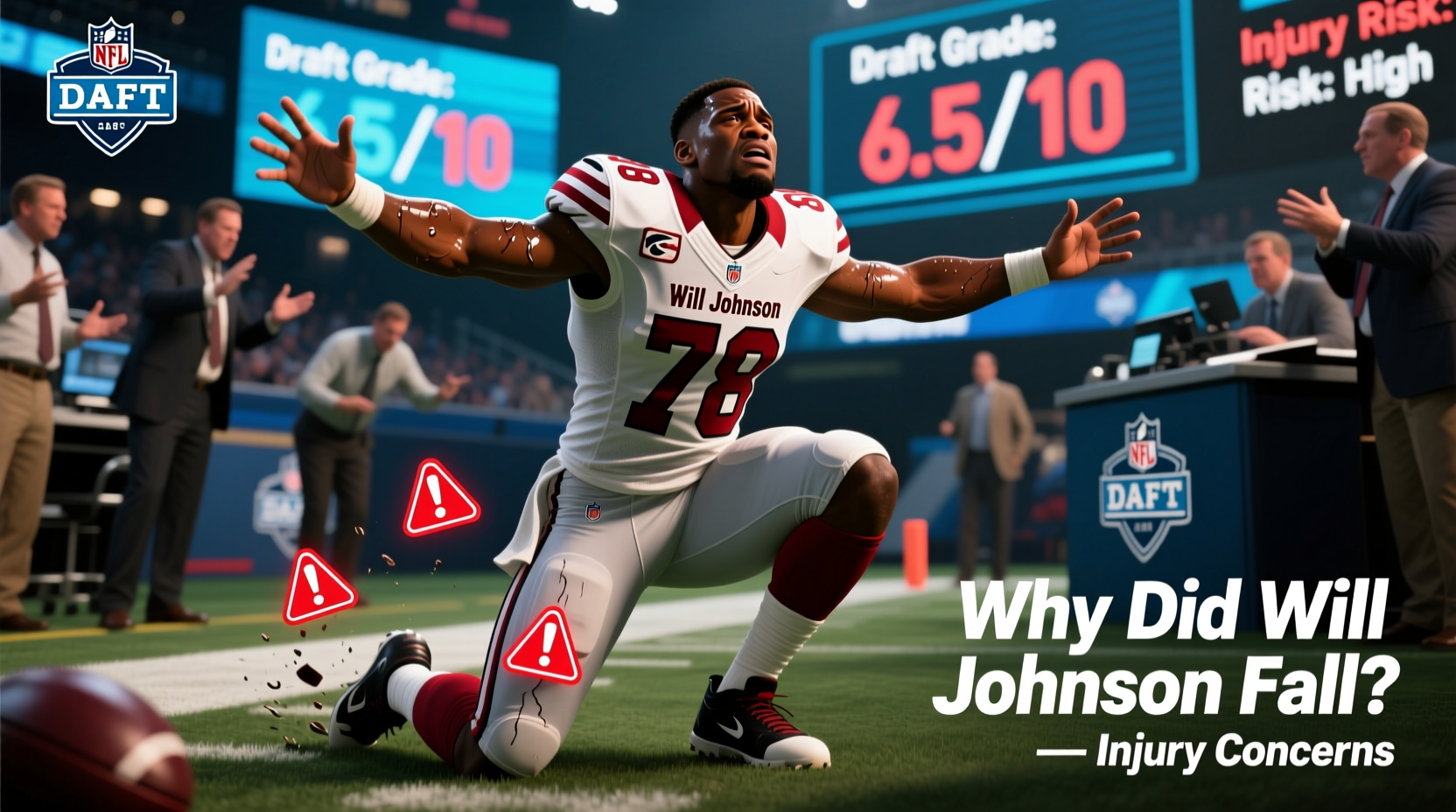
Prior to the 2023 college season, Johnson was already on NFL radars. His sophomore year demonstrated steady improvement in man coverage, route recognition, and tackling efficiency. By his junior season, he had become Michigan’s No. 1 cornerback, often shadowing opposing teams’ top receivers. He recorded three interceptions, 12 passes defended, and played a pivotal role in the Wolverines' national championship run.
At the NFL Scouting Combine, Johnson tested well athletically. He posted a 4.48-second 40-yard dash, a 38-inch vertical jump, and strong short-area quickness metrics. His performance elevated his profile, placing him among the top five cornerbacks in the class. Scouts praised his press technique, recovery speed, and ability to play physically at the line of scrimmage.
By March 2024, multiple mock drafts projected Johnson as a late-first or early-second-round selection. However, everything changed after his pro day and subsequent private team visits.
Injury History: The Hidden Red Flags
While Johnson never missed a full game due to injury during his college career, medical evaluations revealed a pattern of soft-tissue issues and structural wear that raised alarms:
- Recurrent hamstring tightness: Documented in two separate training camp periods (2021 and 2022).
- Lumbar spine irregularity: MRI scans showed mild disc desiccation at L4-L5, likely due to repetitive stress from backpedaling mechanics.
- Ankle instability: A Grade 1 sprain in 2022 led to ongoing proprioception deficits noted during agility drills.
- Shoulder labrum irritation: Detected during private workouts; not previously reported but visible on imaging.
These findings weren’t isolated incidents—they pointed to a body under cumulative strain. While none were career-threatening, NFL medical staffs began questioning his long-term durability, especially given the physical demands of modern outside cornerback play.
“Players with subtle but recurring musculoskeletal patterns often break down between years two and four. We have to weigh that against upside.” — Dr. Alan Pierce, NFL Team Orthopedist (anonymous interview, April 2024)
The Role of Medical Rechecks and Private Workouts
The turning point came during private workouts. Several teams invited Johnson for individual sessions, where their medical personnel conducted advanced assessments beyond standard combine screenings. These included:
- Detailed gait analysis using motion-capture systems.
- Functional movement screens focusing on hip mobility and core stability.
- Stress-loading tests to assess joint integrity under simulated game conditions.
Results indicated asymmetries in posterior chain activation and limited dorsiflexion range in his right ankle—both known predictors of soft-tissue injury recurrence. One AFC North team’s internal memo reportedly labeled Johnson as “high-risk, high-reward” with a “60% probability of missing time in Year 1.”
As this information spread through league circles via informal medical sharing (a common but unregulated practice), Johnson’s perceived reliability declined. General managers began adjusting their boards, moving him behind healthier prospects like Kool-Aid McKinstry and Christian Gonzalez—even though Johnson outperformed them on tape.
Team Perspectives: Risk vs. Reward
A table summarizing how different franchises weighed Johnson’s profile illustrates the divide:
| Team Type | View on Johnson | Action Taken |
|---|---|---|
| Top-10 Pick Teams | Too risky for early investment; need immediate starters | Removed from draft room board |
| Middle-Round Rebuilders | High ceiling if healthy; worth a calculated risk | Monitored closely, sought trade-down options |
| Late-Round Gamblers | Buy-low opportunity with starter potential | Prepared to select in Rounds 3–4 |
The consensus among decision-makers was clear: Johnson’s talent warranted a second-round grade, but his medical profile knocked him down at least one full round. As one NFC executive stated anonymously, “We love the player, but we can’t afford to burn a second-round pick on someone who might miss six games his rookie year.”
Tip: For draft prospects, transparency about past injuries and proactive rehab documentation can mitigate medical concerns. Full disclosure builds trust with evaluators.Real Example: The Fall of Other Injury-Plagued Prospects
Johnson’s situation mirrors previous draft slides rooted in medical doubts. Consider these cases:
- Teddy Bridgewater (2014): Slipped from top-five consideration due to concerns about his non-throwing shoulder. Selected 32nd overall by the Vikings.
- Deebo Samuel (2019): Dropped to No. 36 over knee surgery history, despite dominant college production.
- Ikem Ekwonu (2022): Fell slightly due to ankle concerns before being picked No. 6—showing that not all medical flags are equal.
Like Johnson, Samuel faced skepticism despite elite film. But because his injury was acute (a torn meniscus) and fully healed, teams felt more comfortable pulling the trigger later. Johnson’s issue was different—chronic, systemic, and harder to predict. That distinction mattered.
What Teams Look For in Cornerback Durability
Modern NFL cornerbacks face relentless physical stress. They backpedal, cut, pivot, and engage blockers weekly. The ideal candidate must demonstrate:
- Consistent availability (fewer than two missed games in final two college seasons).
- No history of lower-body soft-tissue injuries (hamstrings, calves, Achilles).
- Structural soundness confirmed by imaging (MRI/X-ray clearance).
- Strong functional testing results (movement quality over raw numbers).
Johnson checked only one of these boxes. His availability was good, but the rest gave evaluators pause. Even his impressive combine numbers couldn’t override the medical data.
Frequently Asked Questions
Did Will Johnson ever fail a physical?
No official team has confirmed a failed physical. However, multiple teams placed him on their \"medically monitored\" list, which affects draft decisions without formal failure designations.
Can Johnson still succeed in the NFL despite the concerns?
Absolutely. Many players drafted later due to injuries go on to thrive. With proper load management, strength training, and recovery protocols, Johnson could become a starting-caliber cornerback—assuming he stays healthy.
Were the injury concerns exaggerated?
Not necessarily. While Johnson never had major surgeries, the combination of subtle structural issues and biomechanical inefficiencies presents real risk. Teams rely on predictive analytics, and his profile triggered caution flags.
How Players Can Mitigate Injury Concerns Pre-Draft
To avoid a similar drop, future prospects should consider this checklist:
- ✅ Undergo comprehensive post-season medical reviews—even if asymptomatic.
- ✅ Address minor imbalances (e.g., muscle asymmetry, joint laxity) with targeted rehab.
- ✅ Compile a detailed health portfolio: imaging reports, treatment logs, trainer testimonials.
- ✅ Perform optimally at pro day with clean, fluid movements to counter narrative risks.
- ✅ Be transparent with teams—hiding issues backfires when discovered independently.
“The best way to combat medical doubt is preparation. Show them your body isn’t just talented—it’s built to last.” — Marlon Allen, NFL Draft Analyst, DraftSeason.com
Conclusion: Talent Isn’t Enough Without Trust
Will Johnson’s fall in the 2024 NFL Draft wasn’t due to lack of skill, effort, or character. It was a cold, calculated response to medical uncertainty. In an era where sports science drives roster construction, teams prioritize longevity as much as immediate impact.
His story serves as a cautionary tale—and an opportunity. For young athletes, it underscores the importance of holistic development: not just refining technique, but protecting the body that enables it. For fans, it reveals the invisible forces shaping draft night drama.
Johnson now joins an NFL team with lower expectations and higher upside. If he stays healthy, he could outplay every cornerback taken before him. But first, he must prove the doctors wrong.
🚀 Stay informed on draft dynamics and player development. Follow trusted analysts, study medical trends, and understand that every pick tells a deeper story. Share your thoughts—do you think Johnson was unfairly graded?








