
When Demon Slayer: Kimetsu no Yaiba premiered in 2019, it didn’t just capture the attention of anime fans—it redefined expectations for animated action storytelling. While its compelling narrative and emotional depth contributed to its success, it was the animation quality that catapulted it into global stardom. From fluid swordplay to painterly backgrounds and seamless integration of CGI, the series set a new benchmark in modern anime production. But what exactly made its visuals so distinct? The answer lies in a combination of artistic ambition, technical innovation, and meticulous craftsmanship by studio Ufotable.
The Studio Behind the Masterpiece: Ufotable’s Signature Style
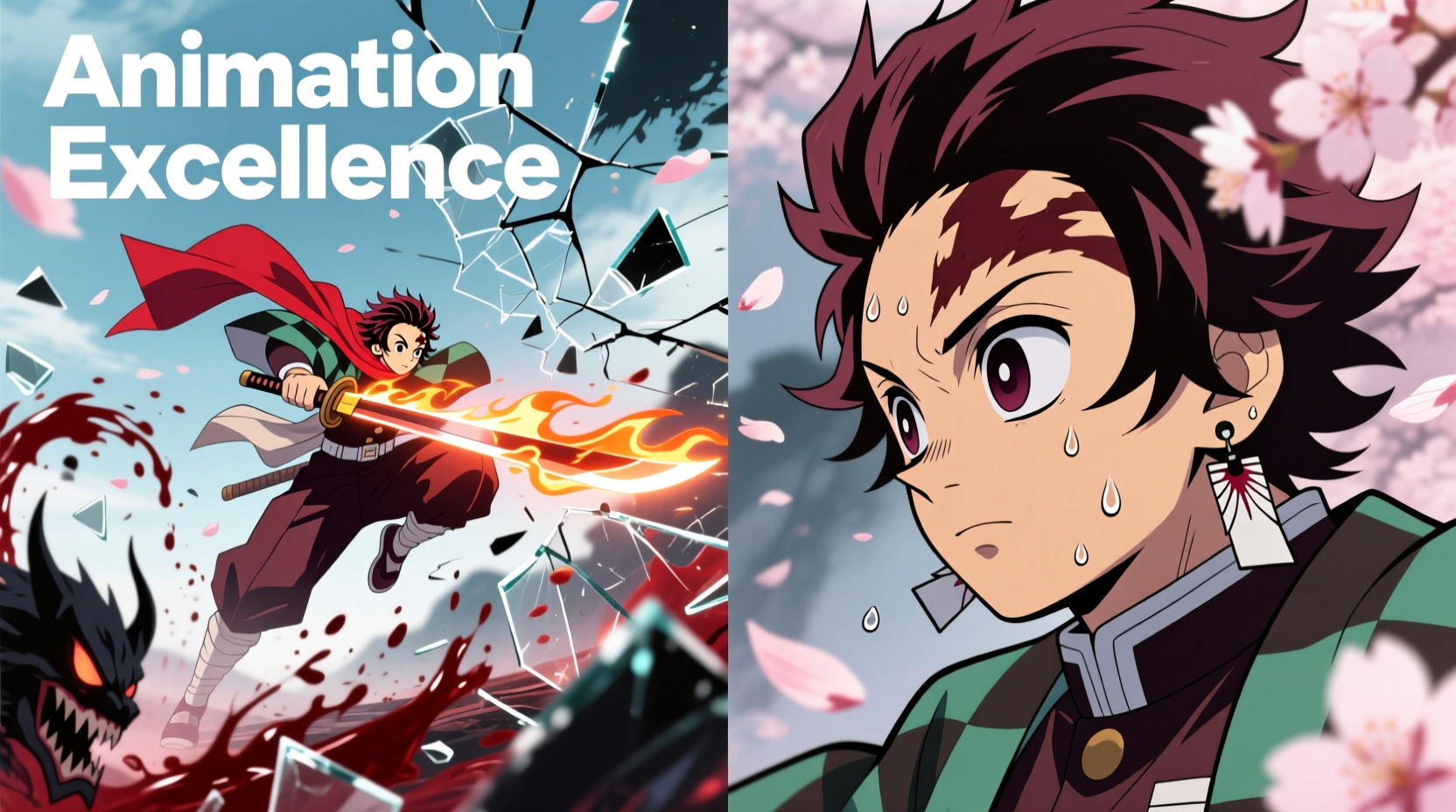
Ufotable, founded in 2000, had already built a reputation for high-quality visual effects through works like Tales of Symphonia and Fate/stay night: Unlimited Blade Works. However, Demon Slayer marked a turning point—not just for the studio, but for the industry’s perception of what mainstream anime could achieve visually.
What sets Ufotable apart is its hybrid approach: blending traditional hand-drawn animation with advanced digital compositing and lighting effects. Unlike studios that rely heavily on limited animation or cost-cutting shortcuts, Ufotable invested heavily in full-animation sequences, especially during fight scenes. This meant more drawings per second, smoother motion, and an overall cinematic feel rarely seen in weekly television anime.
“Ufotable doesn’t treat animation as a means to an end—they treat it as an art form. Every frame in Demon Slayer was designed to evoke emotion, not just advance the plot.” — Akira Shimizu, Animation Director & Industry Critic
This philosophy translated into staggering production values. For example, the iconic “Water Breathing” techniques weren’t just choreographed; they were visualized with flowing ink-like effects, inspired by traditional Japanese sumi-e painting. Each slash of Tanjiro’s blade left behind dynamic trails of water that felt both weightless and powerful—a feat achieved through custom particle simulations layered over hand-drawn frames.
Frame-by-Frame Excellence: The Art of Full Animation
Most TV anime operate under tight budgets and schedules, often using “limited animation”—a technique where fewer frames are drawn, and movements are looped or minimized. In contrast, Demon Slayer employed “full animation” in key sequences, meaning animators drew nearly every frame individually to create lifelike motion.
Consider the Mugen Train arc. The battle between Tanjiro and Akaza spans over 20 minutes of near-continuous combat, featuring complex camera angles, rapid directional shifts, and detailed facial expressions—all without sacrificing clarity or pacing. According to production reports, some episodes required up to 40,000 individual drawings, compared to the industry average of around 15,000.
Tip: When analyzing anime quality, pay attention to motion fluidity—scenes with consistent movement across multiple directions often indicate higher production value.The commitment to detail extended beyond action. Even quiet moments—like snow falling on Tanjiro’s shoulder or Nezuko blinking slowly in human form—were rendered with micro-animations that enhanced realism. These subtleties created immersion, making viewers feel present within the world rather than merely observing it.
Visual Storytelling Through Color, Light, and Composition
One of the most striking aspects of Demon Slayer’s animation is its use of color theory and atmospheric lighting. Instead of relying on flat palettes, Ufotable used gradient-rich hues and dynamic shadows to reflect mood and character psychology.
In the Infinity Castle arc, for instance, the shifting color schemes mirror the emotional state of the characters: deep crimsons signal danger and rage, while cool indigos convey sorrow or introspection. Backgrounds aren’t static either—they breathe. Smoke drifts realistically, fire flickers with organic randomness, and moonlight casts soft glows across armor and skin.
This level of environmental interaction is rare in TV anime, where backgrounds are often reused or simplified. Ufotable treated each scene like a moving painting, frequently collaborating with real-life artists to design backgrounds that resemble classical Japanese woodblock prints—yet move seamlessly with the characters.
Comparison of Visual Techniques in Modern Anime
| Aspect | Demon Slayer (Ufotable) | Average TV Anime |
|---|---|---|
| Frames per Second (Action Scenes) | 24–30 fps (near film quality) | 8–12 fps (limited animation) |
| Background Detail | Hand-painted, dynamic lighting | Static, digitally repeated |
| VFX Integration | Custom particles, layered compositing | Stock effects, minimal layering |
| Production Time per Episode | 4–6 months | 6–8 weeks |
| Budget Allocation (Animation Portion) | ~60% | ~30–40% |
The table illustrates how Demon Slayer diverged from standard practices. By allocating a larger portion of its budget to animation and post-production, the studio ensured that every visual element served the story.
Seamless Fusion of 2D and 3D Animation
CGI has long been a controversial tool in anime, often criticized for clashing with hand-drawn styles. Demon Slayer, however, mastered the integration of 3D models into 2D environments so smoothly that most viewers don’t even notice when CGI is used.
For example, horseback riding sequences, spinning camera movements, and large-scale destruction scenes utilize 3D modeling—but are then heavily processed with filters to match the texture and line work of traditional animation. This includes adding simulated pencil grain, uneven ink lines, and soft shading gradients to eliminate the “plastic” look typical of unrefined CGI.
The result? A sense of depth and spatial awareness that enhances action choreography. During Zenitsu’s lightning-based attacks, the camera swirls around him in a three-dimensional space, yet the character remains stylistically consistent with the rest of the show. This balance between innovation and aesthetic cohesion is what separates Demon Slayer from peers who either avoid CGI entirely or overuse it to the detriment of style.
Step-by-Step: How Ufotable Achieves Its Visual Magic
- Storyboarding with Cinematic Intent: Directors plan shots like live-action films, considering camera angles, lens effects, and pacing.
- Key Animation by Seasoned Artists: Lead animators draw pivotal frames with extreme precision, focusing on anatomy and motion arcs.
- In-Between Frames Handcrafted: Junior animators fill gaps, ensuring smooth transitions without automation shortcuts.
- Digital Compositing & Lighting: Layers of VFX, shadows, and glow effects are added in post-production to enhance depth.
- Final Color Grading: Each episode undergoes color correction to maintain tonal consistency across seasons.
This process is time-consuming and expensive, which explains why few studios replicate it at scale. Yet, the payoff is undeniable: episodes feel less like cartoons and more like animated cinema.
Global Impact and Industry Influence
The success of Demon Slayer wasn’t confined to Japan. The anime broke records worldwide, becoming the highest-grossing film in Japanese history with Mugen Train and topping Netflix charts in over 80 countries. Much of this international appeal stemmed directly from its visual excellence.
Western audiences, accustomed to high-budget Western animation like Disney or Pixar productions, often viewed anime as stylistically charming but technically limited. Demon Slayer challenged that assumption. Its visuals communicated emotion and intensity universally—without relying solely on dialogue or cultural context.
“We showed Demon Slayer clips to animation students at CalArts, and half assumed it was a feature film from Studio Ghibli or a major Hollywood studio. That’s how far it transcends typical TV anime quality.” — Dr. Lena Torres, Animation Program Chair, UCLA School of Arts
Moreover, the series influenced other studios to raise their standards. Productions like Jujutsu Kaisen and Chainsaw Man adopted similar approaches—investing in stronger animation teams, longer production cycles, and better integration of digital tools. In essence, Demon Slayer proved that premium animation could be commercially viable—even in a weekly format.
Mini Case Study: The “Hinokami Kagura” Scene
No discussion of Demon Slayer’s animation would be complete without mentioning the now-iconic Hinokami Kagura sequence in Episode 19. This seven-minute-long battle combines everything that makes the series visually exceptional:
- Fluid, weighty sword movements choreographed to traditional drum music.
- Fire effects that behave like real flames—casting flickering light on surrounding trees and characters.
- Camera pans that follow Tanjiro in sweeping arcs, enhancing momentum.
- Emotional close-ups showing sweat, trembling muscles, and determination in his eyes.
The scene took over six months to produce. Lead animator Toshiyuki Inoue described it as “an attempt to merge dance, martial arts, and spiritual ritual into one continuous motion.” Fans online recreated the sequence frame-by-frame, analyzed its symbolism, and praised its emotional resonance. It became a viral sensation—not because of plot twists, but because of pure visual storytelling.
Why It Matters: Elevating the Medium
Demon Slayer demonstrated that animation isn’t just a vehicle for fantasy or comedy—it can be a serious art form capable of conveying profound human experiences. Its success encouraged streaming platforms to invest in higher-tier anime licenses and fund original projects with improved budgets.
More importantly, it shifted audience expectations. Viewers now demand more than just expressive faces and flashy attacks; they want immersive worlds, believable physics, and emotional authenticity in motion. Studios that fail to meet these standards risk being perceived as outdated.
Tip: To appreciate animation quality, watch scenes in slow motion. Look for consistency in line work, natural shadow movement, and how elements interact with their environment.Checklist: What Makes Demon Slayer’s Animation Stand Out?
- ✅ Use of full animation in critical fight sequences
- ✅ Seamless blend of 2D and 3D elements
- ✅ Emotionally resonant color grading and lighting
- ✅ Custom visual effects inspired by traditional art
- ✅ Extended production timelines allowing for refinement
- ✅ High frame rates enhancing motion clarity
- ✅ Attention to micro-details (breathing, fabric movement, etc.)
Frequently Asked Questions
Did Demon Slayer use more budget than other anime?
Yes. While exact figures are undisclosed, industry analysts estimate that Demon Slayer received a per-episode budget 2–3 times higher than average TV anime, thanks to strong backing from Aniplex and Shueisha. This allowed Ufotable to hire top-tier animators and extend production schedules.
Is the animation hand-drawn or mostly CGI?
The core animation is hand-drawn. However, CGI is used strategically—for complex camera movements, environmental effects (like fire or water), and background depth—and then meticulously processed to match the 2D aesthetic.
Can other studios replicate this level of quality?
Technically, yes—but it requires significant investment in talent, time, and technology. Many studios lack the financial support or long-term planning needed to sustain such high production values week after week.
Conclusion: A New Standard in Animation Excellence
Demon Slayer didn’t just stand out because it looked better—it stood out because it proved that passion, precision, and artistic integrity could thrive in mainstream media. Its animation quality wasn’t a gimmick; it was a language. Every frame communicated urgency, beauty, sorrow, and hope. Around the world, audiences responded not just to the story, but to the way it was told.
The legacy of Demon Slayer extends beyond merchandise sales or box office numbers. It reignited respect for animation as a craft and inspired a new generation of creators to push boundaries. Whether you’re a longtime anime fan or a newcomer drawn in by its visuals, one truth remains: Demon Slayer raised the bar—and the entire industry is still catching up.
💬 What moment in Demon Slayer amazed you the most visually? Share your thoughts and join the conversation about the future of anime artistry.








