When international soccer teams travel for high-profile matches, fans often expect to see their national colors proudly displayed on the pitch. But sometimes, even iconic kits must be set aside—like when Nigeria’s national team, affectionately known as the Super Eagles, are unable to wear their signature green jerseys in Brazil. It’s not a fashion decision or a political statement; it's due to a long-standing rule rooted in global football tradition and broadcast clarity. This article explores the reasons behind this restriction, how it impacts teams, and what alternatives exist under FIFA’s guidelines.
The Origin of Kit Color Conflicts
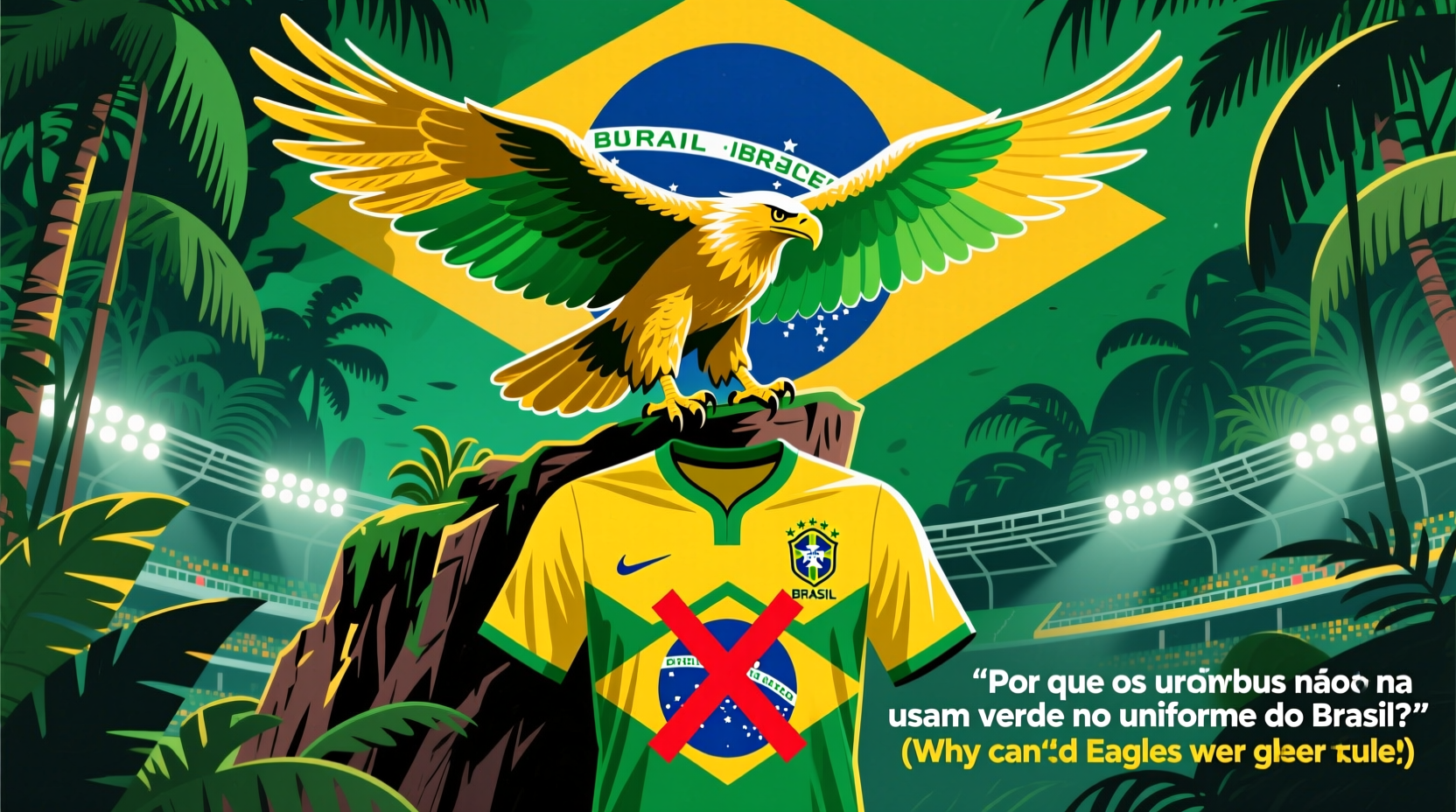
One of the most fundamental rules in international football is that both competing teams must wear distinguishable kits. This ensures players, referees, and spectators can easily identify teammates during fast-paced action. The responsibility falls primarily on the visiting team to change if there's a color clash with the home side. In Brazil, where the national team wears bright yellow shirts, the issue arises when another nation—like Nigeria—also uses a dominant green in its primary kit.
While green and yellow might seem distinct at first glance, the problem intensifies under certain lighting conditions, especially on older television broadcasts or in low-light stadiums. Shades of green can appear washed out or blend into grassy backgrounds, making it difficult for viewers and officials to track movement accurately. To prevent confusion, governing bodies like FIFA enforce strict kit regulations.
Tip: Always check the host nation’s primary kit colors before planning an away match appearance—this helps avoid last-minute uniform changes.FIFA’s Official Kit Regulations
FIFA’s Laws of the Game, specifically Law 4, outline requirements for player equipment. While the law doesn’t ban specific colors outright, it mandates that “the two teams must wear colours that distinguish them from each other and the match officials.” This gives referees authority to require changes if visual confusion could impair gameplay.
In practice, Brazil’s choice of bright canary yellow (officially Pantone 109C) for home games makes it one of the most visually dominant kits in world football. Any opposing team using large amounts of green—even dark forest or lime shades—risks creating contrast issues. Since Nigeria’s traditional home kit features emerald green with white and green shorts, wearing it against Brazil would violate visibility standards.
“Clarity on the field is non-negotiable. If two teams’ kits create ambiguity for players or cameras, one must adapt.” — Marco Rodriguez, FIFA Match Observer
Historical Examples of Kit Changes in Brazil
This isn’t a hypothetical scenario—it has happened multiple times. During a 2014 friendly match in Brasília between Brazil and Nigeria, the Super Eagles were required to switch from their usual green jerseys to an all-white alternative. Despite being labeled as the \"home\" team by schedule, Nigeria was treated as visitors in terms of kit selection because the game took place on Brazilian soil.
Similarly, in 2022, ahead of a proposed exhibition match in São Paulo, Nigerian football officials confirmed early coordination with CONMEBOL to ensure compliant alternate kits would be available. These decisions aren’t made arbitrarily; they stem from pre-match technical meetings involving team managers, referees, and broadcast partners.
Beyond Nigeria, other green-dominant nations have faced similar restrictions. Colombia, Ireland, and even Arsenal FC (in past friendlies) have had to modify their kits when playing in Brazil. The consistency across cases shows this is a standardized protocol, not a targeted policy.
Color Science and Broadcast Considerations
The reasoning goes beyond simple aesthetics. Television production plays a major role in kit regulations. Yellow and green sit close together on the color spectrum, particularly in standard-definition formats still used in some regions. When combined with natural grass fields—which reflect green light—the human eye struggles to differentiate moving figures quickly.
Modern HD and 4K broadcasts reduce this issue significantly, but global accessibility remains a concern. Millions watch matches via mobile devices or lower-resolution streams where color fidelity is compromised. Additionally, colorblind viewers (approximately 8% of males worldwide) may perceive yellow and green as nearly identical under certain conditions.
To address these concerns, FIFA collaborates with broadcasting experts to simulate kit visibility under various conditions. Teams are advised well in advance if their proposed attire poses a risk.
Do’s and Don’ts for International Kit Planning
| Do | Don’t |
|---|---|
| Coordinate with host nations early about kit choices | Assume your home kit is always acceptable abroad |
| Prepare at least one neutral-colored alternate kit | Use reflective or glossy materials that cause glare |
| Test kit visibility under stadium lighting | Choose kits too similar in hue or pattern to common hosts |
| Follow FIFA’s contrast guidelines for text and numbers | Ignore feedback from referees or broadcasters |
How Teams Adapt: The Case of Nigeria’s Alternate Kits
Nigeria has developed several alternate kits over the years to comply with international standards. For matches in Brazil, the Super Eagles typically opt for white-based uniforms with subtle green accents. In some instances, they’ve worn light gray or sky blue variants, depending on opponent colors.
The Nigerian Football Federation (NFF) now includes kit flexibility in its tour planning. Before any overseas fixture, logistics teams review the host country’s primary colors and submit proposed kits to FIFA for approval. This proactive approach minimizes disruptions and maintains professionalism.
Interestingly, fan reception to alternate kits has been largely positive. Some of Nigeria’s best-selling merchandise items have come from special-edition designs created specifically for away games. What began as a compliance requirement evolved into a branding opportunity.
Step-by-Step: How a Team Prepares for Kit Compliance
- Review the host nation’s official kit colors and history of enforcement.
- Consult FIFA’s latest equipment guidelines and visibility standards.
- Select 1–2 alternate kits that provide maximum contrast.
- Submit digital mockups to tournament organizers for pre-approval.
- Conduct on-site testing under actual stadium lighting.
- Finalize kit choice 48 hours before kickoff based on referee input.
FAQ
Can Nigeria ever wear green against Brazil?
Only if Brazil agrees to change their kit, which is highly unlikely. As the host nation, Brazil holds priority for wearing their traditional yellow. Therefore, Nigeria must adapt unless both teams agree to a mutual compromise—rare in official competitions.
Does this rule apply only in Brazil?
No. Similar rules exist globally. For example, England often changes their white kit when playing against teams with light-colored uniforms. However, Brazil’s yellow is among the most restrictive due to its brightness and widespread use in home matches.
Has technology reduced the need for kit changes?
To some extent, yes. High-definition cameras and enhanced color grading help differentiate similar tones. But since not all audiences have access to premium broadcasts, and player safety depends on immediate recognition, the rule remains necessary.
Conclusion
The inability of the Eagles to wear green in Brazil is not a matter of preference or politics—it’s a carefully considered regulation designed to preserve fairness, clarity, and viewer experience in international football. From FIFA mandates to broadcast science, every element supports the principle that distinction on the field is essential. Teams like Nigeria have responded with creativity and professionalism, turning potential limitations into opportunities for innovation.
Understanding these rules deepens appreciation for the logistical precision behind global sports events. Whether you're a player, coach, or passionate supporter, recognizing the importance of kit compliance adds another layer to enjoying the beautiful game.
🚀 Next time your team travels abroad, consider the unseen factors shaping their jersey choice—and share this insight with fellow fans who wonder why tradition sometimes takes a backseat to practicality.








