
Volcanoes are among nature’s most powerful and awe-inspiring phenomena. While their slow-building cones and dramatic eruptions captivate scientists and tourists alike, they also represent one of Earth’s most unpredictable and deadly forces. Despite their beauty, volcanoes can devastate entire regions in minutes, displacing populations, destroying infrastructure, and altering global climate patterns. Understanding the dangers associated with volcanic activity is essential for communities living near active zones and for anyone seeking to grasp the true scale of geological risk.
The Many Faces of Volcanic Danger
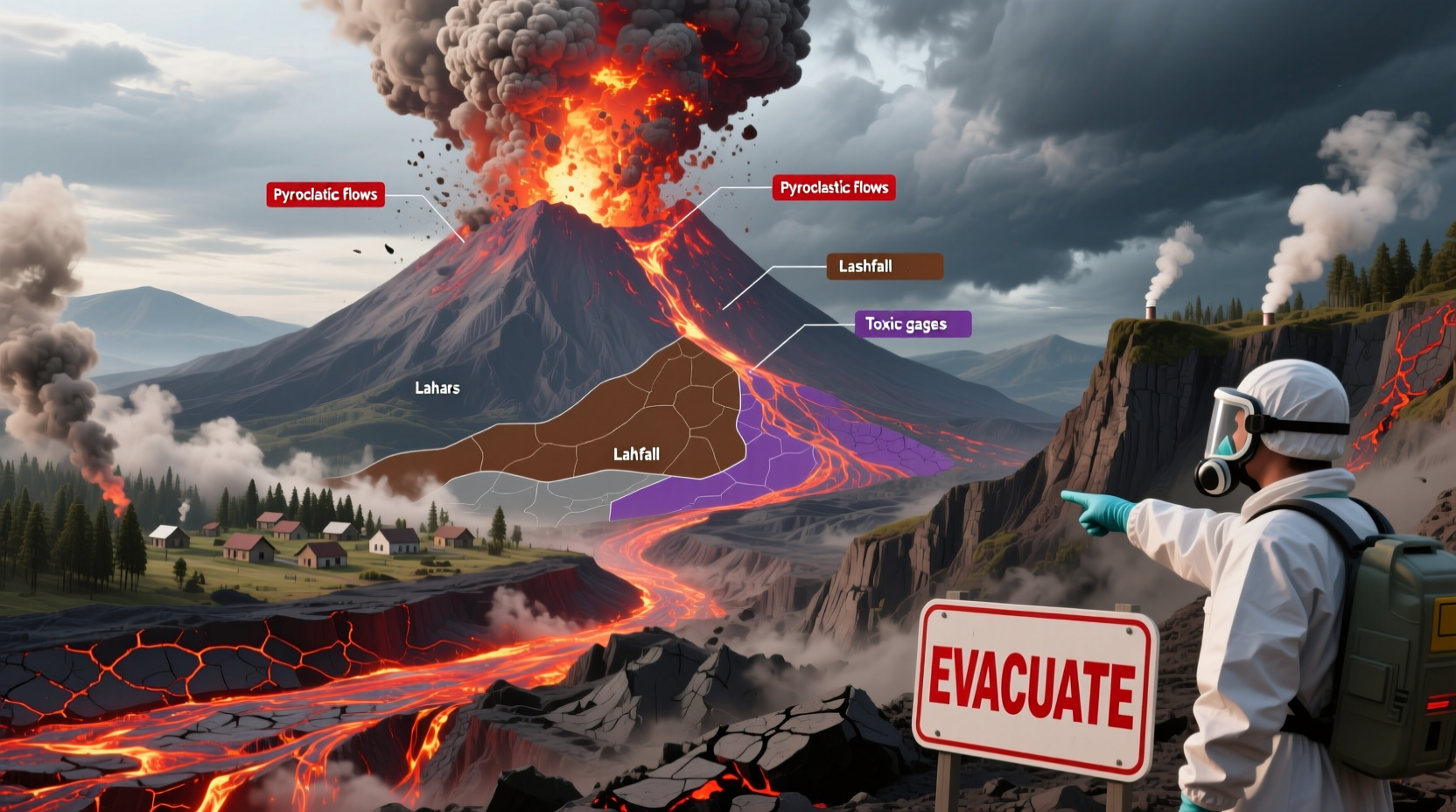
Most people imagine volcanoes as towering mountains spewing red-hot lava, but the reality is far more complex. The danger isn’t limited to molten rock; it extends to a range of secondary hazards that often prove deadlier than the eruption itself. These include pyroclastic flows, toxic gases, ashfall, lahars (volcanic mudflows), and even tsunamis in coastal areas.
Lava flows, while destructive, typically move slowly enough for people to evacuate. However, other threats like pyroclastic surges—fast-moving currents of superheated gas and volcanic debris—can travel at speeds exceeding 700 km/h (450 mph) and reach temperatures over 1,000°C. These are responsible for some of history’s deadliest volcanic events, including the destruction of Pompeii in 79 AD.
Tip: Never underestimate the speed or reach of pyroclastic flows—even if you're outside the immediate blast zone, conditions can change rapidly.Primary Volcanic Hazards and Their Impacts
- Lava Flows: Molten rock that destroys everything in its path. While usually slow-moving, it can ignite fires and collapse buildings.
- Pyroclastic Flows: A mixture of hot gas, ash, and rock fragments that race down slopes. Often fatal due to heat, suffocation, and impact force.
- Volcanic Ash: Fine particles that can travel thousands of kilometers, damaging lungs, collapsing roofs, and disrupting air travel.
- Lahars: Mudflows formed when volcanic debris mixes with water from melting snow or heavy rain. Can bury entire towns under meters of sludge.
- Toxic Gases: Emissions like sulfur dioxide, carbon dioxide, and hydrogen sulfide can poison air and water supplies.
- Tsunamis: Triggered by underwater eruptions or flank collapses, these waves can devastate distant coastlines.
Case Study: The 1985 Nevado del Ruiz Disaster
In November 1985, the Colombian volcano Nevado del Ruiz erupted after decades of dormancy. Though the initial explosion was relatively small, it melted glaciers atop the peak, triggering massive lahars. These fast-moving mudflows swept through the town of Armero nearly 50 kilometers away, killing over 23,000 people—making it the deadliest volcanic disaster in South American history.
What made this event particularly tragic was the lack of effective communication. Scientists had warned authorities of the potential for lahars, but evacuation plans were poorly executed, and many residents were unaware of the danger. This case underscores how preparedness and public education are as critical as scientific monitoring.
“Even a moderate eruption can be catastrophic if it interacts with ice, water, or densely populated areas.” — Dr. Susan Kieffer, Geophysicist and Volcanic Hazard Specialist
Secondary and Long-Term Risks
Beyond the immediate destruction, volcanoes pose long-term environmental and societal challenges. Widespread ashfall can contaminate drinking water, destroy crops, and cause respiratory illnesses. In extreme cases, large eruptions inject sulfur dioxide into the stratosphere, forming aerosols that reflect sunlight and cool the planet—a phenomenon known as \"volcanic winter.\"
The 1815 eruption of Mount Tambora in Indonesia led to the “Year Without a Summer” in 1816. Global temperatures dropped by as much as 3°C, causing crop failures, famine, and social unrest across Europe and North America. Such events remind us that volcanic impacts are not confined to local regions—they can alter global climate systems.
| Hazard Type | Speed/Duration | Typical Impact Range | Fatality Risk |
|---|---|---|---|
| Lava Flow | 0.5–10 km/h | Local (within 10–20 km) | Moderate (avoidable with warning) |
| Pyroclastic Flow | 100–700 km/h | Regional (up to 100 km) | Very High (often unsurvivable) |
| Volcanic Ash | Winds carry globally | Continental to Global | High (respiratory, aviation) |
| Lahar | 30–80 km/h | Downstream valleys (up to 100 km) | Very High (sudden, destructive) |
| Toxic Gas Release | Varies with wind | Local to Regional | High (especially CO₂ in low areas) |
Monitoring and Early Warning Systems
Modern science has significantly improved our ability to predict volcanic activity. Seismometers detect underground tremors caused by rising magma. GPS instruments monitor ground deformation, while gas sensors track changes in emissions—key indicators of an impending eruption.
However, prediction is not prevention. Not all volcanoes behave the same way, and some erupt with little or no warning. For example, the 2014 Mount Ontake eruption in Japan occurred without significant seismic precursors, killing 63 hikers who had no time to escape.
Effective risk reduction requires more than technology—it demands community engagement, clear evacuation routes, and regular drills. Countries like Indonesia and Japan, which sit on the Pacific Ring of Fire, have invested heavily in early warning networks and public education campaigns.
Tip: If you live near an active volcano, sign up for local alert systems and know your evacuation route. Keep an emergency kit ready year-round.Step-by-Step: What to Do Before, During, and After an Eruption
- Before: Stay informed about local volcanic risks. Attend community preparedness meetings and create a family emergency plan.
- During: Follow official evacuation orders immediately. Avoid river valleys and low-lying areas prone to lahars. Wear masks or cover your nose and mouth to avoid inhaling ash.
- After: Wait for official clearance before returning home. Clean roofs of ash to prevent collapse. Boil water until authorities confirm it's safe to drink.
FAQ: Common Questions About Volcanic Risks
Can we predict exactly when a volcano will erupt?
No. While scientists can identify signs of increasing unrest—such as earthquakes, swelling, and gas release—pinpointing the exact timing and magnitude remains challenging. Some volcanoes give weeks of warning; others erupt suddenly.
Are all volcanoes equally dangerous?
No. Shield volcanoes like those in Hawaii tend to produce less explosive eruptions, while stratovolcanoes (like Mount St. Helens or Vesuvius) are more likely to explode violently due to trapped gases in viscous magma.
Is volcanic ash harmful to breathe?
Yes. Volcanic ash contains fine glass and mineral particles that can irritate the lungs, worsen asthma, and cause long-term respiratory issues. Children, the elderly, and those with preexisting conditions are especially vulnerable.
Conclusion: Respecting Nature’s Power
Volcanoes are not just geological curiosities—they are dynamic, potentially deadly forces that demand respect and preparedness. While we cannot stop eruptions, we can reduce their human toll through science, planning, and awareness. Living near a volcano doesn’t have to mean living in fear, but it does require vigilance, education, and a commitment to safety.
Whether you’re a resident of a high-risk zone or simply curious about Earth’s inner workings, understanding the dangers of volcanoes empowers you to make informed decisions. Knowledge is the first line of defense against nature’s most formidable displays.
💬 Have questions about volcanic risks in your region? Share your thoughts or experiences below—your insight could help others stay safe.








