Labor unions have long played a role in shaping workplace standards, advocating for fair wages, safe conditions, and employee rights. While many view unions as essential protectors of worker dignity, others argue that their influence can introduce inefficiencies, hinder innovation, and create systemic challenges for businesses and economies. This article examines the less-discussed side of unionization—its potential downsides—from operational rigidity to unintended consequences on employment and competitiveness.
Reduced Organizational Flexibility
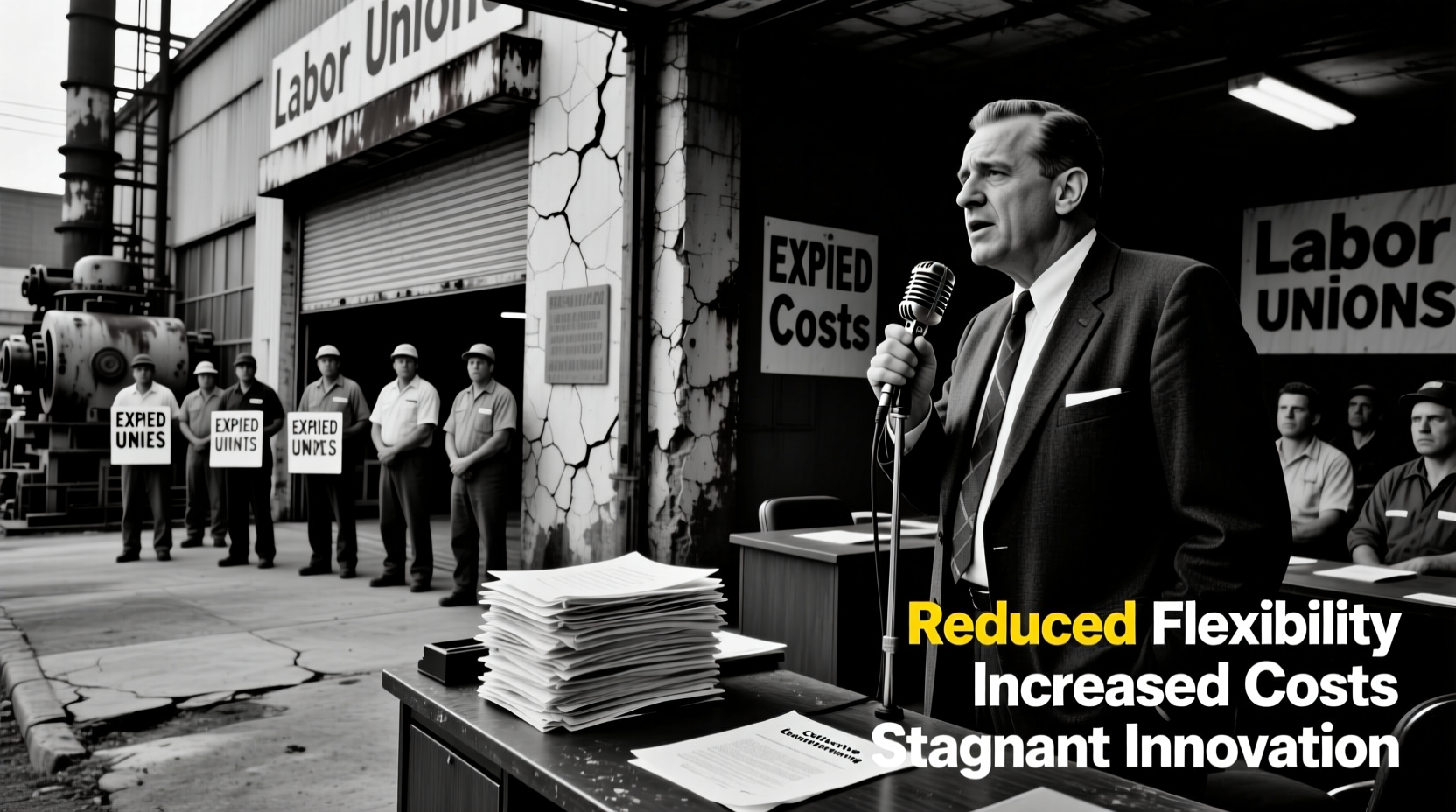
One of the most cited drawbacks of unionized workplaces is the loss of managerial flexibility. Union contracts often include strict rules about job roles, seniority-based promotions, hiring practices, and disciplinary procedures. While these provisions aim to ensure fairness, they can prevent companies from adapting quickly to market changes or rewarding high-performing employees outside rigid frameworks.
For example, a company facing declining sales may need to restructure teams or reassign staff to remain competitive. In a union environment, such moves may require lengthy negotiations or violate existing agreements, delaying critical decisions. This inflexibility can be particularly problematic in fast-moving industries like technology or logistics.
Tip: Employers should assess how collective bargaining agreements might limit strategic agility before entering union negotiations.Economic Impacts and Cost Pressures
Unions typically negotiate for higher wages, better benefits, and improved working conditions. While beneficial for employees, these demands increase labor costs for employers. Over time, sustained cost increases can affect a company’s profitability, pricing strategy, and ability to invest in growth or innovation.
In highly competitive markets, especially those with thin profit margins, rising labor expenses may force businesses to raise prices, reduce staff, or even relocate operations to lower-cost regions. A 2020 study by the National Bureau of Economic Research found that unionization in manufacturing led to a measurable decline in firm survival rates over a 10-year period, partly due to increased operating costs.
“While unions succeed in raising wages, they also raise the break-even point for businesses. That can make them more vulnerable during downturns.” — Dr. Mark Chen, Labor Economist at the University of Chicago
Workplace Tensions and Us-vs-Them Dynamics
Union presence can sometimes foster adversarial relationships between management and employees. When negotiations become contentious, trust erodes, and communication breaks down. Instead of collaborative problem-solving, decision-making shifts toward formal grievances, arbitration, and legal enforcement of contract terms.
This dynamic can stifle open dialogue and discourage individual initiative. Employees may feel pressured to conform to union norms rather than express independent views. In some cases, dissenting workers—even those who oppose union representation—can face social or professional isolation.
A real-world example occurred in a Midwest auto plant where non-union supervisors reported being excluded from team discussions after union leadership declared “management is not part of the workforce.” Productivity dropped by 12% within six months, according to internal reports, largely due to poor interdepartmental coordination.
Potential for Reduced Innovation and Performance Incentives
Union contracts frequently emphasize uniformity in pay scales and promotion criteria, often based on tenure rather than performance. While this protects against favoritism, it can also diminish motivation for high achievers who see limited upside for extra effort.
Merit-based incentives—such as bonuses, rapid advancement, or flexible work arrangements—are harder to implement under standardized union agreements. As a result, companies may struggle to attract or retain top talent, particularly in knowledge-intensive sectors where innovation depends on individual initiative.
| Factor | Union Environment | Non-Union Environment |
|---|---|---|
| Pay Structure | Standardized by role/seniority | Often performance-based |
| Promotion Speed | Slower, seniority-dependent | Faster for high performers |
| Innovation Support | Moderate to low | High (flexible structures) |
| Employee Autonomy | Low (rules-driven) | Higher (role-adaptive) |
Barriers to Entry and Job Market Rigidity
In some industries, unions control access to jobs through apprenticeship programs or hiring halls. While intended to maintain skill standards, these gatekeeping mechanisms can limit opportunities for new entrants, particularly those without connections or prior union affiliations.
Additionally, strong union protections—such as near-absolute job security—can make it difficult to remove underperforming employees. This reduces accountability and may lower overall productivity. In public-sector unions, where funding is not tied directly to performance, this issue is especially pronounced.
For instance, a 2019 audit of a large urban school district revealed that fewer than 1% of tenured teachers were dismissed for poor performance over a decade, despite documented classroom deficiencies. The process required extensive documentation, multiple hearings, and legal representation, costing the district an average of $75,000 per dismissal attempt.
Tip: Policymakers should evaluate whether job protection mechanisms inadvertently shield incompetence at the expense of quality service.Checklist: Assessing Union Impact on Your Organization
- Evaluate current labor costs versus industry benchmarks
- Review contract terms for flexibility in staffing and scheduling
- Assess employee turnover and satisfaction data pre- and post-unionization
- Analyze dispute resolution frequency and associated costs
- Measure innovation output or service quality trends over time
- Consult legal counsel on compliance and negotiation risks
FAQ
Do unions always lead to higher wages?
Most studies show unions do increase wages—typically by 10–20% compared to non-union peers. However, these gains are often offset by reduced non-wage benefits, slower hiring, or automation investments aimed at cutting long-term labor costs.
Can a company refuse to work with a union?
No. Once a majority of employees vote to unionize, federal law requires the employer to engage in good-faith collective bargaining. Refusal constitutes an unfair labor practice under the National Labor Relations Act.
Are public-sector unions different from private-sector ones?
Yes. Public-sector unions negotiate with government entities funded by taxpayers, not revenue-generating businesses. This removes the direct link between labor costs and profitability, potentially enabling unsustainable compensation demands without immediate financial consequences.
Conclusion: Balancing Protection and Practicality
Unions serve a vital function in preventing exploitation and ensuring basic labor rights. Yet, their structure and methods can introduce significant trade-offs—reduced agility, higher costs, weakened performance incentives, and strained workplace dynamics. These downsides are not universal, but they warrant careful consideration by employees, employers, and policymakers alike.
The goal should not be blanket opposition or uncritical support, but rather a balanced evaluation of when and how union involvement enhances—or hinders—organizational health and economic vitality. In an evolving labor landscape, fostering cooperation without sacrificing efficiency may offer a more sustainable path forward.
💬 What’s your experience with unions—positive, negative, or mixed? Share your thoughts below and contribute to a more nuanced conversation about the future of work.








