
Formula 1 is the pinnacle of motorsport—fast, technical, and fiercely competitive. Yet, despite decades of evolution in technology, safety, and global reach, one aspect remains strikingly unchanged: the absence of female drivers on the grid. While women compete successfully in other elite sports, from athletics to esports, not a single woman has raced in an F1 Grand Prix since the championship began in 1950. This isn’t due to lack of skill or interest. The reasons are far more complex, rooted in history, economics, access, and deeply entrenched gender dynamics.
The Historical Context of Women in Motorsport
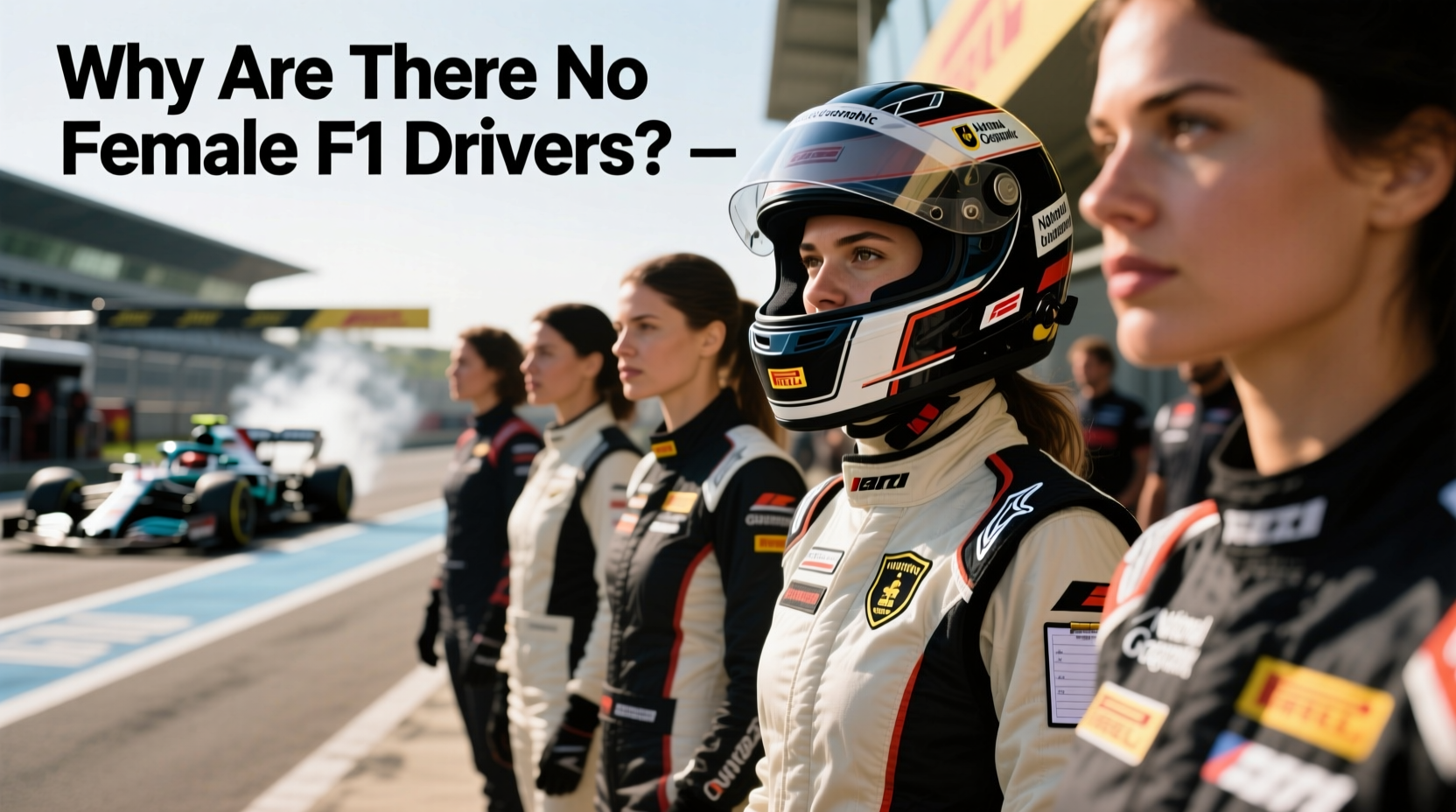
Women have been part of motorsport since its earliest days. In 1903, Hellé Nice raced in Grand Prix events during the 1930s, competing against future F1 legends. Maria Teresa de Filippis became the first woman to enter a Formula 1 World Championship race in 1958. Though she started five Grands Prix, her career was short-lived, and no woman has followed in full-time competition since.
The mid-20th century saw societal norms heavily restrict women’s participation in high-risk or physically demanding roles. Motorsport, perceived as dangerous and male-dominated, became increasingly inaccessible. As F1 grew into a multi-billion-dollar industry, investment flowed almost exclusively to young male drivers coming through karting and junior formulae—pathways where girls were often excluded or discouraged.
“Motorsport hasn’t excluded women intentionally—it just never made space for them.” — Susie Wolff, former Williams F1 test driver
Structural Barriers in the Racing Pipeline
The journey to Formula 1 begins long before a driver reaches the age of 18. It starts in karting, typically between ages 6 and 10, where talent is identified and nurtured through expensive training programs, private coaching, and international competitions. This early stage is where gender disparities begin to solidify.
Karting is costly—often exceeding $50,000 annually for top-tier programs. Families must invest heavily in equipment, travel, and coaching. Without institutional support or sponsorship, few can afford it. Historically, sponsors have favored boys, assuming they have greater long-term potential in motorsport. This creates a self-fulfilling prophecy: fewer girls in karts → fewer visible talents → less funding → no progression to higher series.
Tip: Grassroots initiatives that fund young female racers are critical to breaking the cycle of underrepresentation.Key Gaps in the Development Pathway
| Stage | Typical Age Range | Female Participation Rate (Est.) | Major Challenges |
|---|---|---|---|
| Karting (Entry Level) | 6–12 | ~15% | Lack of encouragement, limited role models |
| National Junior Series | 13–16 | ~8% | Funding gaps, visibility issues |
| European Formula 4 / F3 | 16–19 | <5% | Sponsor reluctance, media neglect |
| FIA Formula 2 | 18–25 | 0% (active) | No recent female graduates from feeder series |
Cultural and Psychological Factors
Beyond money and access, culture plays a powerful role. From childhood, boys are more likely to be introduced to racing games, model cars, and motorsport events. Parents may subconsciously steer daughters toward “safer” or “more feminine” activities. Even when girls express interest, they often face skepticism: “Are you strong enough?” “Isn’t this too dangerous?”
This subtle bias accumulates. A 2021 study by the FIA Women in Motorsport Commission found that 67% of female junior drivers reported feeling isolated or unsupported within their teams. Many described being treated as token participants rather than serious competitors.
The lack of visible role models reinforces the issue. Without women succeeding at the highest levels, young girls don’t see a viable path forward. It becomes difficult to imagine yourself in a cockpit when no one who looks like you has stood on the podium.
Mini Case Study: Jamie Chadwick
Jamie Chadwick offers a compelling example of both progress and limitation. A British driver, she won the W Series championship in 2019, 2021, and 2022—a single-seater series created specifically to support female talent. Her performances earned her a development role with the Williams F1 team and widespread acclaim.
Despite her success, Chadwick has not secured a seat in Formula 1. Why? Not due to speed or ability, but because the W Series folded in 2023 due to financial instability. Without a sustainable pathway beyond her series, even top-tier female talent hits a ceiling. Chadwick herself stated: “I proved I could win against strong competition, but proving it consistently in a male-dominated ladder is another challenge.”
Recent Progress and Ongoing Initiatives
Change is emerging, albeit slowly. The FIA launched the Girls on Track program to introduce young women to motorsport. Teams like Aston Martin and Alpine have established female development academies. In 2023, Abbi Pulling dominated the F1 Academy series, drawing attention from senior figures in the sport.
F1 Academy, a new all-female series backed by Formula 1 itself, aims to bridge the gap between karting and professional single-seaters. Unlike the W Series, it integrates with existing race weekends, giving drivers exposure and experience on real F1 circuits. While still in its infancy, the series represents a shift in strategy—from creating parallel structures to embedding female talent within the mainstream ecosystem.
Checklist: What’s Needed to Bring Women to F1
- ✅ Long-term funding for female karting programs
- ✅ Sponsorship incentives for teams developing female drivers
- ✅ Equal access to simulators, coaching, and fitness training
- ✅ Media coverage that treats female drivers as athletes, not novelties
- ✅ Integration of top female prospects into mixed-gender junior series
- ✅ Clear promotion pathways from F1 Academy to F2 and beyond
Expert Insight: Can We Expect a Female F1 Driver Soon?
Opinions vary, but many insiders believe a woman will race in F1 within the next decade. The key is sustainability. One-off entries or PR-driven selections won’t work. The driver must earn her seat through merit, having competed and succeeded against the best.
“The first female F1 driver of the modern era won’t be chosen because she’s a woman. She’ll be chosen because she’s fast, consistent, and brings value to the team. That’s how it should be.” — Christian Horner, Red Bull Team Principal
Horner’s point underscores a crucial truth: inclusion doesn’t mean lowering standards. It means removing artificial barriers so talent can rise naturally. When a woman finally lines up on the grid, it should be uncontroversial—just another driver ready to race.
FAQ
Has any woman ever driven in a Formula 1 Grand Prix?
Maria Teresa de Filippis was the first woman to enter a Formula 1 World Championship race in 1958. She started five Grands Prix but did not score points. No woman has raced in F1 since.
Can women physically handle F1 cars?
Absolutely. Modern cockpits are adjustable, and physical strength is less important than neck endurance, reflexes, and mental focus—all of which are trainable. Female pilots in military aviation endure similar G-forces, proving capability is not gender-dependent.
Is F1 actively trying to include female drivers?
Yes. Liberty Media, F1’s governing body, supports F1 Academy and promotes diversity initiatives. However, structural change takes time, especially when rebuilding decades of exclusion.
Conclusion
The absence of female drivers in Formula 1 is not due to lack of ability, but a legacy of systemic inequity. From childhood access to sponsorship bias and cultural perception, the path to F1 has been built for men, by men. But momentum is shifting. With targeted investment, inclusive programs, and sustained visibility, the first female F1 driver of the 21st century may already be in karting right now.
Her arrival won’t just make history—it will redefine what’s possible. And when she takes the grid, it won’t be because she’s a woman. It will be because she earned it.
🚀 What do you think is the biggest barrier facing female drivers today? Share your thoughts in the comments and join the conversation on equality in motorsport.








