The Los Angeles Clippers are one of the most talked-about teams in the NBA, but few fans stop to consider how they got their unusual name. Unlike teams named after animals, cities, or mythical figures, “Clippers” evokes a nautical image—fast sailing ships cutting through waves. So why is an NBA franchise associated with 19th-century maritime vessels? The answer traces back not to Los Angeles, but to a different city entirely: Buffalo, New York.
The story of the Clippers’ name is one of relocation, rebranding, and historical homage—a blend of sports marketing and cultural symbolism that has endured for decades. Understanding the origin requires stepping into the past, exploring the evolution of the franchise, and appreciating how a name rooted in seafaring speed came to represent a basketball team on the West Coast.
The Original Franchise: The Buffalo Braves
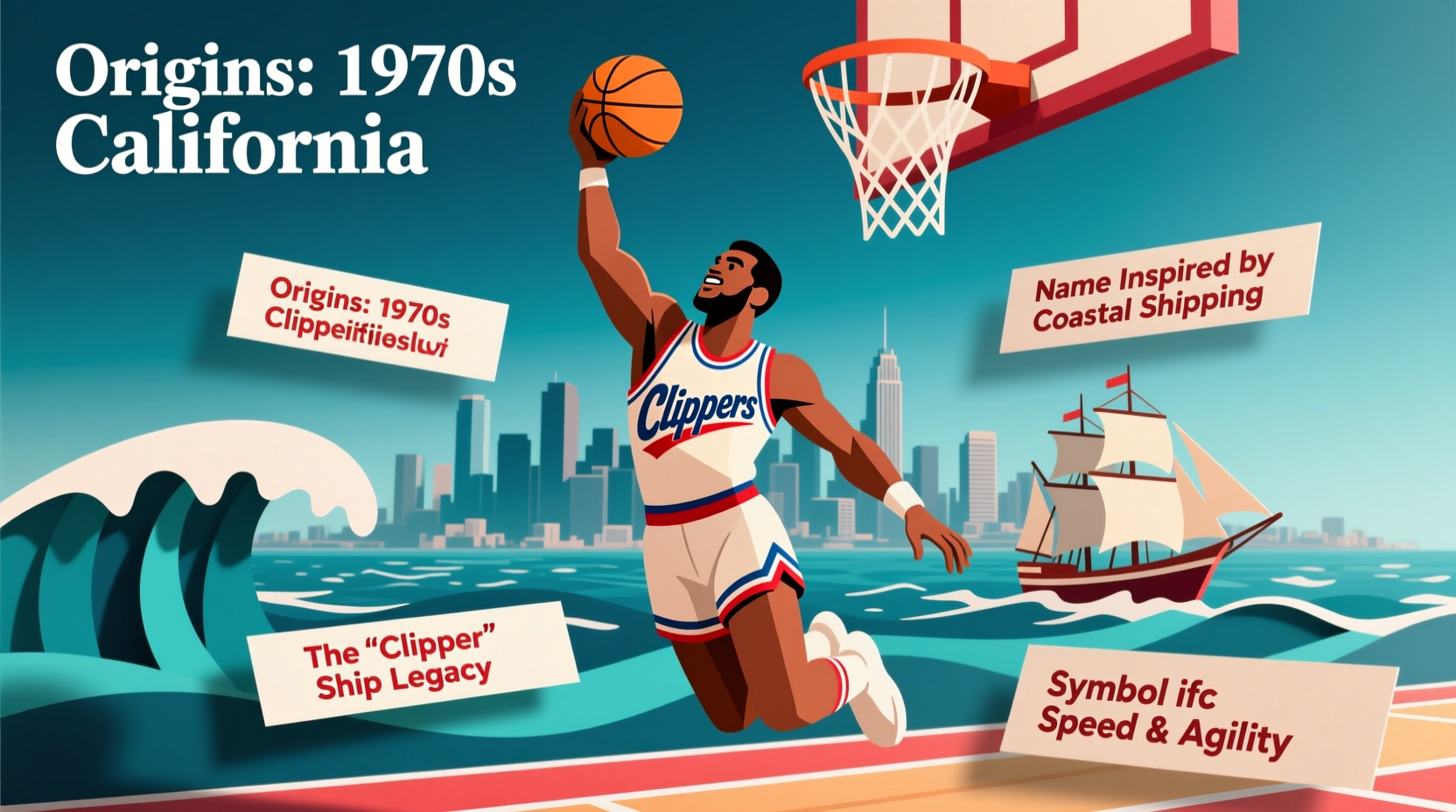
The team now known as the Los Angeles Clippers began its NBA journey in 1970 as the Buffalo Braves, one of three expansion teams added that year alongside the Cleveland Cavaliers and Portland Trail Blazers. Based in Buffalo, New York, the Braves played at the Buffalo Memorial Auditorium and struggled to gain consistent traction both on the court and at the box office.
Despite brief moments of success—including playoff appearances led by stars like Bob McAdoo—the franchise faced financial instability and ownership disputes. By the late 1970s, owner John Y. Brown Jr. sought to relocate the team. However, due to league restrictions and legal challenges, moving the Braves directly wasn’t feasible. Instead, a complex three-team transaction occurred in 1978 involving the Braves, the Boston Celtics, and the San Diego Clippers.
In this deal, the Braves effectively swapped identities with the Celtics, while the Celtics' owner purchased the San Diego Clippers and moved them to Buffalo. But rather than becoming the new Braves, the relocated team took on the Clippers name and branding. This paved the way for Donald Sterling, who owned the original San Diego Clippers, to move his team to Los Angeles in 1984—where the name stuck, despite the geographic shift.
The Real Origin: Clipper Ships and Maritime Speed
The term “clipper” refers to a type of fast, sleek merchant sailing ship popular in the mid-1800s, particularly during the California Gold Rush. These vessels were designed for speed, capable of crossing oceans quickly to transport goods like tea, spices, and passengers. Famous examples include the *Flying Cloud* and the *Cutty Sark*.
The first NBA team to adopt the name was the San Diego Clippers, originally established in 1970 as the Buffalo-based Braves. When the franchise moved to San Diego in 1978 under new ownership, a rebrand was necessary. The name “Clippers” was chosen to reflect San Diego’s deep connection to maritime history and its status as a major port city on the Pacific coast.
“San Diego has always been a naval town. The clipper ship symbolizes speed, precision, and forward motion—all qualities we wanted in a team identity.” — Ted Podleski, former San Diego Sports Council member
The visual identity reinforced the theme: early logos featured stylized sailboats, and the color scheme included navy blue and white, evoking the sea and sky. The name wasn’t just arbitrary; it was a deliberate nod to regional pride and historical imagery.
Why \"Clipper\" Fits Beyond Geography
While the maritime link made sense in San Diego, the name retained symbolic value even after the 1984 move to Los Angeles. The concept of “clipping along”—moving swiftly—resonated with basketball’s fast-paced nature. A clipper ship didn’t rely on brute strength but on agility, design, and momentum. Similarly, modern basketball values quick transitions, sharp passes, and explosive athleticism.
Over time, the literal nautical meaning faded from public consciousness, but the essence remained: speed, efficiency, and progress. The Clippers, especially during eras led by players like Chris Paul, Blake Griffin, and Kawhi Leonard, became known for high-octane offense and dynamic play—living up to the spirit of their namesake.
Tip: When discussing sports team names, look beyond the surface—many carry historical weight or regional significance that’s easy to overlook.Timeline of the Name’s Journey
The Clippers’ name has traveled across states and decades. Here’s a clear timeline showing its evolution:
- 1970: The Buffalo Braves enter the NBA.
- 1978: Ownership changes lead to relocation; the team moves to San Diego and becomes the San Diego Clippers.
- 1978–1984: The Clippers play in San Diego, embracing maritime branding.
- 1984: Owner Donald Sterling controversially moves the team to Los Angeles, keeping the “Clippers” name despite lacking local nautical ties.
- 2015–Present: The team rebrands with a new logo emphasizing speed and urban energy, downplaying sails but retaining the name’s kinetic connotation.
Common Misconceptions About the Name
Many assume the name “Clippers” relates to hair clippers, barber shops, or even the idea of “clipping” opponents’ wings. While these interpretations are creative, they’re inaccurate. The official origin is firmly rooted in maritime history.
Another misconception is that the name was chosen for Los Angeles. In reality, the team inherited the name from its San Diego era. Even today, some LA fans express confusion about the relevance of “Clippers” in a city better known for Hollywood and highways than harbors.
| Misconception | Reality |
|---|---|
| The name refers to hair clippers. | No evidence supports this; the name predates any such association. |
| It was chosen because of LA’s culture. | The name was retained from San Diego; no local naming process occurred in LA. |
| “Clippers” means cutting down opponents. | This is a retroactive interpretation, not the original intent. |
Expert Insight: Naming in Professional Sports
Sports branding experts emphasize that team names often serve dual purposes: honoring heritage and creating marketable identities. In the case of the Clippers, the name succeeded despite relocation because it carried a strong, positive metaphor.
“A good team name doesn’t have to be geographically literal. ‘Clippers’ works because it suggests movement, progress, and excellence—values that transcend location.” — Dr. Rebecca Langston, Sports Marketing Professor at USC
She notes that while some relocated teams change names (e.g., the Seattle SuperSonics becoming the Oklahoma City Thunder), others retain theirs for continuity. The Clippers chose consistency, banking on brand recognition over regional authenticity.
Frequently Asked Questions
Did Los Angeles have a vote in choosing the Clippers name?
No. When the team moved from San Diego in 1984, owner Donald Sterling kept the existing name, logo, and branding. There was no public consultation or rebranding effort specific to Los Angeles.
Are there any official connections between the Clippers and sailing today?
Not really. While early logos featured sails and ships, the current branding focuses on speed lines, urban aesthetics, and performance. The team occasionally runs nautical-themed promotions, but these are nostalgic nods rather than core identity elements.
Has the team ever considered changing the name?
There have been rumors and fan debates, but no official consideration. The name has gained enough recognition—and controversy—that a change would likely cause more disruption than benefit, especially as the franchise builds long-term equity.
How Fans Interpret the Name Today
Modern Clippers fans often interpret “Clippers” less as a reference to ships and more as a metaphor for dominance and pace. Social media hashtags like #ClipCity and slogans like “Lob City” during the Griffin-Paul era emphasized aerial dunks and fast breaks—actions that “cut” through defenses.
A mini case study illustrates this shift in perception: In 2013, a local LA radio station conducted a listener poll asking what “Clippers” meant to them. Only 22% referenced sailing or ships. Over 60% associated it with speed, action, or the idea of “clipping” ahead of rivals. This shows how language evolves within fan cultures, even when divorced from original context.
Conclusion: A Name That Sailed Farther Than Expected
The name “Clippers” began as a tribute to 19th-century sailing vessels in a coastal city proud of its naval heritage. Through relocation, controversy, and reinvention, it has survived—not because of geographic accuracy, but because of symbolic resonance. Speed, ambition, and relentless forward motion define both clipper ships and competitive basketball.
Today, whether you picture a schooner slicing through Pacific waves or a dunker soaring above the rim, the name carries weight. It’s a reminder that in sports, names aren’t just labels—they’re legacies in motion.
🚀 Now that you know the real story behind the name, share this article with a fellow fan and spark a conversation: Do team names need local roots, or can they thrive on symbolism alone?








