The Smith machine is a staple in most gyms, often positioned at the center of functional training zones or tucked neatly into power racks. While many lifters rely on it for squats, bench presses, and deadlifts, few stop to consider one distinctive feature: its angled bar path. Unlike free weights or even some modern vertical-guided machines, many Smith machines guide the barbell along a diagonal trajectory—typically between 5 to 10 degrees from vertical. This subtle tilt isn’t arbitrary; it’s engineered with biomechanics, user safety, and movement efficiency in mind. Understanding why Smith machines are angled—and how this impacts your training—can help you make smarter choices in the gym.
The Biomechanical Rationale Behind Angled Smith Machines
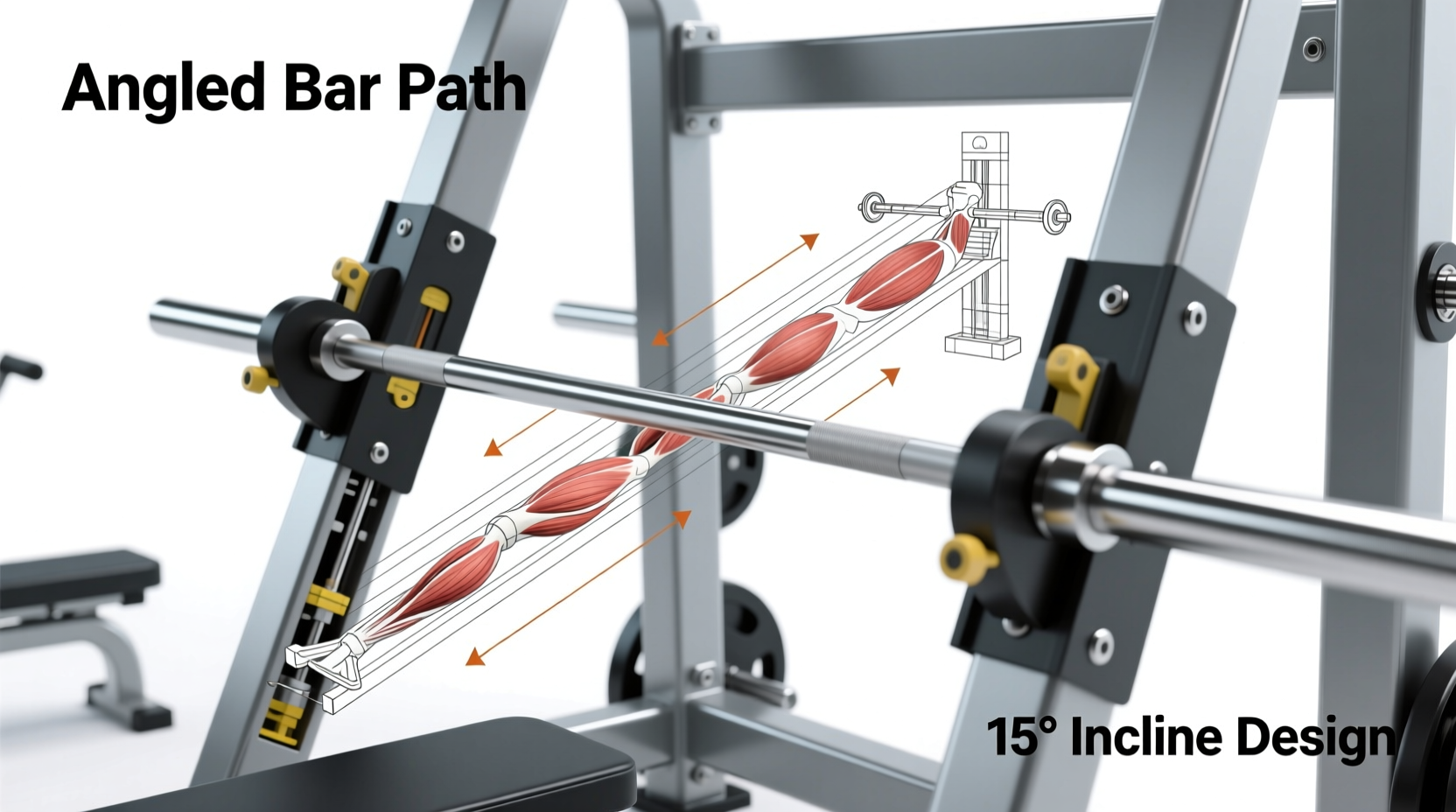
The human body doesn't move in perfectly straight lines during compound lifts. Take the bench press: as you lower the bar, your shoulders, elbows, and wrists follow a natural arc that brings the bar slightly downward and toward the chest, not straight down from the ceiling. A vertically constrained bar can force the lifter into an unnatural range of motion, increasing joint stress. An angled Smith machine mimics this natural pressing path more closely, reducing strain on the shoulder girdle and allowing for smoother transitions through the sticking points of a lift.
This design aligns better with the scapular plane—the optimal alignment for shoulder joint health during overhead and horizontal pressing movements. Research in kinesiology suggests that exercises performed in the scapular plane reduce anterior shoulder impingement risk by up to 30% compared to purely sagittal (frontal) plane motions. The slight forward angle of the Smith machine bar supports this anatomical preference, particularly during incline presses or upright rows.
Tip: When using an angled Smith machine, adjust your stance or bench position so the bar travels over your mid-chest during presses—not too high or too low—to maximize natural mechanics.Safety and Stability Advantages
One of the primary reasons gyms install Smith machines is safety. The guided bar path eliminates lateral instability, making it easier for solo lifters to perform heavy sets without a spotter. But the angled design enhances this benefit further. Because the bar moves diagonally, the center of gravity shifts slightly forward during lifts like squats and presses. This shift encourages the lifter to maintain a more upright torso, which reduces shear forces on the lumbar spine.
During barbell squats, for instance, a vertical bar path may encourage excessive forward lean—especially in beginners—which increases lower back loading. An angled Smith machine naturally counteracts this tendency by guiding the bar in a way that keeps the hips under the load more effectively. The result is improved spinal alignment and reduced risk of disc compression.
“Angled Smith machines offer a biomechanically smarter alternative to vertical guides, especially for novice lifters learning proper squat and press mechanics.” — Dr. Marcus Lin, Exercise Physiologist and Strength Coach
Comparison: Angled vs. Vertical vs. Free Weight Training
| Training Method | Muscle Activation | Joint Stress | Stability Required | Beginner-Friendly? |
|---|---|---|---|---|
| Angled Smith Machine | Moderate to high (guided path) | Low (optimized path) | Low | Yes |
| Vertical Smith Machine | Moderate (less natural path) | Moderate to high (shoulder strain) | Low | Yes, but higher injury risk |
| Free Weights | High (full stabilization) | Variable (depends on form) | High | No (requires technique) |
The table illustrates a critical trade-off: while free weights offer superior neuromuscular engagement, they demand greater skill and carry higher injury risk. Angled Smith machines strike a balance—offering enough guidance to protect joints while still enabling effective strength development.
Real-World Application: A Case Study
Consider James, a 32-year-old office worker recovering from a minor rotator cuff strain. Cleared for light resistance training, he wanted to rebuild upper-body strength but was wary of aggravating his shoulder. His physical therapist recommended starting with controlled pressing movements on an angled Smith machine. By setting the bench at a 30-degree incline and aligning the bar path with his natural pressing arc, James could perform chest presses with minimal discomfort. Over eight weeks, he gradually increased load while maintaining pain-free movement. The angled guide allowed him to focus on muscle contraction rather than balance, accelerating his rehab progress.
This example underscores a broader truth: the angled Smith machine isn’t just for convenience—it’s a valuable tool for rehabilitation, skill acquisition, and progressive overload when used correctly.
Maximizing Benefits: A Step-by-Step Guide
To get the most out of an angled Smith machine, follow this sequence:
- Assess the Angle: Observe the bar’s path before loading weight. Stand behind the machine and watch how the bar moves during a dry run.
- Position Equipment Correctly: Adjust your bench or squat rack so the bar descends over the appropriate body landmark (e.g., mid-chest for bench, upper back for squats).
- Engage Core Muscles: Even with a guided bar, activate your core to maintain posture and prevent swaying.
- Use Controlled Tempo: Lower the weight slowly (2–3 seconds), pause briefly, then press explosively but under control.
- Progress Gradually: Increase weight only after completing all reps with perfect form across two consecutive sessions.
Common Misconceptions About Angled Smith Machines
Many lifters dismiss Smith machines as “cheater equipment,” believing they do no real work. However, this view overlooks context. While they don’t replicate the full complexity of free-weight training, angled Smith machines serve specific purposes: building foundational strength, isolating muscle groups, and enabling safer training for those with mobility limitations.
Another myth is that the angle “makes the lift easier.” In reality, the angle doesn’t reduce resistance—it redirects it. Some users report feeling more chest engagement during Smith machine bench presses due to the optimized path allowing fuller pectoral stretch at the bottom. The perceived ease often comes from reduced stabilizer fatigue, not diminished effort.
Frequently Asked Questions
Do all Smith machines have angled bars?
No. While many traditional models—especially older or commercial-grade units—feature angled rails, newer designs and some boutique fitness machines use vertical guides. Always inspect the machine before use to understand its movement path.
Can I build muscle effectively using an angled Smith machine?
Absolutely. As long as progressive overload is applied and form is maintained, muscle growth occurs regardless of equipment type. The angled Smith machine allows consistent execution of compound lifts, which is key for hypertrophy.
Is the angled Smith machine suitable for advanced lifters?
Yes, when used strategically. Advanced athletes often incorporate it for accessory work, rehab phases, or high-rep burnout sets where joint fatigue is a concern. It’s not a replacement for free weights but a complementary tool.
Final Thoughts and Call to Action
The angled design of many Smith machines is far more than a manufacturing quirk—it’s a deliberate integration of human anatomy and mechanical engineering. Whether you're rehabbing an injury, mastering basic lifts, or adding variety to your routine, understanding how and why the bar moves the way it does empowers you to train smarter. Don’t write off the Smith machine as inferior; instead, learn to use it with intention.
🚀 Ready to optimize your workouts? Next time you hit the gym, spend 10 minutes experimenting with the angled Smith machine—adjust your setup, feel the path, and notice how your body responds. Share your experience in the comments below and help others unlock smarter training strategies!








