Pull-ups are one of the most respected bodyweight exercises in fitness. They demand real strength, coordination, and control. Yet for many people—regardless of gym experience—performing even a single clean pull-up feels impossible. The truth is, pull-ups aren’t just difficult; they’re a full-body test of relative strength, muscular endurance, and technique. Understanding why they’re so challenging is the first step toward conquering them.
The Core Challenge: Why Pull-Ups Feel So Hard
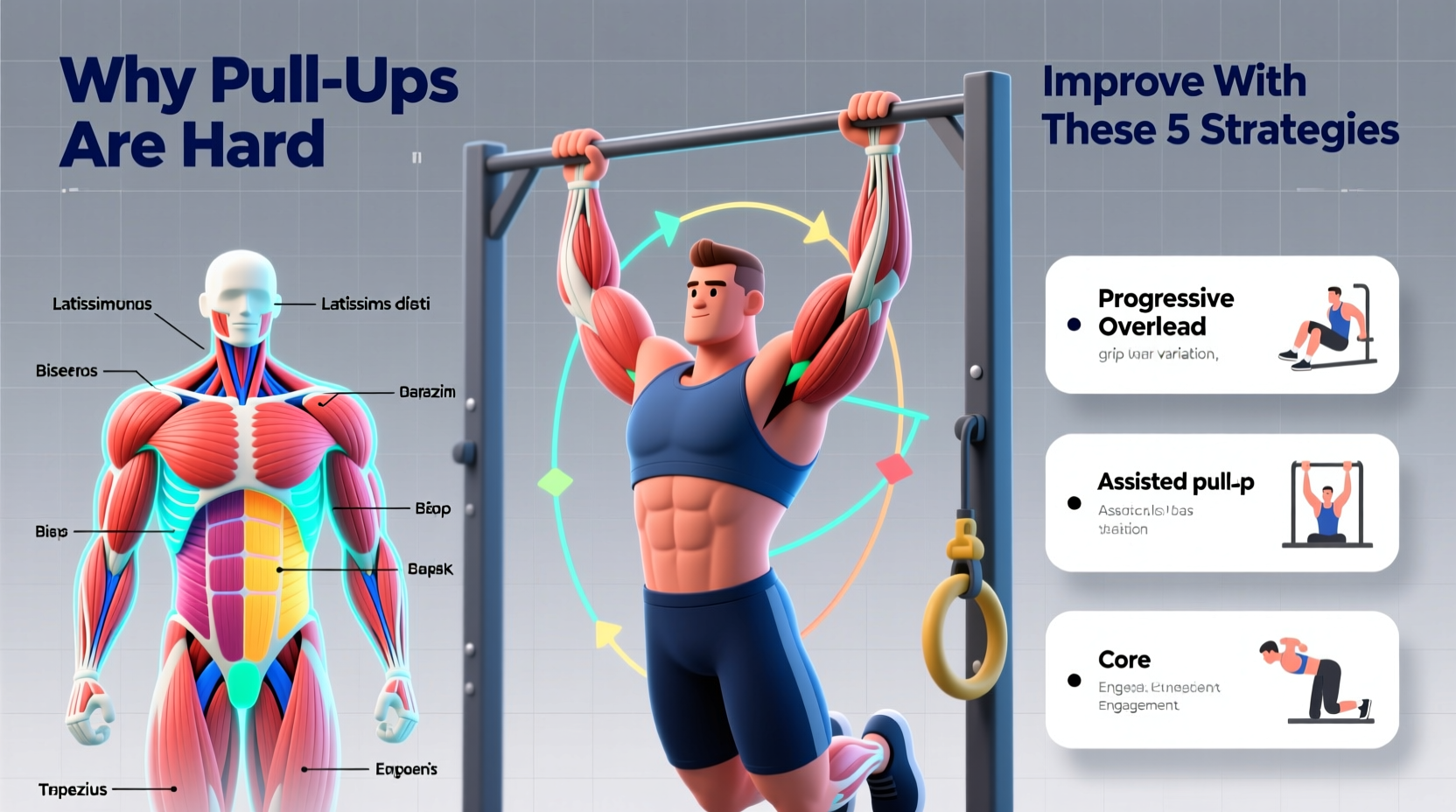
Lifting your entire body weight vertically using only your upper body is no small feat. Unlike machine-based or assisted movements, pull-ups require you to overcome gravity with minimal support. This places significant demands on multiple muscle groups simultaneously, especially the lats, biceps, rear delts, and core.
One major reason pull-ups feel harder than other exercises is that they rely heavily on **relative strength**—your strength relative to your body weight. A person who weighs 200 lbs must generate enough force to lift that mass, while someone at 150 lbs has less load to move. That doesn’t mean heavier individuals lack strength, but the physics make the movement disproportionately more difficult as body weight increases.
“Pull-ups are a benchmark exercise because they reveal true functional strength. You can’t cheat your way through them.” — Dr. James Peterson, Exercise Physiologist
Anatomical and Mechanical Factors
Several biomechanical elements influence how hard pull-ups are for different individuals:
- Arm length: Longer arms increase the range of motion, meaning more work per rep.
- Body proportions: Shorter torsos and longer limbs change leverage, often making it harder to engage the lats effectively.
- Muscle fiber composition: Some people naturally have fewer fast-twitch fibers in their back muscles, affecting explosive pulling power.
- Core stability: Without a stable midsection, energy leaks during the pull, reducing efficiency.
Common Mistakes That Make Pull-Ups Harder
Even with adequate strength, poor form sabotages progress. These common errors turn an already tough exercise into an inefficient struggle:
| Mistake | Why It’s Problematic | Solution |
|---|---|---|
| Swinging (kipping) | Reduces muscle activation; builds poor neuromuscular patterns | Perform strict negatives and dead hangs to build control |
| Partial range of motion | Misses full lat engagement; limits strength gains | Aim for full extension at the bottom and chin over bar at top |
| Gripping too wide | Overstretches shoulders; reduces mechanical advantage | Use shoulder-width grip unless training for specific variation |
| Holding breath | Increases intra-abdominal pressure; causes early fatigue | Exhale on ascent, inhale on descent |
How to Improve: A Step-by-Step Progression Plan
Going from zero to one pull-up—or five to ten—requires a structured approach. Here’s a proven timeline to develop the necessary strength and technique:
- Weeks 1–2: Build Scapular Strength
Start with scapular hangs: Hang from the bar with arms straight, then pull shoulders down and back without bending elbows. Perform 3 sets of 8–10 reps, 3 times per week. - Weeks 3–4: Add Eccentric (Negative) Pull-Ups
Jump or use a box to get to the top position, then lower yourself slowly (4–6 seconds). Aim for 3 sets of 3–5 slow negatives every other day. - Weeks 5–6: Use Assistance Tools
Switch to resistance bands or an assisted pull-up machine. Choose a band that allows 5–8 clean reps. Focus on full range of motion. Train 2–3 times weekly. - Weeks 7–8: Combine Isometrics and Volume
Add static holds at mid-pull (chin at bar level) for 10–15 seconds. Pair with negatives and assisted reps to increase time under tension. - Week 9+: Attempt Unassisted Reps
Once you can do 3 sets of 5 assisted reps with good form, try unassisted attempts. Rest 2–3 minutes between sets. Celebrate your first full rep—it’s a milestone.
Nutrition and Body Composition: The Hidden Factor
No amount of training will fully compensate for carrying excess body weight. If your goal is bodyweight mastery, improving body composition is essential. Losing fat while preserving muscle enhances your strength-to-weight ratio—the key metric for pull-up success.
Consider this: losing 10 pounds of fat without losing muscle means you’re lifting 10 fewer pounds every time you pull up. That’s equivalent to removing two 5-pound dumbbells from each hand in a curl—but across your entire body.
Tip: Track your nutrition for two weeks. Even small caloric deficits (300–500 kcal/day) can lead to meaningful fat loss over time, boosting pull-up performance.Real Example: From Zero to Ten in 12 Weeks
Mark, a 32-year-old software developer, weighed 195 lbs with limited upper-body strength. He couldn’t perform a single pull-up and felt discouraged. Following the progression plan above—and incorporating twice-weekly strength training and a modest calorie deficit—he focused on consistency.
By week 6, he completed his first negative pull-up. By week 10, he knocked out two unassisted reps. At week 12, after dropping 7 pounds of fat and gaining back strength, he achieved 10 consecutive pull-ups. His secret? Daily commitment to form, recovery, and gradual overload.
Essential Exercises to Build Pull-Up Strength
Supplemental exercises reinforce the muscles used in pull-ups. Include these in your routine 2–3 times per week:
- Inverted Rows: Builds back and arm strength with horizontal pulling.
- Lat Pulldowns: Allows controlled loading of the lats in a similar movement pattern.
- Hanging Scapular Retractions: Develops neuromuscular control critical for initiation.
- Plank to Pull-Up Engagement Drills: Lie face-down on floor, reach arms overhead, and simulate a pull-up motion while engaging core and lats.
- Banded Bicep Curls & Face Pulls: Strengthen supporting muscles for better joint health and pulling power.
Frequently Asked Questions
Can women do pull-ups?
Absolutely. While women typically have lower upper-body strength percentages due to physiology, targeted training, body composition improvements, and progressive overload allow anyone to achieve pull-ups. Many female athletes perform multiple reps with ease.
How long does it take to do a pull-up?
For beginners, it typically takes 4–12 weeks of consistent training to perform a first clean pull-up. Factors like starting strength, body weight, and training frequency play a role. Patience and persistence are crucial.
Are chin-ups easier than pull-ups?
Yes, for most people. Chin-ups use a supinated (underhand) grip, which engages the biceps more and slightly reduces the demand on the lats. Many trainees use chin-ups as a stepping stone to pull-ups.
Checklist: Your Pull-Up Success Blueprint
Print or bookmark this checklist to stay on track:
- ✅ Assess current ability: Can you hang for 20 seconds?
- ✅ Perform scapular retractions 3x/week
- ✅ Do 3 sets of slow negatives 2–3x/week
- ✅ Incorporate rows and pulldowns into workouts
- ✅ Use resistance bands for assisted reps
- ✅ Maintain a slight calorie deficit if overweight
- ✅ Record progress weekly (reps, form, ease)
- ✅ Prioritize sleep and recovery (7–9 hours/night)
Final Thoughts: Mastery Begins With the First Rep
Pull-ups are hard because they demand honesty. There’s no hiding, no momentum, no external help. But that’s also what makes them rewarding. Each rep is a testament to discipline, strength, and perseverance. Whether you're aiming for one or striving for twenty, the journey starts with understanding the challenge—and committing to the process.
💬 Ready to conquer your first pull-up? Start today with scapular hangs and track your progress. Share your journey in the comments—your breakthrough could inspire someone else to begin theirs.








