In the past five years, a quiet but unmistakable shift has taken place behind the bar counters of London, New York, Berlin, and Melbourne: the highball glass—tall, dewy, garnished with a single citrus twist—is no longer an afterthought. It’s now the centerpiece of the opening pour. Not the whiskey sour, not the old fashioned—but the Japanese whisky highball: a precise 1:4 ratio of spirit to chilled soda, stirred gently over ice, served in a tall, narrow Collins or highball glass. This isn’t nostalgia. It’s a deliberate, culturally grounded revival—one rooted in Tokyo’s meticulous bar culture, Japan’s whisky renaissance, and a global palate recalibrating toward refreshment over richness.
The resurgence isn’t accidental. It reflects deeper currents: a growing appreciation for subtlety in spirits, renewed interest in low-ABV social drinking, and the global export of Japanese hospitality philosophy—*omotenashi*—applied not just to service, but to drink construction. From Shinjuku’s legendary Bar Benfiddich to Soho’s recently opened Kura Highball Club, bartenders aren’t just serving drinks—they’re curating moments of pause, precision, and presence. And at the heart of that experience sits the highball.
The Origins: More Than Just Whisky and Soda
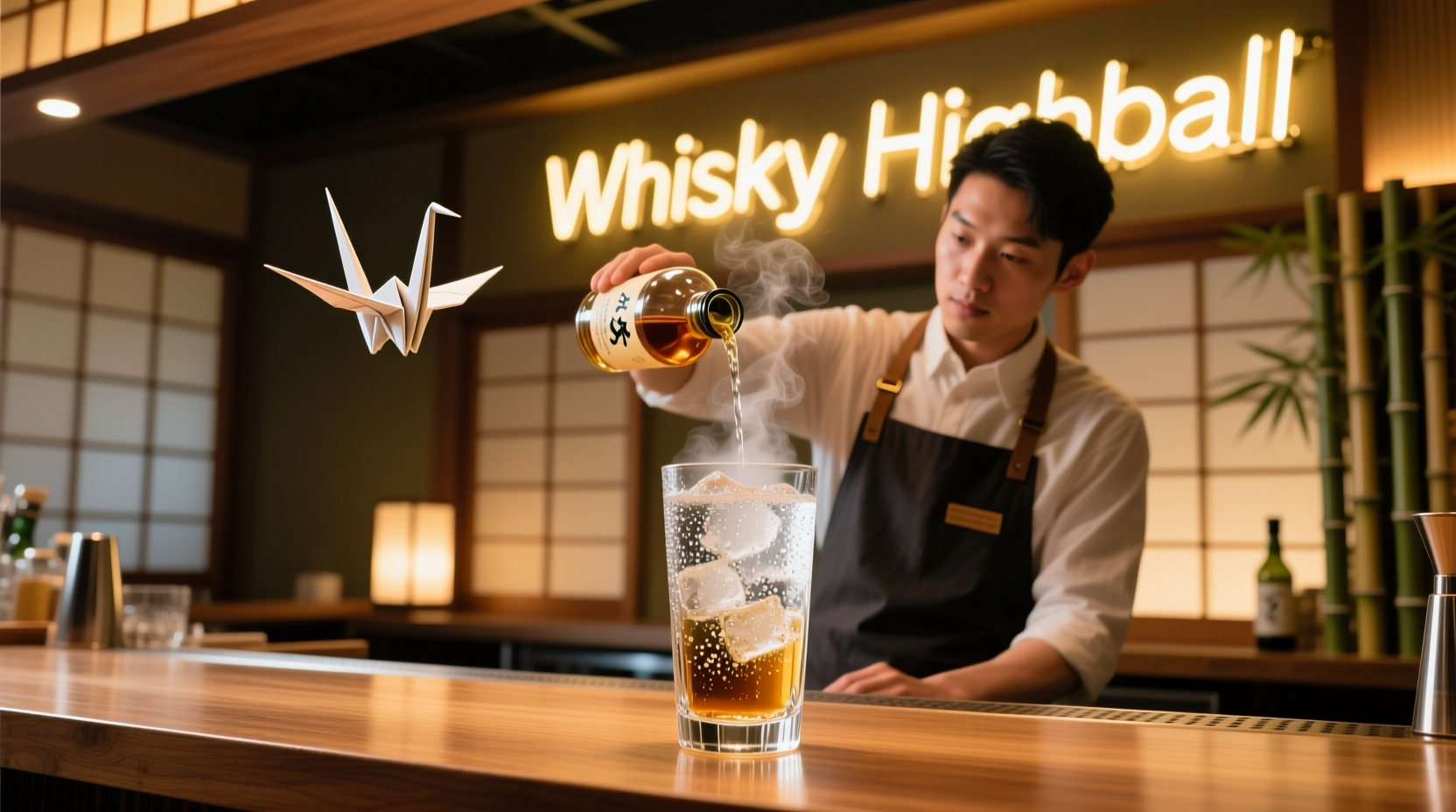
The highball’s lineage stretches back to late 19th-century America, where “whisky and soda” was shorthand for a simple, accessible mixed drink. But in Japan, it evolved into something far more intentional. Introduced in the 1920s alongside early domestic whisky production, the highball was embraced not as a chaser or mixer, but as a vehicle for appreciating flavour. By the 1950s, Suntory had launched its iconic Torys brand explicitly for highball use—light, approachable, and designed to shine when diluted.
What distinguishes the Japanese iteration is its rigour. Unlike the casual American pour, the Tokyo-style highball follows strict parameters: hand-cut, dense, spherical ice (to melt slowly); ultra-chilled, high-carbonation soda water (traditionally Ramune or a proprietary blend like Suntory’s “Highball Water”); precise temperature control (glass pre-chilled to 3°C); and a gentle, three-stir technique—not shaken, not agitated—to preserve effervescence while integrating aroma. The result isn’t dilution—it’s *transformation*. A whisky that might taste austere neat opens up: citrus notes lift, oak softens, and umami depth emerges. As Hiroshi Yamasaki, head bartender at Tokyo’s Bar Orchard, explains:
“The highball isn’t about hiding the whisky—it’s about listening to it. When you get the ratio, temperature, and texture right, the spirit tells you exactly how it wants to be experienced.” — Hiroshi Yamasaki, Bar Orchard, Tokyo
Why Now? Five Drivers Behind the Global Resurgence
The timing of the highball’s international return is no coincidence. Five interlocking forces have converged to make it not just viable—but vital—in today’s bar landscape.
1. The Maturation of Japanese Whisky’s Global Reputation
After decades of quiet excellence—and a brief scarcity-driven boom in the early 2010s—Japanese whisky has entered a phase of mature accessibility. Distilleries like Yamazaki, Hakushu, and Chichibu now release age-stated and NAS expressions specifically formulated for mixing. Suntory’s Hakushu Heavily Peated and Nikka’s Yoichi Single Malt offer smoky complexity that gains nuance, not muddiness, in a highball. Meanwhile, affordable, high-quality blends like Hibiki Harmony and Suntory Toki have become reliable, consistent anchors for bar programs worldwide.
2. The Rise of Low-ABV and Mindful Drinking Culture
Consumers—especially in urban, health-conscious markets—are shifting away from heavy cocktails and toward lighter, more sessionable options. A properly made Japanese highball clocks in at 12–14% ABV—roughly half the strength of a standard cocktail—without sacrificing sophistication. It delivers ritual, aroma, and satisfaction without fatigue. In cities where dinner reservations stretch to three hours and post-work wind-downs prioritize clarity over intoxication, the highball offers a socially graceful alternative to wine or beer.
3. The Export of Tokyo Bar Craftsmanship
Bar educators like Kazuhiro Chiba (formerly of Bar Benfiddich) and Fumihiko Nishimura (Suntory Global Ambassador) have spent over a decade teaching masterclasses across Europe and North America—not just on technique, but on philosophy. Their message is consistent: “The highball is the first drink you learn, and the last you master.” This pedagogical framing has elevated the drink from novelty to discipline. Bars like Bar Highball in Brooklyn and Kura in London don’t just serve highballs—they offer “Highball Tasting Menus,” pairing different whiskies with custom-crafted sodas and seasonal garnishes (yuzu peel, shiso leaf, roasted sesame salt).
4. The Aesthetic and Sensory Appeal
In an era saturated with visual media, the highball is inherently photogenic and sensorially rich: the sharp *crack* of ice settling, the vigorous fizz rising in slow-motion columns, the condensation beading down chilled glass walls, the clean citrus aroma cutting through ambient noise. It’s a multi-sensory reset button—a deliberate contrast to the dark, boozy, syrup-laden cocktails dominating Instagram feeds. Its simplicity becomes its statement.
5. Operational Efficiency Without Compromise
From a bar operator’s perspective, the highball is a strategic asset. With minimal ingredients (whisky, premium soda, citrus), fast prep time (<60 seconds), and high margin (typically 80–85%), it delivers premium perception at scalable execution. Unlike stirred or shaken cocktails requiring multiple components and precise timing, the highball rewards consistency—not complexity. As Maya Tanaka, beverage director at Tokyo’s acclaimed Bar Tram, observes:
“A great highball doesn’t ask for your attention—it earns it. That’s rare in modern hospitality. And for us? It means we can serve 30 perfect ones in an hour without burning out our team.” — Maya Tanaka, Bar Tram, Tokyo
How to Make It Right: A Step-by-Step Protocol
Making a Japanese highball isn’t about improvisation—it’s about adherence to a refined sequence. Here’s the exact method used in top Tokyo-style bars:
- Chill the glass: Place a highball or Collins glass in the freezer for 10 minutes (or fill with ice water for 2 minutes, then discard).
- Prepare the ice: Use one large, hand-carved sphere (60–70g) or two dense cubes. Avoid crushed or small-dice ice—it melts too quickly and over-dilutes.
- Pour the whisky: Measure 30ml of Japanese whisky (chilled to 5°C if possible) directly over the ice.
- Add citrus: Express the oils of a lemon or yuzu twist over the surface, then rub the peel around the rim before dropping it in.
- Top with soda: Using a chilled soda siphon or high-pressure carbonator, pour 120ml of chilled, high-CO₂ soda water (ideally 5–6g/L carbonation) in a thin, steady stream down the side of the glass.
- Stir precisely: With a long bar spoon, stir three full rotations—clockwise, slow and deep—just enough to integrate aroma and chill the surface, not agitate bubbles.
- Serve immediately: No garnish beyond the expressed twist. No straw. No stirring at the table.
Do’s and Don’ts: A Practical Comparison Table
| Action | Do | Don’t |
|---|---|---|
| Whisky Selection | Choose light-to-medium bodied blends (Toki, Hibiki Harmony) or fruit-forward single malts (Hakushu Distiller’s Reserve) | Use heavily sherried, cask-strength, or peat-dominant whiskies (e.g., Lagavulin 16, Ardbeg Uigeadail) |
| Soda Water | Opt for high-mineral, high-CO₂ brands (San Pellegrino, Schweppes Dry, or Suntory Highball Water) | Substitute club soda, tonic, or flavoured sparkling water |
| Ice | Use one large, clear, slow-melting sphere or two 2-inch cubes | Use cracked, crushed, or irregular ice—or skip ice entirely |
| Garnish | Express citrus oil over the surface; use only fresh, organic citrus | Add herbs, syrups, bitters, or multiple garnishes |
| Service | Serve in a pre-chilled, straight-sided highball glass; no straw | Serve in a rocks glass, coupe, or with a straw or swizzle stick |
Mini Case Study: Bar Kura, Melbourne — From Concept to Cultural Anchor
When brothers Kenji and Ryo Sato opened Bar Kura in Melbourne’s Fitzroy in 2021, they faced skepticism. “People asked, ‘Just whisky and soda? For $24?’” recalls Kenji. Their response was uncompromising: a 12-seat bar with a single focus—perfecting the highball. They imported Japanese ice machines, trained staff for six weeks on citrus expression technique, and sourced Suntory’s proprietary highball water via refrigerated air freight.
Within eight months, Kura’s “Highball Hour” (5–7pm daily) became fully booked. What surprised them most wasn’t the volume—but the demographics. “We saw finance professionals skipping after-work martinis for a yuzu highball. We hosted whisky novices who’d never ordered a dram neat—but returned weekly for their ‘Hakushu & Yuzu’. One customer told us she came because it was the only drink that let her ‘feel present, not plastered’.”
Kura didn’t just sell drinks. It created a third space—neither pub nor cocktail lounge—where intentionality, temperature, and texture became shared values. Today, it hosts monthly “Highball & Haiku” evenings, pairing each pour with a short, seasonal poem printed on rice paper. The highball, in this context, is both beverage and cultural vessel.
FAQ: Clarifying Common Misconceptions
Is the Japanese highball just a fancy version of whisky and soda?
No. While the base ingredients overlap, the Japanese highball is defined by technical specificity: precise temperature control, calibrated carbonation, intentional ice geometry, and a philosophy of enhancement—not masking. It treats dilution as a tool for revelation, not compromise.
Can I make a proper highball at home without specialty equipment?
Yes—with adaptation. Use your freezer to chill glasses and whisky. Opt for Schweppes Dry or San Pellegrino (chilled for 20+ minutes). Carve one large ice cube using a silicone mold and filtered water. Stir gently—not vigorously—and serve immediately. You’ll lose some nuance, but retain the core balance and refreshment.
Why not use Scotch or American bourbon in a highball?
You can—but the results differ meaningfully. Many Scotch and bourbon expressions rely on richness, spice, or tannin that can turn harsh or disjointed when highly diluted and carbonated. Japanese whiskies are distilled and matured with highball integration in mind: lighter cuts, careful cask selection, and balanced alcohol delivery. That said, lighter Speyside malts (e.g., Glenfiddich 12) or wheated bourbons (e.g., W.L. Weller Special Reserve) can work well with thoughtful adjustment.
Conclusion: More Than a Drink—A Moment Reclaimed
The Japanese whisky highball’s global resurgence isn’t about chasing trends. It’s a quiet act of resistance against speed, saturation, and sensory overload. In a world of algorithmic feeds and back-to-back notifications, the highball asks for 90 seconds of undivided attention: the sound of fizz, the scent of expressed citrus, the slow, cool descent of a single bubble. It embodies a fundamental truth long honoured in Tokyo’s best bars—that restraint, repetition, and respect for material can yield profound pleasure.
This revival signals something deeper: a growing desire for drinks that harmonise rather than dominate, that invite conversation instead of demanding attention, and that honour tradition without fossilising it. Whether you’re a bartender refining your technique, a curious drinker seeking balance, or simply someone who values a moment of calm in a noisy day—the highball offers an entry point. Not as a gimmick, not as a status symbol, but as a practice. One glass, one stir, one breath at a time.
💬 Have you experienced a standout Japanese highball abroad or at home? Share your story—the bar, the whisky, the moment it clicked. Your insight could help shape how others discover this quietly powerful ritual.








