
Ice fishing is a unique form of angling that demands specialized gear, and among the most distinctive tools in an ice angler’s kit is the compact fishing rod. At first glance, these stubby rods—often just 24 to 30 inches long—seem impractical compared to their full-sized open-water counterparts. Yet, their size is not arbitrary. The design of ice fishing rods is rooted in practicality, precision, and environmental adaptation. Understanding why ice fishing rods are so small reveals how form follows function in extreme conditions.
The Role of Environment in Rod Design
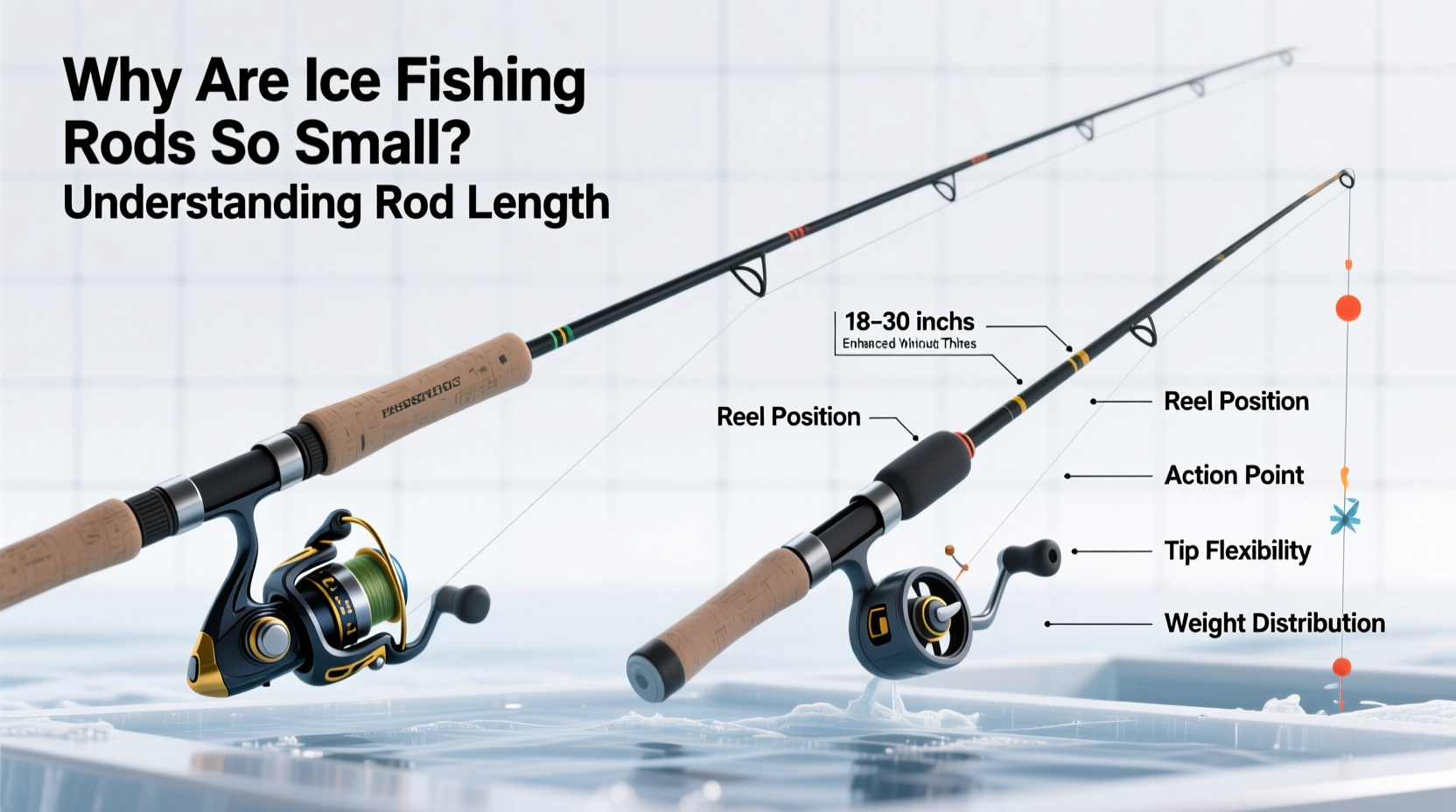
Ice fishing takes place on frozen lakes, where anglers drill holes through thick ice and fish from confined shelters or directly on the ice surface. Space is inherently limited. A standard 6- to 7-foot rod would be unwieldy inside a portable ice shelter or while sitting on a bucket with only a few feet of clearance. Long rods can easily snag on the shelter frame, roof, or even other anglers’ gear when multiple people are fishing close together.
Shorter rods eliminate these spatial challenges. Their compact size allows for quick, controlled movements above the hole without requiring wide arm sweeps. This makes them ideal for vertical jigging—a primary technique in ice fishing where lures are moved up and down directly beneath the angler.
Tip: When selecting an ice fishing rod, ensure it fits comfortably within your shelter and allows room for line management and hook setting.Sensitivity and Control: The Science Behind Short Rods
One of the most critical aspects of ice fishing is detecting subtle bites. Fish in cold water often move slowly, and strikes can be faint—sometimes no more than a slight tick or hesitation on the line. Ice fishing rods are engineered for maximum sensitivity. Their shorter blanks reduce flex and vibration loss, transmitting even the mildest nibble directly to the angler’s hand.
The reduced length also enhances control during the fight. With less leverage needed to set the hook or guide a fish through the hole, short rods provide immediate response. This is especially important when targeting species like perch, bluegill, or crappie, which may dart sideways after biting but have limited swimming space under the ice.
“Sensitivity isn’t just a feature—it’s the foundation of successful ice fishing. A good ice rod turns your fingertips into detection instruments.” — Mark Johnson, Professional Ice Angler and Guide
How Rod Length Affects Performance
Rod length influences casting ability, hook-setting power, line management, and portability. In open-water fishing, longer rods help cast farther and manage line better during retrieval. But in ice fishing, casting is irrelevant. All fishing is done vertically through a fixed hole. Therefore, casting distance becomes obsolete, removing one of the main reasons for longer rods.
Instead, performance metrics shift toward responsiveness and ergonomics. A shorter rod allows faster hook sets because there’s less blank to load. It also minimizes fatigue during long hours of holding the rod over the hole. Many ice anglers use multiple rods at once, propped on rests, making lightweight, compact designs essential for managing several lines efficiently.
Comparative Analysis: Ice Fishing Rod vs. Open-Water Rod
| Feature | Ice Fishing Rod (24–30 in) | Open-Water Spinning Rod (6–7 ft) |
|---|---|---|
| Purpose | Vertical jigging, bite detection | Casting, long-line retrieval |
| Primary Technique | Up-and-down lure motion | Horizontal casting and reeling |
| Sensitivity | High – short blank maximizes feedback | Moderate – longer blank absorbs vibrations |
| Hook-Set Speed | Fast – minimal lag due to length | Slower – requires more rod travel |
| Portability | Excellent – fits in shelters, sleds, packs | Limited – needs rod tubes or racks |
| Multiline Use | Common – multiple rods on rests | Rare – typically one rod per angler |
Choosing the Right Ice Rod: A Practical Guide
Selecting the proper ice fishing rod involves balancing length, power, action, and intended target species. While most rods fall between 24 and 30 inches, variations exist based on specific needs.
Step-by-Step: Selecting Your Ideal Ice Rod
- Determine Target Species: Panfish (perch, bluegill) require ultra-light, sensitive rods. For pike or walleye, opt for medium-power models with stronger backbones.
- Assess Sensitivity Needs: Look for graphite or high-modulus composite blanks, which transmit vibrations better than fiberglass.
- Check Handle Comfort: Short EVA foam or cork handles should fit comfortably in gloved hands. Some models feature trigger grips for better control.
- Evaluate Action: Fast-action tips help detect light bites; moderate actions offer more forgiveness when fighting larger fish.
- Test Portability: Ensure the rod stores easily in your sled or shelter and doesn’t interfere with other gear.
Real-World Scenario: A Day on Lake Mille Lacs
Consider a mid-winter trip to Minnesota’s Lake Mille Lacs, known for its aggressive walleye and deep-water structure. Angler Sarah Thompson drills six holes in a tight spread and sets up three rods on adjustable rod holders. Each rod is a 28-inch fast-action ice model matched with 4-pound test line and a small tungsten jig tipped with a minnow head.
At -10°F, her fingers grow stiff despite thermal gloves. She relies on the rods’ sensitivity to feel every quiver. One rod twitches slightly—not a strike, but a “bite indication” common in lethargic winter walleye. She lifts the rod sharply, sets the hook, and reels in a 19-inch fish through the 8-inch hole. The short rod allows her to maintain control even as the fish dives toward the bottom before surrendering. Had she used a longer rod, the movement would have been sluggish, possibly resulting in a missed hookset or tangled line.
This scenario illustrates how rod length directly affects success. Compact design enables precision, endurance, and adaptability—all crucial in harsh winter environments.
Frequently Asked Questions
Can I use a regular fishing rod for ice fishing?
You can, but it’s inefficient. Standard rods lack the sensitivity and compactness needed for vertical fishing. They’re harder to manage in tight spaces and often miss subtle bites due to dampened feedback.
Are longer ice rods ever useful?
Yes. Some anglers use 32- to 36-inch rods for deep-water trolling under the ice or when targeting more powerful species like northern pike. These offer slightly more leverage but still remain short enough for shelter use.
Does rod material matter for ice fishing?
Absolutely. Graphite provides superior sensitivity, while fiberglass offers durability and flexibility in extreme cold. Many modern rods blend both materials to balance performance and resilience.
Maximizing Your Ice Fishing Experience
Understanding why ice fishing rods are small transforms how you approach winter angling. It’s not about downsizing gear arbitrarily—it’s about optimizing for a different kind of battle. The ice environment demands efficiency, awareness, and precision. Every element of the short rod serves that purpose: enhancing bite detection, enabling rapid response, and fitting seamlessly into the compact world beneath a snow-covered lid of ice.
Whether you're new to the sport or refining your setup, recognizing the engineering behind these compact tools empowers smarter choices. Match your rod to your target species, prioritize sensitivity, and respect the constraints of your environment. The right rod won’t just catch fish—it will deepen your connection to the quiet, focused rhythm of ice fishing.
🚀 Ready to upgrade your ice setup? Start by testing a dedicated ice rod this season—you might be surprised how much difference a few inches make. Share your favorite rod model or tip in the comments below!








