
At first glance, it’s hard not to notice a striking pattern in elite women’s gymnastics: most competitors are notably shorter than average. From Olympic champions like Simone Biles and Sunisa Lee to past legends such as Nadia Comăneci and Svetlana Khorkina, the majority stand well below 5’3” (160 cm). This consistent trend has led many to ask: why are female gymnasts so short? Is it genetics, training, or something else entirely? More importantly, does gymnastics make girls shorter—or do shorter girls simply excel in the sport? This article examines the physiological, biological, and competitive factors behind gymnast height, separates fact from fiction, and dispels long-standing myths.
The Physics of Height and Performance
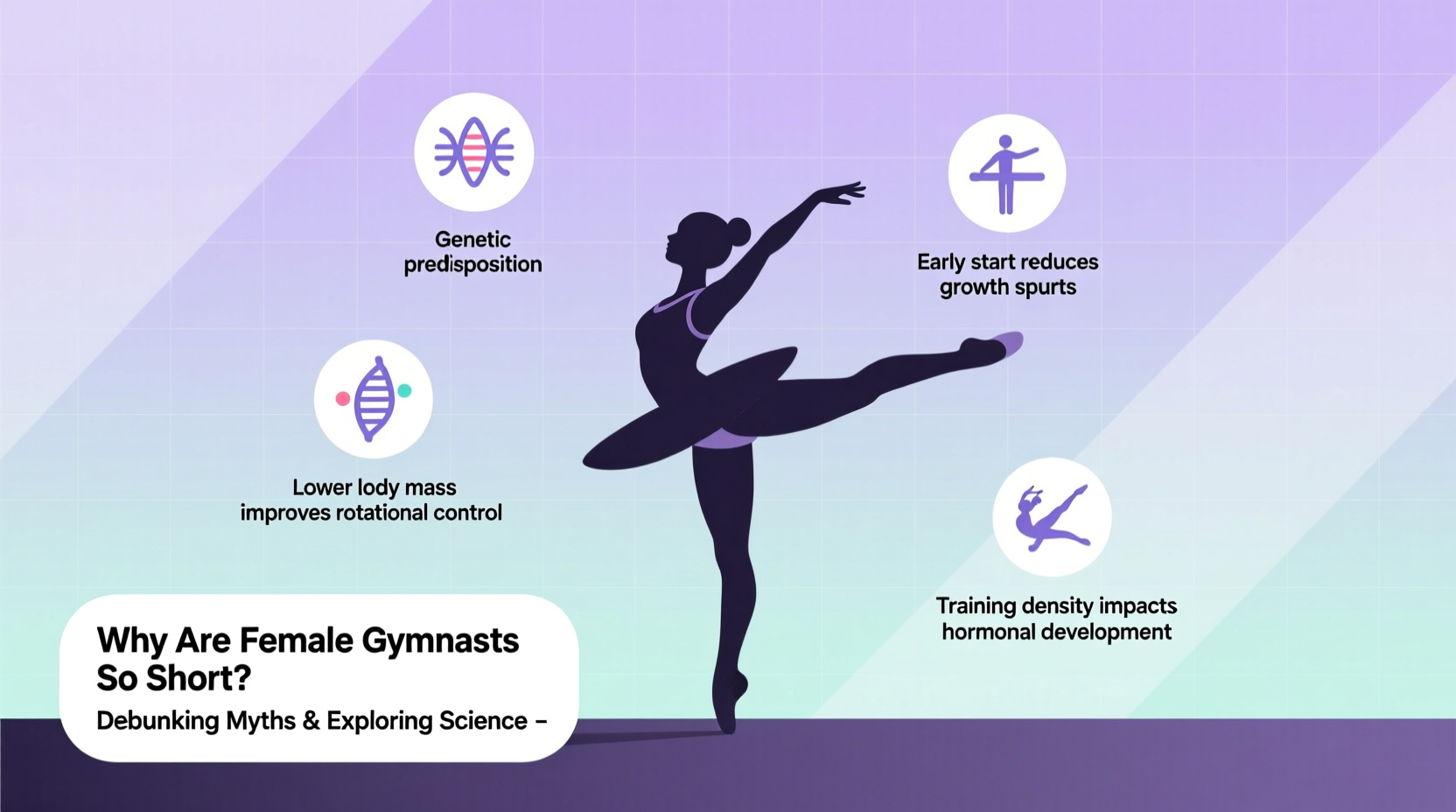
In gymnastics, success hinges on explosive power, tight rotations, and precise control—all of which are influenced by body mechanics. Shorter athletes have a lower center of gravity and reduced rotational inertia, meaning they can spin faster and with less effort. This is critical during tumbling passes, aerial maneuvers, and dismounts where completing multiple flips and twists within fractions of a second determines medal outcomes.
A smaller frame also allows for greater strength-to-weight ratio. With less mass to propel through the air, gymnasts can achieve higher jumps and more controlled landings. The laws of physics favor compact bodies in sports demanding rapid acceleration and deceleration. As Dr. Deborah King, biomechanics researcher at Ithaca College, explains:
“Shorter limbs mean less moment of inertia, making it easier to rotate quickly. That mechanical advantage is crucial in elite-level routines where milliseconds and degrees matter.” — Dr. Deborah King, Biomechanics Researcher
Biological and Developmental Factors
One of the most misunderstood aspects of gymnastics is its relationship with growth and puberty. Many assume that intense training stunts growth—but the reality is more nuanced.
Research shows that elite female gymnasts often experience delayed onset of puberty due to high training volume, low body fat, and energy imbalance. This delay can postpone growth spurts typically seen between ages 10–14. However, studies tracking gymnasts into adulthood indicate that most eventually reach heights within their genetic potential—though some may remain slightly shorter than predicted.
It's important to distinguish correlation from causation. While gymnasts may appear shorter during adolescence, this doesn’t necessarily mean training caused reduced height. Instead, shorter stature may be a self-selecting trait—coaches naturally gravitate toward smaller athletes who demonstrate early advantages in skill execution.
Tip: Delayed puberty in young gymnasts is often temporary. Proper nutrition and monitored training loads support healthy development.Selection Bias: The Hidden Force Behind the Trend
The idea that “gymnastics makes girls short” overlooks a powerful truth: selection bias plays a central role. Gymnastics programs—from local clubs to national teams—tend to identify and promote athletes whose physical traits align with performance demands. Coaches look for agility, coordination, and compact builds—traits more commonly found in shorter individuals.
This creates a feedback loop: shorter girls succeed earlier due to biomechanical advantages, receive more coaching attention, advance faster, and are more likely to stay in the sport. Taller girls, even if talented, may struggle with rotation speed or joint stress and are often steered toward other disciplines like volleyball or swimming.
A 2021 study published in the Journal of Sports Sciences analyzed youth gymnastics recruitment across Europe and found that 78% of selected athletes under age 10 were below the 25th percentile for height. By age 16, over 90% of elite squad members remained under 5'1\". This isn’t proof that training suppresses growth—it’s evidence of systemic preference for smaller frames.
Common Myths Debunked
Several misconceptions persist about gymnasts and height. Let’s address the most widespread ones:
- Myth: Intense training stunts growth permanently.
Reality: While heavy training during childhood may temporarily delay growth and puberty, longitudinal studies show most gymnasts catch up post-retirement. Permanent stunting is not supported by medical literature. - Myth: Parents should avoid gymnastics to protect their child’s height.
Reality: There is no evidence that moderate, well-supervised gymnastics harms development. In fact, it improves bone density, coordination, and discipline. - Myth: All gymnasts are born short.
Reality: Some gymnasts grow taller than average but adapt their techniques. Others leave the sport as they mature. Height diversity exists—even if it’s less visible at the elite level.
Do’s and Don’ts for Young Gymnasts and Parents
| Do’s | Don’ts |
|---|---|
| Prioritize balanced nutrition to support growth and energy needs | Restrict calories to maintain a \"competitive\" size |
| Monitor menstrual health and consult specialists if cycles are irregular | Ignore signs of fatigue, injury, or delayed development |
| Encourage participation in diverse sports during early years | Specialize too early before natural growth patterns emerge |
| Work with coaches who emphasize long-term athlete development | Select programs focused solely on competition wins at young ages |
Real Example: The Case of Aly Raisman
Aly Raisman, former U.S. team captain and three-time Olympic medalist, stands at 5'1” (155 cm)—below average for American women. Her career exemplifies how shorter stature enhances performance. Known for her powerful floor routines and tight form, Raisman maximized her compact build through rigorous training and precision. In interviews, she’s spoken openly about delayed puberty and the pressure to maintain a lean physique, yet credits her longevity to smart coaching and proper recovery.
Her journey highlights that while height provides an initial edge, dedication, technique, and mental resilience define true success. Raisman didn’t become short because of gymnastics—she succeeded because her natural build aligned with the sport’s demands, and she optimized it responsibly.
FAQ: Your Questions Answered
Can tall girls be successful in gymnastics?
Yes, though they face different challenges. Taller gymnasts like British Olympian Becky Downie (5'4\") and Dutch star Sanne Wevers (5'5\") have thrived by focusing on elegance, balance, and strategy. They may train longer to master rotations but bring unique strengths to beam and bar routines.
Does gymnastics affect final adult height?
Most research indicates minimal long-term impact. A 2018 review in Sports Medicine concluded that while elite gymnasts may be shorter during adolescence, their final adult height generally falls within familial genetic range—especially when nutritional and hormonal health is maintained.
Should parents worry about enrolling their daughter in gymnastics?
Only if the program lacks medical oversight or promotes unhealthy weight control. Reputable gyms prioritize safety, development, and enjoyment. When coached ethically, gymnastics builds strength, confidence, and lifelong fitness habits.
Action Plan: Supporting Healthy Growth in Gymnastics
If you’re a parent, coach, or young athlete navigating the world of gymnastics, follow this checklist to ensure balanced development:
- Evaluate programs carefully: Choose gyms that emphasize skill progression over early specialization.
- Maintain nutrient-rich diets: Ensure adequate calcium, protein, vitamin D, and caloric intake to support bone growth and energy output.
- Track developmental milestones: Monitor height, weight, and pubertal changes with a pediatrician or sports medicine specialist.
- Encourage cross-training: Incorporate swimming, dance, or yoga to reduce overuse injuries and promote full-body development.
- Prioritize rest and recovery: Sleep is essential for growth hormone release and tissue repair—aim for 9–10 hours nightly for youth athletes.
Conclusion: Embracing Reality Over Rumor
The perception that female gymnasts are short because of the sport oversimplifies a complex interplay of biology, physics, and human selection. The truth is that shorter stature offers mechanical advantages, leading to preferential recruitment and visibility at elite levels. But gymnastics itself does not cause permanent stunted growth—nor should it deter aspiring athletes of any size.
Understanding these distinctions empowers families, coaches, and athletes to make informed choices. It shifts the conversation from myth to science, from fear to empowerment. Whether your goal is Olympic glory or personal growth, gymnastics remains one of the most demanding and rewarding sports—if pursued with balance, care, and respect for the body’s natural design.
💬 Have thoughts on gymnastics and athlete development? Share your experiences or questions in the comments—let’s build a smarter, healthier conversation around youth sports.








