Dogs radiate joy in a way few creatures do. Whether bounding through grass, wagging at the sight of their human, or simply lying in a sunbeam with a soft sigh, their happiness feels both genuine and contagious. But what lies beneath this seemingly endless cheer? Is it instinct? Evolution? A reflection of their relationship with humans? The answer is layered—rooted in biology, behavior, and deep emotional bonds forged over thousands of years.
Understanding why dogs are so happy isn’t just heartwarming—it’s practical. For pet owners, recognizing the sources of canine joy leads to better care, stronger relationships, and more fulfilling lives for both dogs and their people.
The Biological Blueprint of Canine Joy
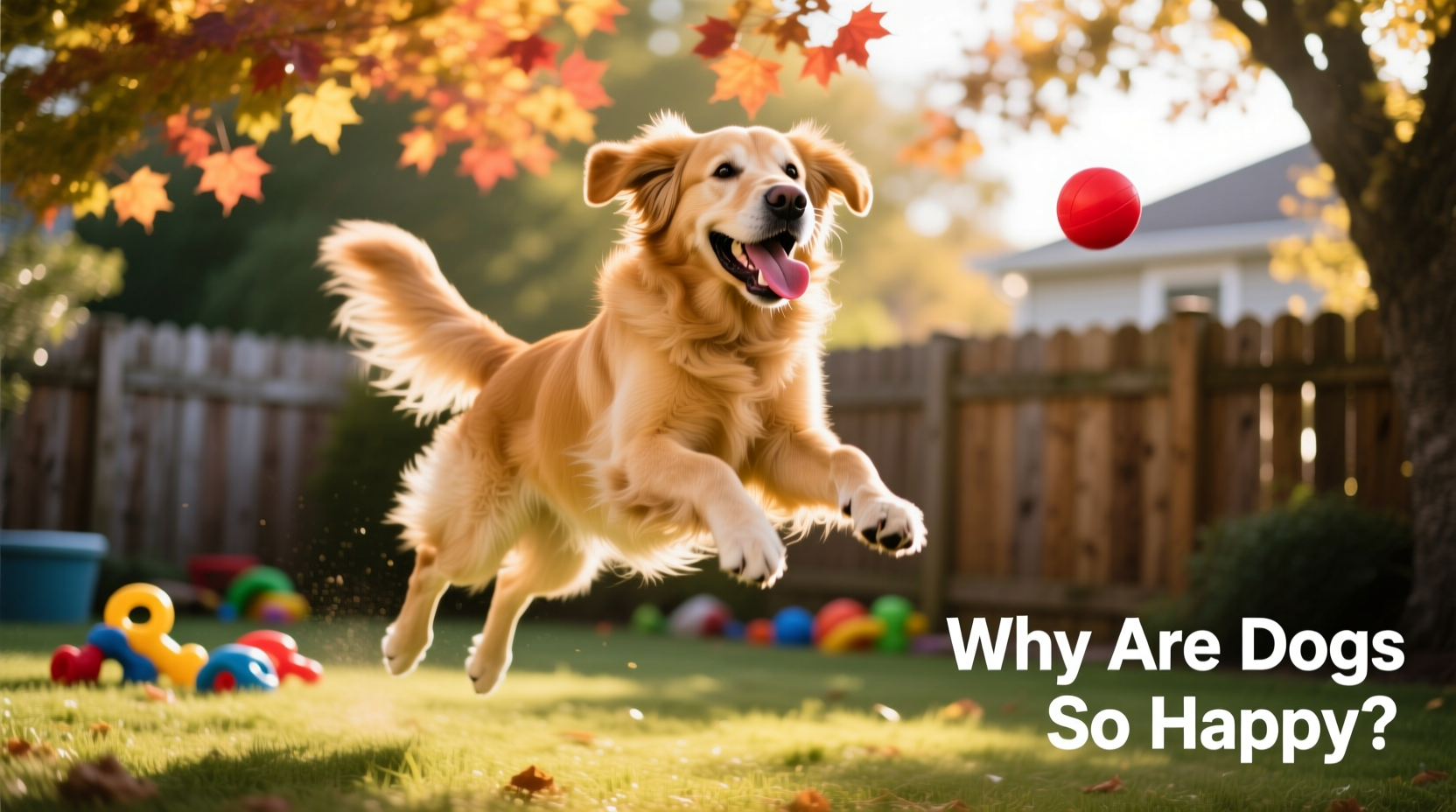
Dogs are biologically wired to experience pleasure and reward in ways that promote survival and social cohesion. Their brains respond to positive stimuli with a surge of neurotransmitters like dopamine, oxytocin, and serotonin—chemicals associated with motivation, bonding, and well-being.
Oxytocin, often called the “love hormone,” spikes not only during physical affection but also when dogs make eye contact with their humans. A landmark study by Nagasawa et al. (2015) found that mutual gaze between dogs and their owners increases oxytocin levels in both species—a rare cross-species bonding mechanism not seen even in chimpanzees.
This neurochemical responsiveness means dogs don’t just tolerate companionship—they thrive on it. Unlike many animals that mask vulnerability, dogs express emotions openly because doing so strengthens their social ties, which in evolutionary terms, ensures protection and access to resources.
Tip: Regular eye contact during calm moments can deepen your bond and boost both your oxytocin levels.Evolutionary Roots of Happiness
Dogs were not always the joyful companions we know today. Their ancestors, wolves, live in tightly controlled hierarchies where overt displays of emotion are risky. So how did we get from wary wild canids to tail-wagging best friends?
The answer lies in domestication. Over 15,000–30,000 years, dogs evolved alongside humans, undergoing what scientists call \"self-domestication\" and selective breeding. Those who were less fearful, more curious, and socially attuned received more food, shelter, and attention. Over generations, these traits became dominant.
Modern dogs exhibit what ethologists call \"neoteny\"—the retention of juvenile traits into adulthood. This includes floppy ears, large eyes, playful behavior, and a persistent desire for interaction. These features aren't just cute; they trigger caregiving responses in humans, reinforcing a cycle of affection and security that contributes significantly to a dog’s sense of well-being.
“Dogs have evolved to read us as well as we read each other. Their happiness is partly a product of being understood—and understanding us.” — Dr. Brian Hare, Cognitive Neuroscientist and Founder of Dognition
Daily Rituals That Fuel Canine Contentment
Happiness in dogs isn’t abstract. It’s built moment by moment through predictable, meaningful experiences. While individual personalities vary, most dogs find deep satisfaction in consistent routines that fulfill core needs: movement, mental engagement, social connection, and sensory enrichment.
A day without a walk may seem minor to a human, but for a dog, it disrupts rhythm and deprives them of essential environmental input. Similarly, lack of interaction can lead to frustration or anxiety, even if basic needs are met.
| Need | Fulfills | Example Activities |
|---|---|---|
| Physical Exercise | Energy regulation, joint health | Walks, fetch, agility training |
| Mental Stimulation | Cognitive function, reduces boredom | Puzzle toys, scent games, obedience drills |
| Social Bonding | Emotional security | Playtime, grooming, co-sleeping |
| Sensory Input | Environmental awareness | Nose walks, varied terrain exploration |
A Real Example: Max, the Anxious Rescue
Max, a three-year-old mixed breed, was adopted from a rural shelter. Initially withdrawn and reactive, he would cower at sudden movements and refuse treats. His new owner, Sarah, committed to a structured routine: daily 30-minute walks, short training sessions using positive reinforcement, and quiet time spent reading nearby.
Within six weeks, Max began initiating play, greeting guests with curiosity instead of fear, and sleeping soundly through the night. The transformation wasn’t due to medication or intensive therapy—but consistency, safety, and incremental joy-building. His happiness emerged not from excitement, but from predictability and trust.
How Humans Shape Canine Happiness
Dogs are exquisitely sensitive to human emotion. They detect subtle shifts in tone, posture, and facial expression—often before we’re aware of our own mood changes. When a household is tense, dogs absorb that stress. Conversely, calm, affectionate environments amplify their natural cheerfulness.
Positive reinforcement training doesn’t just teach commands—it builds confidence. Every successful sit, stay, or recall reinforces a dog’s belief that the world is navigable and rewarding. Harsh corrections, on the other hand, create uncertainty and suppress expression, including joyful behaviors like barking or jumping.
Step-by-Step Guide to Cultivating Your Dog’s Happiness
- Establish a Predictable Routine: Feed, walk, and interact at consistent times to build security.
- Incorporate Daily Mental Challenges: Use puzzle feeders or hide treats around the house for sniffing games.
- Practice Positive Reinforcement: Reward desired behaviors immediately with praise, touch, or treats.
- Allow Off-Leash Exploration: In safe areas, let your dog lead walks to follow scents and explore.
- Monitor Body Language: Learn signs of stress (licking, yawning, turning away) and adjust accordingly.
- Invest in Socialization: Gradually expose your dog to new people, animals, and environments in a controlled way.
- Respect Rest Time: Ensure your dog has a quiet space to retreat and recharge.
Common Misconceptions About Dog Happiness
- Myth: Dogs are happy as long as they’re fed and sheltered.
Truth: Emotional and cognitive needs are just as critical as physical ones. - Myth: A tired dog is a happy dog.
Truth: Exhaustion isn’t fulfillment. Mental engagement matters as much as physical exercise. - Myth: Tail wagging always means joy.
Truth: Wag direction, speed, and body posture matter. A stiff, high-speed wag can signal arousal or anxiety.
FAQ
Can dogs be too happy?
While dogs don’t experience \"too much\" happiness in a harmful way, over-arousal during play or excitement can lead to loss of self-control, nipping, or exhaustion. Balanced stimulation and calm-down periods are important.
Do all breeds experience happiness the same way?
No. Herding dogs may find joy in focused tasks, while retrievers thrive on fetching. Understanding breed tendencies helps tailor activities to maximize contentment.
How do I know if my dog is truly happy?
Look for relaxed body language: soft eyes, open mouth \"smile,\" loose wagging tail, play bows, and voluntary proximity. A happy dog seeks connection and explores confidently.
Checklist: Signs of a Truly Happy Dog
- Voluntarily approaches you for interaction
- Engages in play without coercion
- Has regular, restful sleep patterns
- Eats with enthusiasm
- Displays relaxed facial expressions and body posture
- Recovers quickly from startling events
- Shows curiosity about new environments
Conclusion
Dogs are happy not because life is perfect, but because they are profoundly adapted to find meaning in connection, routine, and sensory engagement. Their joy is not naive—it’s earned through safety, understanding, and daily acts of care. By tuning into their needs and respecting their nature, we don’t just unlock canine contentment; we become part of it.
💬 What makes your dog happiest? Share your story in the comments—your insight could help another pet parent bring more joy to a furry life.








