American Airlines, one of the largest carriers in the world, operates thousands of flights daily across the U.S. and internationally. Despite its scale and infrastructure, passengers occasionally face disruptions when flights are unexpectedly grounded. Understanding why these groundings occur is essential for travelers seeking clarity, better planning, and reduced stress during travel delays.
Flight groundings are rarely due to a single factor. Instead, they result from a combination of operational, environmental, mechanical, and regulatory challenges. This article breaks down the most common causes behind American Airlines flight suspensions, offering insights into safety protocols, real-world examples, and practical advice for navigating disruptions.
Weather-Related Disruptions
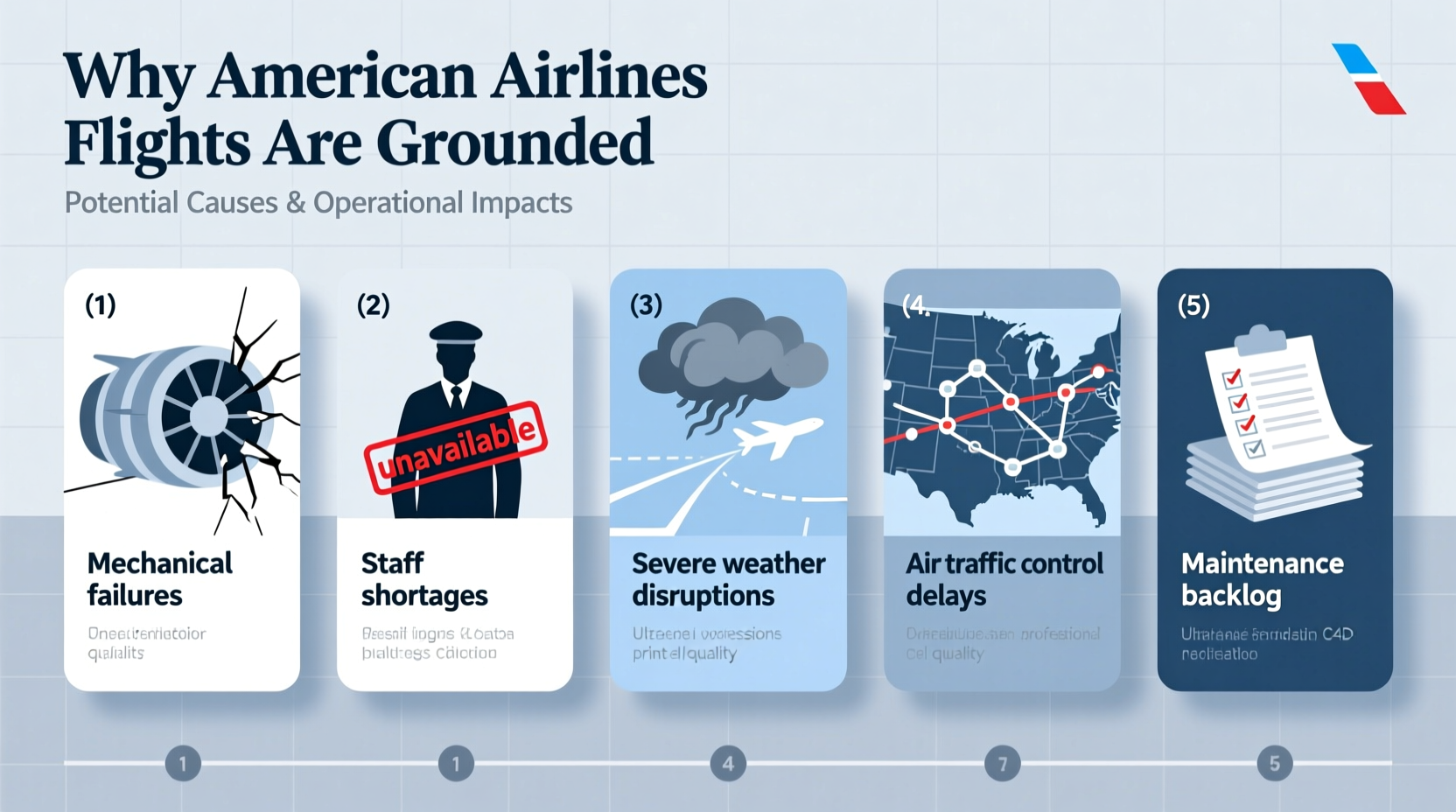
One of the leading causes of flight groundings is adverse weather. Thunderstorms, snow, ice, high winds, and low visibility can all compromise aircraft safety during takeoff, landing, or taxiing. American Airlines, like all carriers, must comply with Federal Aviation Administration (FAA) regulations that prioritize passenger and crew safety above schedule adherence.
Major hubs such as Chicago O’Hare, Dallas/Fort Worth, and New York’s JFK are particularly vulnerable to weather-related delays and cancellations. For instance, winter storms in the Midwest can trigger cascading disruptions across the network due to interconnected flight routes.
Tip: Check your flight status 24 hours before departure during storm seasons—especially winter and hurricane months.Types of Weather That Cause Groundings
- Thunderstorms: Risk of lightning strikes and turbulence.
- Snow/Ice Accumulation: Requires de-icing procedures and runway clearing.
- Fog: Reduces visibility below minimum landing requirements.
- Hurricanes: Lead to preemptive grounding and airport closures.
Technical and Mechanical Failures
Mechanical issues are another frequent cause of flight groundings. Even minor faults in navigation systems, hydraulics, or engine performance can prompt groundings until repairs are completed and certified by FAA-approved technicians.
Aircraft undergo rigorous maintenance checks, but unexpected malfunctions can arise between scheduled inspections. Common triggers include sensor errors, landing gear issues, pressurization problems, or software glitches in flight management systems.
“Preventive grounding due to a technical alert is always safer than risking an in-flight emergency.” — Captain Mark Reynolds, Retired American Airlines Pilot
American Airlines operates a mixed fleet of Boeing and Airbus models, each requiring specific maintenance protocols. Aging aircraft, while still safe, may experience higher rates of technical interruptions, especially during extreme temperature shifts.
Step-by-Step: What Happens When a Plane Is Grounded for Maintenance?
- Pilots or ground crew identify an anomaly during pre-flight checks.
- The issue is reported to maintenance dispatch and logged in the system.
- Technicians assess the severity and determine if repair is required before flight.
- If the fault affects airworthiness, the plane is grounded until fixed.
- After repair, a mechanic signs off, and the aircraft undergoes testing if necessary.
- Only then is it cleared for return to service.
Air Traffic Control and System-Wide Delays
Even when American Airlines aircraft are ready to fly, external factors like air traffic congestion or FAA-imposed ground stops can halt operations. The National Airspace System (NAS) manages all U.S. air traffic, and any disruption—such as equipment failure at a regional control center—can ripple across the country.
For example, in 2023, a nationwide IT outage briefly halted all departures, affecting American Airlines and other carriers. While rare, such events underscore the industry’s reliance on centralized systems for routing, communication, and coordination.
| Cause | Impact on American Airlines | Typical Duration |
|---|---|---|
| ATC Staff Shortages | Reduced departure rates at busy airports | Hours to days |
| NAS Outages | System-wide ground stops | Minutes to several hours |
| Runway Closures | Delays at affected hubs | Variable, based on incident |
Labor and Operational Challenges
Behind every flight is a team of pilots, flight attendants, ground staff, and dispatchers. When staffing falls short—due to illness, scheduling conflicts, or labor disputes—American Airlines may be forced to cancel or delay flights.
In recent years, industry-wide staffing shortages have made airlines more vulnerable to disruptions. A single pilot calling in sick without a qualified backup can cascade into multiple cancellations, especially on narrow-body regional routes with limited reserve crews.
Additionally, crew duty time regulations enforced by the FAA prevent overworked personnel from operating flights. If a crew exceeds legal flying hours due to prior delays, the next leg must be canceled—even if the aircraft is ready.
Tip: Book flights earlier in the day to reduce exposure to cumulative delays caused by crew or aircraft repositioning.Mini Case Study: Summer 2022 Operational Crisis
During the summer of 2022, American Airlines canceled over 15,000 flights amid a surge in demand and insufficient staffing. A combination of understaffed gate agents, overextended maintenance teams, and extreme heat in the Southwest led to widespread groundings. Phoenix Sky Harbor International Airport, for example, experienced temperatures exceeding 118°F (48°C), which exceeded operational limits for certain regional jets.
This case highlighted how interdependent factors—weather, labor, and equipment—can combine to create systemic strain. In response, American increased hiring, revised scheduling buffers, and improved communication with passengers about expected delays.
Security and Regulatory Interventions
The Transportation Security Administration (TSA) and FAA have authority to mandate flight suspensions under urgent circumstances. These include security threats, bomb threats, or breaches in airport perimeter security.
While rare, such incidents lead to immediate halts in departures and arrivals. In 2021, a suspicious package at Miami International Airport prompted a temporary grounding of all American Airlines flights from the terminal, lasting over two hours until the area was cleared.
Regulatory agencies also impose restrictions during national emergencies, such as the airspace closure after the September 11 attacks or the temporary grounding of Boeing 737 MAX aircraft following two fatal crashes.
Checklist: How to Respond When Your Flight Is Grounded
- ✅ Confirm the reason via the airline app or customer service.
- ✅ Check for rebooking options immediately.
- ✅ Monitor for travel waivers if the grounding is widespread.
- ✅ Save receipts for eligible expenses (meals, hotels) if overnight delay occurs.
- ✅ Know your rights: U.S. airlines don’t owe compensation for weather or ATC delays, but may offer vouchers.
Frequently Asked Questions
Does American Airlines compensate passengers for grounded flights?
No federal law requires compensation for flight cancellations due to weather, mechanical issues, or air traffic control. However, American Airlines may offer travel vouchers, meal coupons, or hotel accommodations for significant delays, especially if the cause is within their control (e.g., staffing or maintenance).
How can I tell if my flight will be grounded before I leave for the airport?
Use the American Airlines mobile app or website to check real-time flight status. Enable push notifications for updates. Additionally, monitor local weather at departure and arrival airports, and follow official airport social media accounts for operational alerts.
Are some American Airlines routes more prone to groundings?
Yes. Routes through major hubs like DFW, ORD, and JFK experience higher volumes and thus greater susceptibility to delays and cancellations. Seasonal factors—such as winter storms in Chicago or summer thunderstorms in Florida—also increase risk on certain routes.
Conclusion: Staying Informed and Proactive
Flight groundings by American Airlines are typically the result of responsible decision-making aimed at ensuring safety and regulatory compliance. While frustrating, these pauses reflect the complex ecosystem of modern aviation, where countless variables must align for a successful flight.
Passengers who understand the root causes—be it weather, technical needs, staffing, or air traffic—are better equipped to adapt and minimize disruption. By planning ahead, using digital tools, and knowing what to expect, travelers can navigate uncertainties with greater confidence.
🚀 Stay ahead of disruptions: Bookmark the American Airlines flight status page, sign up for alerts, and consider travel insurance for peace of mind on critical trips.








