Running performance doesn’t always move in a straight line upward. Even experienced runners can hit periods where their pace slows, workouts feel harder, and motivation dips. If you’ve noticed your times slipping despite consistent effort, you’re not alone. A decline in running speed is rarely due to a single cause—it’s often the result of multiple overlapping factors ranging from training errors to lifestyle stressors. Understanding what’s behind the slowdown is the first step toward reversing it.
Overtraining and Inadequate Recovery
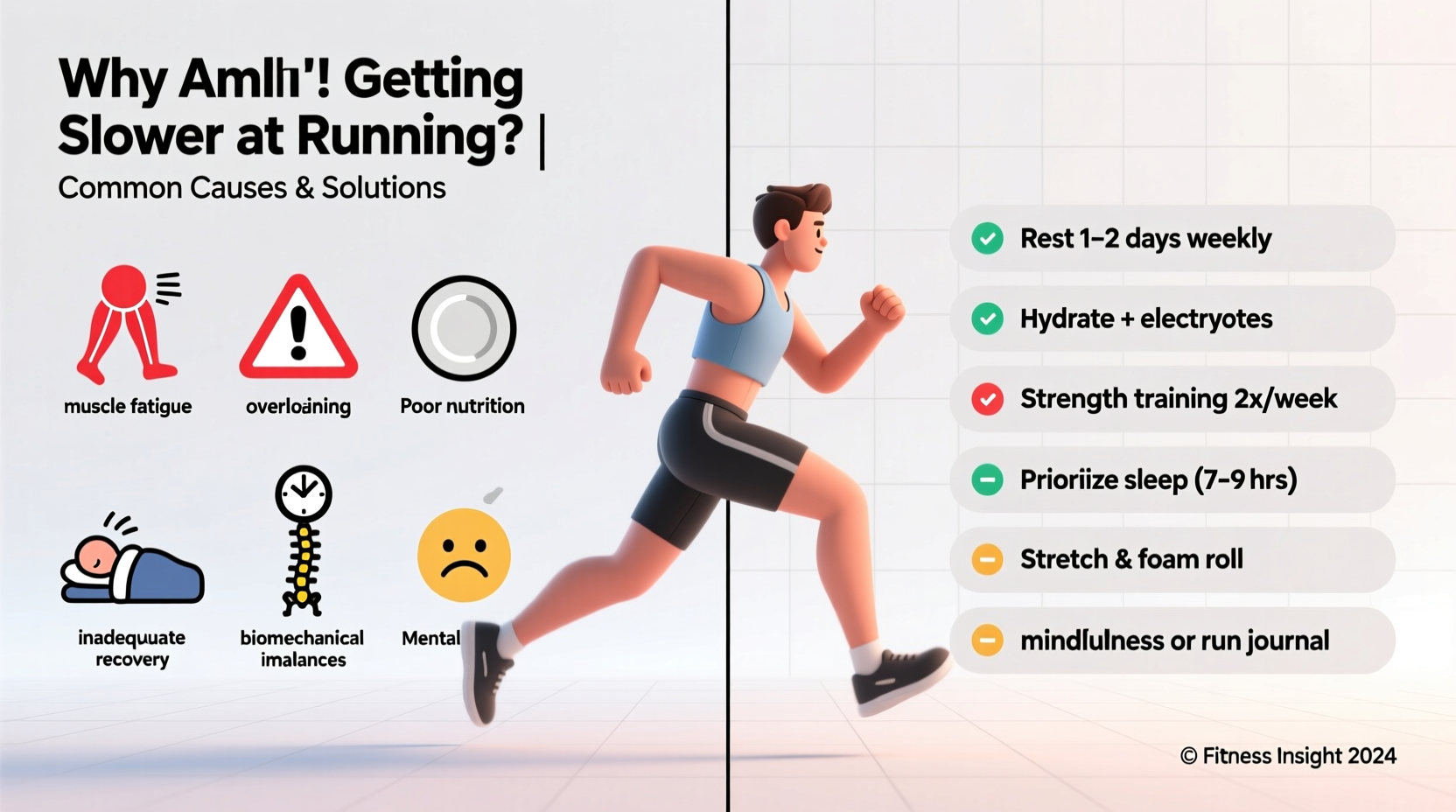
One of the most common reasons runners get slower is overtraining without sufficient recovery. Pushing hard day after day—especially with high mileage, intense intervals, or frequent races—can lead to accumulated fatigue that degrades performance. Your muscles need time to repair, rebuild, and adapt after stress. Without proper rest, your body operates in a state of chronic fatigue, which manifests as sluggishness, reduced stride efficiency, and longer recovery between runs.
Signs of overtraining include persistent muscle soreness, elevated resting heart rate, insomnia, irritability, and declining race times. The solution isn’t to train less indiscriminately, but to train smarter. Incorporating rest days, active recovery (like easy walks or light cycling), and periodized training blocks helps your body absorb workload and grow stronger.
Tip: Schedule at least one full rest day per week and consider a \"recovery week\" every 3–4 weeks, reducing volume by 20–30%.Poor Nutrition and Hydration Habits
Fuel matters. Running is an energy-intensive activity, and if your diet lacks sufficient carbohydrates, protein, healthy fats, or micronutrients, your performance will suffer. Carbohydrates are the primary fuel source for moderate to high-intensity running. When glycogen stores run low—either from inadequate intake or poor timing—you hit the wall sooner and struggle to maintain pace.
Dehydration is another silent speed thief. Even mild dehydration (as little as 2% body weight loss) impairs thermoregulation, increases perceived effort, and reduces blood volume, making every stride feel heavier. Electrolyte imbalances, especially sodium and potassium, can also contribute to cramping and early fatigue.
| Nutritional Factor | Impact on Running Speed | Recommended Fix |
|---|---|---|
| Low carb intake | Reduced endurance and pace sustainability | Eat 5–7g carbs/kg body weight daily |
| Inadequate protein | Slower muscle repair and adaptation | Consume 1.2–1.7g protein/kg daily |
| Chronic dehydration | Increased heart rate, early fatigue | Drink to thirst; monitor urine color |
| Micronutrient deficiency | Anemia, low energy (e.g., iron, B12) | Test levels; supplement if needed |
Loss of Running Form Efficiency
As fatigue builds or motivation wanes, running form often deteriorates—sometimes so gradually you don’t notice. Subtle changes like slouching shoulders, overstriding, or reduced arm drive increase energy cost and decrease propulsion. Poor biomechanics force your body to work harder to maintain the same pace, leading to earlier exhaustion.
A 2021 study published in the Journal of Sports Sciences found that runners who incorporated weekly form drills and strength training improved running economy by up to 8% over 12 weeks. Simple cues like “run tall,” “shorten your stride,” and “drive your elbows back” can make a measurable difference.
“Efficiency is more important than effort. A runner with excellent form uses less oxygen at the same speed.” — Dr. Sarah Mitchell, Exercise Physiologist
Form Check Checklist
- Head aligned over spine, eyes forward
- Shoulders relaxed and down
- Arms bent at 90°, driving backward
- Feet landing under hips, not ahead of body
- Quick cadence (aim for 170–180 steps per minute)
Lifestyle Stress and Sleep Deficiency
Running doesn’t happen in a vacuum. Work pressure, emotional strain, financial worries, and poor sleep all affect your physiological readiness to perform. Chronic stress elevates cortisol, a hormone that breaks down muscle tissue, suppresses immune function, and disrupts recovery. When cortisol stays high, your body remains in survival mode—not ideal for peak athletic output.
Sleep is when most physical adaptation occurs. During deep sleep, growth hormone is released, repairing muscle fibers and strengthening connective tissues. Adults need 7–9 hours nightly. Missing even one hour consistently can reduce aerobic capacity and reaction time.
A real-world example: Maria, a 34-year-old recreational marathoner, saw her half-marathon time drop from 1:50 to 2:05 over six months. She was logging similar mileage but had started a high-pressure job and averaged only 5.5 hours of sleep. After prioritizing sleep hygiene and adding mindfulness practices, she regained her previous pace within 10 weeks—without changing her training plan.
Tip: Track your sleep and stress levels alongside training. Use apps or journals to spot patterns between poor nights and sluggish runs.Age-Related Changes and Muscle Loss
After age 30, most people lose 3–5% of muscle mass per decade—a process called sarcopenia. Since running speed depends heavily on leg power and fast-twitch muscle fiber recruitment, this natural decline can subtly erode performance. Additionally, tendon stiffness increases, joint mobility decreases, and recovery takes longer.
However, aging doesn’t mean inevitable slowdown. Research from the *British Journal of Sports Medicine* shows master athletes who engage in resistance training retain running economy and VO₂ max significantly better than sedentary peers. Strength work, particularly exercises like squats, lunges, and plyometrics, counters muscle loss and improves neuromuscular coordination.
Weekly Strength Routine for Runners (Sample)
- Bodyweight squats – 3 sets of 12
- Step-ups – 3 sets of 10 per leg
- Calf raises – 3 sets of 15
- Plank – 3 sets of 30–60 seconds
- Glute bridges – 3 sets of 12
FAQ
Can lack of variety in training make me slower?
Yes. Sticking only to easy runs neglects key components like speed, strength, and anaerobic capacity. Incorporate interval sessions, tempo runs, and hill sprints once or twice weekly to stimulate different energy systems and prevent plateaus.
Is it normal to get slower during certain seasons?
Seasonal shifts can impact performance. Hot, humid weather increases cardiovascular strain. Shorter daylight hours may reduce motivation. Cold temperatures stiffen muscles. Adjust expectations and focus on effort rather than pace during extreme conditions.
How long does it take to regain lost speed?
With targeted adjustments—better recovery, improved nutrition, strength work—most runners see noticeable improvements within 4–8 weeks. Consistency is key; avoid drastic changes that could lead to injury.
Action Plan: 6 Steps to Regain Your Speed
- Assess your training load: Are you rested enough? Use a heart rate monitor to check for elevated morning readings.
- Optimize nutrition: Ensure adequate carbs before runs and protein afterward. Stay hydrated throughout the day.
- Improve sleep quality: Set a bedtime routine, limit screen time, and keep your bedroom cool and dark.
- Reintroduce speed work: Add one interval session weekly (e.g., 6 x 400m at 5K pace with equal rest).
- Strengthen your legs: Perform a 20-minute strength routine twice weekly.
- Record and reflect: Keep a log of runs, sleep, mood, and energy to identify hidden patterns.
“You don’t stop getting fast because you stop racing. You stop racing because you stopped preparing like a racer.” — Coach Marcus Reed, Distance Running Specialist
Conclusion
Getting slower at running isn’t a life sentence—it’s feedback. Your body is communicating that something needs adjustment. Whether it’s too much stress, not enough fuel, or neglected strength training, each factor is addressable with awareness and action. Speed isn’t just about how fast your legs turn over; it’s about the entire ecosystem of your lifestyle supporting your effort. Revisit your habits, fine-tune your approach, and trust that with patience and consistency, your pace will follow.
🚀 Ready to reclaim your speed? Pick one change from this article—whether it’s adding strength training or improving sleep—and commit to it for the next 30 days. Small steps create lasting results.








