Feeling like a failure is more common than many admit. It can creep in after a job loss, a broken relationship, unmet goals, or even during periods of stagnation. The question “Why am I a failure?” isn’t just rhetorical—it reflects deep emotional pain, often rooted in unrealistic expectations, societal pressure, or internalized criticism. But here’s the truth: feeling like a failure doesn’t mean you are one. In fact, acknowledging this emotion is often the first step toward meaningful change.
This article explores why these feelings arise, how they distort self-perception, and—most importantly—what practical actions you can take to regain clarity, confidence, and direction.
The Psychology Behind Feeling Like a Failure
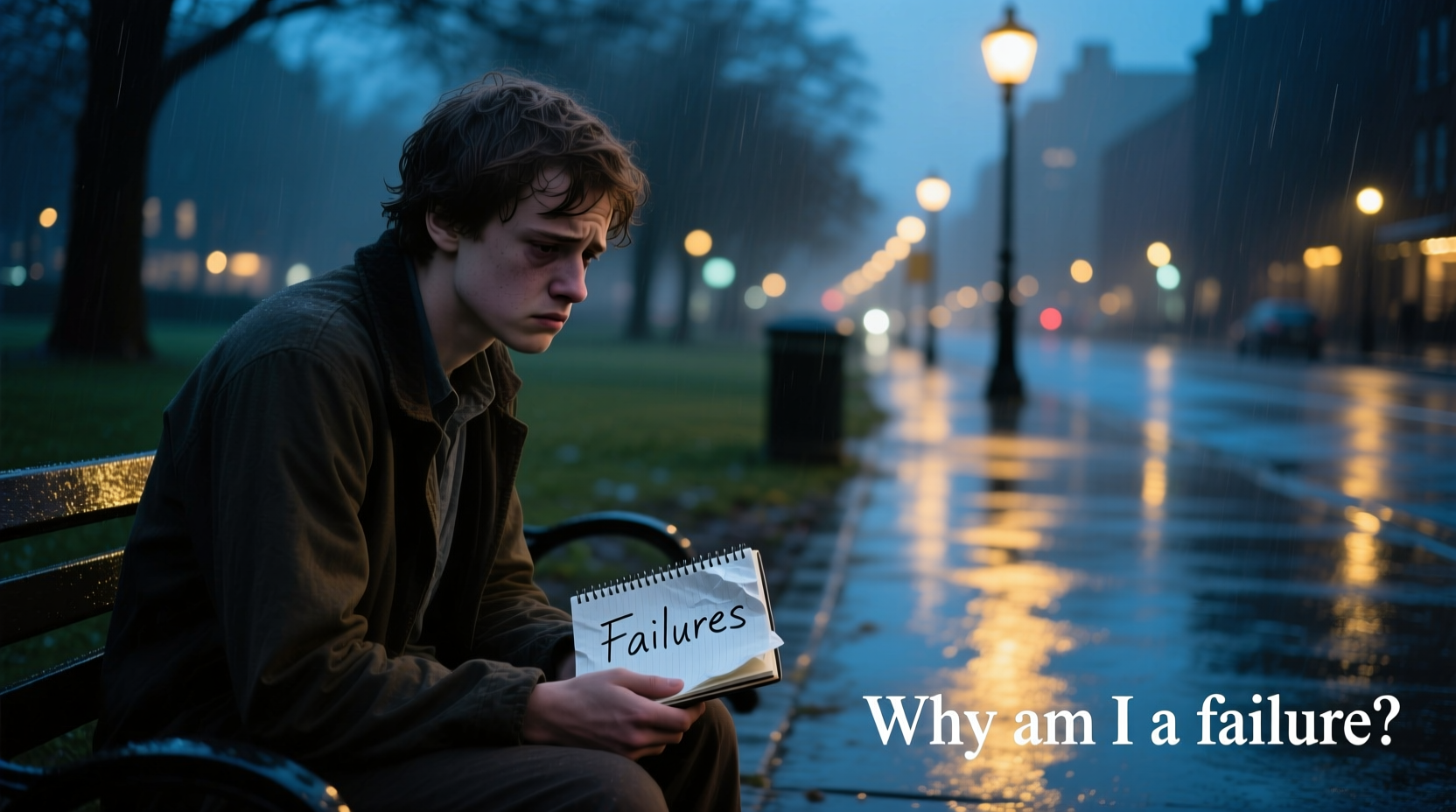
Feelings of failure are rarely about objective reality. They stem from cognitive distortions—mental shortcuts that make us interpret setbacks as personal flaws. Psychologists identify several patterns that fuel these emotions:
- All-or-nothing thinking: Viewing outcomes as either total success or complete failure, with no middle ground.
- Overgeneralization: One setback becomes evidence of lifelong inadequacy.
- Personalization: Blaming yourself entirely for events influenced by external factors.
These thought patterns are amplified by social comparison, especially in an age where curated online personas make others’ lives appear flawless. When you measure your behind-the-scenes struggles against someone else’s highlight reel, it’s easy to feel inadequate.
“We suffer not from failure itself, but from the story we tell ourselves about it.” — Dr. Lisa Firestone, Clinical Psychologist
Common Triggers of Failure Feelings
Understanding what sparks these emotions helps dismantle their power. Below are frequent triggers and their underlying causes:
| Trigger | Underlying Cause | Perspective Shift |
|---|---|---|
| Unemployment or career stagnation | Fear of irrelevance, financial insecurity | Career paths are rarely linear; gaps don’t define capability. |
| Relationship breakdowns | Self-worth tied to being loved or needed | Relationships end for many reasons; one ending doesn’t negate your value. |
| Missed goals (fitness, creative, financial) | Rigid timelines, perfectionism | Progress is non-linear. Small efforts compound over time. |
| Comparing yourself to peers | Social validation seeking, envy | You’re on your own path. Comparison steals joy and distorts reality. |
What to Do When You Feel Like a Failure
Emotional recovery isn’t about positive thinking alone. It requires deliberate action and mindset shifts. Here’s a step-by-step approach to move forward:
- Pause and name the emotion. Instead of saying “I am a failure,” say “I’m feeling like a failure right now.” This small language shift separates identity from temporary emotion.
- Identify the trigger. Ask: What specific event led to this feeling? Was it a rejection, a missed deadline, or a comparison?
- Challenge the narrative. Write down the negative belief (“I’ll never succeed”) and counter it with evidence (“I’ve overcome challenges before”).
- Reframe failure as feedback. Thomas Edison didn’t fail 1,000 times building the lightbulb—he found 1,000 ways that didn’t work. Treat setbacks as data, not destiny.
- Focus on effort, not outcome. Control what you can: consistency, preparation, attitude. Results often follow in time.
A Real Example: From Rock Bottom to Renewal
James, a 34-year-old graphic designer, felt like a failure after being laid off during a company restructuring. He spent months applying for jobs with no response. His inner dialogue turned harsh: “You’re not good enough. You wasted your education.” He withdrew socially and stopped creating.
After three months, he started therapy. With his counselor, James identified that his self-worth was tied entirely to employment. They worked on separating identity from job status. He began freelancing part-time while rebuilding his portfolio. He also volunteered to design for a local nonprofit—an experience that reminded him why he loved design in the first place.
Within six months, James landed a remote role at a startup. More importantly, he developed resilience. “I used to think failure meant the end,” he said. “Now I see it as redirection.”
Actionable Checklist: Rebuilding After Failure
If you're ready to move forward, use this checklist to guide your recovery:
- ✅ Acknowledge the feeling without judgment
- ✅ Identify the specific situation that triggered it
- ✅ List past challenges you’ve overcome
- ✅ Write down 3 strengths you possess (ask a friend if stuck)
- ✅ Set one small, achievable goal for the week
- ✅ Limit social media exposure for 48 hours
- ✅ Speak to someone you trust about how you feel
- ✅ Schedule a self-care activity (walk, cook, read)
When to Seek Professional Help
Occasional feelings of failure are normal. But when they become persistent, lead to hopelessness, or interfere with daily functioning, they may signal depression or anxiety. Warning signs include:
- Chronic fatigue or insomnia
- Loss of interest in activities once enjoyed
- Difficulty concentrating or making decisions
- Thoughts of worthlessness or self-harm
If these symptoms last more than two weeks, professional support is essential. Therapy—especially Cognitive Behavioral Therapy (CBT)—can help restructure harmful thought patterns and build emotional resilience.
Frequently Asked Questions
Is feeling like a failure normal?
Yes. Nearly everyone experiences moments of self-doubt, especially during transitions or setbacks. What matters is how you respond. Normalizing these feelings reduces shame and opens the door to growth.
How can I stop comparing myself to others?
Start by auditing your inputs. Unfollow accounts that trigger envy. Remind yourself that comparison is flawed—you’re judging your real life against someone’s edited version. Focus on your progress, not someone else’s destination.
Can failure actually be beneficial?
When processed constructively, yes. Failure provides feedback, builds resilience, and often redirects people toward better-fitting paths. Many successful individuals credit early failures as pivotal learning experiences.
Conclusion: Redefining Success on Your Terms
Feeling like a failure doesn’t mean you are one. It means you care. It means you have hopes, dreams, and standards—qualities that drive growth. The path forward isn’t about achieving perfection, but about cultivating self-compassion, realistic expectations, and consistent effort.
Success isn’t the absence of failure. It’s the courage to keep going despite it. Start small. Be kind to yourself. Celebrate effort. And remember: every person who ever made a difference failed—repeatedly—before they succeeded.
💬 Your story isn’t over. Share your experience in the comments—how did you move forward when you felt like a failure? Your words might be the encouragement someone else needs today.








