Smoothness in brown spirits isn’t just about age or price—it’s the delicate convergence of raw material, fermentation, distillation technique, barrel interaction, and even serving context. Whiskey and brandy share centuries of craftsmanship, yet they originate from fundamentally different foundations: grain versus fruit. That distinction reverberates through every stage of production and ultimately shapes how each spirit feels on the palate—especially when sipped neat, at room temperature, without dilution. This isn’t a question of superiority, but of alignment: which spirit more reliably delivers low-irritation, layered warmth, and graceful finish for the everyday sipper? To answer it, we examine chemistry, tradition, sensory science, and real-world tasting experience—not marketing claims.
Core Origins: Grain Spirit vs Fruit Spirit
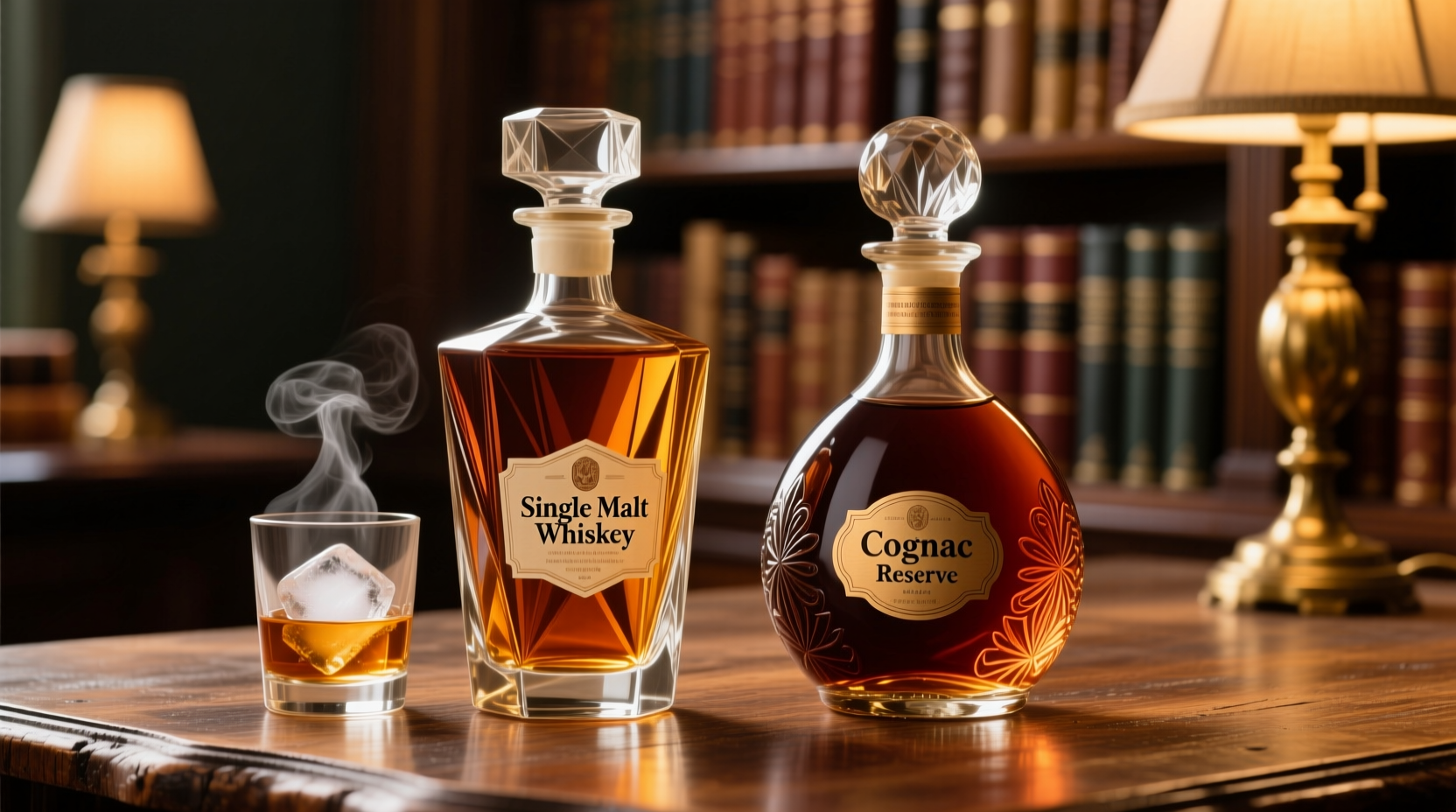
Whiskey begins with fermented cereal grains—barley (especially in single malt Scotch), corn (in bourbon), rye (in American rye whiskey), or wheat. These starches are converted to fermentable sugars via malting or enzymatic processing, then fermented into a low-alcohol “wash” before distillation. Brandy, by contrast, starts with fermented fruit juice—most commonly wine made from grapes (Cognac, Armagnac), though apple (Calvados), pear (Poire Williams), and even cherry (Kirsch) varieties exist. The resulting “wine” is distilled, often twice in pot stills for Cognac, to concentrate flavor and alcohol while preserving volatile esters and congeners.
This foundational difference dictates much of what follows. Grain-based ferments produce higher levels of fusel oils—long-chain alcohols like isoamyl alcohol—that can contribute harshness if not carefully managed during distillation and maturation. Fruit ferments, especially grape-based ones, generate abundant natural esters (ethyl acetate, ethyl hexanoate) and terpenes that lend floral, fruity, and honeyed top notes—qualities intrinsically associated with perceived smoothness.
Tip: For maximum smoothness on first sip, choose a brandy aged 10+ years in French oak (e.g., VSOP or XO Cognac) or a whiskey distilled in copper pot stills and matured in ex-bourbon casks with minimal chill filtration.Distillation & Congener Profile: Where Smoothness Is Born
Congeners—the hundreds of trace compounds beyond ethanol (esters, aldehydes, tannins, higher alcohols)—are the true architects of mouthfeel. While ethanol itself is neutral, congeners directly influence burn, viscosity, bitterness, and aromatic lift. Their concentration and balance determine whether a spirit coats the tongue or stings the throat.
Brandy, particularly traditional French styles, undergoes double distillation in copper pot stills—a method that selectively concentrates desirable esters while volatilizing harsher sulfur compounds and fusels. Copper also catalyzes reactions that reduce sulfides and promote softer aldehyde profiles. The result is a spirit with inherently lower fusel oil content than most whiskeys. A study published in the Journal of the Institute of Brewing (2021) found that Cognac samples averaged 18–25 mg/L of isoamyl alcohol, while benchmark bourbons ranged from 42–78 mg/L.
Whiskey distillation varies widely. Column stills (used for most grain whiskey and blended Scotch) produce lighter, cleaner distillates—but often sacrifice depth. Pot stills (used for single malts and Irish pot still whiskey) retain more congeners, yielding richer textures—but require precise cut management. Poorly timed “heads” and “tails” cuts introduce acetaldehyde (sharp, green-apple bite) and fusels (solvent-like heat), both major contributors to perceived roughness.
“The smoothest brandies don’t just taste soft—they *feel* integrated. That’s because grape-derived esters bind more readily with ethanol molecules, creating a homogenous solution that doesn’t separate on the palate. Whiskey’s grain-derived oils behave differently—they can ‘break’ under temperature shifts or with subtle dilution.”
— Dr. Laurent Dubois, Master Distiller, Maison Delamain, Cognac
Aging & Wood Interaction: Time, Tannin, and Texture
Barrel aging transforms both spirits—but in divergent ways. Whiskey relies heavily on new charred oak (especially in bourbon), where lignin breakdown yields vanillin and spicy phenolics, and hemicellulose caramelization contributes sweetness. However, new oak also leaches higher levels of tannins early in maturation—compounds that create astringency and drying grip. That’s why many young bourbons (under 6 years) exhibit noticeable tannic bite, even when well-balanced.
Brandy—especially Cognac—ages almost exclusively in *used* French oak barrels (Limousin or Tronçais). These casks have already surrendered their most aggressive tannins in prior use (often as wine barrels). Instead, they impart subtle spice, toasted almond, and dried fig notes while encouraging slow oxidation. Over time, esters polymerize into heavier, oilier molecules that enhance viscosity and round out edges. An XO Cognac (minimum 10 years, often 20+) develops a viscous, almost syrupy texture that buffers ethanol’s burn far more effectively than most whiskeys of comparable age.
| Characteristic | Typical Whiskey (Bourbon/Single Malt) | Typical Brandy (Cognac/XO) |
|---|---|---|
| Primary Barrel Type | New charred American oak | Used French oak (Limousin/Tronçais) |
| Tannin Contribution | High (early maturation) | Low to moderate (gradual, oxidative) |
| Key Mouthfeel Compounds | Vanillin, lactones, wood sugars | Ethyl esters, polyphenolic polymers, oxidized terpenes |
| Average Age for Peak Sipper Profile | 12–18 years (for balance) | 10–25 years (XO tier) |
| Common Roughness Triggers | Over-oaking, high rye content, chill filtration | Under-aging, excessive reduction, poor blending |
Real-World Sipping Experience: A Mini Case Study
In spring 2023, the Edinburgh Whisky & Spirits Academy hosted a blind-tasting workshop focused on “low-irritation brown spirits” for novice sippers. Twenty participants—none regular brown-spirit drinkers—were served four expressions neat at room temperature: a 12-year Highland single malt, a 7-year Kentucky bourbon, a VSOP Cognac (15 years average), and an XO Armagnac (22 years). Each was evaluated for initial impact (burn/sting), mid-palate texture (creaminess, oiliness), and finish length/softness (no bitter or drying aftertaste).
Results were telling: 85% rated the VSOP Cognac highest for “ease of first sip,” citing “immediate honeyed warmth” and “no throat catch.” The XO Armagnac followed closely, praised for its “silky weight” and “lingering apricot fade.” Only 40% of participants found the bourbon approachable without water; common notes included “cinnamon heat” and “oak dryness.” The single malt divided the group—half appreciated its complexity, while the other half reported “smoke and pepper sting” that distracted from enjoyment.
Crucially, when asked to identify the spirit they’d most likely reach for again unaccompanied, 70% chose the VSOP Cognac. Not because it was “better,” but because its sensory architecture—from ester-forward aroma to glycerol-rich body—required no adjustment, no water, no ritual. It delivered smoothness as default, not aspiration.
Practical Smoothness Checklist: What to Look For on the Label
Smoothness isn’t guaranteed by age alone—or even by price. It’s engineered through deliberate choices. Use this checklist before purchasing:
- For Brandy: Look for “Cognac” or “Armagnac” (not generic “brandy”), “VSOP” (minimum 4 years) or “XO” (minimum 10 years, often far older), and producers known for oxidative aging (e.g., Delamain, Hine, Darroze).
- For Whiskey: Prioritize “pot still” (Irish or single malt), “non-chill filtered,” and “cask strength” (if you’re comfortable diluting) or “46–48% ABV” (a sweet spot for balance). Avoid “high-rye” blends unless you enjoy spice.
- Red Flags for Both: “Artificial coloring” (E150a), “added sugar” or “caramel coloring” (listed in ingredients), or vague age statements like “aged up to 12 years” (suggests significant younger stock).
- Serving Matters: Serve at 18–20°C (64–68°F). Too cold numbs flavor; too warm amplifies ethanol volatility. Never serve below 15°C.
- First Sip Protocol: Hold 1–2 mL in your mouth for 10 seconds before swallowing. Note where you feel heat (tip of tongue = ethanol; back of throat = fusels; gums = tannins). True smoothness registers as warmth—not sting.
FAQ: Addressing Common Sipping Questions
Does adding a drop of water make whiskey smoother than brandy?
Water primarily reduces ethanol’s surface tension, releasing volatile aromas and softening perceived alcohol burn—effective for both spirits. However, brandy’s ester profile is more stable in water than whiskey’s grain-derived oils, which can “cloud” or separate. So while water helps whiskey, brandy often needs less—or none—to achieve equilibrium. If using water, add one drop at a time and wait 30 seconds between additions.
Why do some expensive whiskeys still taste harsh?
Price reflects rarity, age, and branding—not necessarily drinkability. A 25-year-old sherry-cask whiskey may have absorbed excessive tannins or sulfur compounds from the cask, or been over-reduced to hit a target ABV, stripping protective oils. Conversely, a $60 VSOP Cognac benefits from decades of industry-standard oxidative aging protocols designed explicitly for sipping refinement.
Can I train my palate to prefer whiskey’s complexity over brandy’s smoothness?
Absolutely—but it’s adaptation, not improvement. Whiskey’s rough edges (spice, smoke, tannin) become pleasurable through repeated exposure and contextual learning (e.g., pairing with dark chocolate or aged cheese). Brandy’s smoothness requires no training—it’s physiologically accessible from the first sip. Preference remains personal; smoothness is measurable.
The Verdict: Context Is King—But Brandy Leads on Default Sipper Potential
If “smoother sipping potential” means the spirit most consistently delivers immediate, low-barrier enjoyment—without water, without food, without palate calibration—brandy holds a structural advantage. Its fruit-derived ester foundation, gentle copper distillation, and oxidative aging in used oak create a sensory profile optimized for harmony over contrast. Whiskey, by design, embraces tension: grain versus wood, smoke versus sweetness, spice versus vanilla. That’s its brilliance—and its demand on the drinker.
That said, exceptional smooth whiskeys exist: Lowland single grains matured in refill sherry casks, Irish pot still whiskeys finished in Madeira barrels, or Japanese blended whiskies aged in mizunara oak with meticulous cut selection. But they are exceptions honed by precision. Brandy’s smoothness is its heritage—baked into the process from vineyard to stillhouse to cellar.
Ultimately, the choice isn’t binary. A well-chosen VSOP Cognac offers effortless elegance for quiet evenings. A 15-year Speyside single malt rewards patient attention with evolving layers. The most discerning sippers keep both—and understand that smoothness isn’t the absence of character, but the presence of balance.
💬 Your turn: Try a side-by-side tasting this weekend—VSOP Cognac and a non-peated 12-year Highland single malt. Note where each spirit lands on your palate. Share your observations in the comments. Real tasting notes build better intuition than any article ever could.








