
Running shoes don’t come with an expiration date stamped on the sole. Yet, every pair has a finite lifespan—typically defined not by how they look, but by how much they’ve been used. Many runners wait until their shoes show visible signs of wear—peeling midsoles, frayed uppers, or flattened cushioning—before considering a replacement. But by then, critical structural support may already be compromised, increasing injury risk and reducing performance.
The truth is, damage to a running shoe’s internal structure often happens long before it becomes visible. The midsole foam compresses with every mile, losing its ability to absorb impact efficiently. The arch support weakens, altering foot mechanics. These changes happen gradually, making them easy to overlook—until knee pain, shin splints, or plantar fasciitis appear.
Replacing your running shoes based on mileage—not appearance—is one of the most effective ways to maintain performance, prevent overuse injuries, and ensure consistent comfort. Understanding this principle can transform your running routine from reactive to proactive.
Why Mileage Matters More Than Appearance
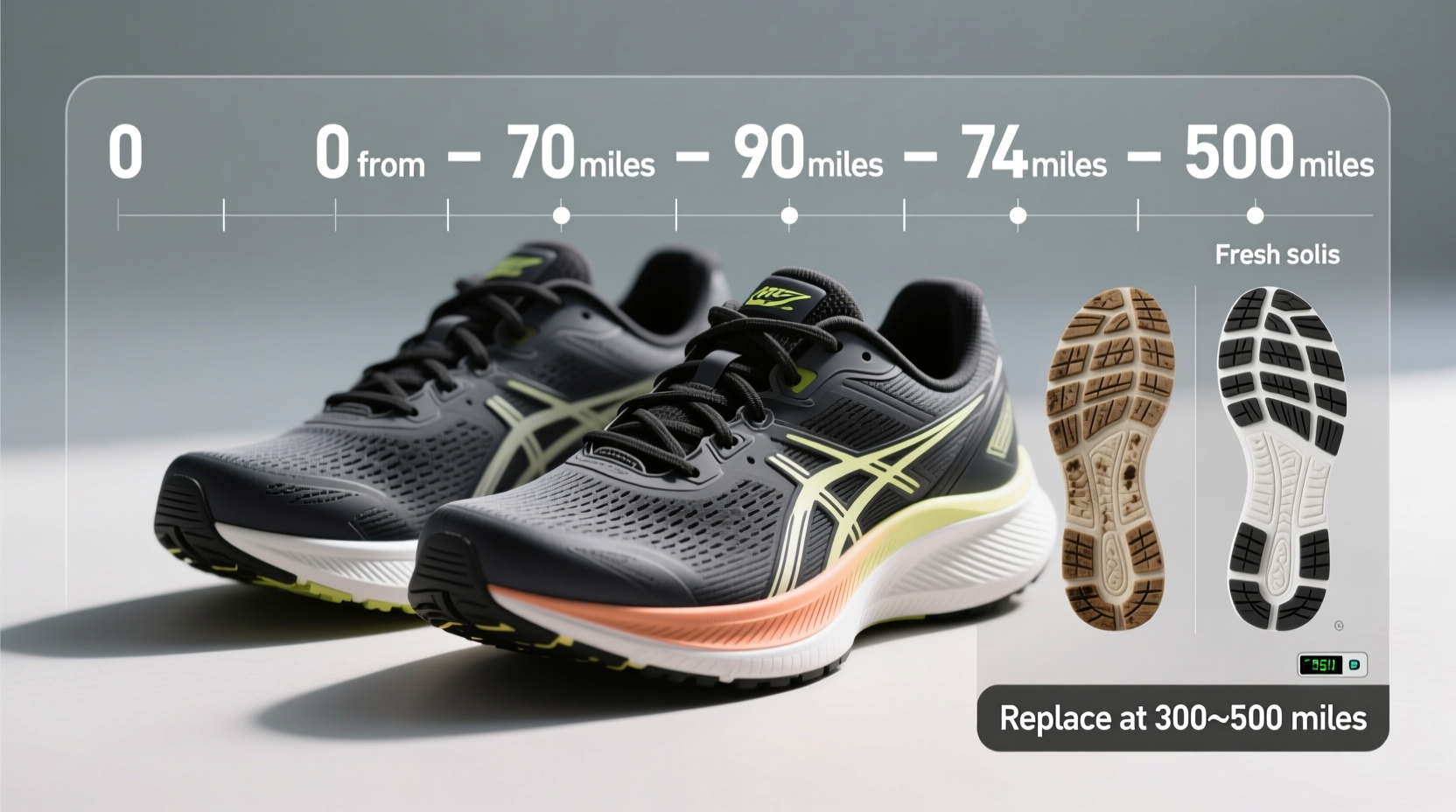
Modern running shoes are designed with advanced materials engineered for shock absorption and stability. The midsole—usually made from EVA (ethylene vinyl acetate) or newer compounds like PWRRUN, Boost, or ZoomX—provides the bulk of cushioning. However, these foams degrade with repeated compression. Each footstrike breaks down microscopic cell structures within the foam, reducing resilience and energy return.
This degradation occurs whether you notice it or not. A shoe might still look clean and intact after 300 miles, especially if worn mostly on treadmills or dry pavement. But internally, the foam may have lost up to 50% of its original responsiveness. Studies using mechanical testing devices have shown measurable loss in cushioning capacity after as few as 200–300 miles, even when shoes appear brand new.
“Runners often underestimate how quickly performance degrades in a shoe. By the time they feel discomfort, the shoe has likely been ineffective for dozens of miles.” — Dr. Irene Davis, Director of the Harvard Biomechanics Lab
Unlike clothing or accessories, where aesthetics dictate replacement timing, running shoes serve a biomechanical function. Their job is to protect joints, stabilize gait, and reduce ground reaction forces. Once that function declines, so does injury protection—even if the laces are still tight and the color hasn’t faded.
General Mileage Guidelines by Shoe Type
While individual factors vary, most running shoes last between 300 and 500 miles. This range depends heavily on the shoe’s construction, your body weight, running form, and surface type. Below is a general guide based on common categories:
| Shoe Type | Average Lifespan (Miles) | Key Factors Affecting Longevity |
|---|---|---|
| Daily Trainers | 300–500 | Moderate cushioning; balanced durability and comfort |
| Max-Cushion Shoes | 300–400 | Thick midsoles compress faster; heavier runners accelerate breakdown |
| Racing Flats / Lightweight Speedsters | 200–300 | Minimal foam; high stress during tempo runs and races |
| Stability & Motion Control Shoes | 300–450 | Denser materials resist compression longer; support features degrade gradually |
| Carbon-Plated Super Shoes | 200–300 (for racing), up to 400 (easy runs) | Plate maintains integrity, but foam degrades rapidly under high load |
Note that these numbers are averages. A 120-pound runner logging easy miles on grass will get more life out of a pair than a 190-pound runner doing interval training on concrete. Similarly, trail shoes endure additional abrasion from rocks and roots, shortening their effective lifespan despite rugged exteriors.
Tip: Rotate two pairs of running shoes to extend the life of each. Alternating allows foam to decompress between runs, preserving responsiveness.Hidden Signs Your Shoes Need Replacing
Even with meticulous mileage tracking, some cues indicate it’s time for new shoes. These signs aren’t always obvious—but paying attention can prevent setbacks.
- Increased fatigue during runs: If you’re feeling unusually tired in your legs or joints, your shoes may no longer be absorbing impact effectively.
- Persistent soreness: Shin splints, knee pain, or hip tightness that wasn’t there before could stem from degraded support.
- Uneven wear patterns: Check the outsole. Excessive wear on one side suggests instability due to midsole collapse, even if the upper looks fine.
- Loss of “bounce”: When your shoes feel flat or dead—like you’re running on pavement without padding—it’s a sign the foam has reached its limit.
- Odor and moisture retention: While not directly related to mileage, old shoes lose breathability. Combined with worn linings, this can create a breeding ground for bacteria and blisters.
One practical test is the “twist test.” Hold the heel and forefoot of your shoe and gently twist in opposite directions. If the shoe twists easily—especially along the arch—it likely lacks torsional rigidity, meaning structural integrity is gone. A healthy shoe should resist twisting significantly.
Real Example: Sarah’s Marathon Training Setback
Sarah, a recreational runner preparing for her first marathon, followed her training plan diligently. She logged 35–40 miles per week over 16 weeks. Proud of her consistency, she wore the same pair of max-cushion trainers throughout—only replacing them once she noticed the soles were visibly worn at the heel.
At mile 18 of the race, she developed sharp pain in her left knee. She finished but required physical therapy for iliotibial band syndrome. Her physiotherapist reviewed her gear and discovered her shoes had accumulated over 520 miles—well beyond the recommended 400-mile threshold for that model. Though the upper looked intact, the midsole was fully compressed, offering minimal shock absorption.
Had Sarah tracked mileage instead of relying on appearance, she could have replaced her shoes around week 12 of training—potentially avoiding injury. Now, she uses a running log app and rotates two pairs per training cycle.
How to Track Mileage Effectively
Knowing when to replace shoes starts with accurate tracking. Here’s a step-by-step approach:
- Record purchase date and first use: Note when you begin wearing the shoes for running (not casual wear).
- Log every run: Use a GPS watch, smartphone app (like Strava, Garmin Connect, or Nike Run Club), or a simple spreadsheet.
- Assign miles per run: Add distance to the cumulative total for that pair. <4> Set replacement alerts: Program a reminder at 75% of expected lifespan (e.g., 375 miles for a 500-mile shoe).
- Inspect regularly: Every 50 miles, examine the shoe’s shape, flexibility, and outsole wear.
Digital tools simplify this process. Most fitness apps allow tagging specific shoe models and automatically incrementing mileage. Some watches even alert you when a pair approaches end-of-life.
“Think of your running shoes like car tires. You wouldn’t wait for a blowout to change them. Same logic applies—preventive maintenance beats emergency repair.” — Jason Fitzgerald, USATF-certified running coach
Checklist: When to Replace Your Running Shoes
- ✅ Reached 300–500 miles (depending on shoe type)
- ✅ Feeling unexplained joint or muscle pain after runs
- ✅ Midsole feels hard or uneven when pressed
- ✅ Outsole shows deep grooves or exposed foam
- ✅ Upper is loose or no longer secures foot properly
- ✅ Failed the twist test (excessive torsional flex)
- ✅ Using the shoes for racing? Replace every 200 miles
Frequently Asked Questions
Can I extend the life of my running shoes?
Yes, but only marginally. Avoid leaving shoes in hot cars or direct sunlight, which accelerates foam breakdown. Let them air out between runs and avoid soaking them in water. Rotating between two pairs also helps preserve foam resilience. However, you cannot reverse compression—mileage is cumulative.
Do lightweight or racing shoes wear out faster?
Generally, yes. Racing flats and carbon-plated super shoes prioritize performance over durability. They often use softer, more responsive foams that break down quicker under high stress. Reserve them for speed workouts and races, not daily mileage, to maximize their functional life.
What if I run fewer than 10 miles per week?
Even low-mileage runners should replace shoes every 6–12 months. Foam degrades over time due to oxidation and humidity, regardless of use. If your shoes are over a year old—even with under 200 miles—they may have lost structural integrity.
Final Thoughts: Make Mileage Tracking a Habit
Replacing running shoes based on mileage isn’t about perfection—it’s about awareness. The human body adapts slowly to small changes, so the decline in shoe performance often goes unnoticed until discomfort arises. By shifting focus from appearance to usage, you take control of a key variable in injury prevention and running efficiency.
Start today: pull out your current running shoes and check their age and estimated mileage. If you’re unsure, assume they’re halfway through their lifespan and begin tracking forward. Label each pair with the start date using a permanent marker inside the tongue. Use technology to automate logs, or keep a simple notebook by your shoe rack.
Your knees, hips, and long-term enjoyment of running will thank you. Great runs start with great footwear—and knowing when to let go is part of respecting your craft.
🚀 Take action now: Audit your current running shoes. Log their mileage, assess their condition, and schedule replacements before your next big race or training block. Share your shoe rotation strategy in the comments—help fellow runners stay injury-free!








